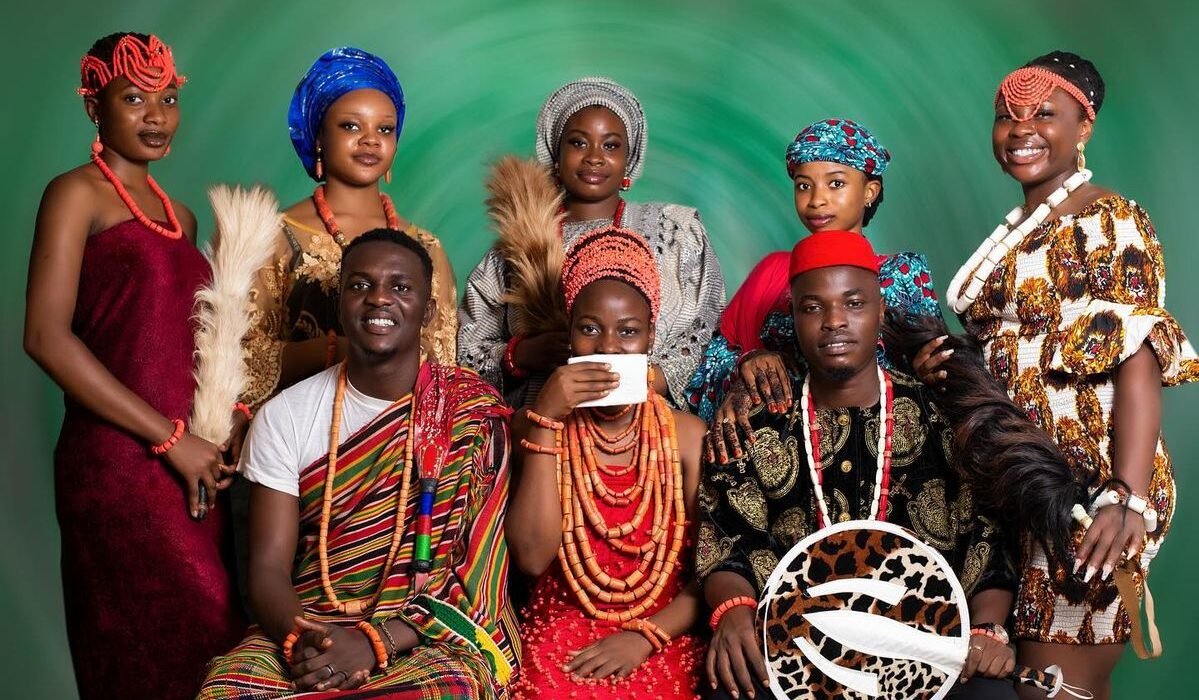

Nigeria is globally celebrated as a magnificent tapestry of over 250 ethnic nationalities, each boasting unique customs, languages, and historical legacies. When exploring the foundational roots of this diverse nation, historians, linguists, and archaeologists frequently point to one group as the earliest established continuous inhabitants: the Ijaw (Ijo) people. Primarily settling the rich, labyrinthine waterways of the Niger Delta region, the Ijaw possess an ancestral lineage that deeply intertwines with the very dawn of human habitation in West Africa. Understanding their history offers a profound window into the prehistoric origins of the modern Nigerian state.
The Linguistic Footprint of 5,000 Years
One of the most compelling pieces of evidence establishing the Ijaw as Nigeria’s oldest continuous ethnic group comes from comparative linguistics. Language experts studying the Ijoid language family have discovered that it stands entirely isolated from neighboring language groups, such as the Benue-Kwa family spoken by surrounding agricultural tribes. Glottochronology—the study of how languages diverge over time—suggests that the Ijaw language branch split from other African languages more than 5,000 years ago. This unique linguistic isolation proves that the Ijaw managed to maintain a distinct, uninterrupted cultural identity for millennia, shielded effectively by the dense, protective mangrove swamps of the delta.
Archaeological Foundations in the Delta
Beyond the spoken word, physical evidence buried deep within the earth strongly validates the antiquity of the Ijaw civilization. Significant archaeological excavations conducted across key historical settlements, such as Agadagba-bou and other ancient city-states in the Lower Niger, have unearthed remnants of highly organized human activity. Radiocarbon dating of pottery shards, early tools, and residential mounds places a definitive Ijaw presence in the region as far back as 800 BCE. These discoveries provide nearly 3,000 years of unbroken material proof that while many other major ethnic groups were migrating across West Africa, the Ijaw were already firmly rooted in their maritime homeland.
The Ancestral Legacy of the Oru
Oral traditions and deep-seated folklore among the delta communities heavily reinforce these scientific findings. According to widespread historical accounts, the Ijaw are considered the direct descendants of an ancient, autochthonous (aboriginal) race known as the Oru. In ancient times, the Ijaw were originally referred to by this name, signifying their status as the primal, original settlers of the West African river systems. Legends detail their early migrations along the vast waterways connecting the Nile Valley and the Lake Chad basin, eventually funneling down into the coastal wet regions where they mastered the art of watermanship, fishing, and regional trade long before external influences arrived.
Adapting and Thriving Across Millennia
The enduring legacy of the Ijaw people is a testament to human resilience and environmental adaptation. By building communities on stilted structures over coastal swamps and developing unparalleled navigational mastery of the rivers, they created an insular sanctuary that external empires could not easily conquer or absorb. Over centuries, they expanded into dozens of distinct clans spreading across modern-day Bayelsa, Delta, Rivers, and Ondo states. Today, recognizing the Ijaw as one of Nigeria’s oldest ethnic foundations honors not just a people, but the very genesis of community building, survival, and cultural preservation on the African continent.