What Makes Igbo Weddings Different From Other Cultures?
Posted in :

Nigerian weddings are globally renowned for their grandeur, but an Igbo traditional wedding—locally known as Igba Nkwu (the wine carrying)—holds a unique, unyielding position in cultural storytelling. Far beyond a simple legal or spiritual contract, an Igbo marriage is an intricate, multi-stage community merger governed by ancient customs and deep familial reverence. While neighboring cultures place immense focus on the day-of reception, the Igbo people weave a profound tapestry of negotiation, symbolic tests, and high-energy celebrations that truly set their matrimonial rites apart from the rest of the world.
1. The Dual-Family Legalization Process
Unlike Western or contemporary ceremonies where a couple can independently obtain a marriage license, an Igbo wedding is strictly a union of two extended families. The process begins long before the public celebration with Iku Aka (the knocking), followed by extensive background checks where both families quietly investigate each other’s history, character, and values. This deep communal vetting ensures that the marriage begins with a rock-solid foundation. Only after both families are completely satisfied can the groom receive the marriage list, making the union a collective responsibility rather than an individual decision.
2. The Igba Nkwu and The Ultimate Search
The absolute climax of an Igbo wedding is the symbolic wine-carrying ceremony, a dramatic ritual unseen in most other global cultures. The bride is given a cup of palm wine by her father and instructed to find her husband among a crowded, boisterous room of guests who actively try to distract her and claim the drink. She must navigate the crowd, find her groom, and present the wine to him on her knees. Once the groom takes a sip, the crowd erupts in celebration; this single act serves as the official, traditional sealing of the marriage, publicly declaring their mutual consent and devotion.
3. The Prestige of the Marriage List (Iku Aka)
Another distinct feature of Igbo weddings is the mandatory fulfillment of the bridal list, which reflects the high value placed on women within Igbo society. The list is meticulously tailored based on the bride’s village, family status, and educational attainment, often requiring items like high-quality wrappers (such as George or Abada), livestock, foodstuff, and symbolic cash gifts for various segments of the community, including the village youths and daughters (Umuada). While critics sometimes view this as expensive, the Igbo culture regards it as a proud demonstration of the groom’s capacity to love, honor, and financially protect his new family.
4. A Masterclass in High-Fashion and Vibrant Energy
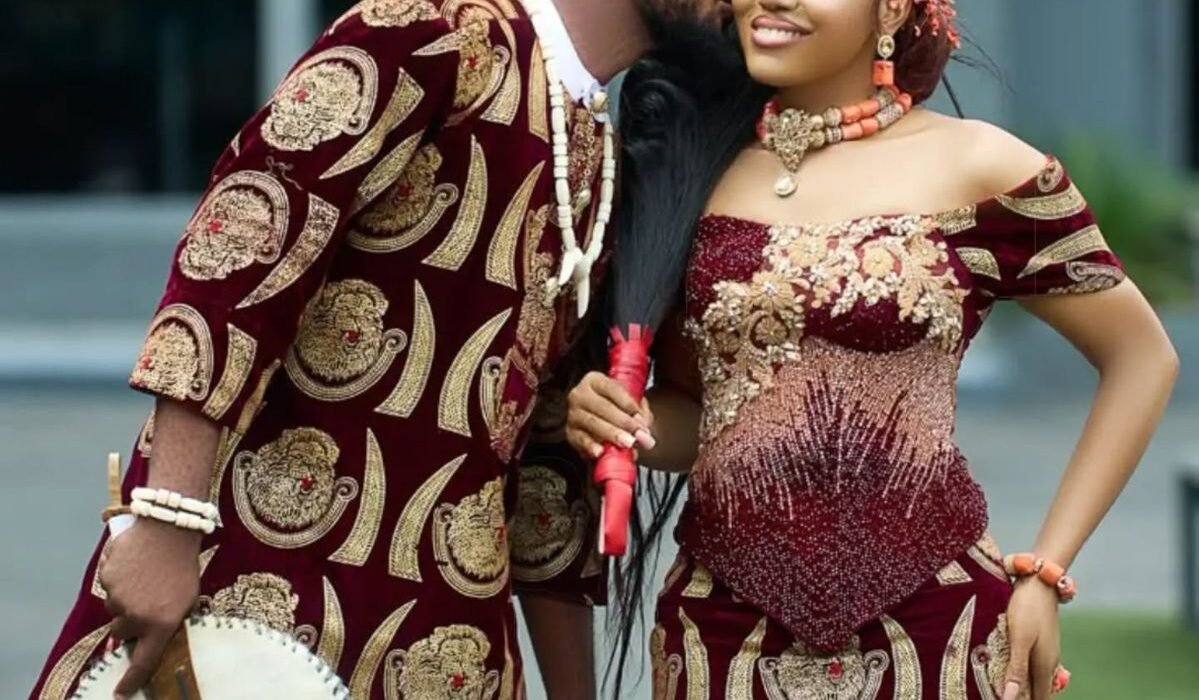
From a purely sensory perspective, the sheer energy and opulence of an Igba Nkwu are unmatched. The couple undergoes multiple outfit changes, showcasing premium fabrics, intricate coral beads, and traditional staff accessories that signify nobility. The atmosphere is charged with traditional live music, heavy percussion, and the iconic practice of “spraying” money, where guests shower the dancing couple with cash to wish them financial prosperity. Ultimately, it is this seamless blend of rigid, sacred tradition with a loud, joyful, and visually stunning celebration of life that makes an Igbo wedding an unforgettable cultural masterpiece.