Lagos Heritage & Traditional Customs You May Not Have Known
Posted in :

Beyond its famous reputation as Africa’s bustling financial hub and entertainment capital, Lagos State holds a deeply rooted cultural identity. Long before skyscrapers redefined its skyline, the original settlers—primarily the Awori and Egbas of the Yoruba ethnic group, alongside the Bini descendants—established a structured society built on respect, spirituality, and communal values. Today, this indigenous legacy smoothly coexists with contemporary city life. Understanding the traditional customs of Lagos offers a fascinating look into the historical soul of Nigeria’s most energetic city.
1. The Monarchical System and the Oba of Lagos
At the heart of Lagosian heritage is its traditional leadership structure, led by the Oba of Lagos (the Eleko). Operating from the historic Iga Idunganran palace on Lagos Island, the Oba serves as the spiritual and cultural custodian of the people. Backed by a council of high-ranking white-cap chiefs known as the Idejo, this monarchical system maintains local order, settles community disputes, and preserves ancestral lands. Even in modern governance, the political and social influence of the Oba remains highly respected, bridging the gap between ancient tradition and modern authority.
2. The Majestic Eyo Festival (Adamu Orisha)
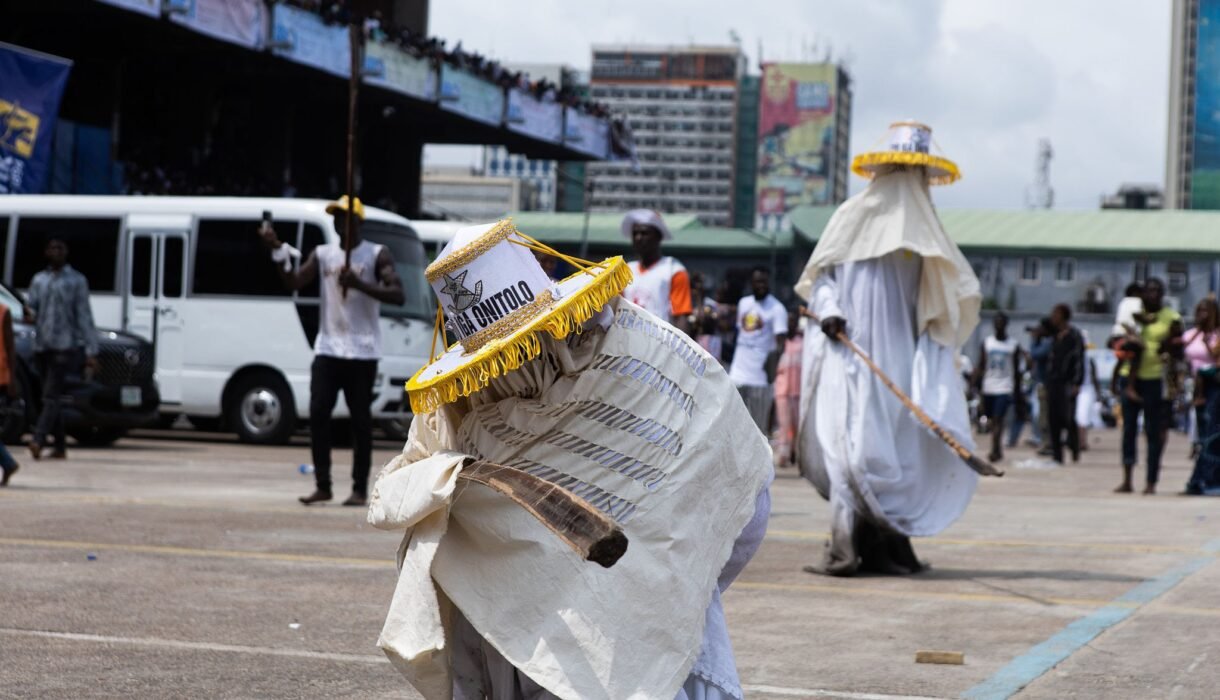
Perhaps the most iconic cultural expression unique to Lagos is the Eyo Festival, an extraordinary masquerade celebration deeply tied to the history of Lagos Island. The Eyo masquerades represent the spirits of the ancestors, completely robed in white flowing cloths (Agbada) and wearing beautifully decorated wide-brimmed hats (Aga). Armed with symbolic decorated staff called the Opambata, they parade the streets to honor deceased dignitaries or celebrate major state milestones. The festival is a spectacular display of song, dance, and historical pride that completely transforms the historic center of the city.
3. Aquatic Heritage and Coastal Celebrations
Given its unique geography surrounded by lagoons and the Atlantic Ocean, the heritage of Lagos is profoundly linked to water. For generations, fishing and water transportation were the primary livelihoods of coastal communities like Makoko, Badagry, and Epe. This aquatic relationship is celebrated through the annual Lagos Boat Regatta, a colorful festival featuring beautifully decorated boats, synchronized paddling, and water gymnastics. These events not only showcase the seafaring skills of indigenous communities but also preserve the crucial relationship between the people and their natural environment.
4. Cultural Preservation in a Megacity
Preserving these deep-rooted traditional customs within a rapidly expanding megacity is an impressive achievement. While urbanization has altered the physical landscape, communities on Lagos Island, Badagry, and Ikorodu deliberately keep their ancestral shrines, festivals, and oral histories alive. This intentional protection of heritage ensures that local identity is never lost to globalization. Ultimately, the vibrant traditions of Lagos prove that a city can fiercely embrace economic development while remaining firmly grounded in the rich customs of its ancestors.