I Visited an Igbo Village and Learned This
Posted in :

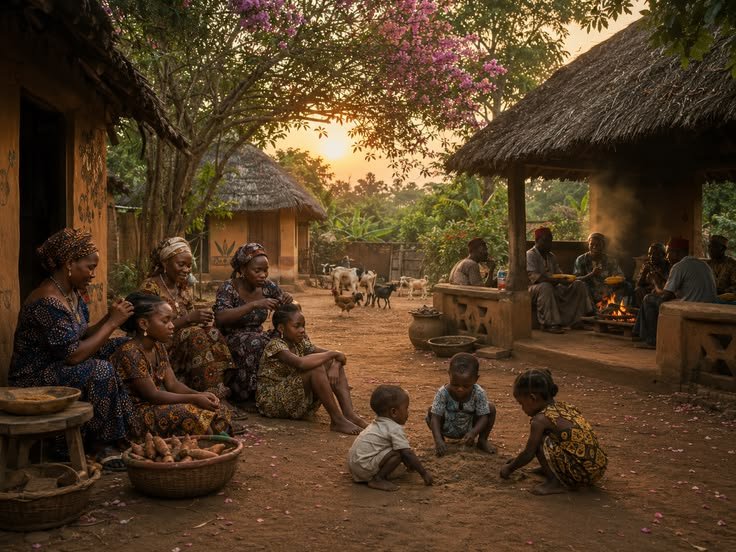
Stepping into a traditional Igbo village in southeastern Nigeria feels less like a geographic journey and more like an immersive lesson in communal living. The bustling city noises melt away, replaced by the rhythmic thumping of yams being pounded in wooden mortars and the melodic cadence of the Igbo language. While modern life has swept across much of West Africa, the core values of the Igbo people remain deeply rooted in their ancestral soil. My recent visit revealed that beneath the surface of daily village life lies a highly sophisticated social structure built on mutual respect and shared responsibility.
The Unbreakable Bond of Community (Umunna)
The most profound lesson I gathered centers around the Umunna, a traditional kinship system that binds extended families and villages together. In the village, individualism is secondary to the collective welfare. If a family is building a house, the youth show up with tools; if a child is born, the entire village shares the joy and the care. I learned that this tightly knit structure serves as a natural social safety net. It ensures that no single person is left to suffer financial or emotional ruin alone, offering a powerful blueprint for how modern societies can combat isolation.
Enterprise and the Mentorship Mindset
Walking through the village square, I observed firsthand the cultural roots of the famous Igbo apprenticeship system, locally known as Igba-Boi. I learned that entrepreneurship is not just a career choice here; it is a cultural expectation embedded in village upbringing. Elders routinely mentor young men and women, passing down trade secrets, farming techniques, and craft skills. This structured path from novice to master craftsman creates a continuous cycle of wealth creation and self-reliance, proving that economic empowerment is most sustainable when it is taught and handed down through generational mentorship.
A Profound Respect for Elders and Land
Another unmistakable pillar of village life is the absolute reverence for the elders and the sacredness of the land (Ala). The elders, often recognized by their traditional red caps, function as the living libraries of the community, settling disputes with proverbs and ancient wisdom under the shade of sacred trees. I learned that the land is viewed not merely as property to be bought and sold, but as a sacred trust held for future generations. This deep environmental and spiritual connection fosters a natural culture of conservation and agricultural sustainability that modern conservationists are still striving to replicate.
The Universal Language of Hospitality
My visit concluded with a lesson in radical hospitality, symbolized perfectly by the breaking of the kola nut (Oji). To the Igbo people, “he who brings kola brings life.” To be welcomed into a village home is to be treated as family, regardless of your background or where you come from. This openness, paired with an extraordinary pride in their cultural heritage, taught me that true community is built on greeting the world with an open heart. Leaving the village, I carried away more than just photographs; I left with a renewed appreciation for how tradition, when preserved with pride, can guide us toward a more connected future.