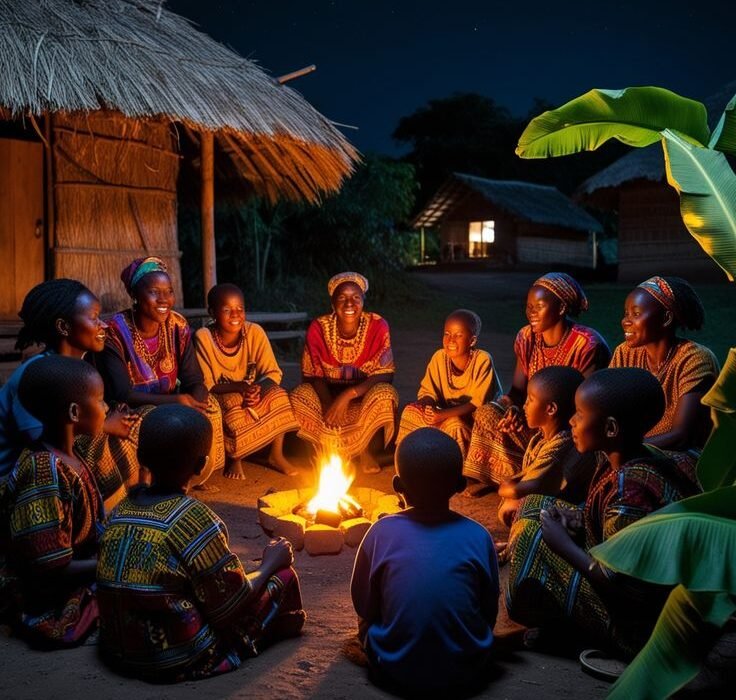

Long before modern gadgets and electricity reshaped the landscape of West Africa, life in an Igbo village was guided by the natural rhythms of the earth and the deep warmth of human connection. It was a world where time was measured by the market days of the Eke, Orie, Afo, and Nkwo cycle, rather than the ticking of a clock. In this pristine environment, community was the ultimate currency, and survival depended on a harmonious relationship with nature, ancestral wisdom, and neighbors.
1. The Rhythm of the Farm and the Yam King
Agriculture was the undisputed heartbeat of the pre-technological Igbo economy. Without tractors or synthetic fertilizers, families relied entirely on iron hoes, machetes, and communal labor to cultivate the land. Yam, revered as the “king of crops,” was a symbol of wealth and masculinity; a man’s status was directly tied to the size of his ba (yam barn). The farming season required intense physical work, but it was also a communal affair where neighbors took turns clearing patches of land for one another, turning grueling labor into a festive, cooperative venture.
2. Social Architecture and the Obi
The village structure was beautifully designed around kinship, centered on the umunna (extended patrilineal family). Homes were architectural wonders of clay mud walls and thatched roofs made from palm fronds, which naturally insulated interiors against the tropical heat. At the center of every compound stood the Obi—the patriarch’s lounge and the spiritual anchor of the home. Here, family disputes were settled, kola nuts were broken with prayers for long life, and meals were shared from communal bowls, reinforcing a culture where individual isolation was completely unknown.
3. Moonlight Tales and Oral Education
In the absence of television or smartphones, the setting sun did not mark the end of the day, but the beginning of the village’s entertainment and education. Under the bright glow of the moonlight (onwa na-agbali), children and elders gathered in the open squares for ifo (storytelling). Through these vibrant oral tales featuring witty characters like Mbe the tortoise, elders passed down critical lessons on morality, justice, and history. Coupled with traditional music, wrestling matches, and masquerade festivals, entertainment was an active, participatory experience that sharpened the mind and preserved cultural identity.
4. A Legacy of Sustainable Balance
Life in the pre-tech Igbo village was a masterclass in sustainability and mental well-being. Though modern medicine was absent, a deep knowledge of herbalism (ogwu obala) treated ailments, and the lack of industrial pollution meant clean air and pristine rivers. While technology has brought undeniable convenience, the history of the early Igbo village serves as a powerful reminder of a time when human beings lived fully in the present, deeply rooted in their heritage, and profoundly connected to the people right next to them.