The Rhythm of the Pampas and the Passion of Tango: A Deep Dive into Argentina Culture – South America
Posted in :

Argentina is a land of sweeping geographic extremes, fierce national pride, and a culture that is utterly intoxicating. Located at the southern tip of South America, its identity defies simple categorization. It is a place where European architectural elegance blends seamlessly with the untamed spirit of the South American wilderness.
The people—Argentinos—are celebrated worldwide for their intense passion, whether directed toward football (soccer), literature, politics, or the art of conversation. From the bustling, cosmopolitan avenues of Buenos Aires to the quiet, wind-swept plains of Patagonia, Argentine culture centers heavily on human connection, creative expression, and a shared appreciation for the slower, sweeter moments in life.
History & Origins
The historical tapestry of Argentina is built on layers of indigenous heritage, colonial conquest, and massive waves of transatlantic migration.
- Pre-Columbian Era: Long before European ships arrived on the shores of the Río de la Plata, the land was inhabited by diverse indigenous groups. In the mountainous northwest, the Diaguita people established advanced agricultural societies influenced by the Inca Empire. In the fertile grasslands of the center, nomadic tribes like the Querandí roamed, while the southern plains of Patagonia were home to the Tehuelche.
- Colonial Rule & Independence: Spanish conquistadors arrived in the early 16th century, seeking silver and establishing a territory that would eventually become part of the Viceroyalty of the Río de la Plata. Argentina fiercely fought for its independence, achieving it on July 9, 1816, under the military brilliance of General José de San Martín.
- The Great Migration Wave: Between 1880 and 1930, the cultural trajectory of the nation changed forever. Seeking economic opportunity, millions of European immigrants—predominantly from Italy and Spain—flooded into Argentina. This massive influx fundamentally reshaped the country’s demographics, language, music, and cuisine, creating a heavily Euro-centric Latin American identity.
Culture, Traditions & Customs
Argentine customs are expressive, deeply social, and oriented heavily around community milestones.
- The Ritual of Mate: You cannot understand Argentina without understanding mate (pronounced mah-teh). This traditional, caffeine-rich herbal infusion is drank from a hollowed-out gourd through a metal straw called a bombilla. Rather than a simple beverage, mate is a profound social ritual. A group sits in a circle, and one person (the cebador) prepares and pours the hot water, passing it to each person in turn. It is a symbol of friendship, hospitality, and egalitarianism.
- Festivals & Celebrations: The country celebrates its history with immense fervor. Fiesta Nacional de la Tradición (National Tradition Festival), held every November in San Antonio de Areco, is a spectacular showcase of cowboy heritage. Additionally, the National Harvest Festival (Fiesta Nacional de la Vendimia) in Mendoza celebrates the wine harvest with massive parades, light shows, and theatrical performances.
- Rites of Passage: Similar to other Latin American countries, the Quinceañera (the 15th birthday celebration for young women) is a major transition milestone, marked by formal gala dresses, choreographed waltzes, and large family gatherings.
Languages & Communication
Spanish (Castellano) is the official language of Argentina, but it features a distinct linguistic twist that makes it completely unique in the Spanish-speaking world.
- Voseo and Pronunciation: Instead of using the pronoun tú for “you,” Argentines use vos, which carries its own unique verb conjugations. Furthermore, their pronunciation of the letters ll and y features a distinct “sh” sound. For example, “¿Cómo te llamas?” sounds like “¿Cómo te shamas?”
- Lunfardo: Born in the working-class immigrant neighborhoods of Buenos Aires during the late 19th century, Lunfardo is a rich slang that is fully integrated into daily speech and tango lyrics today.
| Lunfardo Term | Meaning |
| Che | Hey, pal, or friend (The ultimate Argentine filler word). |
| Pibe / Piba | Boy / Girl or young person. |
| Laburo | Work or job (derived from the Italian lavoro). |
| Fiaca | A feeling of intense laziness or sluggishness. |
Geography
Argentina is the eighth-largest country in the world, and its geography plays an enormous role in its cultural diversity. The country is broadly split into four major regions:
- The Pampas: The vast, fertile central grasslands that serve as the economic heartland and the home of the legendary gaucho.
- The Andes & Northwest: The towering mountain range running along the western border, featuring high-altitude deserts, multi-colored canyons, and a culture heavily influenced by Andean indigenous traditions.
- Mesopotamia & the Northeast: A subtropical rainforest region bounded by massive rivers, home to the jaw-dropping Iguazú Falls and deep Guaraní heritage.
- Patagonia: The mythic, wild southern expanse characterized by dramatic glaciers, sapphire lakes, and a rugged, wind-scoured frontier lifestyle.
Economy
The economic history of Argentina is a complex story of immense agricultural wealth counterbalanced by periods of severe macroeconomic volatility.
- Agribusiness: Argentina is a global agricultural powerhouse. The endless pastures of the Pampas allow the country to be a primary exporter of beef, soy, wheat, and corn.
- Viticulture: The high-altitude valleys of Mendoza and San Juan have established Argentina as the world’s premier producer of Malbec wine, making wine tourism an essential economic driver.
- Energy & Tech: The country holds the Vaca Muerta formation, one of the world’s largest shale oil and gas deposits, alongside a rapidly growing domestic software development and technology sector centered in major cities.
Politics
Argentine political culture is intensely passionate, highly participatory, and historically dramatic. The defining political philosophy of modern Argentine history is Peronism, a multi-faceted movement emerging in the 1940s under President Juan Domingo Perón and his legendary wife, Eva “Evita” Perón. Focusing historically on workers’ rights and social justice, Peronism remains a massive ideological force that continues to divide and define the nation’s political spectrum. Argentines are highly politically literate, and peaceful public demonstrations, street art, and passionate debates in local cafes are a standard feature of civic life.
Ethnic Groups
Unlike many of its South American neighbors with large mestizo or indigenous majorities, Argentina’s population is predominantly of European descent, with roughly 85-90% of the population tracing ancestry to Italy, Spain, Germany, and France. However, this Euro-centric demographic is beautifully enriched by a growing recognition of its indigenous communities—including the Mapuche, Kolla, and Qom peoples—as well as steady immigration from neighboring countries like Bolivia, Paraguay, and Peru, creating a diverse contemporary tapestry.
Beliefs & Values
While Roman Catholicism remains the historically dominant religion and retains constitutional recognition, modern Argentina is a heavily secularized and socially progressive society.
The core cultural values of the nation center on loyalty, deep intellectualism, and the sanctity of the family. Weekend family dinners are non-negotiable fixtures of life. Furthermore, friendship is treated with a near-religious respect; the country even celebrates “Friendship Day” (Día del Amigo) every July 20th, where restaurants and bars fill to maximum capacity with people honoring their social circles.
Food & Cuisine
In Argentina, food is not merely sustenance; it is a grand social event, a culinary art form, and an expression of national love.
- The Asado: The absolute pillar of Argentine food culture is the asado (barbecue). More than a meal, it is an all-day social gathering where friends and family watch the asador (pitmaster) slowly cook various cuts of premium beef, chorizo, and morcilla over open embers on a specialized iron grid called a parrilla.
- Empanadas: These savory pastry turnovers vary drastically by province. In Salta, they are baked and filled with spiced, hand-cut beef and potatoes; in Tucumán, they are juicier and fried.
- Italian Legacy: Because of the heavy Italian immigration, pasta, gnocchi (ñoquis), and thick-crust fugazza pizzas are absolute staples. It is a strict tradition to eat gnocchi on the 29th day of every month for financial good luck.
- Dulce de Leche: This thick, luxurious caramel made from slowly simmered milk and sugar is found in almost every Argentine dessert, most notably sandwiched between shortbread cookies to create the iconic alfajor.
Clothing & Symbols
Argentine clothing effortlessly transitions from high-fashion urban elegance to historic rural durability.

- Gaucho Attire: The gaucho (Argentine cowboy) is the ultimate national folk symbol. Traditional gaucho attire is built for life on horse: wide-brimmed hats, loose-fitting trousers called bombachas de campo, leather boots, a decorative silver-buckled belt (rastra), and a woven wool poncho to protect against the cold pampean winds.
- National Symbols: The flag features three horizontal bands of light blue and white, centered with the Sun of May (Sol de Mayo), representing the sun breaking through the clouds during the 1810 revolution. The national flower is the striking red Ceibo, and the official national sport is Pato (a game played on horseback combining elements of polo and basketball), though football is the undisputed king of popular culture.
Music, Dance & Art
Argentina’s artistic contributions to the global stage are immense, complex, and emotionally raw.
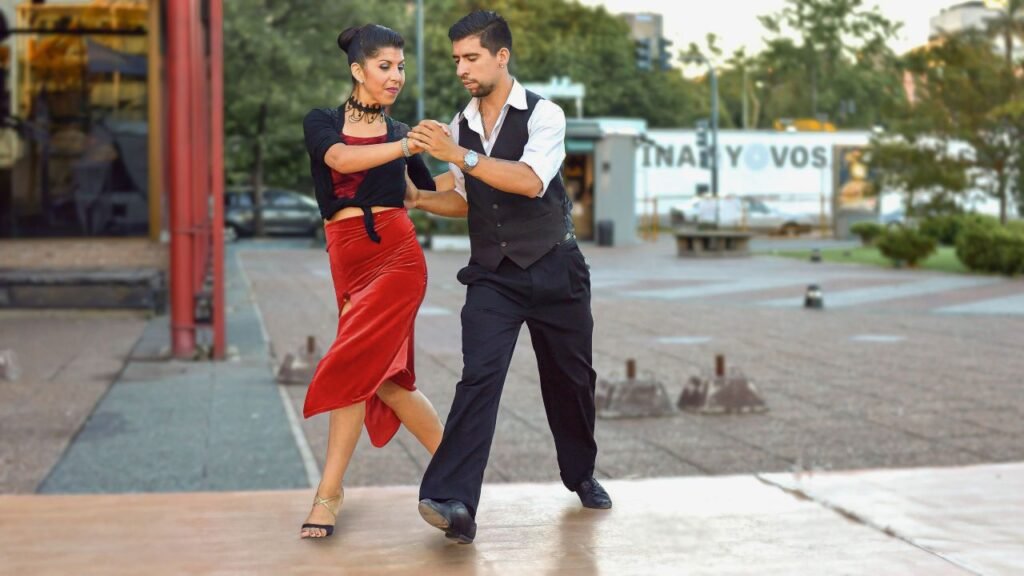
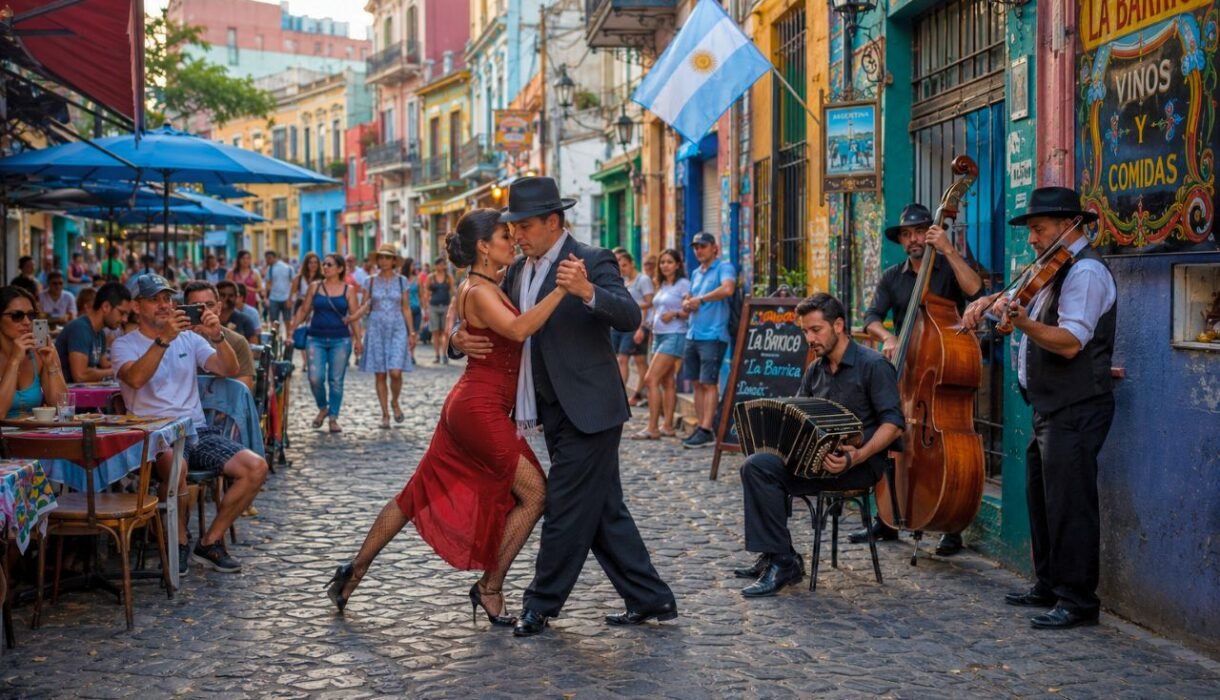
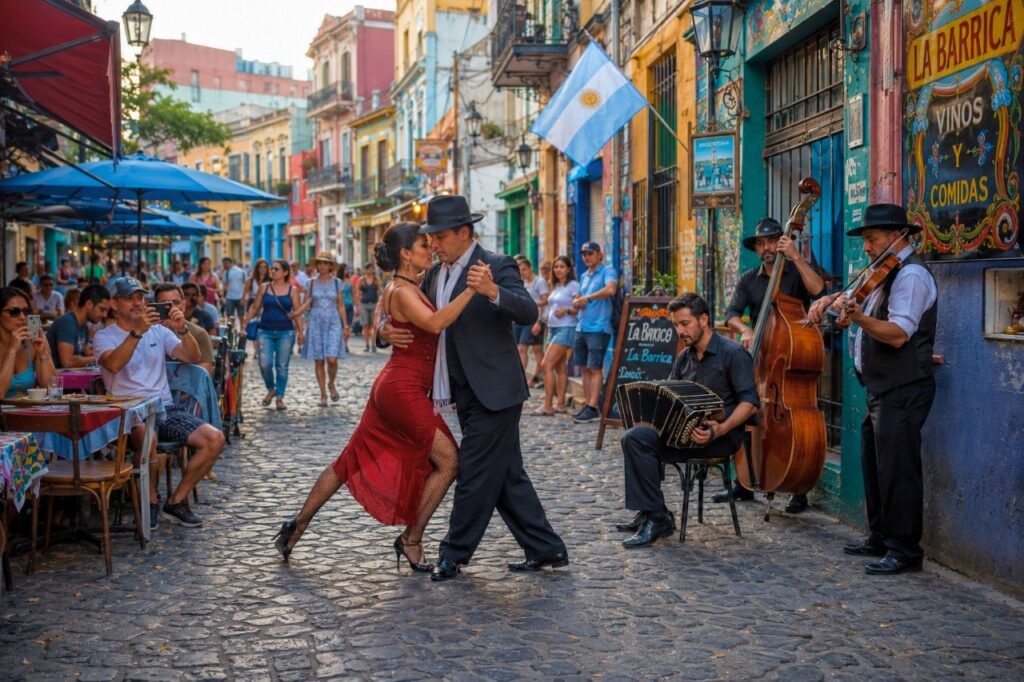
- Tango: Born in the late 1800s in the immigrant port brothels of Buenos Aires, Tango is a sensual, melancholic dance and music style that reflects the longing, heartbreak, and nostalgia of the early settlers. Played on the bandoneón (a specialized accordian-like instrument), tango is a UNESCO Intangible Cultural Heritage asset that continues to live on the streets of historic neighborhoods like San Telmo and La Boca.
- Folklore Music: Away from Buenos Aires, rural Argentina moves to the rhythm of folklore music. Styles like Chacarera and Zamba, driven by acoustic guitars and the booming bombo legüero drum, celebrate rural life, landscape, and gaucho mythology.
- Visual Arts & Fileteado: Buenos Aires is famous for its architecture, earning it the nickname “The Paris of South America.” A unique local art form is Fileteado—a stylized, decorative painting style featuring swirling lines, stylized flowers, and colorful lettering, traditionally used to decorate local buses, signs, and storefronts, most visibly in the bright streets of Caminito.
Summary
The culture of Argentina is a captivating, multi-layered masterpiece. It is a society profoundly shaped by its European ancestry, yet deeply anchored to the wild, rugged soul of the South American continent. Through the warm shared warmth of a mate gourd, the slow artistry of the asado, the mournful cry of the bandoneón, and an unmatched zest for life, Argentina offers a rich, diverse, and fiercely passionate cultural landscape that leaves an indelible mark on everyone who experiences it.
At Best Culture Insight, we see culture as the heartbeat of every society—the way people live, connect, and express their identity.