The Gateway of a Nation: Exploring the Culture of the Australian Capital Territory (ACT)
Posted in :

The Australian Capital Territory (ACT) is the political and administrative heart of Australia. Home to the nation’s purpose-built capital, Canberra, the ACT possesses a culture that is distinct from its larger, more boisterous coastal neighbors like Sydney and Melbourne. Often stereotyped as a quiet enclave of politicians and public servants, the ACT actually harbors a deeply intellectual, highly artistic, and vibrantly multicultural community.
The people of the ACT—Canberrans—enjoy a culture shaped by high education rates, a passion for the outdoors, and immediate proximity to the country’s most significant cultural institutions. It is a unique territory where modern, global civic culture operates directly alongside the ancient, enduring heritage of the region’s First Nations custodians.
History & Origins
The cultural evolution of the Australian Capital Territory is a fascinating journey from ancient indigenous landscapes to meticulously planned urban architecture.
For over 21,000 years, the limestone plains, rivers, and alpine mountains of what is now the ACT were cared for by the Ngunnawal and Ngambri peoples. The region was a crucial gathering point where neighboring nations met to trade, perform ceremonies, and harvest bogong moths in the nearby mountains.

Scenic aerial cityscape of Canberra, ACT, Australia’s capital, showcasing urban and natural elements.
The modern history of the territory began as a compromise. Following the federation of the Australian colonies in 1901, a fierce rivalry broke out between Sydney and Melbourne over which city should become the national capital. To settle the dispute, it was agreed to build a completely new capital within New South Wales, at least 100 miles from Sydney. In 1911, the Federal Capital Territory (later renamed the ACT) was officially established.
An international design competition was launched, won by visionary American architects Walter Burley Griffin and Marion Mahony Griffin. They designed a city integrated beautifully with the natural landscape, featuring grand geometric axes centered around artificial lakes and sweeping vistas—a blueprint that created Canberra’s unique identity as the “Bush Capital.”
Culture, Traditions & Customs
ACT traditions heavily reflect its dual identity as a local community and a national meeting ground.
- Civic & National Customs: Because it houses the Australian Parliament, the Australian War Memorial, and the High Court, the ACT serves as the focal point for major national traditions. The annual Anzac Day Dawn Service at the War Memorial is a profound, solemn rite of passage that draws tens of thousands of locals and visitors alike.
- The Festival State of Mind: Canberrans aggressively celebrate their distinct seasons. The most famous local custom is Floriade, a month-long celebration of spring where millions of flowers bloom along the shores of Lake Burley Griffin. In autumn, the city hosts the Canberra Balloon Spectacular, where hot air balloons float over the parliament house, alongside the Enlighten Festival, which illuminates architectural masterpieces with vivid projection art.
Languages & Communication
English is the primary language spoken across the territory. Because of the high concentration of academics, diplomats, and defense personnel, the local English dialect is typically precise and formal, though standard Australian slang remains prevalent.
However, the ACT has a highly specific “political vernacular” that has seeped into everyday community speech:
- “The Bubble”: A term used by locals to describe the insular, political world of Parliament House, separating it from the everyday lives of Canberrans.
- “The Griffins”: Refers directly to the architects Walter and Marion Griffin, whose names are invoked constantly when discussing local urban layout and design.
Crucially, there is a strong cultural movement to respect and preserve the local Indigenous linguistic heritage. The Ngunnawal greeting “Yuma” (Hello) is increasingly used in schools, public services, and official territory welcomes. Due to a massive diplomatic presence, over 100 foreign languages are spoken in embassies across the city daily.
Geography
The ACT is the smallest self-governing territory in Australia, completely surrounded by the state of New South Wales. Despite its small size, its geography dictates a unique lifestyle. The northern part of the territory is dominated by the undulating volcanic plains of the Canberra basin, centered around the sprawling waters of Lake Burley Griffin.
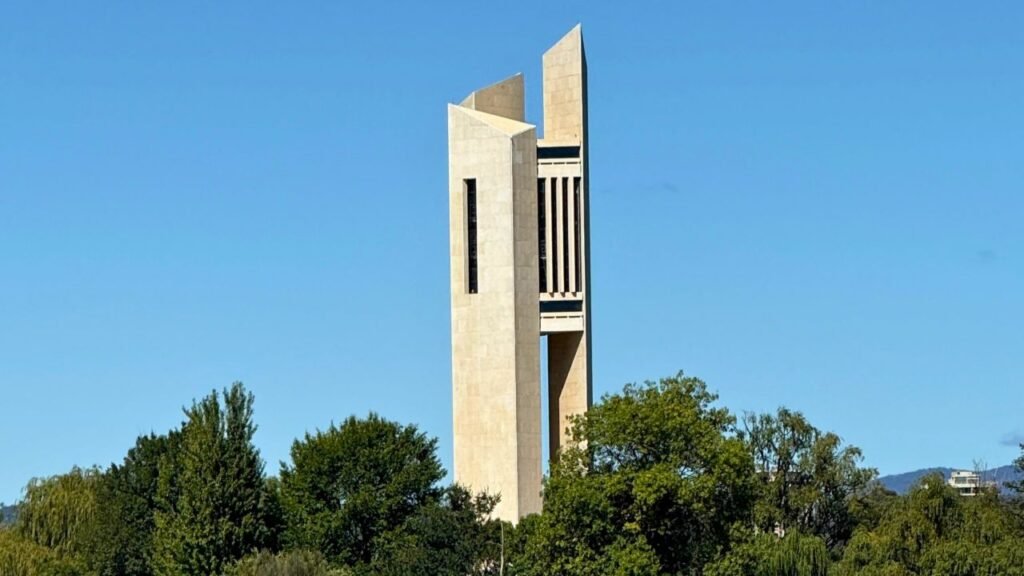
Canberra, Australia
The southern and western portions of the ACT transform dramatically into the rugged, forested peaks of the Namadgi National Park, which forms part of the Australian Alps. This close relationship with nature means that wilderness trails, alpine hiking, and native wildlife are an integral part of daily life for locals.
Economy
The economic culture of the ACT is remarkably stable, insulated from many of the financial booms and busts experienced by industrial or mining-heavy states.
- The Public Sector: The single largest employer in the territory is the Australian Public Service (APS) and the Department of Defence. This has created a professional, service-oriented community culture.
- Knowledge & Innovation: The ACT boasts the highest average income and lowest unemployment rate in Australia. Its economy is deeply tied to tertiary education and research, anchored by institutions like the Australian National University (ANU).
- Agritourism: The surrounding territory hills host a boutique cool-climate wine industry and specialized black truffle farms, which are massive culinary economic drivers.
Politics
Politics is not just an industry in the ACT; it is the fabric of the community. Canberrans are highly politically engaged, frequently participating in rallies, policy debates, and community forums.
The local territory government is famously progressive, often acting as a social laboratory for the rest of Australia. The ACT was the first Australian jurisdiction to legalize voluntary assisted dying, decriminalize the personal possession of small amounts of illicit substances in favor of a health-led approach, and achieve 100% renewable electricity sourcing. This environment breeds a culture heavily focused on social justice, environmental sustainability, and human rights.
Ethnic Groups
The demographic makeup of the ACT is profoundly international. While Anglo-Celtic roots remain prominent, the territory is a highly cosmopolitan melting pot.
Nearly one-third of the ACT population was born overseas. Because of the city’s universities and its role as the diplomatic capital of Australia—hosting over 80 international embassies and high commissions—there are well-established communities of British, Chinese, Indian, Italian, and Vietnamese residents. This global presence creates a highly tolerant, culturally diverse community.
Beliefs & Values
The cultural worldview of the ACT is deeply progressive, highly analytical, and heavily secular, with a vast majority of the population identifying as having no religious affiliation in national censuses.
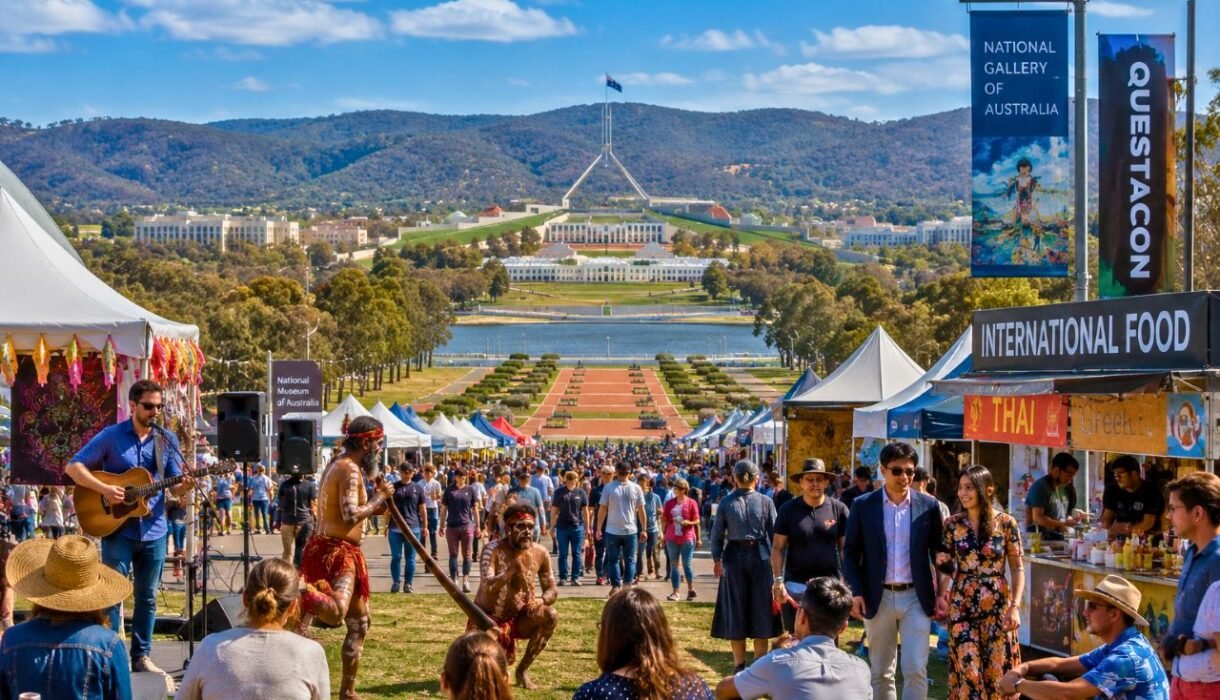
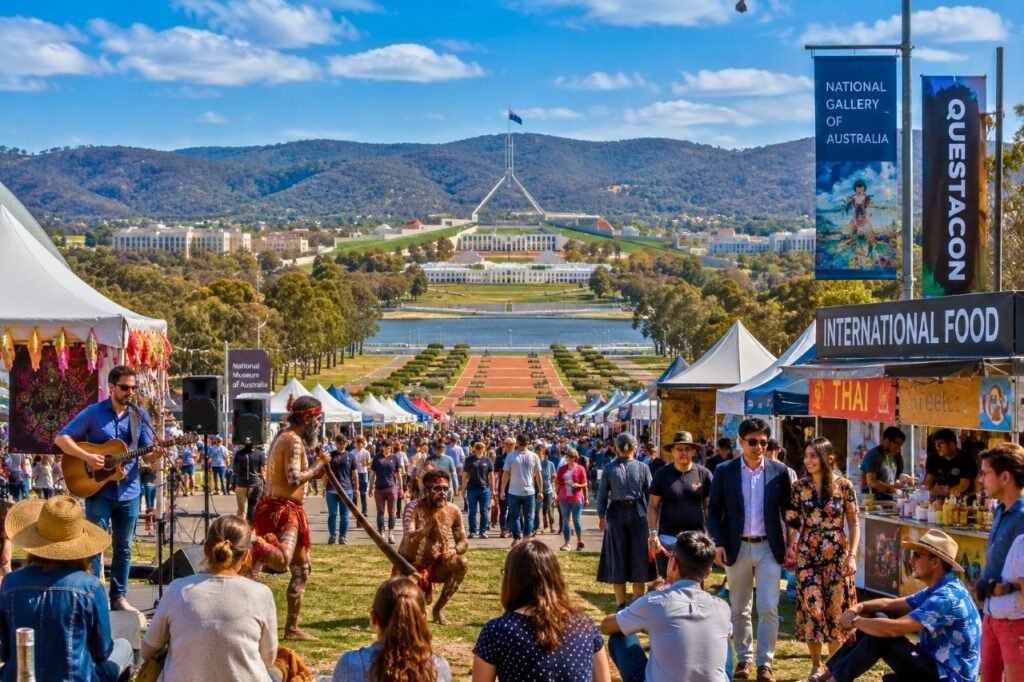
However, pluralism is fiercely protected. The National Multicultural Festival, held every February, draws hundreds of thousands of people to celebrate cultural expression without religious or ethnic friction. Simultaneously, spiritual respect for the land is championed by the Ngunnawal and Ngambri people, whose ancestral beliefs center on the sacred preservation of the Murrumbidgee River systems and the surrounding mountain ranges.
Food & Cuisine
Food culture in the ACT is incredibly sophisticated, leaning heavily on a “paddock-to-plate” ethos and high-end multicultural dining.
- Cool-Climate Viticulture: The region’s cool climate makes it a premier destination for elegant Shiraz Viognier and crisp Rieslings.
- The Black Truffle: The cold winter climates of the ACT are ideal for harvesting premium black truffles. The annual winter truffle hunt is a major local cultural tradition, where dogs track the subterranean delicacies, which are then used across local fine-dining establishments.
- The International Food Scene: Areas like Braddon and the Kingston Foreshore host vibrant coffee and culinary hubs. Because of the global diplomatic community, Canberra boasts incredibly authentic global cuisines, ranging from Ethiopian and Nepalese to high-end pan-Asian fusion.
Clothing & Symbols
Given Canberra’s high altitude, the climate features scorching hot summers and freezing, frosty winters—a stark contrast to Australia’s coastal capitals.
- Attire: The local wardrobe is defined by functional elegance. Corporate and political attire (“the suit”) is standard on weekdays around the Parliamentary Triangle. However, during the icy winters, the unofficial local uniform shifts heavily to premium wool coats, scarves, and high-quality outdoor wear.
- Symbols: The official floral emblem is the Royal Bluebell, a delicate purple-blue wildflower that grows natively in the territory’s cooler mountain regions. The animal emblem is the Gang-gang Cockatoo, a distinctive slate-grey bird with a bright red head. The ACT flag features the traditional colors of blue and gold, alongside the municipal coat of arms.
Music, Dance & Art
As the home of the nation’s treasures, the ACT is an absolute powerhouse for arts and culture.
- The National Institutions: The National Gallery of Australia (NGA) holds the world’s largest collection of Aboriginal and Torres Strait Islander art, including the iconic Aboriginal Memorial installation. The National Portrait Gallery and National Museum of Australia act as cultural mirrors, reflecting the country’s complex history.
- Grassroots Performance: Beyond the grand national institutions, the ACT has a fierce community arts scene. The Street Theatre and the Canberra Theatre Centre nurture local playwrights, contemporary dancers, and indie musicians. Classical music is anchored by the Canberra Symphony Orchestra and the ANU School of Music, producing top-tier avant-garde compositions.
Summary
The culture of the Australian Capital Territory is an elegant blend of natural beauty, political history, and worldly diversity. It is a territory built on intellectual curiosity, environmental stewardship, and a shared appreciation for global perspectives. By honoring its ancient Ngunnawal foundations while managing the civic pulse of modern Australia, the ACT has cultivated a sophisticated, inclusive, and deeply engaged society that proudly showcases the best of the nation to the world.
At Best Culture Insight, we see culture as the heartbeat of every society—the way people live, connect, and express their identity.