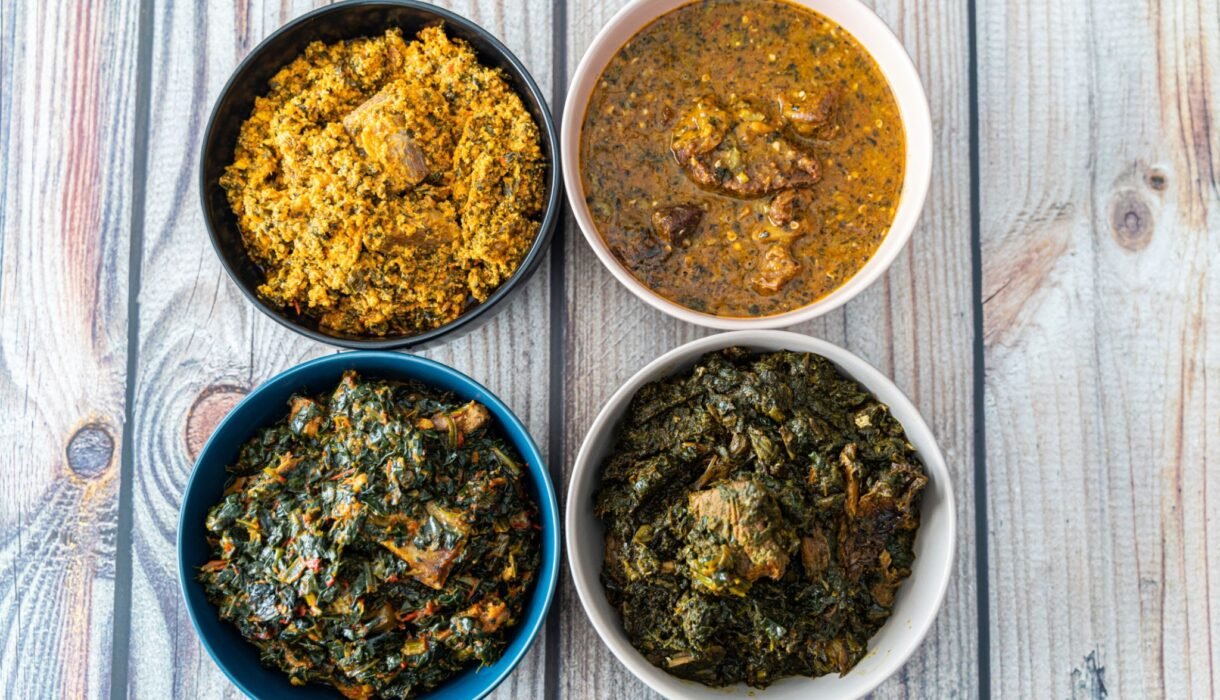

In Nigerian culinary culture, few topics spark as much fiery passion as determining the undisputed king of soups. Across dining tables, festive gatherings, and online food forums, a legendary rivalry persists among four heavyweights: Egusi, Ogbono, Banga, and Afang. Each soup boasts a fiercely loyal fanbase, distinct flavor profile, and deep regional heritage. Together, they form the cornerstone of West African swallow delicacies, sparking a delicious debate that shows no sign of ending.
Egusi: The Undefeated People’s Champion
If popularity were measured purely by widespread reach, Egusi would claim the crown without contest. Made from ground protein-rich melon seeds, palm oil, bitterleaf or spinach, and an array of meats and seafood, Egusi transcends regional boundaries. Its nutty aroma and grainy texture pair seamlessly with nearly every swallow, from pounded yam to eba. Because it is served everywhere from street food stalls to high-end diplomatic banquets, its supporters argue that Egusi is the true national soup.
Ogbono: The Silky Master of Texture
Standing in sharp contrast to Egusi’s coarse texture is Ogbono, a soup celebrated for its distinct mucilaginous, slippery consistency. Crafted from ground wild mango seeds (Irvingia gabonensis), Ogbono cooks into a dark, rich broth that coats every morsel of food. Fans revere it for its comfort-food quality and effortless pairing with morsels of fufu or semovita. Its lovers insist that no other dish matches the comforting feel and deep, earthy flavor profile that a well-cooked pot of Ogbono provides.
Banga: The Aromatic Jewel of the Delta
Hailing from the Niger Delta region, Banga soup (also known as Ofe Akwu) introduces an unparalleled depth of flavor born from fresh palm fruit extract. Infused with specialized indigenous spices like beletete leaves, bush pepper, and dried catfish or fresh tilapia, Banga delivers a sweet, savory, and aromatic richness. Loyalists argue that Banga is not just a meal, but a sophisticated culinary experience that elevates palm fruit to an art form, especially when enjoyed with starch or pounded yam.
Afang: The Nutritious Pride of the South-South
Originating from the Efik and Ibibio peoples of Cross River and Akwa Ibom states, Afang soup is a masterclass in combining wild greens with rich seafood. The dish relies on finely shredded wild Afang leaves (Gnetum africanum) pounded together with fresh waterleaves, creating a dark, textured vegetable soup loaded with stockfish, periwinkles, and smoked fish. Afang enthusiasts argue that its complex balance of natural crunch, rich oils, and nutrient density puts it in a class entirely above the rest.
The Science Behind the Standoff
What keeps this debate alive is that each soup excels in a completely different sensory category. Egusi offers unmatched versatility and crunch; Ogbono delivers a smooth and comforting glide; Banga brings aromatic depth and richness; while Afang provides fresh, herbaceous texture and nutritional power. Because food preference is deeply tied to personal nostalgia, childhood memories, and regional identity, no single contender can permanently claim victory.
A Culinary Tradition Where Everyone Wins
Ultimately, the unresolved battle between Egusi, Ogbono, Banga, and Afang is a celebration of West Africa’s incredible gastronomic diversity. Rather than dividing food lovers, this friendly rivalry highlights the rich variety of ingredients, cooking techniques, and cultural heritage present in the region. Whether you prefer the nutty warmth of Egusi or the herbal richness of Afang, one truth remains clear: every seat at this table offers a winning experience.