The Cultural Tapestry of Tasmania (lutruwita): Island of Wilderness, Art, and Ancient Heritage
Posted in :

Tasmania—or lutruwita in the revived Aboriginal language—is a place unlike anywhere else on Earth. As Australia’s only island state, separated from the mainland by the notoriously rough Bass Strait, its physical isolation has bred a fiercely unique culture. Tasmanians (affectionately known as “Tassies”) are known for their resilience, strong sense of community, and deep, protective connection to their dramatic landscapes. Today, the island is a fascinating collision of ancient Indigenous heritage, colonial history, world-leading environmentalism, and a globally celebrated contemporary art and culinary scene.
History & Origins
The cultural timeline of Tasmania is a story of ancient survival, profound tragedy, and modern resilience.
Ancient Custodianship
40,000+ Years Ago
Aboriginal Tasmanians (the palawa and pakana people) lived as skilled stewards of the land. During the last Ice Age, Tasmania was connected to mainland Australia via a land bridge.
The Great Isolation
~10,000 Years Ago
Rising sea levels flooded the Bass Strait, isolating the palawa people from the mainland. They became the longest socially and geographically isolated human population in history, developing a completely distinct culture.
British Colonization
1803
The British established a penal colony known as Van Diemen’s Land. The island’s culture shifted dramatically as it became a harsh, punitive settlement for convicts.
The Black War
1820s – 1832
A period of devastating frontier violence, disease, and forced removal drastically reduced the Aboriginal population. Despite colonial attempts at erasure, Aboriginal Tasmanian lineages survived, particularly through the women of the Bass Strait islands.
The Green Awakening
1970s – Present
A massive cultural shift occurred. Environmental activism birthed the world’s first green political party (the United Tasmania Group) as locals fought to save wild rivers and ancient forests. Simultaneously, a powerful cultural revival of palawa language and traditions began taking shape.
Culture, Traditions & Customs
Tasmanian culture today is deeply tied to the seasons and the environment.
- Rites of Passage: For the palawa people, traditions like shell stringing (creating intricate necklaces from rare maireener shells) and mutton-birding on the offshore islands are vital, continuous cultural practices passed down through generations. Modern smoking ceremonies are now a highly respected staple at official state events and civic gatherings.
- The Festival Calendar: Tasmanians have fully embraced the darkness of their long winters. The Dark Mofo festival, held during the winter solstice in Hobart, is a cultural phenomenon featuring nude solstice swims, towering winter feasts, and avant-garde art. In summer, the Wooden Boat Festival celebrates the island’s deep-rooted maritime heritage.
Languages & Communication
English is the primary language, spoken with a standard Australian accent, though locals use specific idioms. Because it is an island, you will often hear Tasmanians jokingly refer to the mainland as “the North Island.”
However, the most significant linguistic development in Tasmania is palawa kani.
This is a composite Aboriginal language carefully reconstructed from historical records of the original 14 language groups. In palawa kani, capital letters are generally reserved only for people’s names, not place names. Today, dual naming is common, and you will see signs for nipaluna (Hobart), kunanyi (Mount Wellington), and wukalina (Mount William).
Geography
Tasmania’s geography is its defining cultural characteristic. Nearly 40% of the island is protected as national parks and World Heritage sites.
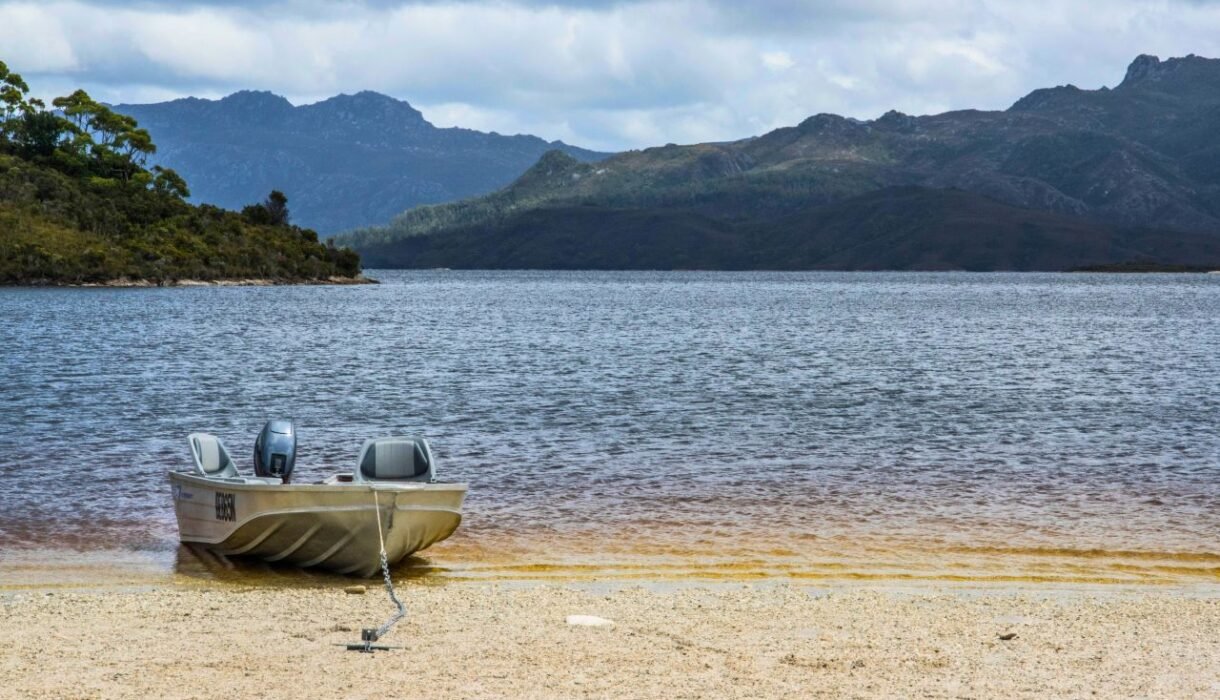
From the ancient, mist-shrouded temperate rainforests of the west coast to the towering dolerite peaks of Cradle Mountain, the land commands respect. On the east coast, the Bay of Fires (larapuna) contrasts pristine white sands with vibrant, orange-lichen-covered granite boulders, meeting the crystal-clear waters of the Tasman Sea.
Economy
The “Apple Isle” was traditionally reliant on forestry, mining, and apple exports. Today, the economy has pivoted toward sustainability and premium quality.
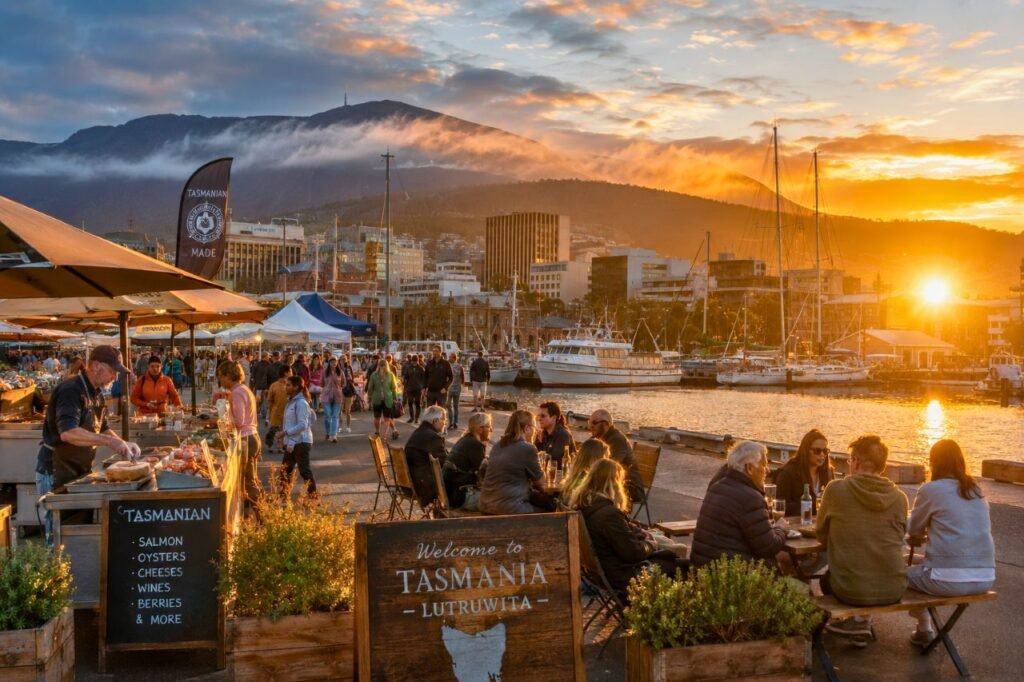
- Ecotourism: Tasmania is a global leader in sustainable tourism, drawing visitors who want to hike the wilderness and experience pristine environments.
- Renewable Energy: Culturally proud of its green credentials, Tasmania runs entirely on 100% renewable energy, powered almost exclusively by a massive network of hydroelectric dams and wind farms.
- Premium Agriculture & Aquaculture: The island’s clean air and water allow it to export world-class Atlantic salmon, beef, and dairy.
Politics
Tasmanian politics are a fascinating paradox. Rural areas can lean historically conservative, yet the island is the undisputed birthplace of global green politics. The fight to save Lake Pedder and the Franklin River in the 1970s and 80s forged a culture of fierce environmental activism. Today, conservation and land management remain the most passionately debated political topics at dinner tables across the state.
Ethnic Groups
Historically, the demographic was heavily composed of Aboriginal Tasmanians and descendants of British and Irish settlers. Following WWII, European migrants (particularly from Italy and Greece) arrived to work on the massive hydroelectric schemes, bringing European culinary traditions to the island. While still less culturally diverse than cities like Sydney or Melbourne, Tasmania is rapidly changing, welcoming growing communities from India, China, Nepal, and the Philippines.
Beliefs & Values
- Aboriginal Spirituality: Palawa cosmological beliefs are deeply intertwined with the landscape and the sky. Many creation stories speak of Muyini (a creator star ancestor) whose actions shaped the mountains, rivers, and laws of the land. The belief that “if we take care of Country, Country will care for us” is paramount.
- Modern Values: Secularism dominates modern Tasmanian life. The overarching cultural values are self-reliance, a lack of pretension, and a deep appreciation for the “slow life.” Tasmanians value quality over speed, whether in crafting a wooden boat or distilling a single malt whisky.
Food & Cuisine
Tasmania is widely considered Australia’s culinary capital, driven by its cool-climate growing seasons and pristine oceans.
- The Curried Scallop Pie: This is the ultimate Tasmanian comfort food. Bakeries across the state wrap plump, locally caught scallops in flaky pastry, swimming in a mildly spiced, creamy yellow curry sauce.
- Seafood: Southern Rock Lobster (locally called crayfish) is a staple at Tasmanian Christmas tables. The island’s cold waters also produce incredibly plump Pacific oysters and premium Atlantic salmon.
- Leatherwood Honey: Unique to the island, this honey is produced by bees foraging in the ancient rainforests of the west coast, yielding a pungent, floral, and deeply complex flavor.
- Drinks: Tasmania produces world-beating Single Malt Whiskies (Sullivans Cove famously won “World’s Best Single Malt”) and exceptional cool-climate Pinot Noir and sparkling wines.
Clothing & Symbols
- Attire: The weather in Tasmania is notoriously volatile—it is entirely possible to experience four seasons in a single hour. Consequently, the unofficial state uniform is the black “puffer jacket.” Layered, practical, and weather-resistant clothing dominates over high fashion.
- Symbols: The state is globally recognized by its unique fauna: the aggressive, carnivorous Tasmanian Devil, and the tragically extinct Thylacine (Tasmanian Tiger), which still serves as a powerful symbol of conservation. The floral emblem is the Tasmanian Blue Gum.
Music, Dance & Art
The cultural landscape of Tasmania was permanently altered in 2011 with the opening of MONA (The Museum of Old and New Art) in Hobart.
Described by its eccentric founder David Walsh as a “subversive adult Disneyland,” MONA is an underground, labyrinthine museum that challenges taboos around death, sex, and society. It single-handedly transformed Hobart from a sleepy harbor town into a global cultural destination. Beyond MONA, the island boasts the world-class Tasmanian Symphony Orchestra and a thriving grassroots folk and indie music scene heavily inspired by the island’s maritime and logging history.
Summary
Tasmanian culture is a masterclass in resilience and reinvention. It is a society that honors the ancient, unbroken connection of the palawa and pakana people to lutruwita, while embracing a modern identity built on environmental stewardship, avant-garde art, and world-class gastronomy. Separated from the rest of the world by the roaring ocean, Tasmania has cultivated a deeply authentic, unpretentious culture that celebrates the wild, the slow, and the spectacular.
At Best Culture Insight, we see culture as the heartbeat of every society—the way people live, connect, and express their identity.