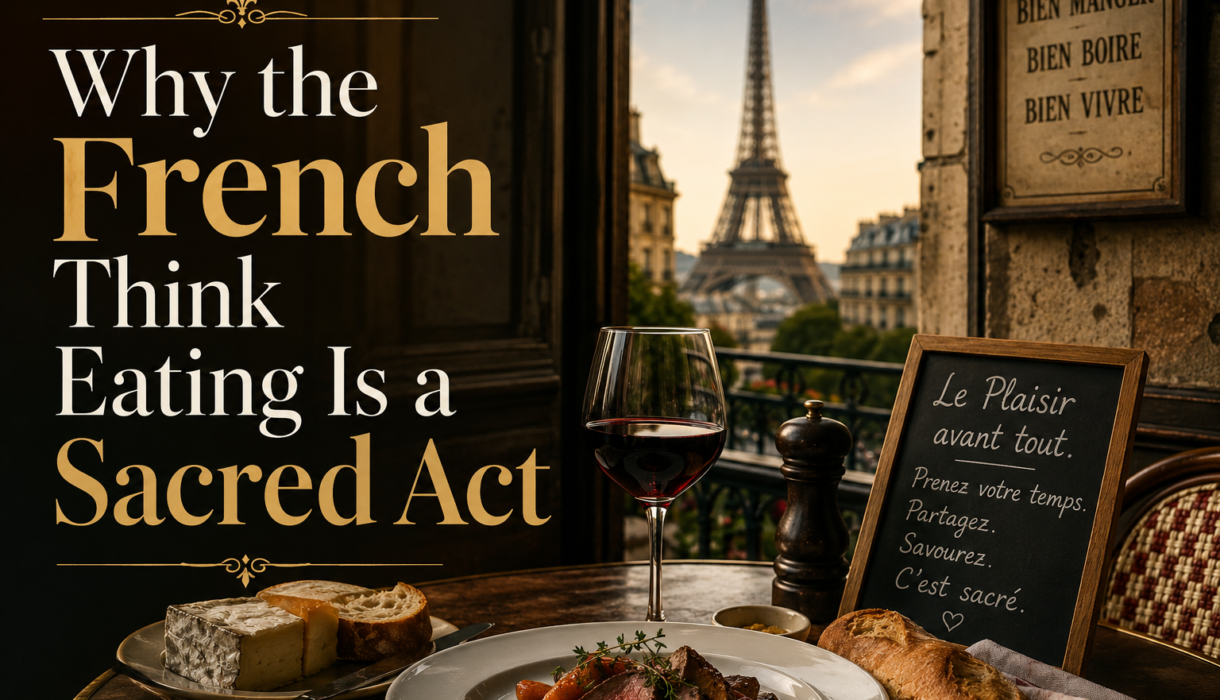

In many parts of the world, eating has become a functional necessity—a quick fuel stop rushed between work meetings or consumed mindlessly in front of a digital screen. In France, however, dining is treated as an elevated art form, a revered social ritual, and a foundational pillar of national identity. The French do not simply eat to satisfy physical hunger; they engage in a deliberate, multi-sensory ceremony designed to celebrate life, family, and cultural heritage. This reverent approach to the table is so profound that UNESCO officially inscribed the “Gastronomic Meal of the French” onto its Intangible Cultural Heritage list, recognizing that for the French nation, dining is truly a sacred act.
The Art of Convivialité: Connection Over Consumption
At the heart of French culinary philosophy is the concept of convivialité—the deep, joyful art of living and eating together. A French meal is never just about the food on the plate; it is an intentional space created for lively conversation, emotional bonding, and human warmth. Eating alone or rushing through a meal is generally discouraged because it strips food of its primary social purpose. By setting aside multi-course lunches and long family dinners, the French transform the dining table into a sanctuary where relationships are nurtured, news is shared, and community ties are continually strengthened.
Respect for the Terroir: A Sacred Bond With the Land
The reverence the French hold for food stems directly from their deep connection to terroir—a concept describing how a region’s unique soil, climate, and geography shape the flavor of its produce. From the creamy cheeses of Normandy to the robust wines of Bordeaux, French culture honors the origin and craftsmanship behind every ingredient. This reverence manifests in a commitment to seasonal, locally sourced foods purchased fresh from neighborhood markets rather than heavily processed, mass-produced items. When the French sit down to eat, they are paying homage to the land, the seasons, and the generations of dedicated artisans who produced their meal.
Structure, Timing, and the Ritual of the Table
What makes French dining feel almost liturgical is its strict adherence to structure, timing, and traditional sequence. A formal French meal follows a deliberate flow: an apéritif to awaken the palate, a starter (entrée), a main course (plat principal), a distinct cheese course, dessert, and a finishing espresso or digestif. Snacking continuously throughout the day is culturally frowned upon, preserving the appetite so that scheduled meal times remain sacred, uninterrupted events. This structured pacing encourages mindfulness, allowing diners to fully savor every flavor pairing and savor the company without feeling rushed.
Preserving Mindfulness in a Fast-Paced World
In an era dominated by fast food and constant distraction, France’s steadfast devotion to the dining table serves as a powerful defense of slow living and presence. By refusing to compromise on mealtimes, the French demonstrate that pausing to nourish both body and soul is an essential human right rather than a luxury. Choosing to sit down, uncork a bottle of wine, and engage in meaningful dialogue day after day is more than a culinary preference. It is an enduring cultural manifesto declaring that the simplest, most sacred moments in life are found right around the dinner table.