Bolivia’s Cholitas: The Indigenous Women Who Became Wrestling Stars
Posted in :

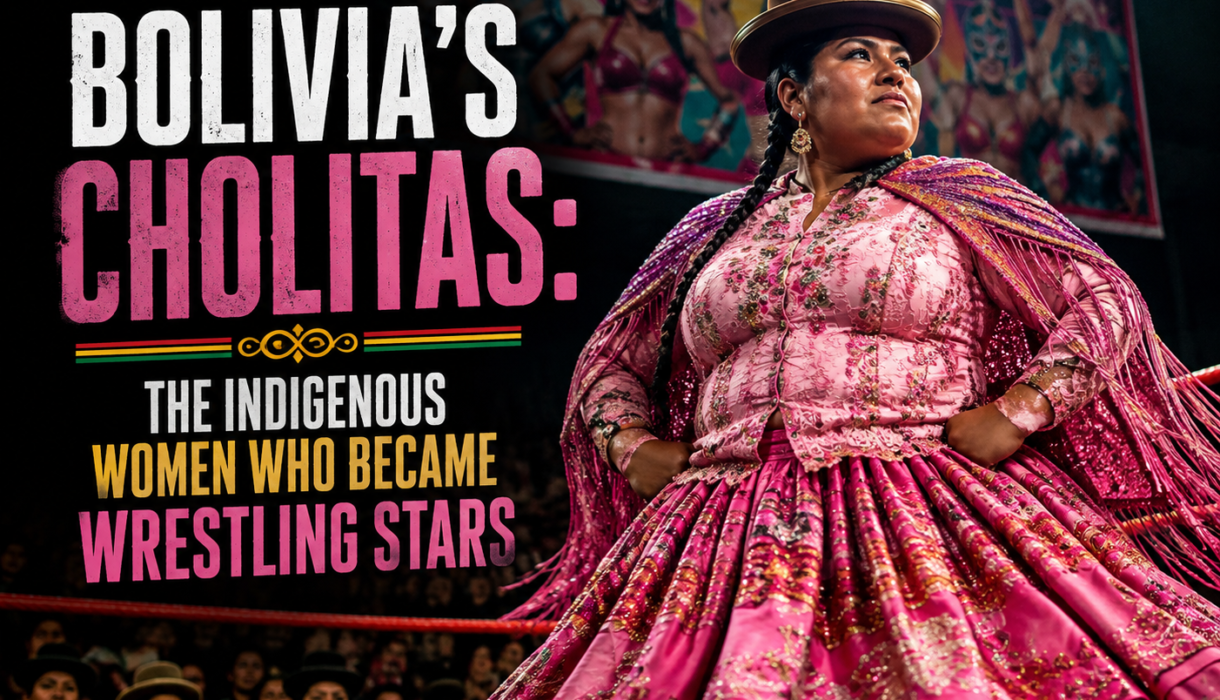
In the high-altitude city of El Alto, Bolivia, a unique sporting phenomenon combines dramatic entertainment with cultural liberation. Known as the Cholitas Luchadoras, these Indigenous Aymara and Quechua women take to the professional wrestling ring in full traditional attire—complete with multi-layered pleated skirts (polleras), woven shawls, long braided hair, and distinctive bowler hats. What began in the early 2000s as a creative stunt to boost dwindling lucha libre attendance has transformed into a powerful platform for cultural pride. Today, these women are celebrated international stars who use athletic theater to rewrite their place in modern Bolivian society.
Reclaiming a History of Marginalization
For centuries, the term chola or cholita was used as a derogatory slur aimed at Indigenous women in Bolivia, symbolizing poverty and social exclusion. Under strict societal norms, women wearing traditional polleras faced systematic discrimination, often barred from entering certain public squares, entering upscale establishments, or accessing higher education. However, rather than shedding their cultural clothing to fit into Westernized spaces, these resilient athletes stepped directly into the squared circle wearing their heritage with pride. By performing acrobatic moves like flying kicks and arm-drags while enveloped in heavy, colorful fabric, they transformed a uniform of historical oppression into a fierce badge of honor.
High-Flying Acrobatics Meets Cultural Tradition
Inside the ring, a Cholita wrestling match is a theatrical battle of good versus evil inspired by Mexican lucha libre. The performers are divided into two categories: the virtuous técnicas who fight clean, and the rule-breaking rudas who delight in tormenting their opponents and stirring up the audience. Executing complex maneuvers in a heavy pollera—a garment made of yards of dense fabric—requires exceptional physical strength, agility, and stamina. Spectators cheer as these formidable athletes hurl themselves off the turnbuckles, demonstrating that traditional attire poses no limit to world-class athleticism.
A Global Movement for Female Empowerment
The impact of the Cholitas Luchadoras extends far beyond Sunday entertainment in El Alto. Outside the ring, many of these women are mothers, street vendors, students, and community leaders who view wrestling as a tool to confront domestic violence and challenge deep-seated gender stereotypes. Their visible success on international stages has helped spark broader social change across Bolivia, where Indigenous women now hold influential roles in banking, politics, and higher education. By body-slamming prejudice in front of roaring crowds, the Cholitas have proved that indigenous identity and female empowerment are forces to be reckoned with.