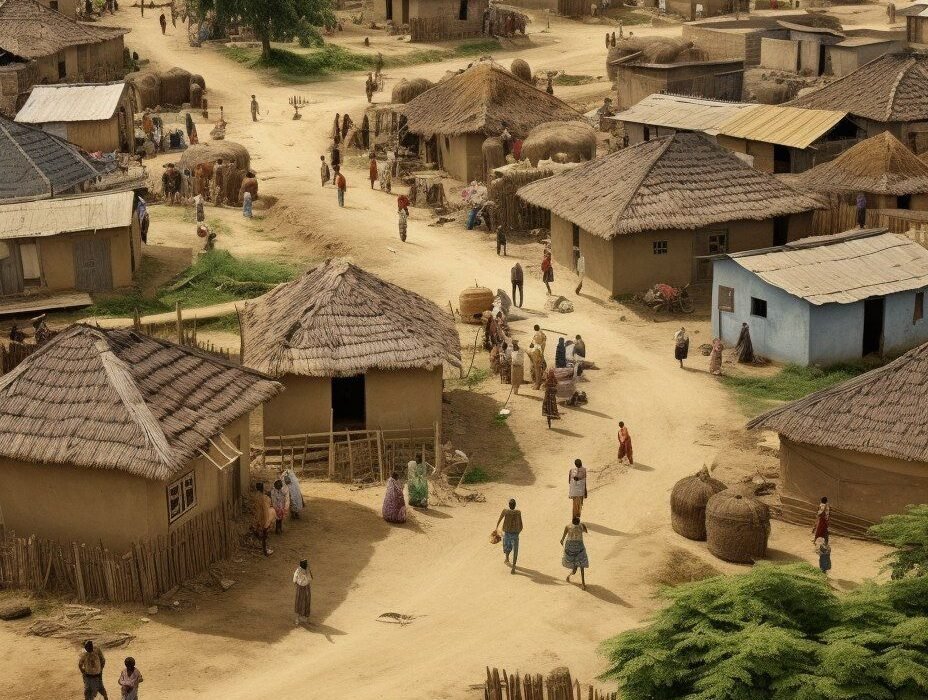

In pre-colonial Africa, the social fabric of the Igbo people was famously decentralized, yet remarkably cohesive. Unlike societies governed by centralized monarchs, old Igbo society relied on a web of kinship, shared values, and mutual dependency to maintain order and progress. This unique social structure fostered an extraordinary sense of community where individual identity was deeply anchored in the collective. Understanding why this communal bond was so unbreakable reveals the core principles that sustained one of West Africa’s most resilient cultures.
1. The Philosophy of Umunna and Shared Kinship
At the heart of Igbo communal strength was the concept of Umunna, a patrilineal kinship network that bound extended families together. The Umunna served as the primary administrative and judicial unit, ensuring that no individual faced life’s challenges alone. Disputes were settled collectively by elders beneath the shade of the village square, prioritizing reconciliation over punishment. Because everyone belonged to a clearly defined lineage, social safety nets were inherent; the success of one person was celebrated by all, and the burden of tragedy was distributed across the entire kindred.
2. Economic Interdependence and Cooperative Labor
The agrarian economy of old Igboland made community a practical necessity for survival. Yam farming, the economic backbone of the society, required intense physical labor during clearing, planting, and harvesting seasons. Through systems like Oru Olu (cooperative farming networks), villagers took turns working on each other’s farms. This economic interdependence meant that isolating oneself was a recipe for poverty, while active participation guaranteed food security. Wealth was measured not just by personal hoarding, but by how many people a man could support and lift out of hardship.
3. Shared Spirituality and Cosmological Accountability
Spirituality in traditional Igbo society was deeply communal, centered around Ala, the earth goddess and keeper of morality. The Igbo believed that individual actions had cosmic consequences for the entire village. Committing an abomination (nso ala) was thought to bring droughts, epidemics, or bad harvests upon the whole community. This shared cosmological accountability created a powerful, self-regulating moral compass. People maintained high ethical standards because protecting the community’s spiritual purity was directly tied to their personal survival and prosperity.
4. Age Grades and Collective Civic Responsibility
The age-grade system (Uke) acted as the executive arm of old Igbo society, grouping peers born within the same period into functional civic units. These age grades were responsible for community development, such as clearing pathways, securing the village, and building marketplace infrastructures. They also enforced discipline among their members, using peer accountability to curb anti-social behavior. Through these structured groups, every citizen had a defined role and a voice, ensuring that civic responsibility was a lifelong commitment that welded the individual to the collective good.