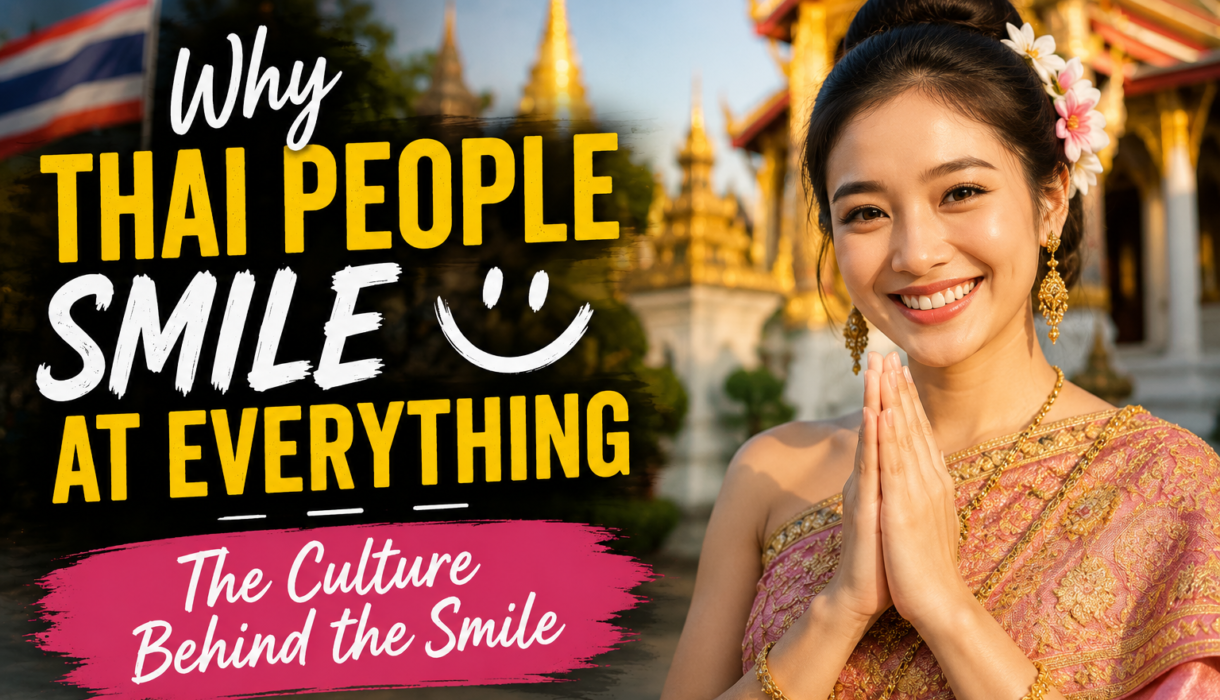

Thailand has long been globally celebrated as the “Land of Smiles,” a reputation that leaves an indelible mark on millions of international travelers visiting Southeast Asia each year. To the uninitiated Western eye, a smile is a simple, direct expression of happiness or friendliness. However, in Thai culture, the act of smiling is an incredibly nuanced, complex form of non-verbal communication that goes far beyond basic joy. Understanding the deeper cultural motivations behind these omnipresent smiles reveals a society built on emotional resilience, social harmony, and profound respect.
The Diverse Vocabulary of the Thai Smile (Yim)
In the Thai language, there are nearly thirty distinct words used to categorize different types of smiles, collectively known as Yim. Rather than a singular reflex, a smile functions as a silent vocabulary. For instance, Yim Thak Thaai is the polite smile shared with a stranger, while Yim Haeng is a dry, self-deprecating smile used to mask embarrassment or financial discomfort. By utilizing these varied facial expressions, Thai people can communicate intricate layers of meaning—ranging from genuine admiration to gentle disagreement—without ever having to voice a potentially disruptive word.
Saving Face and Maintaining Social Harmony
The foundational pillar driving this behavior is the deeply ingrained cultural imperative to “save face” and maintain interpersonal harmony (Jai Yen). Heavily influenced by Buddhist philosophies, Thai society places a premium on avoiding open confrontation, public anger, or the outward expression of negative emotions. Displaying overt distress or irritation is viewed as a breach of politeness and a burden to those around you. Consequently, when faced with an awkward situation, an error at work, or even minor accidents, a Thai person will instinctively smile to soften the tension, protect the dignity of everyone involved, and keep the environment peaceful.
A Psychological Shield and Strategy for Resilience
Beyond its social functions, the Thai smile serves as a powerful psychological mechanism for personal resilience in the face of adversity. When life presents hardships or unexpected difficulties, the cultural attitude dictates that dwelling on uncontrollable misfortune is futile. A specific smile, Yim Yoh-Yae, encapsulates the mindset of “there is no use crying over spilled milk”. By smiling through stressful moments, individuals intentionally signal to themselves and their community that they possess the inner strength to endure, adapt, and move forward gracefully without breaking down.