
Nestled in the heart of the Balkan Peninsula, where the vibrant blue waters of the Adriatic and Ionian seas meet, Albania stands as one of Europe’s most captivating, historically intact secrets. The fascinating Culture of the Albanian people—known natively as Shqiptarët—is an ancient tapestry shaped by an extraordinary lineage that predates many of its modern neighbors. For centuries, this resilient nation has preserved its distinct identity through a profound code of honor, world-class hospitality, and an unshakeable connection to its breathtaking landscapes. From the snow-capped peaks of the Accursed Mountains to the ancient ruins along its sun-drenched coast, Albania is a dynamic crossroads where historical civilizations and contemporary evolution beautifully collide.
History & Origins
The historical lineage of Albania is among the oldest in Europe, tracing its primary roots back to the ancient Illyrians—an Indo-European group of tribes who inhabited the western Balkans since the Bronze Age.
- Antiquity & Empires: The region became a crucial prize for ancient superpowers. It was integrated successively into the Roman and Byzantine Empires, serving as a vital strategic, maritime, and economic bridge across the Mediterranean.
- The Ottoman Era & Skanderbeg: In the 15th century, the Ottoman Empire swept into the Balkans. Albania’s national hero, Gjergj Kastrioti (Skanderbeg), successfully united Albanian princes and held off the massive Ottoman armies for over 25 years. Following his death, Albania spent over four centuries under Ottoman rule, which heavily reshaped its religious and architectural landscape.
- Independence & Modern Rebirth: Albania declared independence in 1912. Following the devastation of World War II, the nation fell into a uniquely strict, self-imposed communist isolation under dictator Enver Hoxha for nearly half a century. In 1991, the country broke free from isolation, initiating a rapid transformation into a vibrant, open democratic society and a rising star in Mediterranean tourism.
Culture, Traditions & Customs
Besa: The Supreme Code of Honor
The undeniable cornerstone of Albanian social morality is Besa—a sacred cultural pledge meaning “to keep a promise” or “word of honor.” Historically rooted in the Kanun (an ancient code of customary law), Besa dictates that an Albanian’s home belongs first to the guest and second to the host. This unshakeable cultural value was famously demonstrated during World War II, when Albanian families risked their own lives to harbor and protect thousands of Jewish refugees, ensuring Albania was one of the few European countries whose Jewish population grew during the war.
Marriage & Family Milestones
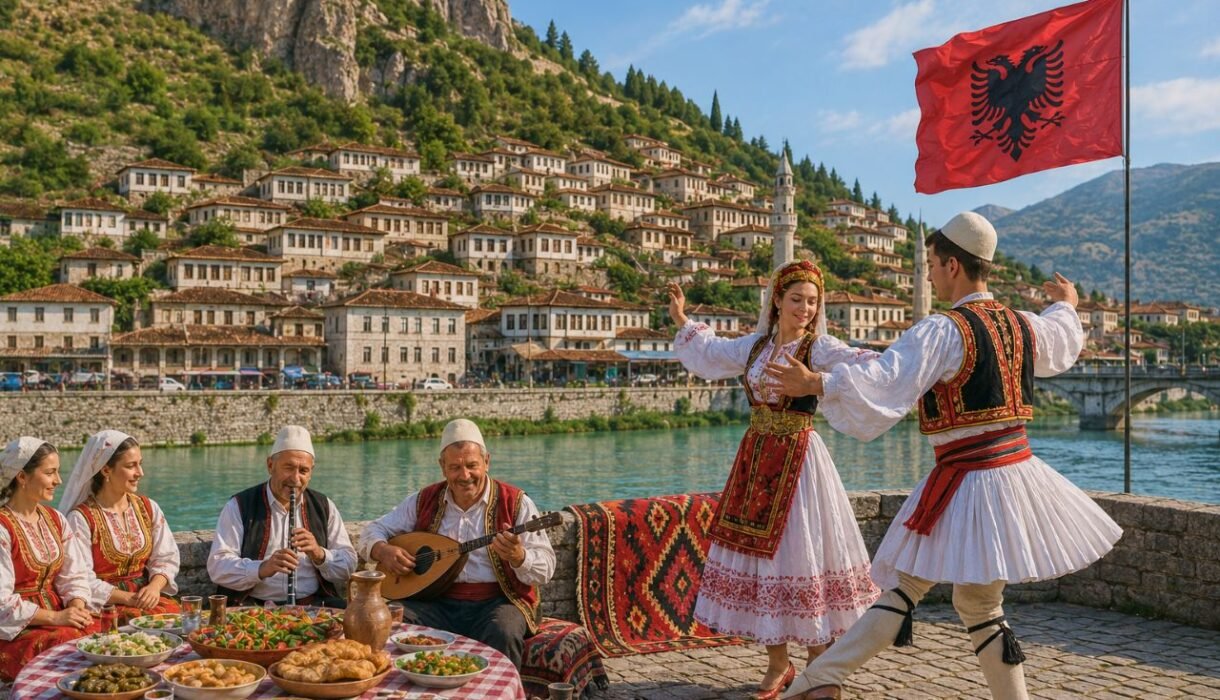
Albanian weddings (Dasma) are legendary, high-energy celebrations that traditionally take place over several days, often featuring separate banquets for the bride’s and groom’s families. The celebrations are filled with traditional circle dancing (Valle) and live folk music. A moving customary highlight includes the exchange of symbolic gifts and heartfelt family blessings as the bride transitions to her new household.
Festivals and Rites of Passage
- Dita e Verës (Summer Day): Celebrated universally on March 14th, this ancient pagan festival welcomes the rebirth of nature. Citizens wear a braided red-and-white string (Verore) on their wrists and share Ballokume—a large, traditional crumbly cookie made from corn flour and sugar.
- Naming Customs: Traditionally, naming a child involved close consultations with family elders or godparents, historically choosing names that reflect strength, nature, or noble Illyrian historical figures to anchor the child to their ancestral soil.
Languages & Communication
A Unique Linguistic Island
The official language is Albanian (Shqip). It occupies its own completely independent branch on the Indo-European language family tree, meaning it has no close living linguistic relatives on earth. The language is split into two primary historic dialects divided by the Shkumbin River:
- Gheg: Spoken predominantly in the rugged north.
- Tosk: Spoken across the south and serving as the foundational basis for modern standardized Albanian.
Greetings & Everyday Etiquette
- Tungjatjeta (May you live long) or a warm Mirëdita (Good day) are standard greetings.
- Faleminderit translates to “Thank you.”
- The Non-Verbal Paradox: A crucial point for travelers is that in traditional Albanian body language, a slight nod can sometimes communicate a negative response (“no”), while a side-to-side shake of the head can indicate agreement (“yes”).
Geography & Natural Treasures
Albania’s geography is a spectacular, diverse playground of rugged mountains, deep lake basins, and white-sand coastlines. Crucially, Albania shares some of Europe’s most important, biodiverse natural treasures side-by-side with its Balkan neighbors:

- Lake Shkodra: This massive, ancient lake is shared proudly between Albania and Montenegro. As the largest lake on the Balkan Peninsula, it serves as a critical, pristine wetland habitat hosting over 270 bird species, including Europe’s last remaining wild pelicans.
- Lake Ohrid: Extending gracefully into eastern Albanian territory near the lakeside town of Pogradec, Lake Ohrid is shared between Albania and North Macedonia. It is one of the oldest and deepest lakes in the world, preserving a unique, millions-of-years-old aquatic ecosystem containing over 200 endemic species.
Economy
Historically localized and agrarian, modern Albania is one of the fastest-growing tourist and service economies in the Balkans.
The primary engine of growth is tourism, driven by global travelers exploring the “Albanian Riviera.” Other critical sectors include hydroelectric power generation, textile manufacturing, and agriculture. The country is a prominent regional exporter of organic olive oil, medicinal herbs, and high-quality citrus fruits.
Politics
Albania is a unitary parliamentary constitutional republic.
The Prime Minister serves as the Head of Government, exercising administrative executive control, while the President serves as the ceremonial Head of State. Legislative power is vested in the unicameral Parliament (Kuvendi), consisting of 140 deputies elected every four years. Albania is a committed member of NATO and is actively progressing through official negotiations for full integration into the European Union.
Ethnic Groups
Albania possesses a largely homogeneous demographic structure, with over 90% of the population identifying as ethnically Albanian. However, its historical position as a regional crossroads means it proudly protects and accommodates several small, culturally distinct minority communities, including Greeks, Macedonians, Vlachs (Aromanians), Romani, and Montenegrins.
Beliefs & Values: A Model of Religious Harmony
The spiritual identity of Albania is celebrated globally as a gold standard of interfaith harmony. The population is beautifully blended across Sunni Islam, Bektashi Islam, Eastern Orthodoxy, and Roman Catholicism.
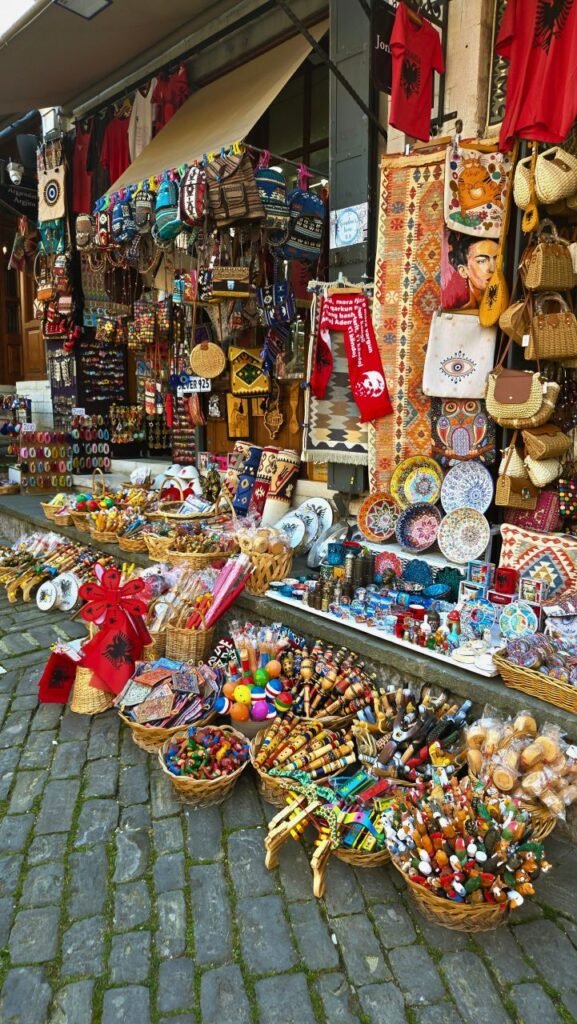
Colorful outdoor market stall showcasing various traditional souvenirs and crafts on cobblestone street – Albania
Rather than a source of division, religious holidays are celebrated universally across communal lines. It is entirely common for a Muslim family to join their Christian neighbors for Easter, and vice versa for Eid, highlighting a national worldview that prioritizes cultural unity and Omenie (humanity) far above sectarian divides.
Food & Cuisine
Albanian cuisine is a flavorful, healthy Mediterranean tradition heavily influenced by Greek, Turkish, and Italian culinary heritages, relying on fresh lamb, seafood, olive oil, and wild herbs.
- Tavë Kosi: The undisputed national culinary treasure. It consists of tender pieces of lamb baked in an earthenware dish with a seasoned mixture of eggs and sour yogurt sauce, seasoned with garlic and butter until it reaches a velvety, soufflé-like consistency.
- Byrek: A comforting pastry made of paper-thin layers of flaky phyllo dough stuffed with savory fillings like wild spinach, salted curd cheese, or minced meat.
- Flija: A traditional northern dish composed of multiple layered crepes brushed with cream and slow-baked over open embers using a metallic dome lid (saç).
Clothing & Iconic World Heritage
Traditional Attire
Albanian traditional dress includes over 200 distinct regional variations. Men traditionally wear the Fustanella (a pleated, white kilt-like garment) or the Qeleshe—a dome-shaped, white felt hat that serves as a universal symbol of Illyrian heritage. Women wear the highly intricate Xhubleta, a bell-shaped, heavy wave-pleated skirt adorned with ancient geometric patterns.
The Crown Jewels of UNESCO World Heritage
Albania holds a uniquely elite position within the “Hidden Balkans,” boasting a superior collection of UNESCO World Heritage cultural sites that surpass many neighboring profiles:
- Butrint: Declared a UNESCO treasure in 1992, Butrint stands as the oldest and most significant archaeological site in the country. Deeply rooted in Greco-Roman antiquity, this exceptional Mediterranean landmark features a well-preserved ancient amphitheater, Roman baths, and Byzantine basilicas.
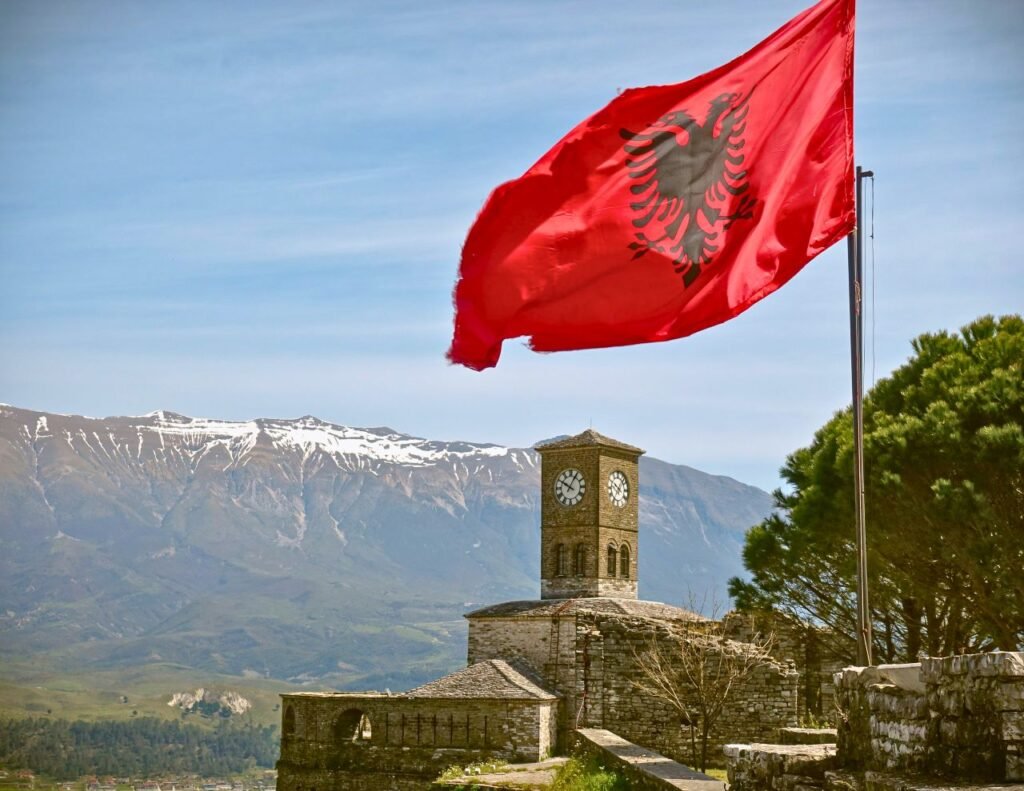
- Gjirokastër and Berat: Known beautifully as the “Museum Cities.” Gjirokastër is celebrated for its imposing stone Ottoman-era fortress-houses, while Berat—the “City of a Thousand Windows”—presents a stunning, tiered architectural ensemble showcasing centuries of peaceful coexistence between Christian and Islamic neighborhoods.
Music, Dance & Art
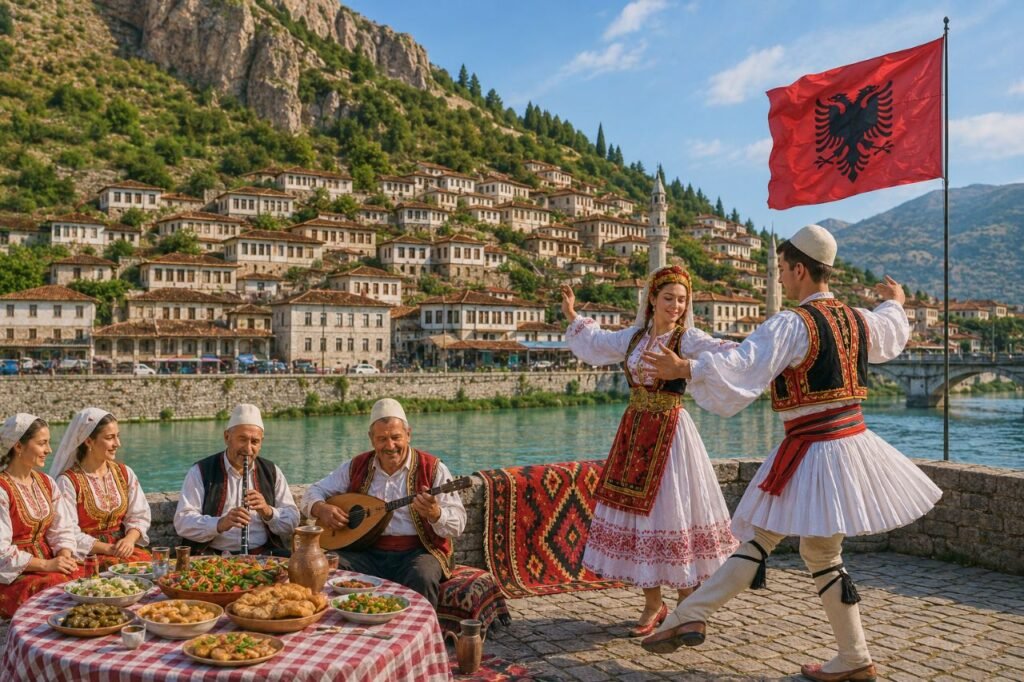
- Iso-Polyphony: Albania’s mesmerizing traditional vocal music is inscribed on the UNESCO Intangible Cultural Heritage list. It features a multi-part vocal structure where a continuous, low-pitched drone background supports soaring, emotionally raw solo melodies.
- The Çifteli: A distinctive acoustic stringed instrument featuring a long neck and only two strings, utilized heavily to play epic narrative folk songs detailing historical battles and legends of honor.
Summary
The culture of Albania is an inspiring celebration of preservation, natural brilliance, and unmatched hospitality. By proudly hosting the oldest Mediterranean archaeological ruins at Butrint, sharing spectacular ecosystems like Lakes Ohrid and Shkodra, and safeguarding an ancient language and code of honor, the Albanian people have secured a distinct, noble position in Europe’s heritage. It is a nation that invites the world to move past superficial boundaries and discover a timeless sanctuary of community, harmony, and resilience.
At Best Culture Insight, we see culture as the heartbeat of every society – the way people live, connect, and express their identity.