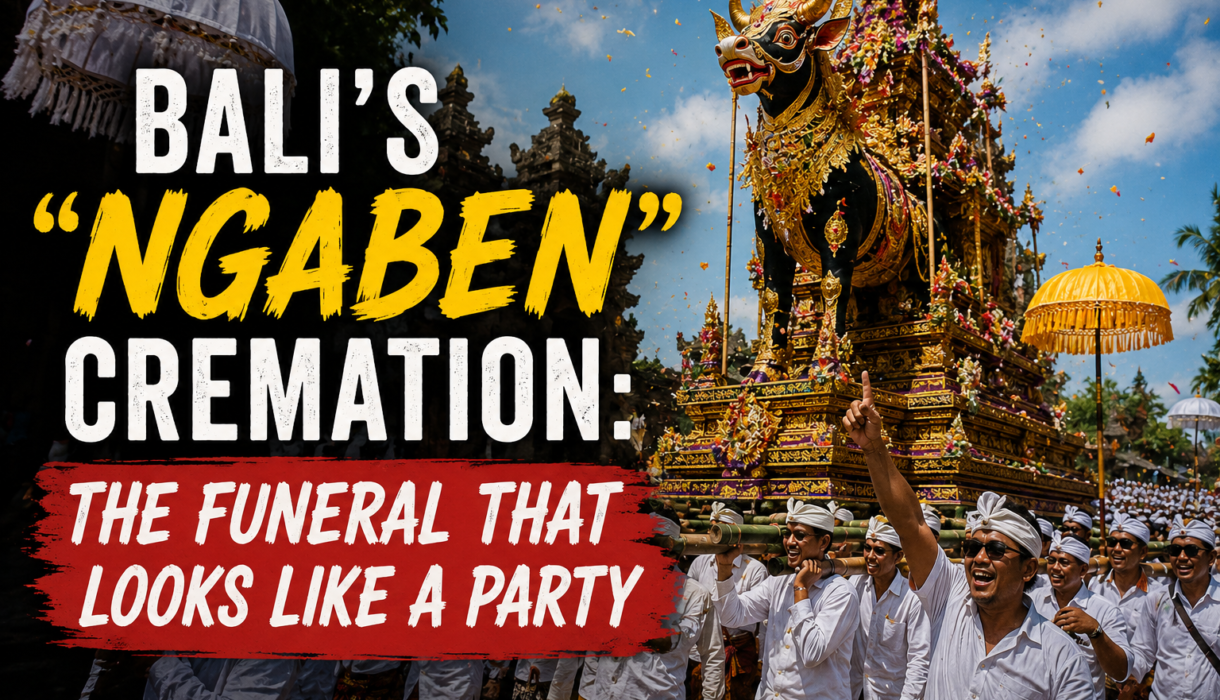

To the Western world, a funeral is traditionally a solemn, quiet affair defined by mourning and tears. However, on the Indonesian island of Bali, the departure of a loved one triggers a vibrant, high-energy spectacle filled with music, elaborate artistry, and mass celebration. This unique ritual is known as Ngaben, the sacred Balinese Hindu cremation ceremony. Rather than a sorrowful goodbye, Ngaben is approached as a joyful send-off. It is widely considered one of the world’s most fascinating cultural phenomena, transforming the concept of grief into a communal expression of ultimate liberation and joy.
The Spiritual Essence: Liberating the Soul
At the core of Ngaben is the deep-rooted Balinese Hindu belief in reincarnation and the cyclical nature of life. The Balinese view the physical body merely as a temporary vessel composed of five basic elements, known as the Panca Maha Bhuta. When a person passes away, their soul (Atman) is believed to remain trapped near the earth until the physical shell is entirely destroyed. Grief and weeping are actively discouraged during the ceremony because heavy hearts are thought to tether the soul to the earthly realm. Fire acts as the ultimate agent of purification, swiftly releasing the soul so it can return to the cosmos or be reborn.
Artistic Mastery and Massive Processions
The visual centerpiece of a Ngaben ceremony involves an extraordinary display of local craftsmanship. Families spend weeks constructing a massive, multi-tiered tower called a Wadung or Bade, alongside a giant, hollow animal sarcophagus—usually a black bull (Lembu) for men or a mythical winged cow for women. On the day of the cremation, hundreds of villagers carry these towering structures through the streets. The procession is intentionally chaotic and boisterous; carriers spin the towers around at crossroads and shake them vigorously to confuse the deceased’s spirit so it cannot find its way back home to haunt the living.
A Symphony of Sound and Community Connection
A Ngaben procession is entirely sound-driven, defined by the rhythmic, clanging melodies of a traditional Gamelan orchestra, specifically the Bleganjur style of music. The energetic drumming and cymbal crashes serve two crucial purposes: they psych up the tower carriers pushing through the crowds and ward off negative spiritual energies. What makes the event feel like a massive block party is the profound sense of Gotong Royong, or mutual community assistance. An entire village unites to fund, build, and celebrate the ritual, turning a potentially devastating financial and emotional burden for a single family into a beautiful, shared triumph.
The Sacred Fire and Final Release
The carnival-like atmosphere culminates at the Pura Dalem (the temple of the dead) or the local cremation grounds. The body of the deceased is carefully transferred into the belly of the animal sarcophagus. Under the guidance of a high priest, holy water is sprinkled, offerings are placed, and the entire structure is set ablaze. As the massive fire roars into the sky, the mood shifts from chaotic excitement to a peaceful, meditative closure. The ashes are later collected and scattered into the ocean, completing the spiritual cycle and ensuring the soul is beautifully free to embark on its next cosmic journey.