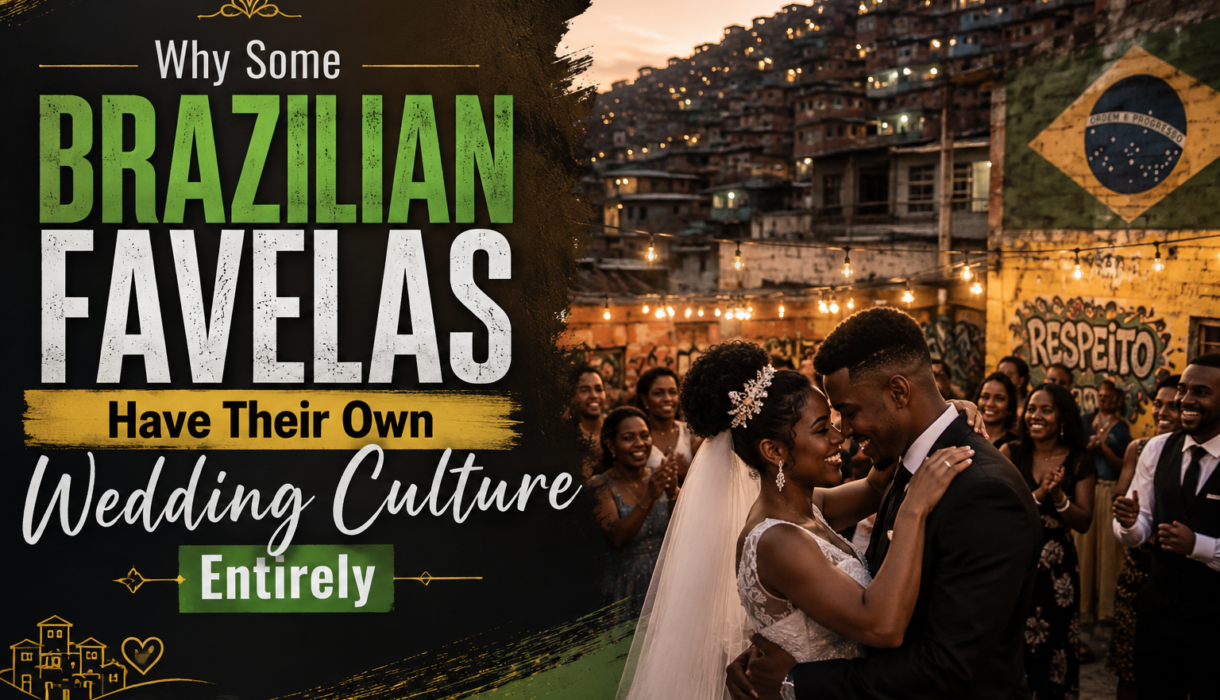

In many of Brazil’s working-class hill communities, getting married looks vastly different from traditional high-society weddings in Rio de Janeiro or São Paulo. Far from formal banquet halls and rigid cathedral protocols, several favelas have developed their own distinct wedding traditions born out of tight-knit geography, resourceful economics, and vibrant local pride. These celebrations transform narrow alleys into lively dance floors and turn private family milestones into neighborhood-wide festivals. Understanding why these communities created their own matrimonial customs reveals a deep story of resilience, cultural identity, and social solidarity.
Communal Mass Weddings (Casamentos Comunitários)
One of the most defining aspects of favela wedding culture is the widespread reliance on collective ceremonies. High legal fees and venue costs historically made individual civil marriages difficult to access for low-income couples. In response, local community associations, churches, and social NGOs regularly organize mass weddings (casamentos comunitários) where dozens—or even hundreds—of couples tie the knot simultaneously. By sharing expenses for officiants, photography, and decorations, couples secure official legal protections while celebrating alongside their friends, family, and neighbors in a massive shared event.
The Street Block Reception
Unlike conventional weddings held behind closed doors, favela wedding receptions take over the public realm. The celebration spills directly out of homes and local community centers onto rooftops (laajes) and narrow streets. Outfitted with sound systems playing baile funk, samba, or pagode, the entire street block becomes part of the party. Local vendors supply food, and neighbors often contribute homemade dishes or drinks, ensuring that guests are welcomed not by guest lists or strict RSVPs, but by open community participation.
Crowdfunded Traditions and Resource Sharing
Economic ingenuity shapes every detail of favela nuptials, leading to unique customs built on mutual aid. Rather than registering for expensive home appliances, couples rely on practical community gift networks known as chá de panela (kitchen showers) or raffle-style fundraisers hosted weeks prior to the wedding. Local tailors alter secondhand dresses, neighborhood DJs offer discounted performances, and friends volunteer as decorators. This cooperative approach ensures that a lack of financial capital never stands in the way of a beautiful, memorable milestone.
A Powerful Statement of Neighborhood Identity
Ultimately, favela wedding culture is a declaration of pride, joy, and self-determination. For decades, mainstream media portrayed these hillside neighborhoods almost exclusively through the lens of poverty or conflict. By creating self-sustained, joyful wedding rituals, residents reclaim their narratives and celebrate life on their own terms. The vibrant street decorations, energetic music, and collective support prove that love and tradition do not depend on lavish budgets, but on the strength and heart of the community surrounding the couple.