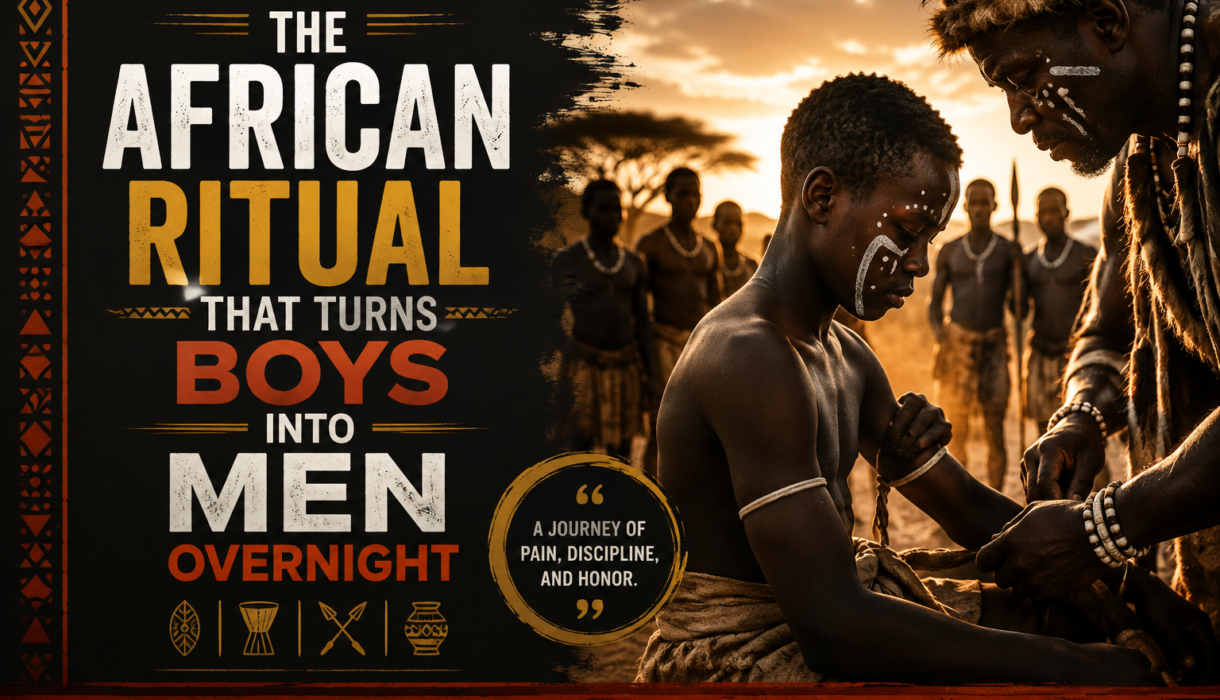

Across many traditional African cultures, reaching adulthood is not marked by a calendar date, a driver’s license, or a birthday celebration. Instead, it is earned through deeply symbolic rites of passage that test physical endurance, mental fortitude, and moral character. Among the Xhosa people of South Africa, the ancient ritual of Ulwaluko serves as a definitive boundary between youth and adulthood. Far more than a simple ceremony, this weeks-long ordeal strips away childhood privileges and reshapes young initiates into responsible community leaders almost overnight.
Leaving Childhood Behind in the Wilderness
The journey begins when young men, typically in their late teens, leave their family homes to spend several weeks isolated in temporary bush huts called ibhoma. Dressed in traditional blankets and painted with white clay (ifutha) to symbolize purity and rebirth, the initiates enter a sacred space entirely detached from modern distractions. Under the strict guidance of community elders and traditional mentors (khankatha), the boys undergo traditional circumcision without showing distress, proving their stoicism and physical self-control before the community.
Mentorship and the Core Values of Manhood
While the physical trial is a critical component, the true essence of Ulwaluko lies in the intensive psychological and cultural education taking place in the wilderness. Elders use the isolation period to teach the initiates unwritten ancestral laws, tribal history, and social ethics. The young men are taught that true manhood is not defined by physical strength or dominance, but by emotional restraint, respect for elders, protection of the vulnerable, and accountability to the broader community.
A Complete Transformation and Rebirth
Upon completing their period of isolation, the initiates undergo a dramatic ritual of transformation. The bush huts and all possessions from their boyhood are burned to the ground, symbolizing the permanent destruction of their former identities. The young men wash away the white clay in a local river and return to their villages wrapped in brand-new blankets as amakhwala (new men). From that moment forward, the community treats them with a new level of respect, granting them adult rights such as participating in council decisions and starting families.
Preserving Heritage in a Modern World
In a fast-paced global society where traditional customs are often replaced by modern conveniences, Ulwaluko remains a vital anchor of cultural identity and continuity. It provides young men with a clear, unambiguous transition into adulthood—a clarity that many modern societies lack. By demanding discipline, self-sacrifice, and communal responsibility, this ancient African ritual ensures that becoming a man is not merely a biological milestone, but a solemn pledge to serve one’s people.