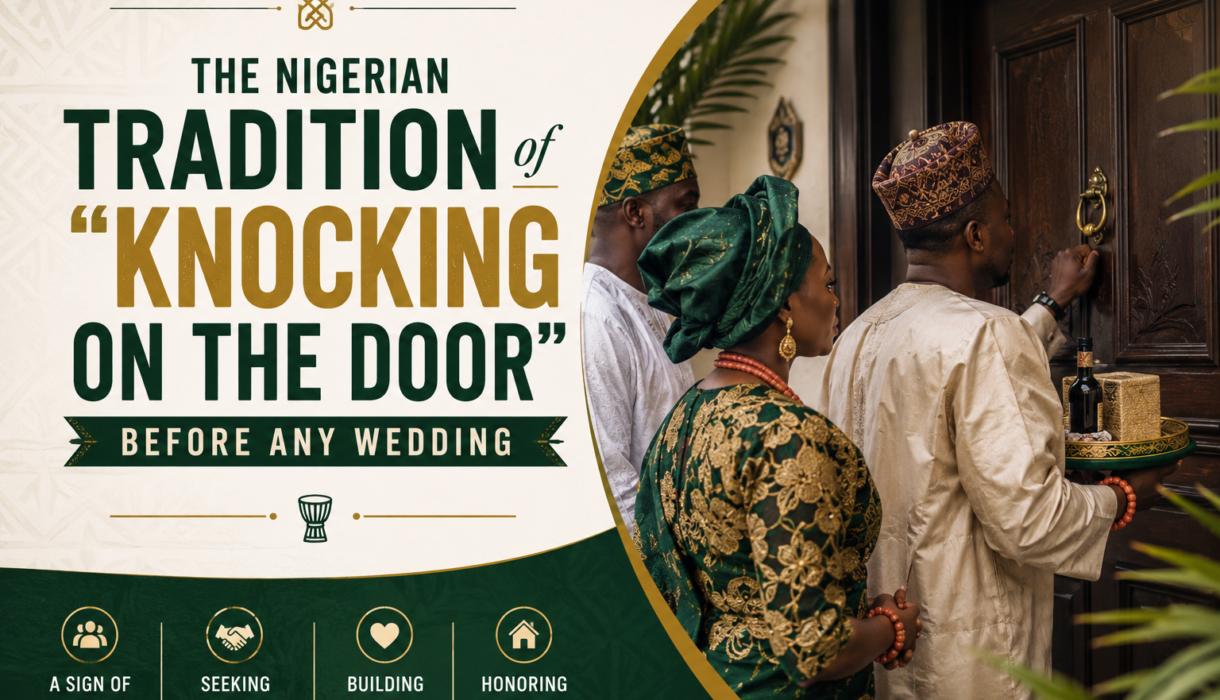

Nigerian Marriage Introduction Ceremony. Source: Event Design By BEIn Nigerian culture, a marriage is never simply a private agreement between two individuals; it is the formal union of two entire families and communities. Long before the grand outfits, elaborate traditional rites, or white wedding receptions begin, couples must first observe a pivotal custom known across various regions as “Knocking on the Door.” Known as Iku Aka in Igbo, Moimoi or Mo ni n owo in Yoruba, and Koko Zaria in Hausa, this preliminary gathering serves as the official request for a bride’s hand in marriage. Far from a mere formality, this ritual sets the structural and spiritual foundation for every Nigerian wedding that follows.
The Symbolic Intent Behind the Knock
The phrase “knocking on the door” originates from the literal act of a groom and his immediate family arriving at the bride’s ancestral or family home to seek entry and permission. Historically, the groom’s family does not simply walk in; they knock and wait to be formally received by the elders of the household. This symbolic gesture demonstrates respect, humility, and honorable intentions. By physically coming to the doorstep, the groom’s family announces that their son has found a “beautiful flower” within the house and wishes to ask the family’s consent to cultivate a lifelong relationship.
Formally Introducing the Two Families
Beyond requesting consent, the primary practical goal of the door-knocking ceremony—often called the “Introduction”—is to bring key family members face-to-face for the first time. Extended family elders, parents, and close guardians gather to exchange gifts, share stories, and establish mutual trust. Small token gifts such as palm wine, hot drinks, kola nuts, or fruit baskets are presented by the visiting family as a sign of goodwill. This step ensures that both lineages know who they are entering into an alliance with, preserving community harmony and verifying background history long before any wedding date is chosen.
Setting the Terms for the Traditional Marriage
The door-knocking ceremony also serves an essential administrative purpose in the wedding sequence. Once the bride’s family grants permission to proceed, the elders present the groom’s family with the official bride price list (Ivu Nlo or traditional requirements list). This document outlines the traditional gifts, dowry items, and community dues required for the main wedding ceremony. By receiving this list during the introduction, the groom’s family receives a clear roadmap, allowing both sides to plan the upcoming festivities with full clarity, transparency, and agreement.
Honoring Heritage in the Modern Age
Even as contemporary Nigerian weddings embrace modern trends and global aesthetics, the tradition of knocking on the door remains non-negotiable across socio-economic classes. It reinforces the core African belief that marriage thrives on collective support, familial consent, and elder blessings rather than isolated decisions. By pausing to knock, ask, and listen before celebrating, Nigerian couples honor centuries of ancestral wisdom—proving that the journey toward a lasting union always begins with respect at the family doorstep.