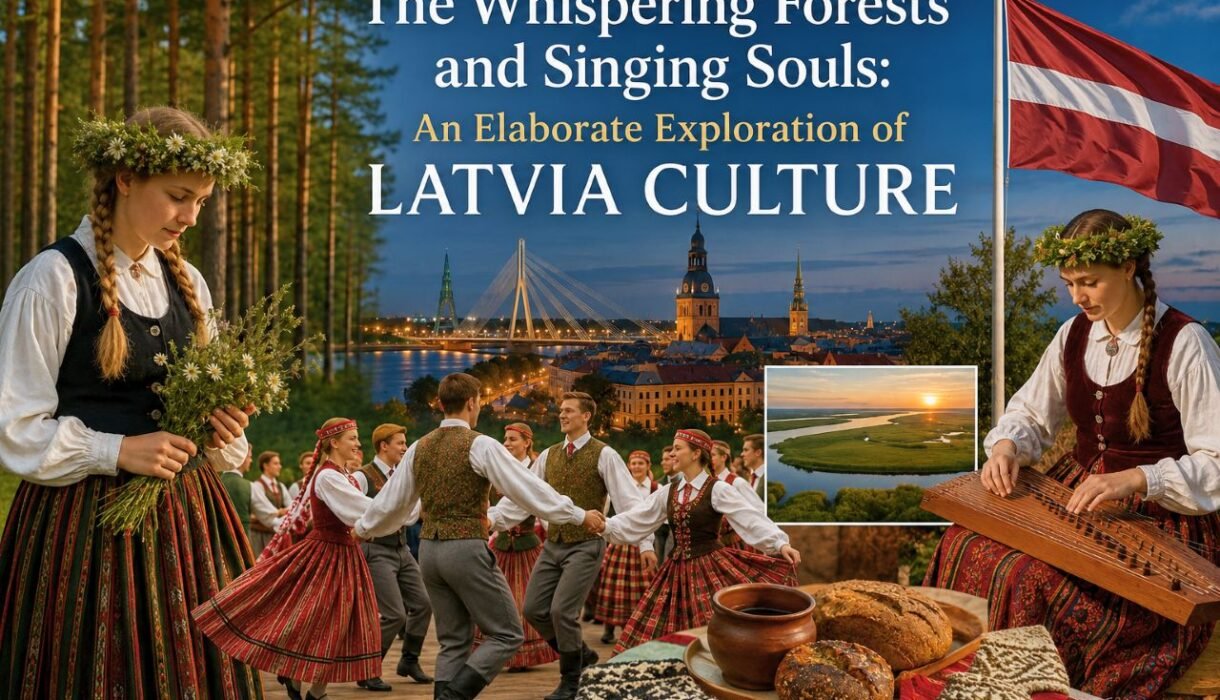

Latvia, one of the three Baltic states located in Northern Europe, is a country where centuries-old folklore smoothly blends with modern European life. Positioned on the shores of the Baltic Sea, Latvia’s culture is deeply tied to the natural world. Its vast forests, pristine coastlines, and ancient marshes have shaped a unique way of life for the Latvian people (latvieši).
Latvians are often described as introverted but deeply passionate individuals who guard their independence fiercely. They possess an exceptional love for song, a profound respect for seasonal rhythms, and an unwavering connection to their land. This article dives into Latvia’s distinct identity, celebrating its rich heritage and the enduring traditions that continue to define it today.
History & Origins
Latvian culture has developed through layers of native Baltic traditions and centuries of foreign rule.
- Ancient Baltic Roots: Around 3000 BCE, Baltic tribes settled along the eastern shores of the Baltic Sea. These early ancestors developed a deep, animistic worldview based on the worship of nature deities. Over time, these groups evolved into distinct tribal kingdoms, such as the Couronians, Latgalians, Selonians, and Semigallians.
- The Crusades and German Rule (12th–16th Century): In the late 12th century, German crusaders arrived to forcefully Christianize the region. This led to the formation of Livonia, a confederation ruled by Baltic German nobility. Though indigenous Latvians were pushed into serfdom, they preserved their culture by passing down oral folklore, songs, and traditions in secret.
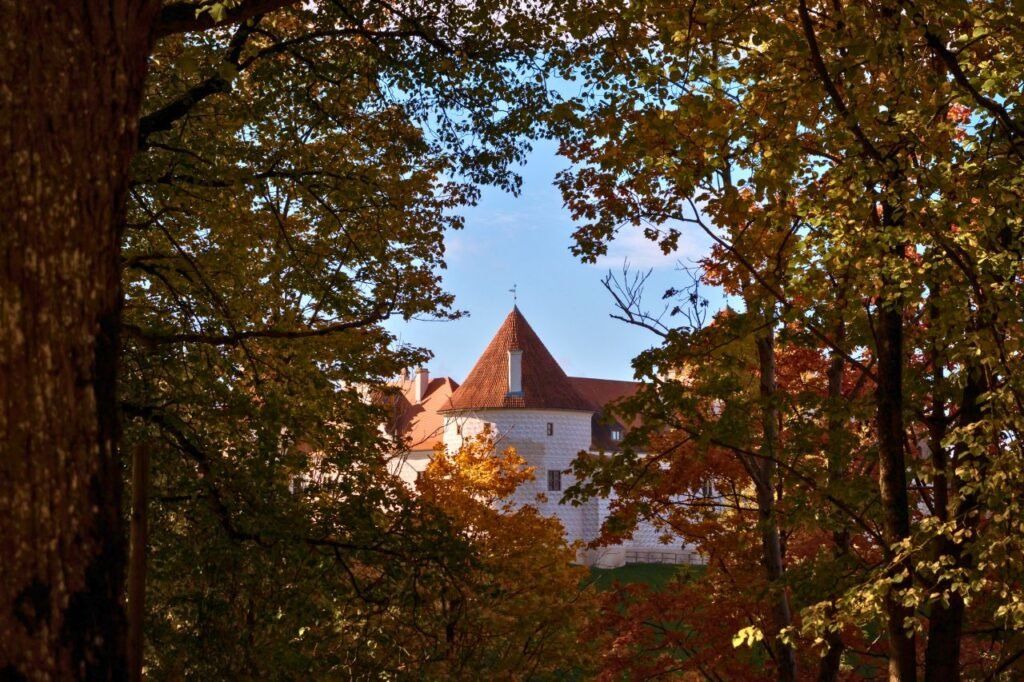
- Swedish, Polish, and Russian Eras: Due to its strategic maritime location, Latvia became a battlefield for regional powers. It was divided among the Polish-Lithuanian Commonwealth, the Swedish Empire, and eventually the Russian Empire by the 18th century. Riga blossomed into a major merchant center during this time.
- Independence and Modern Resilience: Latvians experienced a powerful National Awakening in the late 19th century, which led to their first declaration of independence on November 18, 1918. Following decades of Soviet occupation after World War II, Latvia reclaimed its freedom in 1991 during the peaceful “Singing Revolution.” Today, it is a proud member of the European Union.
Culture, Traditions & Customs
The Summer Solstice (Jāņi)
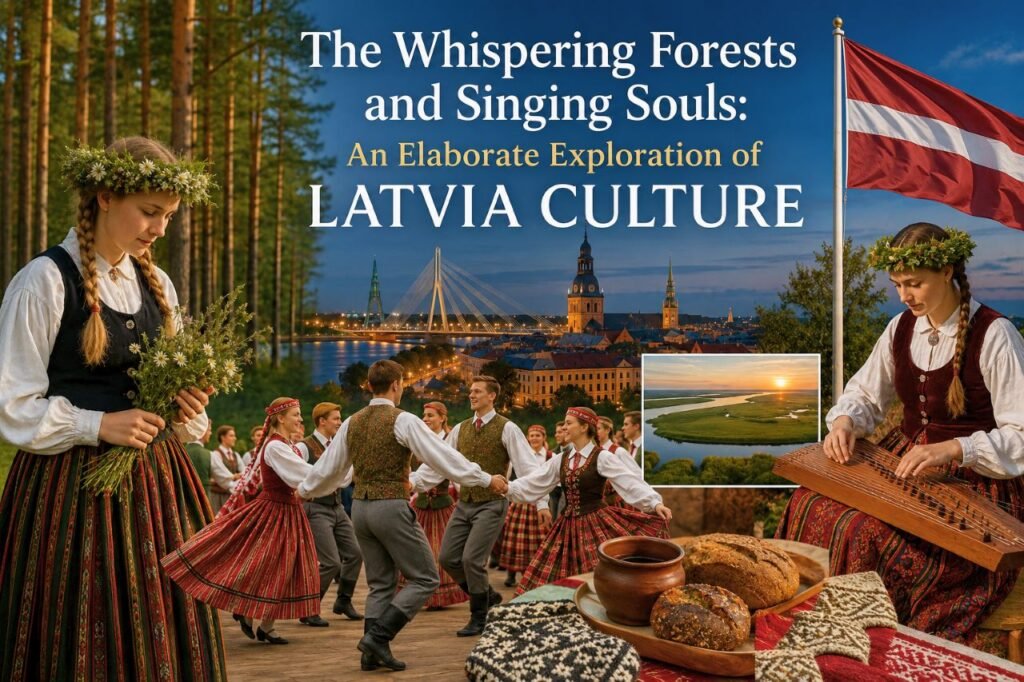
Jāņi (held on June 23–24) is Latvia’s most important and widely celebrated traditional holiday. Rooted in ancient pagan fertility rites, it marks the longest day and shortest night of the year. During Jāņi, Latvians leave the cities for the countryside to gather wildflowers and oak leaves.
Men named Jānis wear crowns woven from oak leaves, while women wear crowns made of beautiful sweet-scented grasses and flowers. Communities gather to drink caraway cheese, beer, sing traditional dainas (folk songs), and leap over bonfires. Jumping over the fire is believed to bring good health, prosperity, and purge negative energy for the upcoming year.
Marriage Traditions
Traditional Latvian weddings are colorful, theatrical, and steeped in ritual. A major highlight is mičošana—the midnight ceremony that marks the bride and groom’s transition into a mature husband and wife. The bride’s maiden wreath is carefully removed and replaced with a traditional matron’s cap or apron, while the groom is presented with a pipe or a hat.
Name Days (Vārda dienas)
In Latvian society, celebrating a Name Day is often treated with the same importance as a birthday. Every calendar date is assigned specific names, and anyone carrying that day’s name can expect unexpected visits from friends and family. According to custom, guests do not need an official invite; they simply show up with flowers, and the host is expected to provide treats in return.
Languages & Communication
The Latvian language is a unique cultural treasure and a cornerstone of the country’s national identity.
A Rare European Tongue
- Latvian (Latviešu valoda): The sole official language of the state. Along with Lithuanian, Latvian belongs to the Baltic branch of the Indo-European language family. It is one of the oldest surviving languages in Europe, retaining archaic structural elements that make it an invaluable study for modern linguists.
- Regional Accents and Russian: A distinct dialect known as Latgalian is spoken in the eastern province of Latgale. Additionally, due to twentieth-century history, a significant portion of the population speaks Russian as a second language, while English is spoken fluently by the younger generation.
Greetings & Local Proverbs
Latvian communication is direct, polite, and respectful of personal space.
- “Sveiki!” / “Labdien!”
Meaning: “Hello!” / “Good day!”—the quintessential everyday greetings.
- “Darbs dara darītāju.”
Proverb: “The work makes the doer.” This phrase highlights the high cultural value Latvians place on a strong, quiet work ethic.
- “Kas lēni brauc, tas tālu tiek.”
Proverb: “He who drives slowly arrives far.” This saying reflects the patient, measured, and thoughtful mindset embedded in the culture.
Geography
Latvia sits on the eastern shore of the Baltic Sea, featuring a flat landscape with rolling hills, massive lakes, and dense river networks. Over 50% of Latvia’s territory is covered by lush forests, making it one of Europe’s greenest countries.

The coastline features hundreds of miles of white sand beaches and pine-covered dunes along the Gulf of Riga. The country’s interior is preserved through four major national parks, with Gauja National Park being famed for its striking sandstone cliffs and deep river valleys. Latvia’s ecosystem supports diverse wildlife, including thousands of black storks, Eurasian lynx, and European castors.
Economy
Latvia operates a developed, high-income market economy, utilizing the Euro as its currency and leveraging its location as a key geographic gateway between Western and Eastern European markets.
- Information Technology and Logistics: Riga has grown into a major hub for tech startups, e-commerce, and high-speed telecommunications infrastructure. Additionally, Latvia’s three ice-free ports (Riga, Ventspils, and Liepāja) are vital transit points for global maritime trade.
- Forestry and Woodworking: Given the country’s immense natural resources, sustainable timber production, furniture manufacturing, and paper processing form the backbone of Latvia’s industrial export economy.
- Green Tech and Agriculture: Organic farming, grain exports, and the development of eco-friendly biochemical products are rapidly expanding economic sectors.
Politics
Latvia is a democratic, unitary parliamentary republic.
The legislative branch is represented by the Saeima, a unicameral parliament made up of 100 members who are elected by proportional representation every four years. The Prime Minister serves as the head of government, holding executive authority and directing the cabinet. The President is elected by the parliament to serve as the formal head of state, representing Latvia internationally and acting as the commander-in-chief of the armed forces. Latvia’s legal system is grounded in continental civil law.
Ethnic Groups
Latvia’s modern demographic makeup reflects its complex twentieth-century history, transitioning from a highly diverse populace to a modern European state.
| Ethnic Group | Estimated Population Share | Primary Settings |
| Latvians | ~63% | Nationwide, dominant in rural provinces |
| Russians | ~24% | Major urban areas, Riga, Daugavpils |
| Belarusians | ~3% | Eastern border municipalities |
| Ukrainians | ~2.5% | Distributed across industrial urban hubs |
| Poles & Lithuanians | ~3.5% | Southern border regions, Latgale |
Beliefs & Values
Secularism and Eco-Spirituality
While most religious Latvians identify as Lutheran, Roman Catholic (in Latgale), or Eastern Orthodox, Latvia is largely a secular society. Underneath modern religious affiliations lies a strong undercurrent of Dievturība—a modern revival of traditional Baltic folk religion. This belief system emphasizes living in harmony with nature, viewing the natural world as a divine space.
Environmental Stewardship
Latvians share a deep, spiritual bond with nature. Activities like foraging for wild chanterelles, picking blueberries, and gathering herbal teas are cherished seasonal traditions. Damaging a tree or littering in a forest is often viewed as a moral offense, reflecting an ancient worldview that respects the living environment.
Food & Cuisine
Latvian cuisine is simple, practical, and deeply satisfying, designed to provide long-lasting energy for agricultural life. It relies heavily on rye, potatoes, pork, and cultured dairy products.
- Rupjmaize (Dark Rye Bread): The true foundation of Latvian cuisine. This heavy, sour, and slightly sweet dark bread is baked from coarse rye flour. It is found at almost every meal and holds deep cultural significance; dropping a piece of rye bread on the floor is considered bad luck, and it must be quickly picked up and kissed out of respect.
- Pelēkie Zirņi ar Speķi: The ultimate national dish. It consists of large grey peas boiled and tossed with fried spek (fatback bacon) and chopped onions. It is traditionally served during Christmas to symbolize tears; eating them all ensures no tears are carried into the new year.
- Aukstā Zupa (Cold Beet Soup): A striking, bright pink cold soup eaten during hot summer days. It is made from kefir, boiled beets, fresh cucumbers, dill, and hard-boiled eggs.
Clothing & Symbols
Traditional Attire
Latvian folk costumes (tautas tērps) are worn proudly during festivals and national celebrations. The designs vary across five distinct historical regions: Vidzeme, Latgale, Courland (Kurzeme), Semigallia (Zemgale), and Selonia. Women wear beautifully pleated skirts, white linen shirts with detailed embroidery, and ornate silver brooches (sakta). Men wear long wool coats, woven sashes, and felt hats.
Ancient Sacred Symbols
Latvian textiles are famous for their protective folk signs, which have been used for centuries to guard homes and clothing.
- The Mara Cross (Māras krusts): Symbolizes the goddess of earth and fertility, offering deep spiritual protection.
- The Laima Sign (Laimas slotiņa): Shaped like a small broom, this pattern represents the goddess of luck and fate, sweeping away negative energy.
- The Sun Symbol (Saule): A geometric rosette or star motif representing eternal life, warmth, and motherhood.
Music, Dance & Art
The Nationwide Song and Dance Festival
The Latvian Song and Dance Festival (Vispārējie latviešu Dziesmu un Deju svētki) is the pinnacle of Latvian culture, recognized by UNESCO as a Masterpiece of the Oral and Intangible Heritage of Humanity. Held every five years, this spectacular event gathers up to 40,000 amateur singers, dancers, and musicians onto a massive open-air stage in Riga. The sight and sound of a massive choir singing traditional folk melodies in perfect harmony is an unforgettable experience that embodies the collective soul of the nation.
Traditional Instruments
The Kokle is Latvia’s iconic stringed folk instrument, closely related to the Finnish kantele and Lithuanian kanklės. Carved from a single piece of wood, its soft, ethereal, bell-like plucking sounds have been used for centuries to accompany the singing of dainas—short, unrhymed folk verses that capture ancient Baltic mythology, wisdom, and daily life.
Summary
The culture of Latvia stands as a moving testament to the power of artistic expression and a deep respect for the natural world. By preserving their ancient Baltic language, celebrating the solstice, and passing down thousands of folklore dainas, the Latvian people have kept their distinctive identity alive through centuries of change. From the quiet majesty of its pine forests to the powerful harmony of its massive choirs, Latvia offers an authentic, inspiring glimpse into a culture that values patience, community harmony, and an unbreakable bond with the earth.
At Best Culture Insight, we see culture as the heartbeat of every society – the way people live, connect, and express their identity.