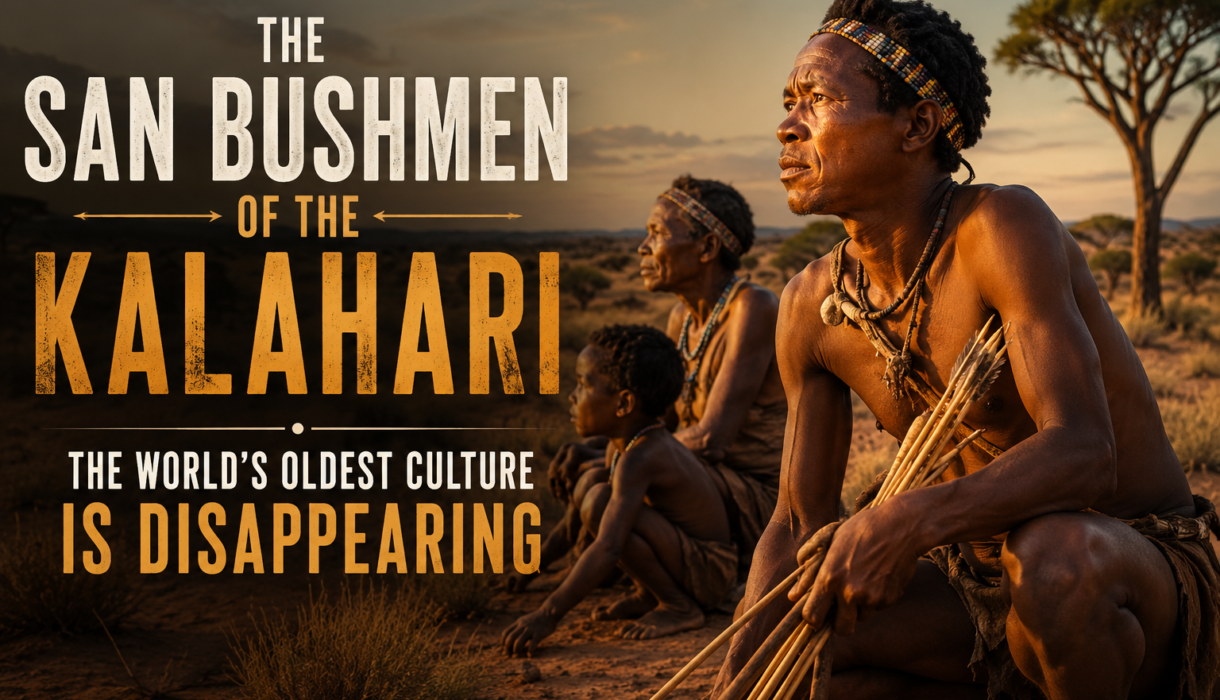

Deep in the arid expanses of the Kalahari Desert spans the home of the San people, widely recognized by geneticists as the world’s oldest continuous human culture, with ancestral roots stretching back over 100,000 years. For millennia, these indigenous hunter-gatherers have lived in perfect harmony with one of the harshest, most unforgiving environments on Earth. Today, however, this irreplaceable living library of human history is facing an existential crisis. Driven by rapid modernization, restrictive government policies, and territorial loss, the traditional San way of life is rapidly fading into the pages of history.
An Extraordinary Harmony with Nature
The San Bushmen possess an unparalleled understanding of the Kalahari’s ecosystem, utilizing a sophisticated body of indigenous knowledge passed down through generations. Famous for their complex “click” languages and extraordinary tracking abilities, they can find water hidden deep within parched roots and read the slightest disturbance in the desert sand like an open book. Their spiritual connection to the land is celebrated through the sacred “trance dance,” a communal ritual used for healing and spiritual guidance. This nomadic lifestyle represents a unique blueprint of sustainable human existence, relying entirely on a profound respect for nature rather than modern infrastructure.
The Crisis of Forced Modernization
Despite their historical resilience, the San face systematic external pressures that directly threaten their survival. Over the past few decades, large-scale diamond mining, wildlife conservation zoning, and commercial cattle ranching have severely restricted their access to ancestral hunting grounds. Many San communities have been relocated from their lands into government-built resettlement camps. Cut off from their traditional means of subsistence and prohibited from hunting, many have found themselves trapped in a cycle of poverty, systemic discrimination, and forced dependency on government aid, effectively severing their physical connection to the wilderness.
The Fading of Ancient Knowledge
The physical displacement of the San has triggered a severe cultural crisis among the younger generation. In resettlement villages, children attend formal schools where traditional tracking, hunting, and foraging skills are not taught, and native dialects are often replaced by dominant regional tongues. As elders pass away, centuries of complex botanical knowledge, medicinal secrets, and oral folklore are dying with them. The allure of modern economic opportunities further distances the youth from their heritage, creating a generational divide that leaves ancient customs highly vulnerable to total erasure.
A Call to Protect Humanity’s Roots
Saving the San culture from disappearing requires a concerted global effort that prioritizes indigenous land rights and targeted cultural preservation. When an ancient culture fades, humanity loses an essential part of its collective identity and invaluable insights into ecological sustainability. While various human rights organizations continue to fight for the legal right of the San to return to their ancestral lands, sustainable cultural eco-tourism offers a practical pathway for them to monetize and preserve their heritage on their own terms. Ultimately, protecting the San Bushmen is a vital moral imperative to safeguard the foundational roots of our shared human story.