How To Say “Hello” in Ibibio Language? | Learn Ibibio
Posted in :

How To Say “Hello” in Ibibio?
Greetings are the cornerstone of human connection. In African cultures, a greeting is rarely a brief, transactional exchange; it is a warm inquiry into one’s health, peace, and household. Among the Ibibio people—the indigenous inhabitants of Akwa Ibom State in southeastern Nigeria—learning how to greet properly is the first step toward showing honor and respect.
If you are building your vocabulary, connecting with your heritage, or preparing to travel to Akwa Ibom, mastering the fundamental greeting is essential.
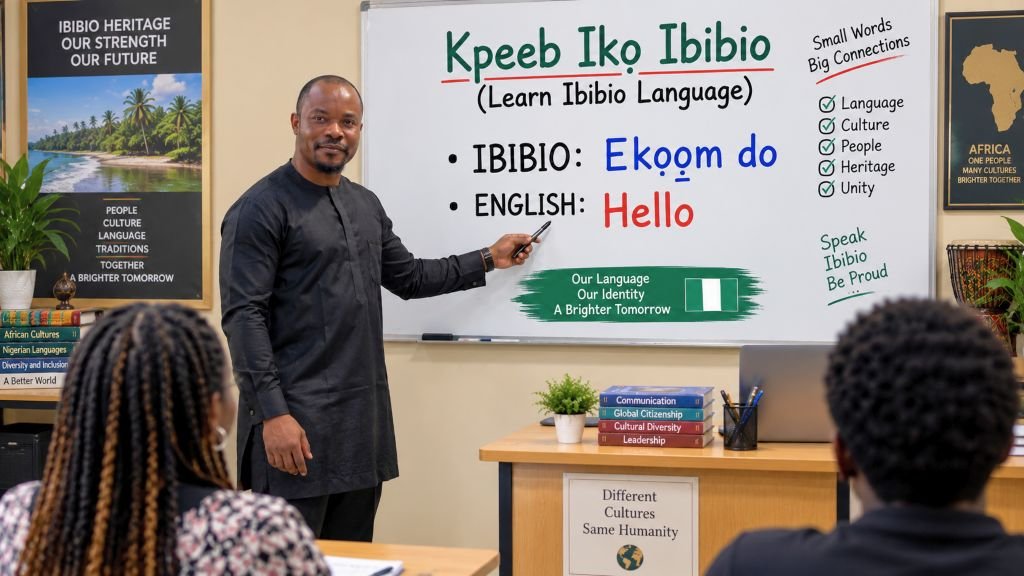
The standard way to say “Hello” or “Greetings” in Ibibio is:
Ekọọm do (pronounced: Eh-kaw-awm doh)
Below is a detailed guide exploring the literal meaning, phonetic breakdown, variations by time of day, and social etiquette associated with Ekọọm do.
Understanding the Greeting: Ekọọm do
In standard Ibibio, Ekọọm do serves as the universal baseline greeting, equivalent to saying “Hello,” “Greetings to you,” or “I greet you there.”
- Ibibio: Ekọọm do
- English Translation: Hello / Greetings to you
- Phonetic Breakdown:
- E-kọ-ọm (Eh-kaw-awm): Rooted in the verb kọọm, which means “to greet” or “to appreciate.” The open “ọ” sound resembles the aw in saw.
- do (doh): A directional modifier meaning “there” or “in that location.”
When combined, Ekọọm do literally translates to “Greetings there” or “I send my greetings to you right there.”
Greetings by Time of Day and Context
While Ekọọm do can be used at almost any time, Ibibio offers rich, time-specific greetings that reflect the natural rhythm of the day.
| English Greeting | Ibibio Phrase | Pronunciation Guide | Context / Usage |
| Hello / Greetings | Ekọọm do | Eh-kaw-awm doh | General greeting used anytime |
| Good morning | Amesiere | Ah-meh-see-eh-reh | Morning greeting (lit. “Have you woken up well?”) |
| Response to Good Morning | Amesiere-nde | Meh-see-eh-reh nde | Warm response to Amesiere |
| Good afternoon / Evening | Ekọọm do / Mmekọọm oo | Eh-kaw-awm doh | Used from midday through the evening |
| Good night (Farwell) | Asiere | Ah-see-eh-reh | Night blessing when parting (lit. “May it dawn well”) |
| Welcome | Mọkọm / Amedi | Maw-kawm / Ah-meh-di | Welcoming a visitor arriving at your home |
Respectful Variations and Social Honorifics
In Ibibio society, social structure and age hierarchy play a vital role in everyday communication. Adding honorific titles after Ekọọm do displays maturity and deep cultural awareness.
- Greeting a Male Elder or Father: Ekọọm do, Ete (Eh-kaw-awm doh, Eh-teh)
- Greeting a Female Elder or Mother: Ekọọm do, Eka (Eh-kaw-awm doh, Eh-kah)
- Greeting a Friend or Peer: Ekọọm do, Ufan mmi (Eh-kaw-awm doh, Oo-fahn mee)
- Greeting a Group of People: Ekọọm do-o, mbon mmi (Eh-kaw-awm doh-oh, m-bohn mee)
Cultural Etiquette: How to Greet in Akwa Ibom
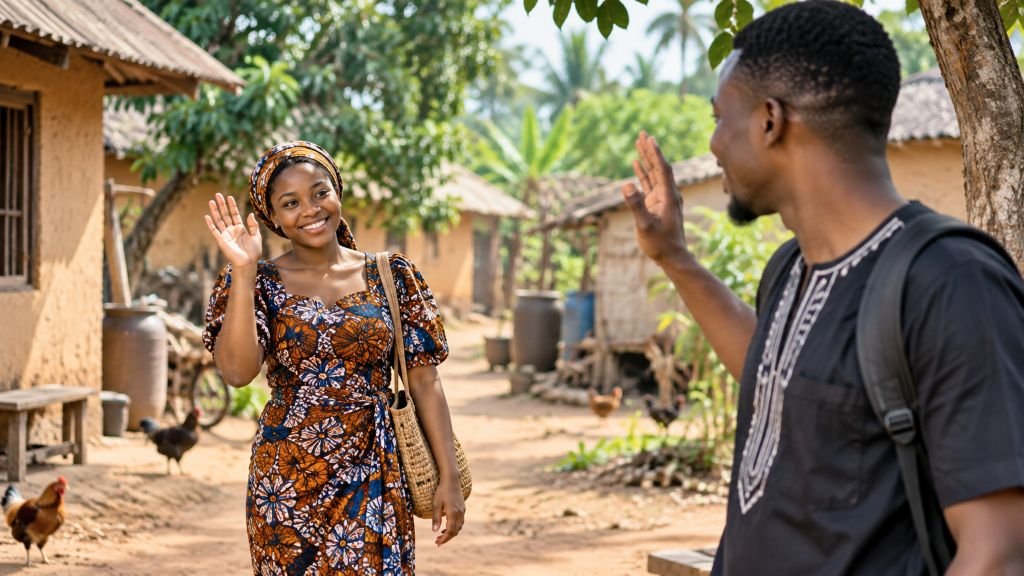
Speaking the words correctly is only half the gesture; physical posture and tone carry equal weight in Ibibio culture:
- Acknowledge the Elder First: When entering a room, always extend greetings to the oldest people present before addressing younger peers.
- Body Posture: Young men often lower their shoulders slightly or nod respectfully, while young women may bend their knees slightly (a subtle curtsy) when saying Ekọọm do to elders.
- Handshakes: A gentle handshake with the right hand is customary among adults. Using the left hand to greet or offer items is viewed as impolite.
- Tone of Voice: Speak with warmth and moderate tone. An over-assertive tone can be misinterpreted as aggressive, whereas a gentle delivery conveys peace (Emem).
The Role of Language Preservation
Ibibio is the fourth most widely spoken language family in Nigeria, yet the dominance of global languages in school systems and urban centers poses a continuous challenge to regional dialects.
Documenting core conversational entry points like Ekọọm do ensures that:
- Language learners can initiate meaningful cultural interactions.
- Youth in the diaspora maintain a tangible link to their ancestral roots.
- Digital resources continue to expand linguistic diversity across the internet.
Quick Practice Summary
- Basic “Hello”: Ekọọm do
- “Good Morning”: Amesiere
- Greeting an Elder (Male): Ekọọm do, Ete
- Greeting an Elder (Female): Ekọọm do, Eka
Initiating a conversation with a warm Ekọọm do opens doors to hospitality, mutual respect, and cultural exchange.
Notice: This educational article is published under Open Creative Commons / Public Domain terms for open distribution, cultural education, and language preservation.