The Heartbeat of El Dorado: A Deep Journey Into Colombian Culture – Colombia Culture, South America
Posted in :

Situated at the northwestern gateway of South America, Colombia is a nation defined by its breathtaking biological and cultural diversity. Known as the “Land of a Thousand Rhythms,” Colombia is home to over 52 million people whose collective identity is a kaleidoscopic mosaic of Indigenous, African, and European legacies.
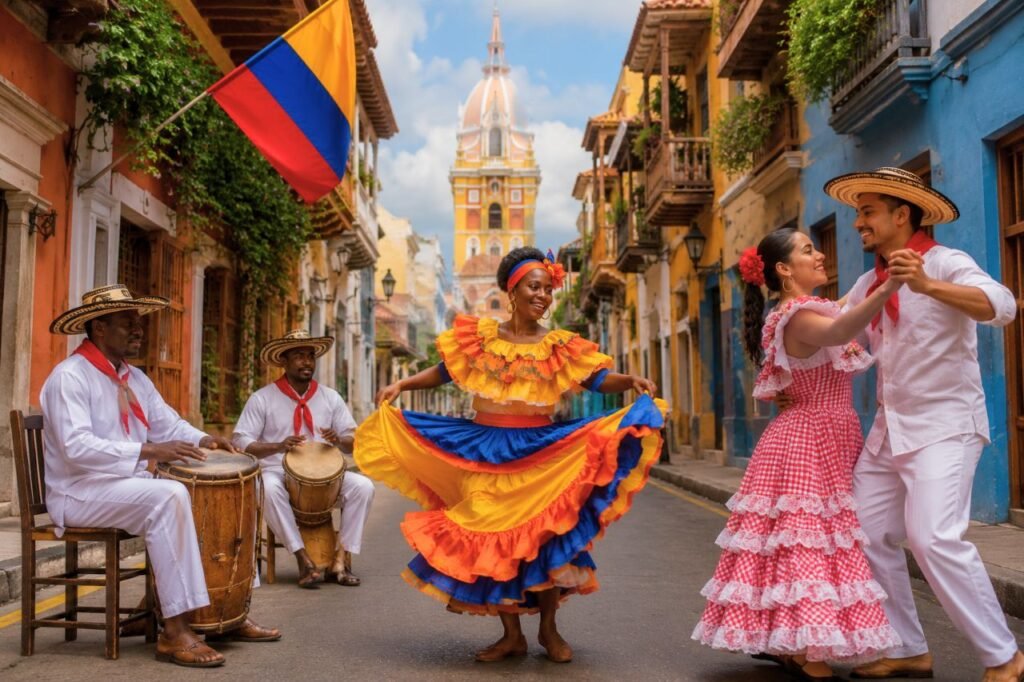
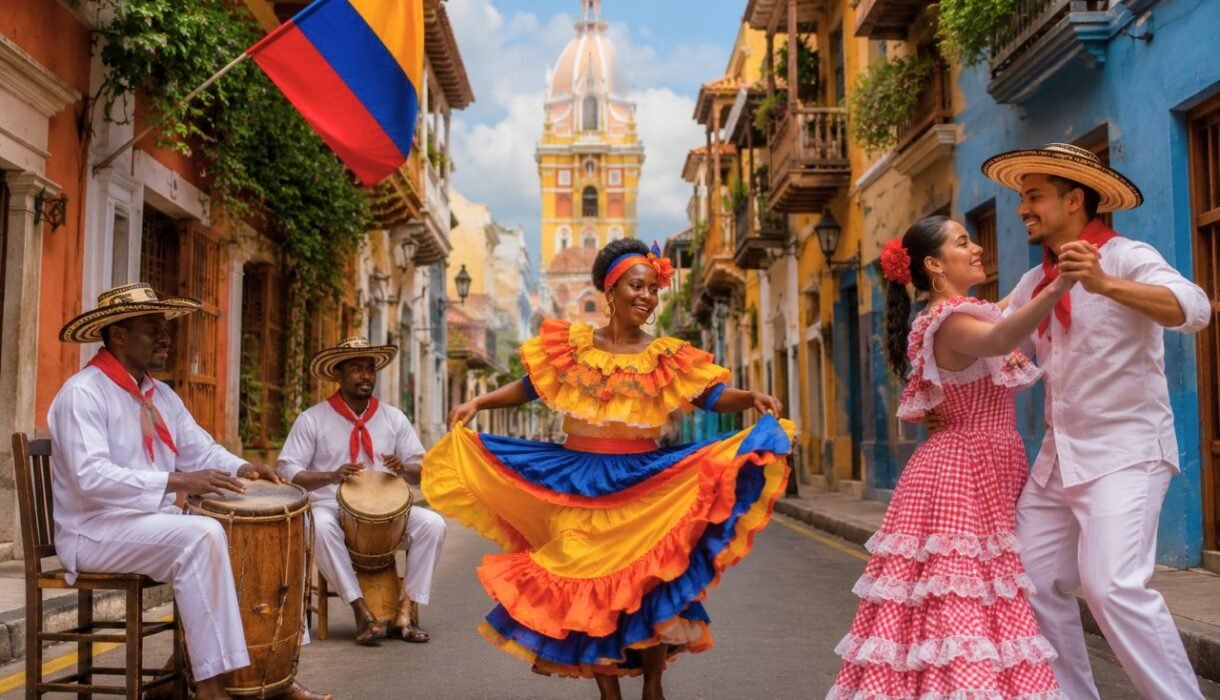
Colorful street celebration in Colombia – Colombia Culture, South America
To meet the Colombian people—los Colombianos—is to experience an infectious joy for life, a profound sense of regional pride, and a legendary capacity for hospitality. Despite navigating decades of historical complexity, Colombians have forged a society deeply anchored in optimism, community solidarity, and creative expression. This comprehensive guide explores the deep-rooted customs, diverse ethnic landscapes, and artistic treasures that make Colombian culture one of the most mesmerizing tapestries on earth.
History & Origins
The narrative of Colombian culture predates European contact by millennia. Advanced pre-Columbian civilizations—including the Muisca, Tairona, Zenú, and Quimbaya—flourished across the Andean highlands and coastal plains. The Muisca, famed for their master craftsmanship in gold, formed the historical basis for the Spanish myth of El Dorado (The Golden City), centered around the sacred ritual waters of Lake Guatavita.
The arrival of Spanish conquistador Rodrigo de Bastidas on the Caribbean coast in 1525 initiated the colonial era. The Spanish established major administrative hubs in Santa Marta and the fortified port city of Cartagena de Indias. This period brought about a dramatic demographic and cultural shift. Concurrently, the forced migration of enslaved African peoples, primarily from West and Central Africa, introduced profound spiritual, musical, and agricultural traditions that would permanently reshape the Caribbean and Pacific coastlines.
Colombia achieved its independence from Spanish rule on July 20, 1810, solidified by the historic military campaigns of Simón Bolívar at the Battle of Boyacá in 1819. The fledgling republic evolved through various territorial configurations, including Gran Colombia, before stabilizing into its modern borders. Throughout the 20th and early 21st centuries, the nation’s cultural fabric was further tested and strengthened by internal political conflicts, giving rise to an extraordinary collective resilience and an artistic renaissance aimed at national healing and historical preservation.
Culture, Traditions & Customs
Marriage and Family
Family (la familia) is the absolute structural epicentre of Colombian life. Multi-generational households are common, and extended family networks heavily influence personal and professional decisions. Traditional marriage customs are heavily rooted in Roman Catholic rituals, though civil unions are increasingly prevalent. A beloved traditional wedding custom includes the las arras (thirteen gold or silver coins blessed by the priest and presented by the groom to the bride), symbolizing a shared commitment to financial stewardship and divine providence.
Naming Ceremonies and Birth
Children are welcomed into the community with great celebration. Following Catholic traditions, the bautizo (baptism) serves as a major social milestone, cementing the role of padrinos (godparents), who assume lifelong spiritual and financial co-responsibility for the child. Structurally, individuals carry two surnames: the father’s first surname followed by the mother’s first surname, preserving dual family heritages across generations.
Major Festivals and Holidays
Colombia boasts one of the highest numbers of public holidays (festivos) globally, turning long weekends into festive celebrations.
- Carnaval de Barranquilla: Proclaimed a UNESCO Masterpiece of the Oral and Intangible Heritage of Humanity, this monumental Caribbean celebration features an intense blend of African rhythms, Indigenous satire, and Spanish tropes, epitomized by iconic characters like Marimonda and Rey Momo.
- Feria de las Flores (Medellín): Held annually in August, this festival transforms the “City of Eternal Spring” into a botanical wonderland. The highlight is the Desfile de Silleteros, where rural flower farmers carry massive, intricate floral arrangements (silletas) on their backs down city avenues.
- Feria de Cali: Celebrated in late December, this festival cements Cali’s status as the “Salsa Capital of the World,” featuring world-class dance parades (Salsódromo) and live orchestras.
Rites of Passage
The Quinceañera marks a young woman’s 15th birthday, celebrated with formal gala events, a symbolic change from flat shoes to high heels, and a father-daughter waltz. For men, completing mandatory military service or graduating from university are key milestones, the latter often celebrated with large family feasts where the graduate is showered with praise and gifts.
Languages & Communication
While Spanish is the official national language spoken by over 99% of the population, Colombia is a linguistically rich territory recognizing 65 Indigenous languages, two Creole languages (Palenquero and San Andrés Creole), and Romani.
Colombian Spanish is globally celebrated for its clarity, particularly the dialect spoken in Bogotá. However, linguistic patterns vary wildly across regions, defined by distinct regional vocabularies known as Costeñismos (Caribbean coast) and Paisas (Antioquia region).
Key Colombian Expressions:
- ¡Chevere! / ¡Bacán!: Meaning cool, awesome, or fantastic.
- ¿Qué más?: A ubiquitous greeting meaning “What’s up?” or “How are things?”
- Tinto: A small, sweet cup of black filter coffee consumed throughout the day.
- Dar papaya: A critical cultural idiom meaning “to expose yourself to risk” or “to leave yourself vulnerable to trickery” (literally, “to give papaya”). The common golden rule is: “No des papaya” (Don’t let your guard down).
Traditional Greetings
Communication is inherently warm and physically close. A standard greeting involves a warm handshake accompanied by direct eye contact. Among women, a gentle touch on the shoulder or a single kiss on the right cheek is standard, while close male friends engage in a robust handshake-hug combination.
Geography
Colombia is the only country in South America with coastlines on both the Pacific Ocean and the Caribbean Sea. Its territory is geographically divided into six natural regions:
- The Andean Region: The mountainous heartland where the Andes split into three distinct cordilleras. It houses major urban centers like Bogotá and Medellín, deep canyons, and the iconic Eje Cafetero (Coffee Triangle).
- The Caribbean Region: A sunny, low-lying coastal plain defined by rich musical cultures, historic ports, and the snow-capped coastal peaks of the Sierra Nevada de Santa Marta.
- The Pacific Region: A hyper-humid, biodiverse rainforest corridor known for its Afro-Colombian heritage, eco-tourism, and whale-watching bays.
- The Orinoquía (Llanos): A vast, sweeping eastern grassland savanna home to a robust cowboy culture (Llaneros) and extensive cattle ranching.
- The Amazon Region: A dense, untamed rainforest wilderness bordering Brazil and Peru, serving as a critical global ecological lung and home to ancestral Indigenous reservations.
- The Insular Region: Comprising oceanic islands including San Andrés, Providencia, and the Pacific sanctuary of Gorgona.
Economy
Colombia possesses the fourth-largest economy in Latin America, historically driven by its rich natural resource base. The nation is a primary global exporter of petroleum, coal, and nickel. Additionally, Colombia produces some of the world’s finest, ethically sourced emeralds, dominating the international gemstone trade.
In the agricultural sector, Colombia is globally famous for its mild, high-quality Arabica coffee, grown across the steep volcanic slopes of the Andes. It is also a premier global exporter of fresh-cut flowers (particularly roses and carnations for Valentine’s Day and Mother’s Day), bananas, and exotic fruits. In recent years, the economy has diversified rapidly into software development, medical tourism, and a booming international tourism sector.
Politics
Colombia is a democratic presidential republic operating under the progressive Constitution of 1991, which officially redefined the nation as a pluralistic, multi-ethnic state. The President serves a single four-year term as both head of state and head of government.
The country’s political evolution has been profoundly shaped by the historic 2016 Peace Accord signed between the national government and the FARC guerrilla movement. This landmark agreement transitioned the country into a post-conflict era focused on rural infrastructure development, victims’ rights, and political inclusion, fostering a highly dynamic and participatory contemporary political climate.
Ethnic Groups
Colombia is an ethnically diverse nation that officially recognizes its multi-cultural identity. The demographic layout reflects centuries of intersection between different peoples:
| Ethnic Group Identity | Statistical Representation (Approx.) | Primary Geographic Concentration |
| Mestizo & Caucasian | ~87% | Andean highlands, urban capitals, and central valleys |
| Afro-Colombian (incl. Raizal & Palenquero) | ~9% | Pacific coast, Caribbean lowlands, and island territories |
| Indigenous (e.g., Wayuu, Muisca, Arhuaco) | ~4% | La Guajira peninsula, Amazon basin, and southern mountains |
The Wayuu people of the arid northern desert of La Guajira represent the largest indigenous group, famous for preserving their matriarchal societal structures and ancestral weaving arts despite centuries of external pressures.
Beliefs & Values
Roman Catholicism remains the dominant religious institution in Colombia, heavily influencing social values, statutory holidays, and local laws. However, the Constitution of 1991 guarantees absolute freedom of worship, leading to a substantial rise in Evangelical and Pentecostal congregations, alongside urban secularism.
Beyond institutional religion, the core Colombian worldview is driven by resilience and solidarity. Having historically overcome profound structural adversity, Colombians place an immense premium on mutual support, joy, and resourcefulness—a trait locally celebrated as malicia indígena (sharp wit or street smarts used positively to solve complex problems). Community life is vibrant, and structural politeness is deeply embedded in daily interactions.
Food & Cuisine
Colombian cuisine (comida criolla) is a hearty, comforting reflection of its regional agricultural diversity. It favors fresh, locally sourced ingredients rather than heavy spice blends, leaning on a foundational flavor base called hogao (a savory sautéed mixture of tomatoes, scallions, garlic, and cumin).
Traditional Dishes
- Bandeja Paisa: The undisputed national culinary heavyweight originating from the Antioquia region. This massive platter features white rice, red beans cooked with pork, grilled steak, crunchy fried pork belly (chicharrón), chorizo, a fried egg, sweet plantains, avocado, and a small arepa.
- Arepa: The ultimate Colombian culinary staple. These round, grilled corn patties are eaten daily across all social classes, served plain, slathered in butter and cheese, or stuffed with various meats.
- Ajiaco Santafereño: A comforting, thick potato soup native to Bogotá. It features three distinct varieties of local potatoes, shredded chicken, corn on the cob, and guascas (a distinct aromatic herb that gives the soup its signature flavor), served alongside capers and heavy cream.
- Sancocho: A rustic, wood-fired broth stew prepared during family weekend gatherings by the river (paseo de olla), combining plantains, yuca, potatoes, and large cuts of beef, chicken, or fish.
Clothing & Symbols
While modern Western clothing dominates urban spaces, traditional garments serve as powerful emblems of regional pride and historical resistance.
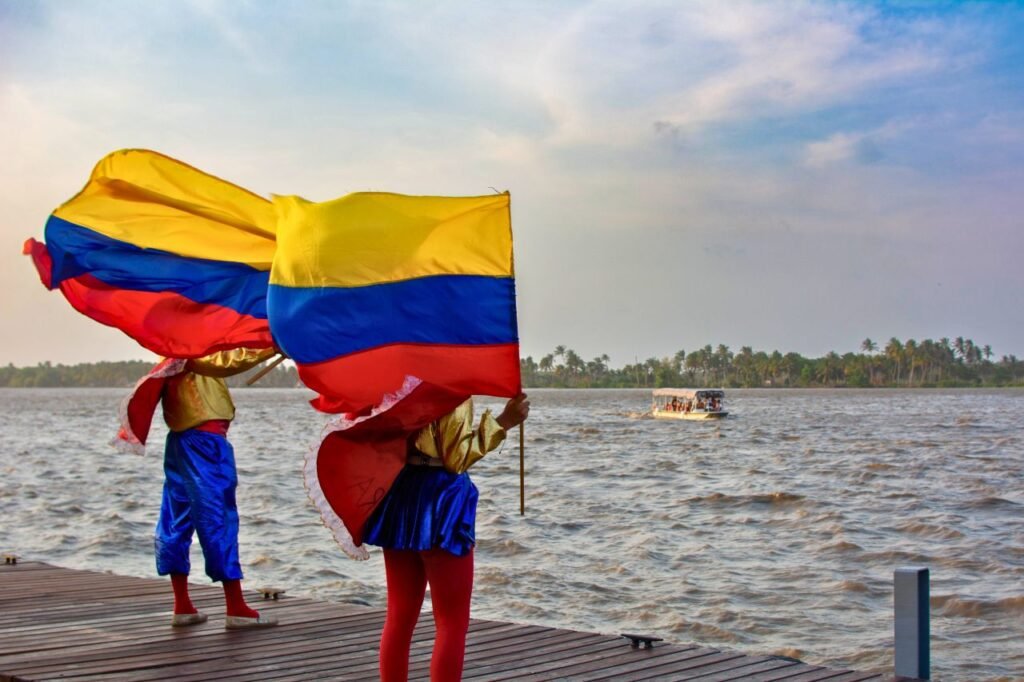
Vibrant Colombian flags waving over a scenic river with colorful costumes
The most iconic Colombian garment is the Sombrero Vueltiao (turned hat), originating from the Zenú indigenous culture of the Caribbean plains. Woven from the fibers of the caña flecha palm using intricate geometric black-and-white patterns, this resilient hat is a universally recognized symbol of Colombian identity. In the chilly Andean highlands, the Ruana—a heavy, sleeveless four-cornered wool poncho—remains a staple of rural attire, perfectly insulating farmers against mountain winds.
[ National Symbols of Colombia ] ┌───────────────────────┬───────────────────────┬───────────────────────┐ │ The Flag │ The National Tree │ The National Bird │ │ Yellow (wealth/sun), │ The Wax Palm of │ The Andean Condor │ │ Blue (seas/skies), │ the Quindío │ Symbolizing freedom │ │ Red (blood of heroes) │ (Tallest palm species)│ and national pride │ └───────────────────────┴───────────────────────┴───────────────────────┘The national flag consists of three horizontal bands: a large yellow top stripe symbolizing the nation’s vast natural wealth and sovereignty, a blue middle stripe representing the two oceans and clear skies, and a red bottom stripe honoring the blood spilled by patriots to secure national liberty.
Music, Dance & Art
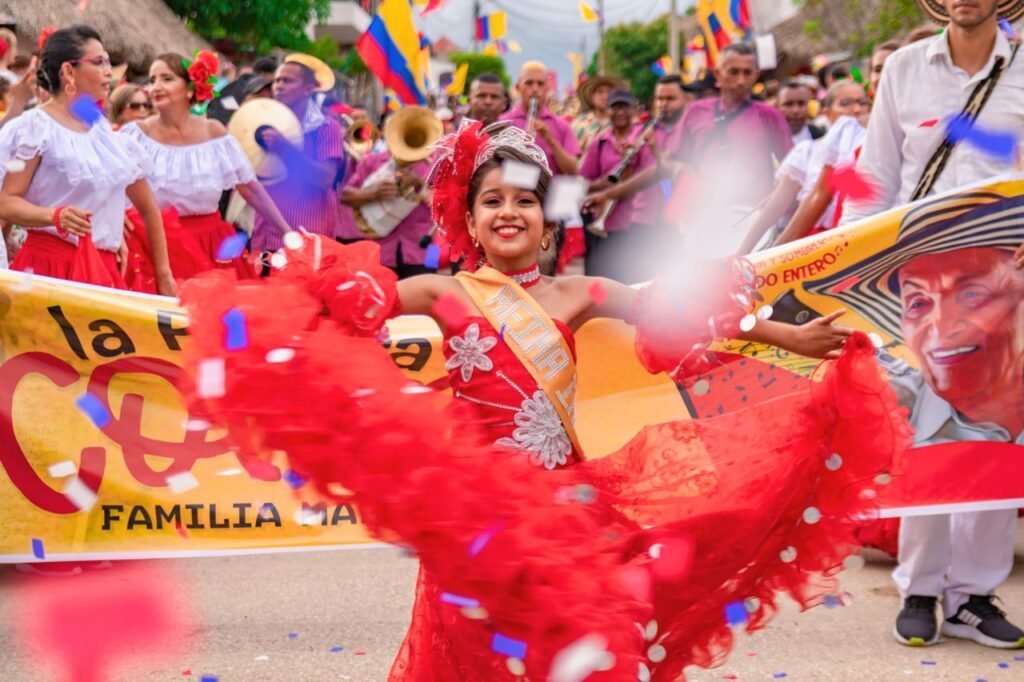
A joyful parade scene in Sincé, Colombia, featuring a young girl dancing in a colorful festival
The Soul of Cumbia and Vallenato
Colombia’s musical footprint is monumental. Cumbia, the foundational rhythm of the nation, emerged as a courtship dance on the Caribbean coast, merging Indigenous flutes (gaitas) with African drums and Spanish melodic structures.
Another deeply cherished genre is Vallenato, which utilizes the European accordion, the African-derived caja drum, and the Indigenous guacharaca scraper to tell lyrical stories of love, landscape, and local folklore. In contemporary spaces, Colombia has successfully exported global musical icons including Shakira, Juanes, Carlos Vives, and J Balvin, blending traditional roots with modern pop and urban beats.
Literature and Art
Colombia has made invaluable contributions to global high culture. Gabriel García Márquez, the 1982 Nobel Laureate in Literature, revolutionized the literary world with his masterpiece One Hundred Years of Solitude, pioneering the genre of Magical Realism—a style that mirrors the surreal, magical realities embedded within daily Colombian life.
In the visual arts, maestro Fernando Botero gained international acclaim for his signature style, Boterismo, which features exaggerated, voluptuous proportions to convey subtle political satire, humor, and sensuality. His massive bronze sculptures can be explored in public squares across Medellín and Bogotá.
Summary
Colombian culture is a luminous testament to what can blossom when diverse worlds converge. Out of a history of profound geological and historical intensity, its people have created an enduring heritage of music, literature, and culinary arts. From the energetic rhythms of Cumbia on the Caribbean shores to the mist-shrouded coffee farms of the Andes, Colombia invites the global community to shed its misconceptions and experience a resilient, welcoming culture where magic is a daily reality.
At Best Culture Insight, we see culture as the heartbeat of every society—the way people live, connect, and express their identity.