The Symphony of the Equator: A Deep Journey Into Ecuador Culture – South America
Posted in :

Perched on the western edge of South America, directly intersected by the earth’s equator, Ecuador is a nation where geographical marvels meet deep human heritage. Despite its relatively compact size, Ecuador holds a monumental identity shaped by its multi-ethnic people, known as Ecuatorianos.

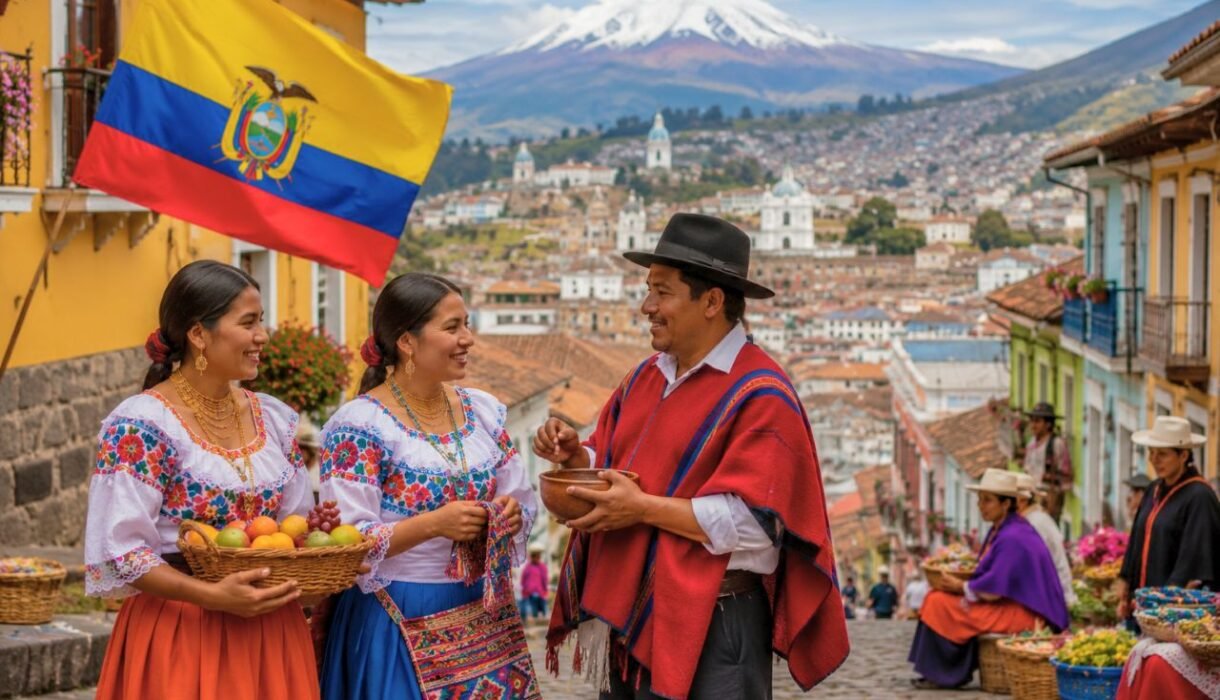
Vibrant market scene in historic Andean town – Ecuador culture, Ecuador, South America
To understand the culture of Ecuador is to step into a world built on a profound reverence for the land, a deeply ingrained spirit of community, and a peaceful yet fiercely resilient way of life. From the highland Kichwa communities of the Andes to the Afro-Ecuadorian marimba players of the Pacific coast, the country is a vibrant testament to cultural preservation and diversity. This comprehensive guide explores the history, customs, and daily rhythms that make Ecuadorian culture one of the most unique and enduring on the planet.
History & Origins
The historical foundations of Ecuador date back thousands of years before the arrival of European explorers. Advanced pre-Columbian societies—such as the Valdivia, Chorrera, and Cañari cultures—settled along the coast and through the high mountain valleys. The Valdivia culture, thriving as early as 3500 BCE, is famous for producing some of the oldest recorded ceramic art in the Americas.
In the late 15th century, the expansive Inca Empire pushed northward under Huayna Capac, conquering local tribes and integrating the region into Tahuantinsuyu (the Inca Empire). Quito became a critical northern capital, linked directly to Cusco by an extensive network of stone highways. However, the Inca rule was short-lived. In 1534, Spanish conquistadors led by Sebastián de Belalcázar seized Quito, ushering in nearly three centuries of colonial rule.
The Spanish Crown transformed Ecuador into the Real Audiencia de Quito, blending European architecture, language, and Catholicism with ancestral indigenous structures. This era also saw the forced migration of enslaved African populations, who brought their own distinct traditions to the coastal province of Esmeraldas and the Chota Valley.
Ecuador broke free from Spanish rule through the historic Battle of Pichincha on May 24, 1822, fought on the slopes overlooking Quito under the leadership of Marshal Antonio José de Sucre. After a brief period within Simón Bolívar’s Gran Colombia federation, Ecuador emerged as an independent republic in 1830, embarking on a long journey to honor and unite its diverse ancestral lineages.
Culture, Traditions & Customs
Marriage and Family Life
In Ecuador, the family unit (la familia) serves as the core foundation of daily life. Family networks extend far beyond the nuclear household, with grandparents, aunts, uncles, and cousins tightly knit into support systems. Traditional marriages often feature dual ceremonies: a legally binding civil wedding followed by a large, festive Catholic church ceremony. In indigenous communities, weddings are deeply communal affairs lasting several days, featuring traditional cleansing rituals, shared feasts, and symbolic gifts of wool, grain, and livestock to help the newlyweds establish economic independence.
Naming Ceremonies and Birth
Births are celebrated with deep spiritual significance. Among Catholic families, the bautizo (baptism) formally introduces the infant to the church and community. This ritual establishes the lifelong connection between the child and their padrinos (godparents), who act as secondary parents and protectors. In many Andean communities, traditional midwives (parteras) lead ancestral birth rituals, utilizing local medicinal herbs and postpartum warming therapies to ensure the health of both mother and child.
Major Festivals and Celebrations
Ecuador’s cultural calendar is punctuated by lively, synchronized festivals that fuse ancestral solar celebrations with Catholic saint days.
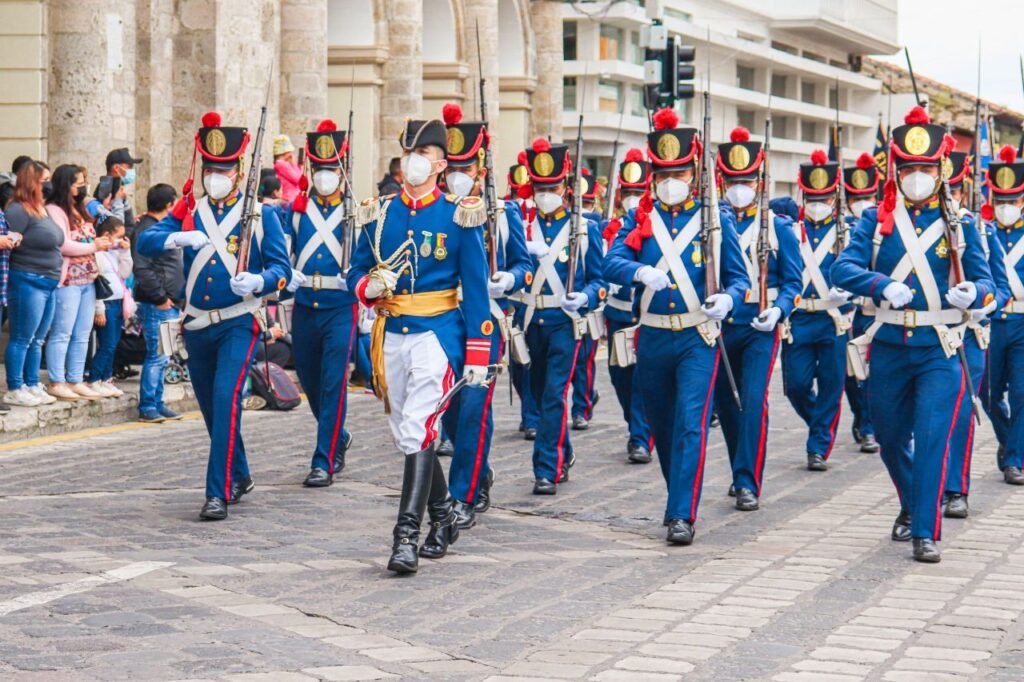
- Inti Raymi (Festival of the Sun): Celebrated across the Andean highlands every June, this ancient Inca harvest festival honors Pacha Mama (Mother Earth) and the sun for their agricultural bounty. It features vibrant rhythmic dancing, traditional instruments, and the iconic Diablo Huma—a mythological character wearing a two-faced woven mask who leads the celebratory processions.
- La Diablada de Píllaro (Devil Dance of Píllaro): Held in early January in the Tungurahua province, this high-energy festival features thousands of locals parading through streets wearing incredibly detailed, handmade devil masks, a custom originating as an artistic act of indigenous defiance against colonial oppression.
- La Fiesta de la Mamá Negra (The Black Mother Festival): Celebrated in Latacunga, this mesmerizing parade combines indigenous, African, and Spanish cultural influences, honoring the Virgin of Mercy while featuring a dynamic cast of characters, led by a man dressed as the “Mamá Negra.”
Rites of Passage
The Quinceañera marks a young girl’s transition into womanhood on her 15th birthday, celebrated with a formal mass, elaborate ballgowns, and a ceremonial changing of shoes to symbolize maturity. For young men in rural communities, taking on active responsibilities in the minga (communal volunteer workdays) represents a critical milestone, signaling their readiness to contribute to the village’s collective well-being.
Languages & Communication
While Spanish is the official language of government and commerce, Ecuador is officially recognized as a pluricultural state. Kichwa (the Ecuadorian dialect of Quechua) and Shuar are recognized as official languages of intercultural communication. Millions of highlanders speak Kichwa natively or use it alongside Spanish, directly influencing the local vocabulary.
Popular Ecuadorian Idioms:
- ¡Chulla!: Used to describe a single, unique, or final item (e.g., el chulla vida – you only live once).
- ¡Achachay!: A Kichwa-derived exclamation used instantly when feeling cold.
- ¡Ayayay!: An expression used to convey physical pain or sudden distress.
- ¡Chévere!: A ubiquitous South American term for cool, excellent, or awesome.
- De ley: A common phrase meaning “absolutely,” “of course,” or “by law.”
Everyday Communication
Ecuadorians are known for their gentle, polite, and formal communication style. Greetings are warm and deliberate; a soft handshake with a pleasant “Buenos días” (Good morning) or “Buenas tardes” (Good afternoon) is standard. Close female friends often greet each other with a light kiss on the right cheek, while men share a warm handshake coupled with a gentle pat on the shoulder.
Geography
Ecuador is defined by its division into four highly distinct, biodiverse geographic regions, each shaping its own local cultural traditions:
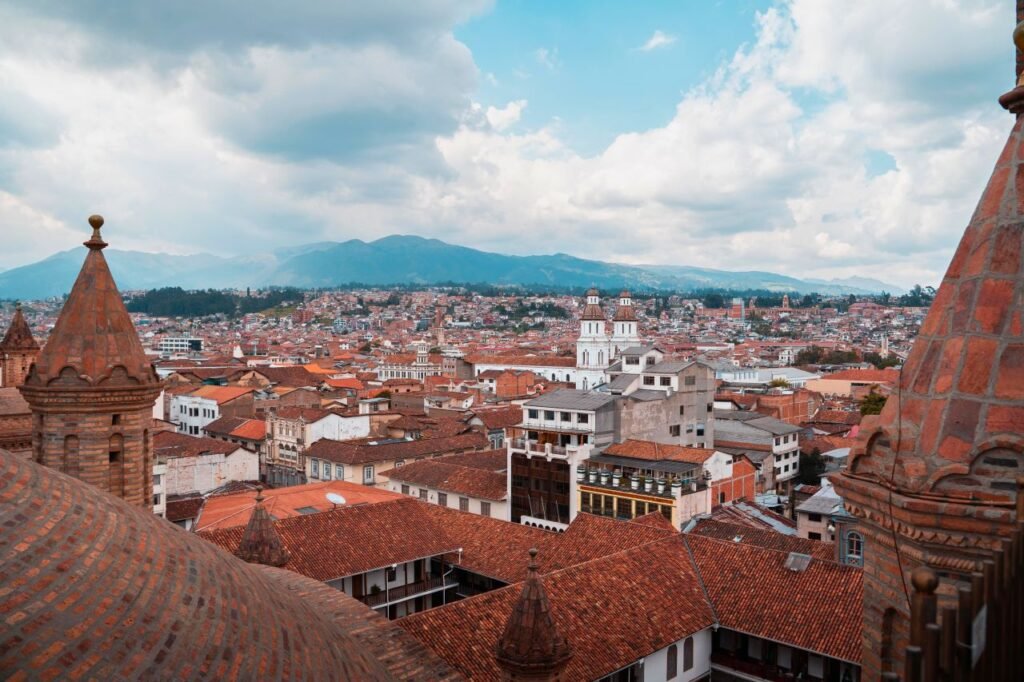
- La Sierra (The Highlands): The central volcanic spine of the Andes, home to snow-capped peaks like Chimborazo and Cotopaxi. This region features historic colonial cities, fertile agricultural valleys, and deep-rooted indigenous communities.
- La Costa (The Coast): A warm, tropical lowland stretching along the Pacific Ocean. It serves as the commercial heart of the country, defined by a laid-back lifestyle, thriving maritime industries, and rich afro-descendant cultures.
- El Oriente (The Amazon): A dense rainforest basin east of the Andes, drained by tributaries of the Amazon River. It is home to pristine national parks and ancestral indigenous nationalities, including the Waorani, Shuar, and Achuar.
- The Galápagos Islands: An isolated volcanic archipelago situated roughly 1,000 kilometers off the mainland coast, globally celebrated for its unparalleled endemic wildlife and critical place in ecological science.
Economy
Ecuador possesses a developing economy that shifted to full US Dollarization (using the USD as official tender) in the year 2000, bringing long-term monetary stability. The nation is a major exporter of petroleum, pumped primarily from the Amazon basin.
In the agricultural sector, Ecuador is a top global exporter of high-quality bananas and premium fresh-cut roses, which thrive under the intense, direct equatorial sunlight. The country has also earned international praise for its production of Arriba or Nacional fine aroma cacao beans, highly sought after by premium chocolatiers worldwide. Tourism—driven by the Galápagos Islands and well-preserved colonial centers—serves as a vital source of foreign exchange and sustainable employment.
Politics
Ecuador operates as a democratic presidential republic. The President acts as both head of state and head of government, elected by popular vote to serve a four-year term. The nation’s legislative branch is the unicameral National Assembly.
Ecuador’s political landscape is guided by its progressive 2008 Constitution, famously drafted in Montecristi. This document made Ecuador the first country in the world to legally recognize the intrinsic rights of nature (Derechos de la Naturaleza). It guarantees the protection of ecosystems and formally establishes Buen Vivir (Good Living) or Sumak Kawsay—an ancestral indigenous philosophy prioritizing harmony between humans, community, and the environment—as a foundational goal of state policy.
Ethnic Groups
Ecuador’s population is a beautiful, diverse mix of heritages. The government officially recognizes 14 distinct indigenous nationalities across its territory:
| Ethnic Identity | Estimated Population Share | Primary Geographic Regions |
| Mestizo | ~72% | Widespread across urban centers, Sierra, and Costa |
| Indigenous | ~7% | Andean highlands (Sierra) and Amazon basin (Oriente) |
| Afro-Ecuadorian | ~7% | Coastal Esmeraldas and the highland Chota Valley |
| Montubio | ~7% | Rural coastal plains and central farming regions |
| White / Euro-Descendant | ~6% | Major cities like Quito, Guayaquil, and Cuenca |
The Montubio are a distinct, officially recognized rural mestizo culture of the coastal provinces, celebrated for their exceptional horsemanship, oral poetry (amorfinos), and agricultural traditions.
Beliefs & Values
Roman Catholicism is the predominant religion in Ecuador, woven tightly into local laws, architectural landscapes, and family milestones. However, freedom of religion is constitutionally protected, paving the way for the steady growth of diverse Protestant denominations and secular communities.
Beyond institutional religious practices, Ecuadorian values are anchored in the worldview of Sumak Kawsay. This indigenous concept rejects pure materialism, emphasizing that true human fulfillment comes from maintaining an eco-centric balance with nature and cultivating deep solidarity within the community. Another core value is the concept of the minga—the collective call to voluntary community labor. Whether clearing a road, building a neighbor’s house, or cleaning a school, the minga demonstrates a deep commitment to shared responsibility.
Food & Cuisine
Ecuadorian cuisine (comida criolla) is a rich, comforting experience that varies dramatically based on altitude and region. It highlights fresh, local ingredients rather than heavy seasonings, relying on a savory cooking base known as refrito (a slow-cooked mixture of onions, garlic, achiote oil, and cumin).
Iconic Regional Dishes
- Locro de Papa: A creamy, velvety potato soup originating from the Andean highlands. Made with local papa chola, milk, and achiote, it is served piping hot with fresh cheese, corn, and slices of avocado.
- Ceviche Ecuatoriano: Unlike the dry, lime-cured Peruvian style, Ecuadorian ceviche is served as a chilled, flavorful soup broth containing shrimp, fish, or black clams, accented with lime juices, tomato, and thinly sliced red onions. It is traditionally served with chifles (crispy green plantain chips) or toasted corn kernels (tostado).
- Encebollado: The ultimate coastal comfort dish and a national favorite. This hearty, warm fish soup features fresh albacore tuna, yuca, plenty of red onions, and cilantro, widely celebrated as a restorative breakfast.
- Cuy Chactado: Roast guinea pig, marinated in garlic and spices and roasted over an open flame. It is a prized ancestral delicacy consumed during major celebrations in the Sierra.
Clothing & Symbols
Traditional dress in Ecuador remains an active, proud marker of regional identity and cultural heritage.
The indigenous artisans of Otavalo are globally recognized for their traditional attire. Otavaleño men typically wear crisp white calf-length trousers, dark blue reversible wool ponchos, and keep their hair braided into a single long shymba. Otavaleña women wear beautifully hand-embroidered white blouses with flared sleeves, dark wool wrap-around skirts (anacos), and strings of gold glass beads (wallkas) around their necks.
A global cultural icon often misattributed is the Panama Hat. These exquisite, lightweight straw hats are actually 100% native to Ecuador, handcrafted from the split fibers of the toquilla palm. The master weaving arts centered around Montecristi and Cuenca are recognized as a UNESCO Intangible Cultural Heritage.
The National Flag
Ecuador’s tricolor flag features three horizontal bands: a double-width yellow top stripe representing the abundance of crops, gold, and natural wealth; a blue stripe symbolizing the Pacific Ocean and equatorial skies; and a red stripe honoring the blood shed by the country’s independence heroes. At its center rests the national coat of arms, featuring the majestic Andean Condor protecting the nation.
Music, Dance & Art

Dancers in traditional attire celebrate culture in a vibrant street parade in Cuenca, Ecuador
Rhythm of the Andes and the Coast
Ecuador’s musical landscape is built on soulful, poetic melodies. The national musical genre is the Pasillo, a melancholic, poetic style performed with guitars and mandolins, reflecting themes of love, longing, and heartbreak. The legendary singer Julio Jaramillo remains a timeless national icon of this art form.
In the highlands, ancestral music is driven by the Sanjuanito, an energetic, cheerful rhythm played on traditional woodwind instruments like the rondador (panflutes) and quena (notched flute), drawing entire communities into synchronized circle dances. On the warm Pacific coast, the Afro-Ecuadorian communities of Esmeraldas preserve the vibrant Marimba music, featuring dynamic wooden xylophones, call-and-response singing, and energetic hip-swaying dances that tell historical stories of freedom.
[ Ancestral Sounds of Ecuador ] ┌─────────────────────────┬─────────────────────────┬─────────────────────────┐ │ The Rondador │ The Pasillo │ The Marimba │ │ An Andean panflute │ The melancholic, │ An Afro-Ecuadorian │ │ made of cane tubes, │ poetic national genre │ percussive xylophone, │ │ producing birdsong │ played with acoustic │ symbolizing rhythm │ │ like chord structures. │ string instruments. │ and resistance. │ └─────────────────────────┴─────────────────────────┴─────────────────────────┘Visual Arts and Painting
Ecuador has produced some of Latin America’s most influential visual artists. Foremost among them is Oswaldo Guayasamín, a world-renowned master painter of indigenous Kichwa and Mestizo descent. His raw, highly emotional expressionist style exposed the historical struggles, structural poverty, and incredible resilience of the indigenous and oppressed peoples of the Americas, preserved forever within his masterpiece museum, La Capilla del Hombre (The Chapel of Man) in Quito.
Summary
Ecuadorian culture stands as a brilliant example of deep ancestral identity thriving alongside modern development. From the legal recognition of the rights of nature to the preserved art of toquilla weaving, the country honors its roots with quiet pride. By weaving together the distinct voices of the Andes, the Pacific coast, and the Amazonian rainforest, Ecuador offers the world a lesson in balance, community solidarity, and cultural beauty at the center of the earth.
At Best Culture Insight, we see culture as the heartbeat of every society—the way people live, connect, and express their identity.