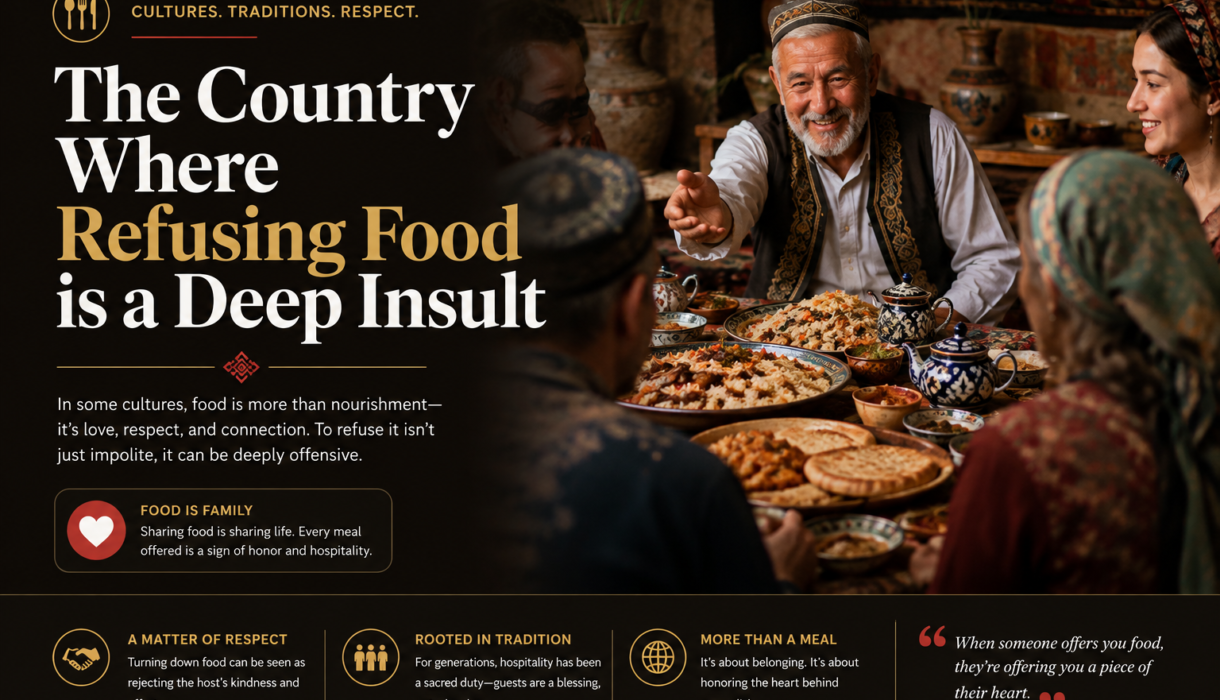

In the heart of the Caucasus, the nation of Georgia views hospitality not merely as polite social behavior, but as a sacred duty embedded in its national DNA. An ancient Georgian proverb asserts that “a guest is a gift from God,” elevated to a status that demands unconditional generosity from the host. Because offering a meal represents the absolute peak of this cultural reverence, declining food or turning down a second serving is rarely seen as a personal preference. Instead, refusing what is offered can be perceived as a direct rejection of the host’s honor, house, and divine goodwill.
The Cultural Significance of the Supra
Central to understanding this intense culinary devotion is the supra, a traditional Georgian feast that serves as the foundation of social gathering. Overseen by a designated toastmaster known as the tamada, the supra is an orchestrated celebration featuring endless platters of cheese-filled khachapuri, savory khinkali dumplings, and local wines. The table is intentionally kept overflowing to signal prosperity and endless warmth. In this setting, food functions as an active currency of affection, making it vital for visitors to accept each dish as a gesture of goodwill rather than just sustenance.
The Spiritual Obligation of Hospitality
The root of this insistence on feeding guests stems from centuries of rugged history and deep spiritual traditions. Historically, welcoming travelers into one’s home meant providing safety, warmth, and nourishment amidst harsh mountainous terrain and unpredictable political eras. Offering food became an unspoken pact of peace and protection between strangers. Consequently, when a host prepares a meal today, they are offering a piece of their home and lineage. To decline that offering suggests that the host’s generosity is inadequate or that the peace offering is unwelcome.
How Polite Refusals Mistranslate Across Cultures
For many Western travelers, saying “no thank you” when full is considered standard, considerate dining etiquette. However, in Georgia, dietary restraint during a meal can easily backfire. Hosts often interpret a guest’s empty plate or polite decline as a sign that the food was unappetizing or that they failed to provide enough. Rather than accepting a refusal, a Georgian host will typically insist multiple times, piling more food onto the guest’s plate to ensure total comfort. True politeness in Georgia requires taking at least a small portion of everything presented.
Navigating the Table with Cultural Respect
Navigating a Georgian meal successfully requires subtle strategy rather than flat refusal. Rather than declining a dish outright, experienced travelers learn to leave a tiny morsel of food on their plate when they are genuinely finished, signaling that the host has successfully satisfied their appetite. Pacing oneself throughout the long, course-heavy meal is equally crucial to managing the sheer volume of dishes. Ultimately, embracing Georgia’s intense food culture allows outsiders to experience a rare form of human warmth—one where sharing a table is the highest form of respect.