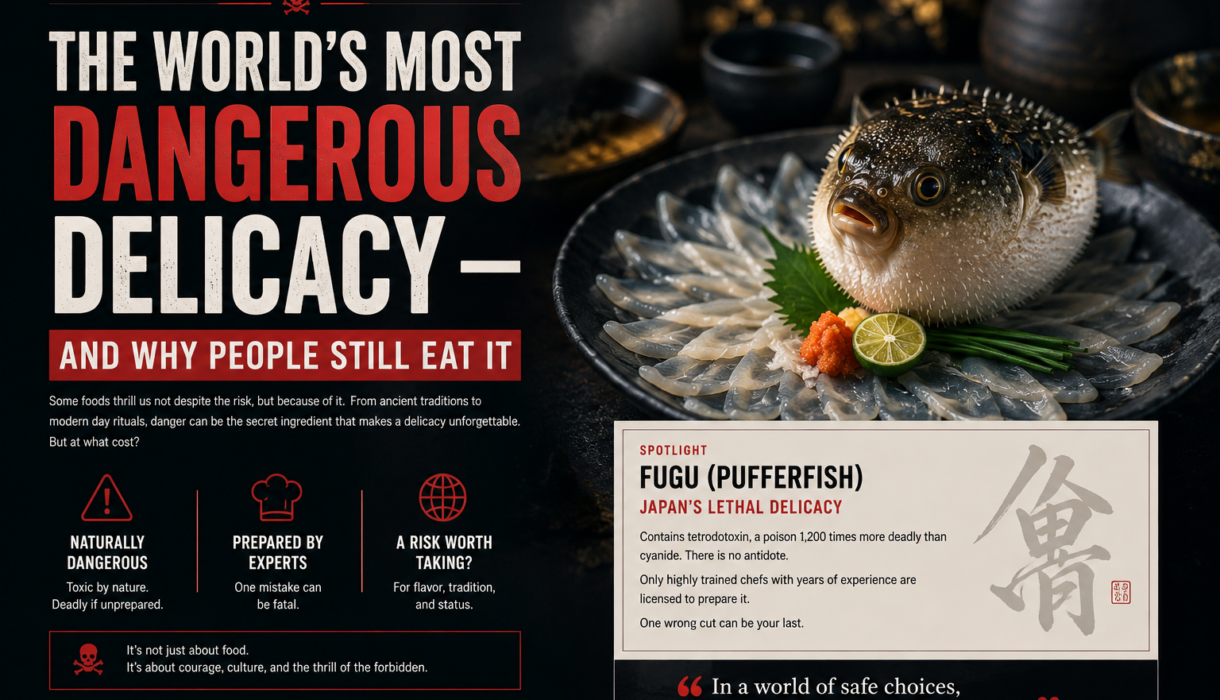

In the high-end dining rooms of Tokyo and Osaka, adventurous food enthusiasts gather to pay hundreds of dollars for a dish that could theoretically be their last. The subject of this high-stakes culinary obsession is fugu, or Japanese pufferfish. Far from a standard seafood order, fugu harbors a potent neurotoxin called tetrodotoxin, an organic compound up to 1,000 times more lethal to humans than cyanide. A dose smaller than a pinhead can trigger complete body paralysis while leaving the victim fully conscious. Because there is no known antidote, a single slip of a chef’s blade can transform a luxury dinner into a fatal encounter. Yet, despite the clear and present danger, fugu remains one of the world’s most coveted and celebrated gastronomic experiences.
The Lethal Chemistry Behind the Pufferfish
The source of fugu’s deadly reputation lies in its internal organs, particularly the liver, ovaries, and skin. Interestingly, the pufferfish does not produce this neurotoxin on its own; rather, it absorbs and accumulates the poison by eating toxic marine bacteria, wild starfish, and snails over time. Tetrodotoxin is completely odorless, tasteless, and heat-stable, meaning that normal cooking methods like boiling or grilling do nothing to neutralize its lethal power. Once ingested, the toxin blocks sodium channels in human nerve cells, quickly shutting down muscle movement and causing respiratory failure.
A Masterclass in Culinary Precision
To prevent catastrophic accidents, Japan enforces strict legal regulations on the preparation and sale of fugu. Aspiring chefs must undergo two to three years of intense specialized training before facing a notoriously rigorous licensing examination. The test requires candidates to accurately identify various pufferfish species, dissect the fish in under twenty minutes, and meticulously separate the edible white flesh from the toxic innards without spilling a single drop of blood. With pass rates hovering around 35 percent, only highly disciplined masters are permitted to serve the fish, reducing modern dining incidents to near zero in professional establishments.
The Subtle Flavor Worth the Gamble
Beyond the dramatic reputation, gourmets continue to seek out fugu for its unique and subtle culinary qualities. Unlike typical soft seawater fish, raw fugu flesh (fugu-sashi) features a remarkably firm, chewy texture and a clean, delicate umami flavor. Master chefs slice the meat so thin that it becomes translucent, often artfully arranging the pieces on decorative platters to resemble a chrysanthemum flower—a classic Japanese symbol associated with longevity. When paired with citrusy ponzu sauce and fresh scallions, the dish delivers a subtle, refreshing taste profile that contrasts sharply with its terrifying biological defense.
The Thrill of Cultural Heritage
Ultimately, the enduring appeal of eating pufferfish comes down to a blend of rich cultural tradition and psychological thrill. For centuries, Japanese diners have celebrated the fish as a prized winter ritual, viewing the slight risk as part of the overall sensory experience. While modern science has allowed farmers to breed non-toxic, toxin-free fugu in controlled environments, true connoisseurs still prefer wild pufferfish prepared by licensed experts. In the end, eating fugu is less about courting danger and more about placing ultimate trust in absolute craftsmanship—a rare dining experience where culinary art literally holds human life in its hands.