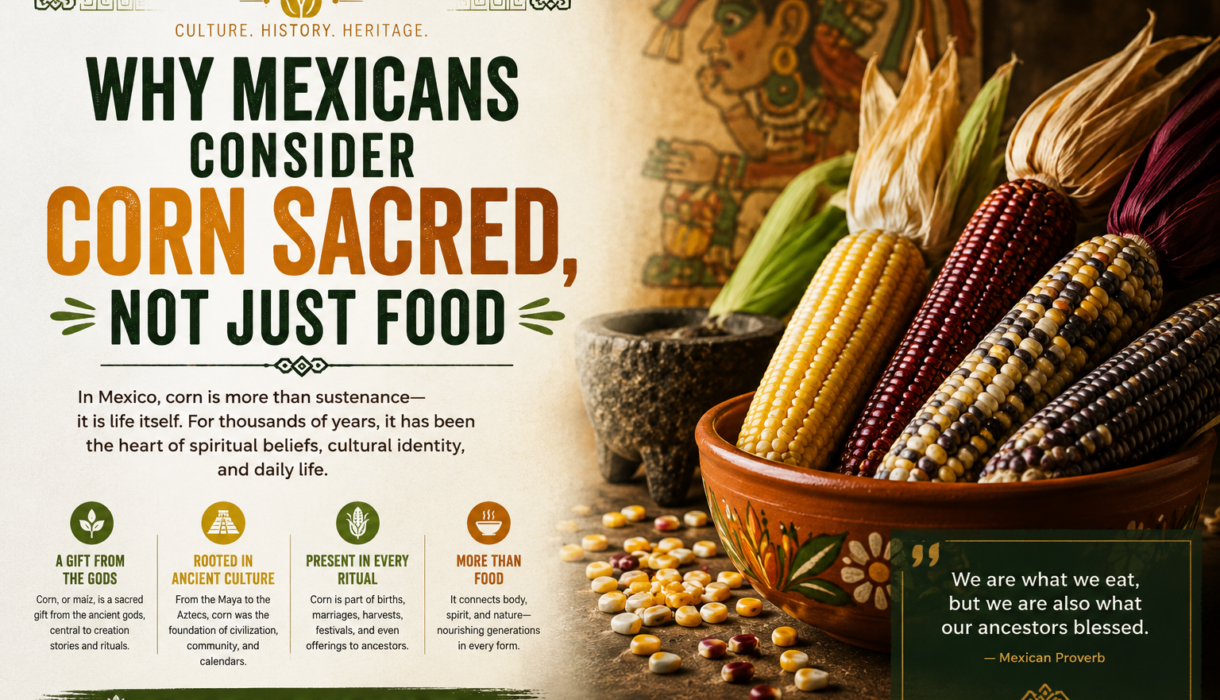

To understand Mexico’s soul, one must look beyond the kitchen table to the vibrant fields of native maize. For thousands of years, corn (maíz) has been the fundamental engine of Mexican civilization, shaping its traditions, spiritual views, and culinary identity. Across the nation, a famous folk saying captures this profound truth: “Sin maíz, no hay país”—without corn, there is no country. In Mexico, corn is never treated as a simple commodity or side dish; it is revered as a sacred life force, an ancestral legacy, and the living embodiment of human existence itself.
The Mythological Origin of the Corn People
The reverence for maize is deeply anchored in Mesoamerican mythology, particularly in the sacred Mayan text, the Popol Vuh. According to ancient creation stories, the gods tried and failed to fashion humanity out of mud and wood before finally crafting true human beings out of ground yellow and white corn dough. This spiritual origin story fundamentally reshaped how indigenous communities viewed the crop: people did not simply cultivate corn; they shared a biological and spiritual bloodline with it. Because humanity was created from maize, growing and consuming the grain became a sacred duty of mutual survival and gratitude.
Nixtamalization as an Ancient Alchemy
Beyond spiritual mythology, ancient Mesoamerican societies developed an extraordinary culinary technology known as nixtamalization that transformed corn into a nutritional powerhouse. By soaking dried kernels in an alkaline solution of water and mineral lime (calcium hydroxide), early agriculturalists unlocked essential nutrients like vitamin B3 (niacin) and calcium that the body could not otherwise absorb. This ancient process not only prevented malnutrition across vast populations, but it also created the pliable dough (masa) needed to make authentic tortillas, tamales, and tlayudas, proving that native ingenuity elevated corn into the true foundation of human life.
Biodiversity as a Symbol of Cultural Heritage
Mexico is the historical birthplace of maize, housing dozens of native heirloom varieties that burst with vibrant shades of blue, red, purple, yellow, and white. Each unique variety has been carefully preserved and adapted across generations to thrive in specific microclimates, from high mountain valleys to tropical coastal plains. For Mexican farmers, these heirloom cobs represent living history and ancestral wisdom. Protecting native seeds against industrial monoculture and genetically modified imports is viewed not just as an agricultural defense, but as a crucial fight to preserve national identity and ecological sovereignty.
A Modern Symbol of Community and Resistance
In contemporary Mexico, corn continues to serve as the ultimate social equalizer and unifying thread across diverse communities. From rural farming villages celebrating harvest festivals to world-renowned urban dining spaces, sharing hot, freshly pressed tortillas remains a universal act of connection and family bonding. As global food systems favor mass production and uniform crops, the Mexican devotion to native maize stands as a powerful statement of cultural pride. Ultimately, corn remains a sacred bridge connecting past, present, and future—a holy grain that continuously feeds both the body and the spirit of Mexico.