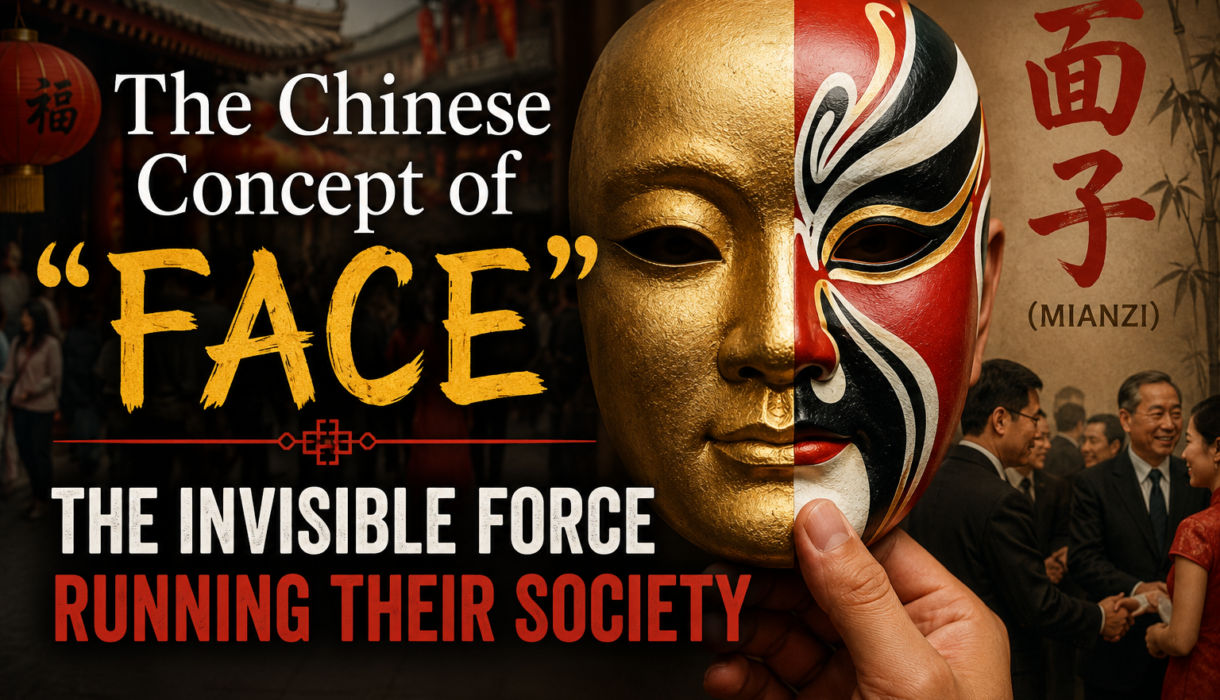

To outsiders, navigating business and social life in China can often feel like playing a game with an unwritten rulebook. At the core of this cultural complexity is a powerful, invisible currency known as “Face”—or mianzi (面子) and lian (脸) in Mandarin. Far more than mere pride, vanity, or ego, the concept of face represents a person’s social standing, reputation, and dignity within their community. In Chinese society, face is treated as a tangible asset that can be given, earned, lost, or saved. Understanding this unseen force is the single most critical factor for successfully building relationships and conducting business in China.
The Two Dimensions of Face: Lian vs. Mianzi
While Westerners often use the blanket term “face,” Chinese culture separates it into two distinct dimensions. The first is lian, which refers to a person’s moral character, integrity, and basic decency. Losing lian—such as through dishonest behavior or breaking the law—is a severe blow that casts shame on both the individual and their family, making it incredibly difficult to function in society. The second is mianzi, which represents earned prestige, professional reputation, and socioeconomic status. While lian is a moral baseline that must be fiercely guarded, mianzi is a dynamic credit system that fluctuates based on your career achievements, wealth, and social connections.
Giving Face: The Art of Mutual Respect
In daily interactions, “giving face” (gei mianzi) is the ultimate catalyst for harmony. Giving face means showing deliberate respect, praising someone publically, or acknowledging their status in front of their peers. In a corporate environment, this could mean treating a business partner to an elaborate banquet, offering premium gifts, or formally deferring to senior managers during meetings. By uplifting others, you not only make them feel valued, but you also elevate your own status. It creates a powerful loop of mutual respect, signaling that you are a sophisticated, trustworthy individual who understands the subtle art of relationship-building (guanxi).
Losing Face: The Cost of Public Embarrassment
Conversely, “losing face” (diu lian) can completely fracture personal and professional bonds. In Chinese culture, causing someone to lose face—even accidentally—is perceived as an aggressive act of disrespect. Publicly contradicting a boss, criticizing a colleague in front of others, or rejecting a host’s hospitality can instantly destroy months of hard work. To avoid this, successful communicators use indirect diplomacy. If a mistake is made, it is handled privately. Disagreements are smoothed over with subtle language rather than blunt confrontation. This protects the dignity of everyone involved, allowing them to “save face” (liu mianzi) and maintain communal harmony.
A Modern Blueprint for International Success
As China continues to exert massive influence on global trade and international relations, the concept of face remains as relevant as ever. It is not an outdated, archaic tradition; it is a sophisticated framework for conflict resolution and social cohesion that shapes modern corporate boardrooms and geopolitical strategies alike. For international entrepreneurs, diplomats, and expats, mastering the rules of face is not just a gesture of cultural appreciation. It is a highly practical, strategic tool that unlocks doors, builds unbreakable trust, and guarantees long-term success in one of the world’s most dynamic markets.