
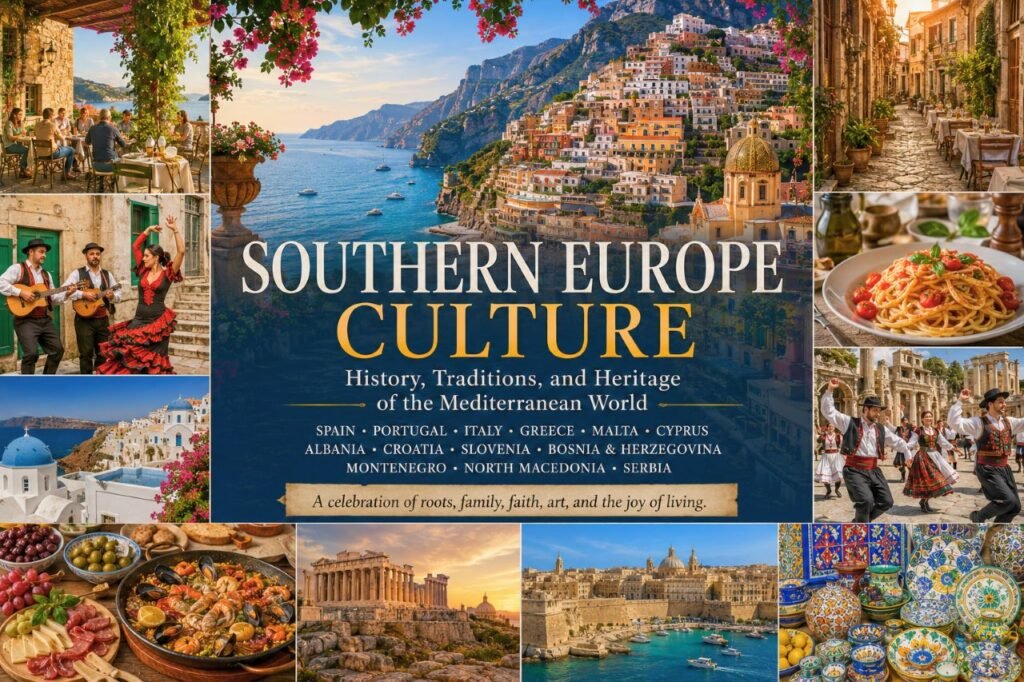
The Culture of Southern Europe is a sun-drenched, vibrant tapestry forged along the shores of the Mediterranean Sea, where ancient civilizational roots blend with warm hospitality, family-centered living, and a passionate zest for life.
Encompassing countries across the Iberian Peninsula (Spain and Portugal), the Italian Peninsula (Italy), the Balkan Peninsula (Greece, Albania, Croatia, Slovenia, Bosnia and Herzegovina, Montenegro, North Macedonia, and Serbia), and island nations such as Malta and Cyprus, Southern Europe serves as the cradle of Western civilization.
Defined by a outdoor-centric lifestyle, deep religious and familial bonds, world-renowned culinary heritage, and centuries of artistic genius, Southern European life celebrates human connection, artistic expression, and enduring tradition.
History & Origins
Southern Europe’s cultural origins represent the foundational bedrock of European history, shaped by ancient empires, maritime exploration, and cross-cultural exchange between Europe, North Africa, and the Near East.
- Classical Antiquity (Ancient Greece & Rome): Greece established the world’s earliest democratic institutions, philosophical traditions, theatrical arts, and Olympic athletic ideals. Building upon Greek ideals, the Roman Empire unified the Mediterranean basin (Mare Nostrum), introducing Roman law, Latin linguistic foundations, engineering marvels, and monumental architecture across the continent.
- Byzantine & Islamic Influences: Following the fall of Western Rome, the Byzantine Empire preserved Greco-Roman scholarship in the East. Meanwhile, the Iberian Peninsula experienced over seven centuries of Moorish (Islamic) rule (Al-Andalus), introducing advanced mathematics, irrigation systems, unique architectural motifs (such as horseshoe arches and intricate tilework), and culinary innovations.
- The Renaissance & Age of Discovery: During the 14th to 17th centuries, Italian city-states like Florence and Venice sparked the European Renaissance, revolutionizing painting, sculpture, and humanistic philosophy. Concurrently, maritime explorers from Portugal and Spain expanded global trade networks, initiating unprecedented global cultural exchanges.
- Modern Transformations: In the 19th and 20th centuries, Southern European nations navigated political unifications, democratic transitions, and economic integration into the European Union while maintaining their distinctive regional identities and heritage.
Culture, Traditions & Customs
Life in Southern Europe emphasizes community participation, intergenerational family structures, and vibrant street festivals.
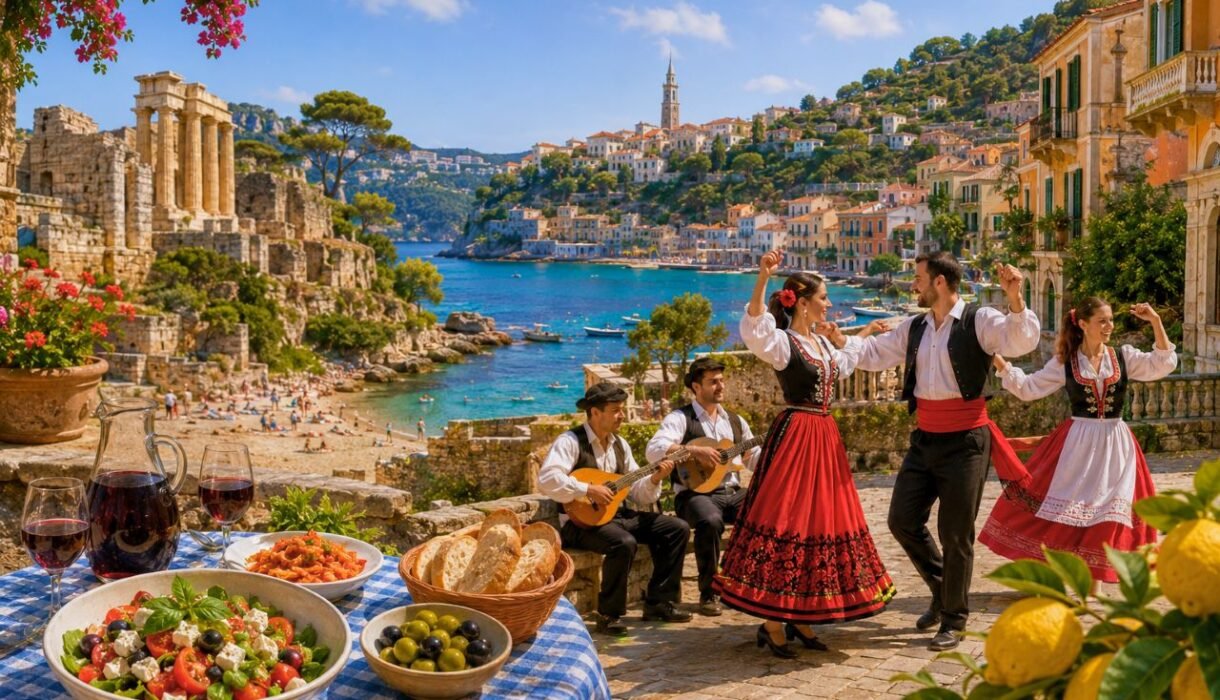
- Family Life & Rites of Passage: The extended family (la familia / la famiglia) remains the core pillar of society. Major life events—such as infant baptisms, First Communions, elaborate church weddings, and saint’s day celebrations—are marked by large family gatherings and multi-course feasts.
- Social Rhythms & Lifestyle Customs:
- Passeggiata / Paseo: An established evening social tradition where people walk leisurely through town squares (piazze or plazas) to greet neighbors, socialize, and enjoy a pre-dinner drink.
- Siesta / Rest Period: A midday break during the hottest hours of the day, where shops temporarily close to allow families to share a hearty meal and rest.
- Festivals & Carnival (Carnevale / Fiestas):
- Carnival of Venice (Italy): Renowned worldwide for its ornate silk costumes and intricate porcelain masks.
- Semana Santa (Holy Week in Spain & Portugal): Solemn religious processions featuring elaborate floats (pasos) carrying sacred statues through cobblestone streets.
- Panegyria (Greece): Summer festival celebrations held in island villages featuring live traditional music, dancing, and communal meals honoring patron saints.
Languages & Communication
Language Families
Southern Europe is characterized by two major language families, alongside unique independent branches:
- Romance Languages (Latin Origin): Italian, Spanish (Castellano), Portuguese, Catalan, Galician, and Romanian share direct linguistic roots in Vulgar Latin.
- Hellenic Branch: Modern Greek forms an independent branch of the Indo-European language family, preserving a continuous written history spanning over 3,000 years.
- South Slavic Languages: Slovenian, Croatian, Bosnian, Serbian, Montenegrin, and Macedonian are spoken across the Balkan region.
- Unique Isolates: Albanian constitutes its own independent Indo-European branch, while Basque (Euskara), spoken in northern Spain, is a pre-Indo-European language isolate unrelated to any known living tongue.
Communication Style
Southern Europeans are known for warm, expressive, and high-context communication. Conversations feature animated body language, hand gestures, close physical proximity, and direct emotional engagement. Greetings typically involve warm handshakes, light arm pats, or double-cheek kisses (besos / baci).
Geography
Southern Europe spans three major European peninsulas extending into the Mediterranean Sea, presenting diverse, dramatic, and sun-drenched physical landscapes.
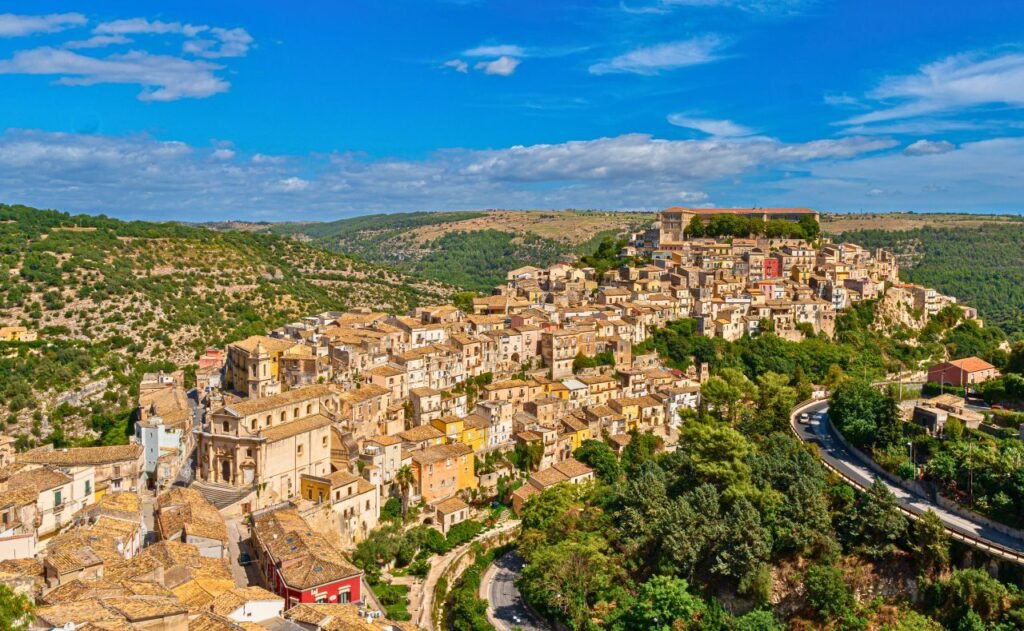
- Peninsulas & Coastlines: Features the rugged mountain chains of the Pyrenees, Apennines, and Pindus, bordered by thousands of miles of sandy beaches, coastal cliffs, and pristine island archipelagos (including the Balearic Islands, Sicily, Sardinia, Crete, and the Cyclades).
- Climate: The signature Mediterranean climate brings warm, dry, sunny summers and mild, wet winters, providing ideal conditions for olive groves, vineyards, and citrus orchards.
Economy
Southern European economies balance traditional agricultural output, vibrant tourism, high-end manufacturing, and maritime trade.
- Tourism & Hospitality: As one of the world’s premier travel destinations, tourism plays an essential economic role, drawing millions of visitors annually to historical monuments, coastal resorts, and UNESCO World Heritage sites.
- Agriculture & Exports: Renowned for high-quality food products, including extra virgin olive oil, premium wines, cured meats, citrus fruits, and artisanal cheeses.
- Industry & Commerce: Major urban hubs excel in automotive engineering, fashion and luxury goods (particularly in Milan and Madrid), shipping, and renewable energy development.
Politics
Southern European nations operate as stable democracies, with most belonging to the European Union and utilizing the Euro currency.
- Governance Structures: Spain, Portugal, Italy, Greece, and Balkan neighbors operate under parliamentary systems (with Spain being a parliamentary constitutional monarchy, while others are democratic republics).
- Civic Engagement: Public political discourse is active and passionate, characterized by strong voter participation, community assemblies, and vibrant political debates in public squares.
Ethnic Groups
Southern Europe possesses a diverse demographic tapestry shaped by centuries of Mediterranean trade and historical migrations:
- Regional Identities: Spaniards, Portuguese, Italians, Greeks, Albanians, Croats, Serbs, Slovenes, and Maltese form the core populations.
- Sub-National Cultural Groups: Strong regional identities exist within nations, such as Catalans, Galicians, and Basques in Spain; Sicilians and Sardinians in Italy; and Cretans in Greece.
- Modern Multiculturalism: Major cosmopolitan cities like Rome, Madrid, Barcelona, and Lisbon are home to growing international communities from Latin America, North Africa, Sub-Saharan Africa, and South Asia.
Beliefs & Values
Spiritual Traditions
Historically rooted in Christian faith, Southern Europe is predominantly Roman Catholic across the Iberian Peninsula, Italy, and the Western Balkans, while Greece and the Eastern Balkans are predominantly Eastern Orthodox Christianity. Historically significant Muslim communities enrich Albania and Bosnia and Herzegovina.
Core Values
- Familism & Community: Family loyalty, hospitality to guests (filoxenia in Greece), and intergenerational support take absolute priority over individual isolation.
- Life Appreciation (Joie de Vivre): A shared cultural priority on enjoying the present moment, savoring good food, prioritizing leisure time, and nurturing personal relationships over intense workplace stress.
Food & Cuisine
Southern European gastronomy—celebrated globally as the Mediterranean Diet—is recognized by UNESCO as an Intangible Cultural Heritage for its health benefits, freshness, and cultural centrality.
- Core Ingredients: Built upon the Mediterranean holy trinity: olive oil, wheat (pasta and bread), and wine, supplemented by fresh seafood, sun-ripened tomatoes, garlic, herbs, and legumes.
- Iconic Regional Dishes:
- Paella (Spain): Saffron-infused rice dish cooked in a flat pan with seafood, rabbit, or chicken.
- Fresh Pasta & Pizza (Italy): Artisanal dough dishes crafted with simple, high-quality sauces, fresh mozzarella, and basil.
- Moussaka & Greek Salad (Greece): Baked eggplant, minced meat, and béchamel sauce layered to perfection, served alongside fresh cucumbers, tomatoes, olives, and feta cheese.
- Bacalhau (Portugal): Salted codfish prepared in hundreds of traditional ways, representing a cornerstone of Portuguese maritime heritage.
- Tapas / Meze: A widespread dining culture of sharing small savory plates among friends over drinks.
Clothing & Symbols
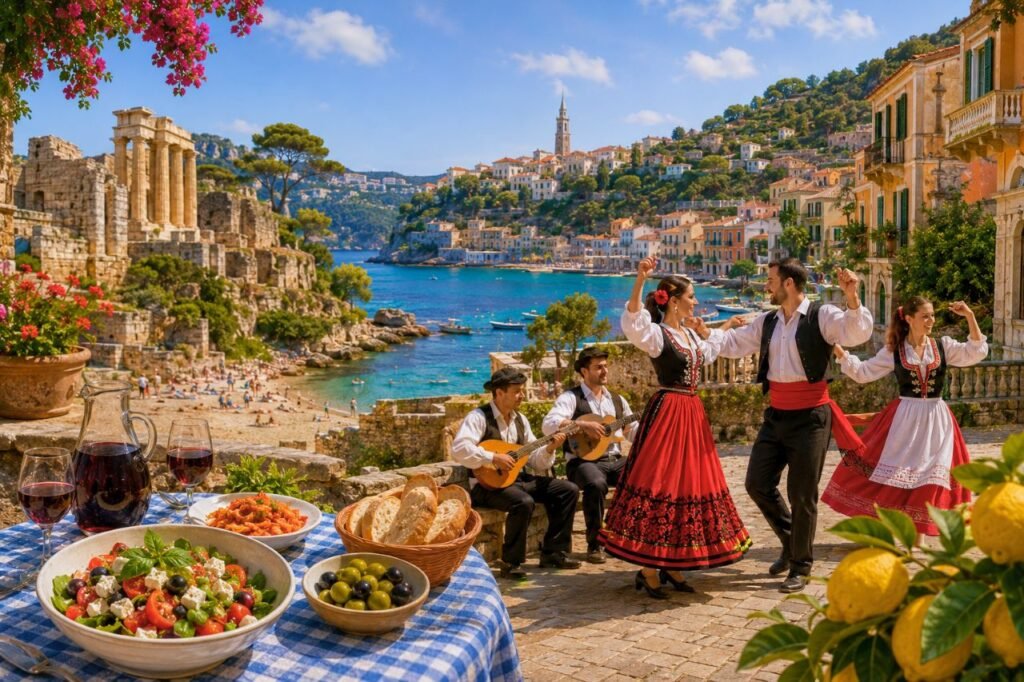
Traditional Attire & Modern Fashion
- High Fashion Capitals: Cities like Milan, Madrid, and Florence are world leaders in modern fashion design, leather craftsmanship, and luxury textile manufacturing.
- Folk Costumes: Traditional regional attire features vibrant hand-embroidered waistcoats, layered lace skirts, ruffled dresses, and traditional head coverings worn during village festivals.
Cultural Symbols
- The Olive Branch: Ancient symbol of peace, abundance, and resilience across Mediterranean civilizations.
- Azulejos: Intricate blue-and-white glazed ceramic tiles adorning historic buildings across Portugal and Spain.
- The Evil Eye (Nazar / Mati): A traditional protective amulet widely displayed across Greece and the Balkans to ward off negative energy.
Music, Dance & Art
- Performing Arts & Dance:
- Flamenco (Spain): Passionate art form combining intricate footwork, acoustic guitar, singing (cante), and expressive hand gestures.
- Fado (Portugal): Melancholic, soulful folk singing accompanied by Portuguese guitar, capturing feelings of nostalgia (saudade).
- Tarantella (Italy): High-tempo, joyful traditional folk dance historically performed to live tambourine music.
- Sirtaki & Kalamatianos (Greece): Circle folk dances performed at celebrations, emphasizing collective unity.
- Visual Art & Architecture: Home to architectural masterworks ranging from the Parthenon in Athens and the Colosseum in Rome to Gothic cathedrals, Renaissance palaces, and the whimsical modernist designs of Antoni Gaudí in Barcelona.
Summary
Southern Europe Culture represents a timeless celebration of human connection, historical depth, culinary mastery, and artistic passion. By balancing ancient traditions with a warm, relaxed approach to everyday living, the Mediterranean world continues to inspire global appreciation for family, food, and the art of living well (la dolce vita).
At Best Culture Insight, we see culture as the heartbeat of every society – the way people live, connect, and express their identity.