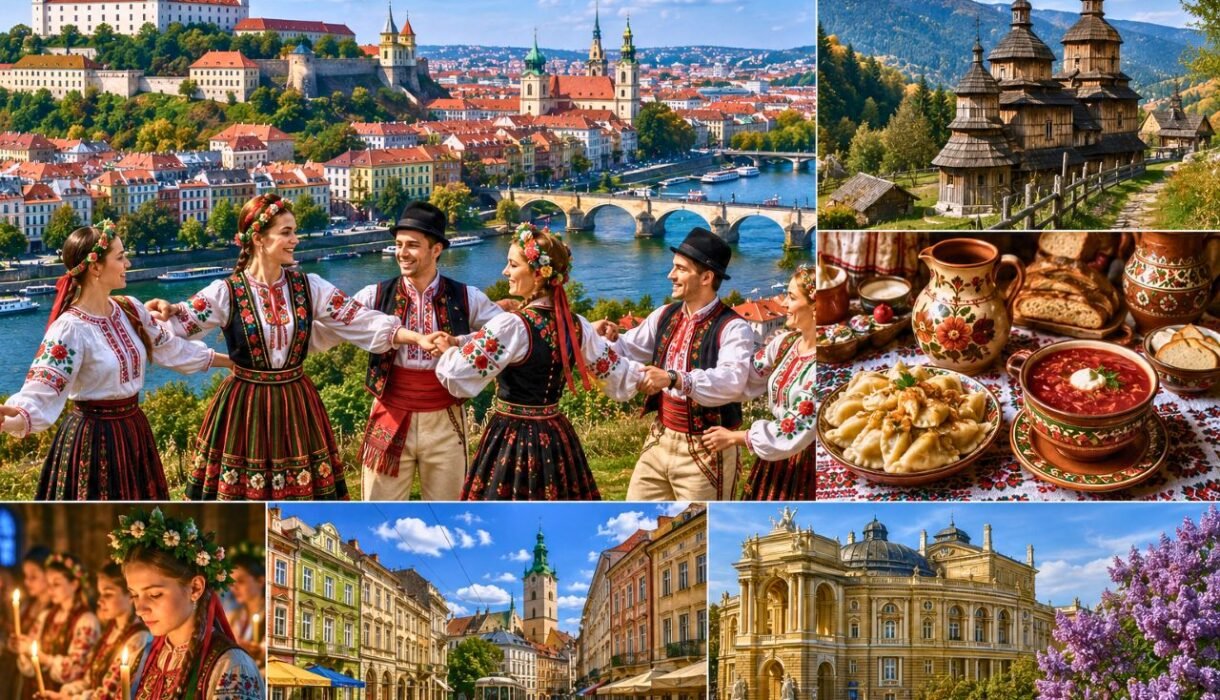

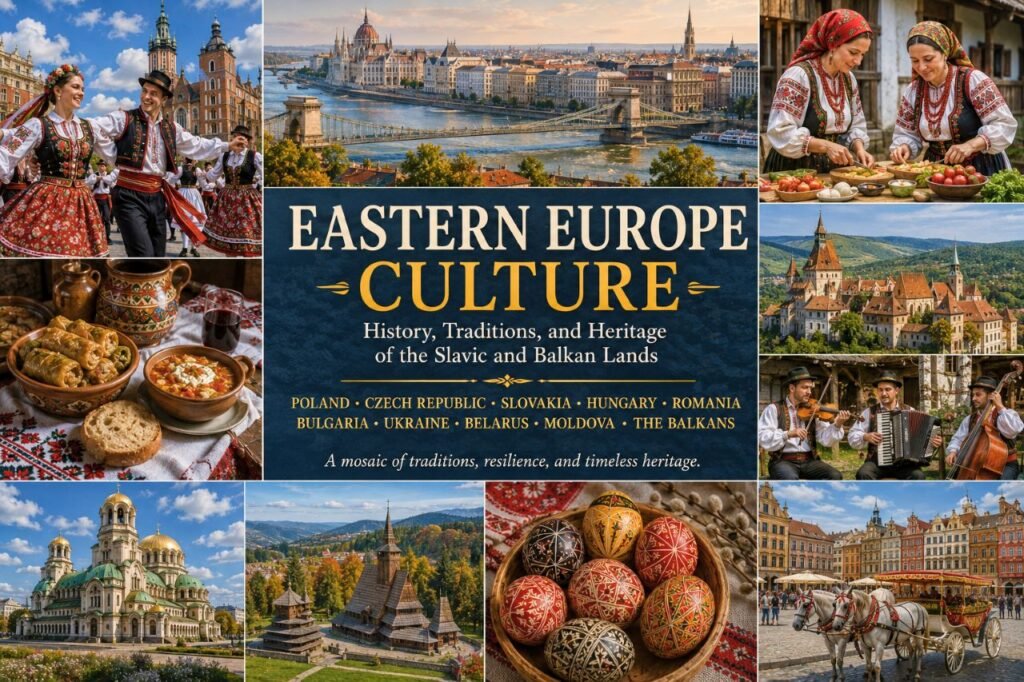
Eastern Europe Culture: History, Traditions, and Heritage of the Slavic and Balkan Lands.
The Culture of Eastern Europe is a rich, complex mosaic shaped by ancient Slavic traditions, imperial legacies, resilient community bonds, and deep-rooted spiritual values. Encompassing Central and Eastern European states—such as Poland, the Czech Republic, Slovakia, Hungary, Romania, Bulgaria, Ukraine, Belarus, Moldova, and the broader Balkan region—this dynamic territory serves as a historical bridge between Western Europe and Eurasia. Defined by vibrant folklore, soulful folk music, distinct architectural landmarks, and an extraordinary culinary heritage, Eastern European life reflects remarkable adaptability, poetic depth, and warm hospitality.
History & Origins
Eastern Europe’s cultural journey is marked by the movement of ancient tribes, the clash of powerful empires, and an unwavering preservation of regional identity.
- Slavic Migrations & Early Mythology: Between the 5th and 8th centuries CE, early Slavic tribes expanded across Central and Eastern Europe. Their early worldview was deeply tied to nature worship, centered around deities like Perun (god of thunder) and Lada (goddess of love and spring), alongside rich folklore traditions.
- Christianization & the Cyrillic Script: In the 9th century, Byzantine missionaries Saints Cyril and Methodius introduced Christian liturgy to the Slavs, developing the Glagolitic script which evolved into the Cyrillic alphabet. This established a enduring cultural divide between Western-oriented Catholic lands (using the Latin alphabet) and Eastern-oriented Orthodox realms.
- Imperial Legacies: The region was continuously shaped by competing empires—including the Byzantine Empire, the Ottoman Empire in the Balkans, the Polish-Lithuanian Commonwealth, the Austro-Hungarian Empire, and the Russian Empire. Each left indelible marks on local architecture, culinary habits, and social structures.
- 20th Century Resilience: Navigating the turbulent events of World Wars and decades under Soviet influence during the Cold War, Eastern European nations demonstrated profound cultural resilience, preserving their ancestral folk arts, religious heritage, and distinct national identities.
Culture, Traditions & Customs
Seasonal customs, ancestral folklore, and tight-knit family gatherings form the beating heart of Eastern European social life.
- Seasonal Solstice & Spring Festivals:
- Maslenitsa / Mártisor / Dola Rusa: Spring welcoming rituals involving symbolic burning or drowning of winter effigies (such as Marzanna in Poland) to usher in warmth and fertile harvests.
- Kupala Night (Ivan Kupala): A joyous summer solstice celebration featuring flower-wreath floating on rivers, leaping over bonfires, and searching for mythical fern flowers.
- Easter & Egg Painting (Pysanky): Easter is a paramount celebration. The intricate folk art of wax-resist egg decorating—known as Pysanky in Ukraine and practiced widely across Poland, Romania, and the Czech Republic—utilizes geometric and floral symbols to invoke protection and renewal.
- Hospitality Customs: Welcoming guests with Bread and Salt (Chleb i Sól / Khleb-Sol) is a sacred tradition across Eastern European nations, symbolizing basic sustenance, friendship, and enduring respect.
Languages & Communication
Language Families
The linguistic landscape of Eastern Europe is dominated by the Slavic branch of the Indo-European family, alongside distinct non-Slavic tongues:
- West Slavic: Polish, Czech, and Slovak (written in the Latin alphabet).
- East Slavic: Ukrainian, Belarusian, and Russian (written in the Cyrillic alphabet).
- South Slavic: Bulgarian, Macedonian, Serbian, Croatian, Bosnian, Montenegrin, and Slovenian.
- Non-Slavic Island Languages:
- Romance: Romanian and Moldovan preserve direct Vulgar Latin origins enriched with Slavic vocabulary.
- Uralic: Hungarian (Magyar) belongs to the Finno-Ugric family, entirely distinct from neighboring Slavic tongues.
Communication Style
Communication across Eastern Europe combines straightforward honesty with warmth. While initial interactions in public settings can appear quiet or reserved, private social gatherings among friends and family are characterized by generous hospitality, lively storytelling, and emotional sincerity.
Geography
Stretching from the Baltic Sea in the north down to the Black Sea and the Balkan Mountains in the south, Eastern Europe exhibits vast and varied natural landscapes.
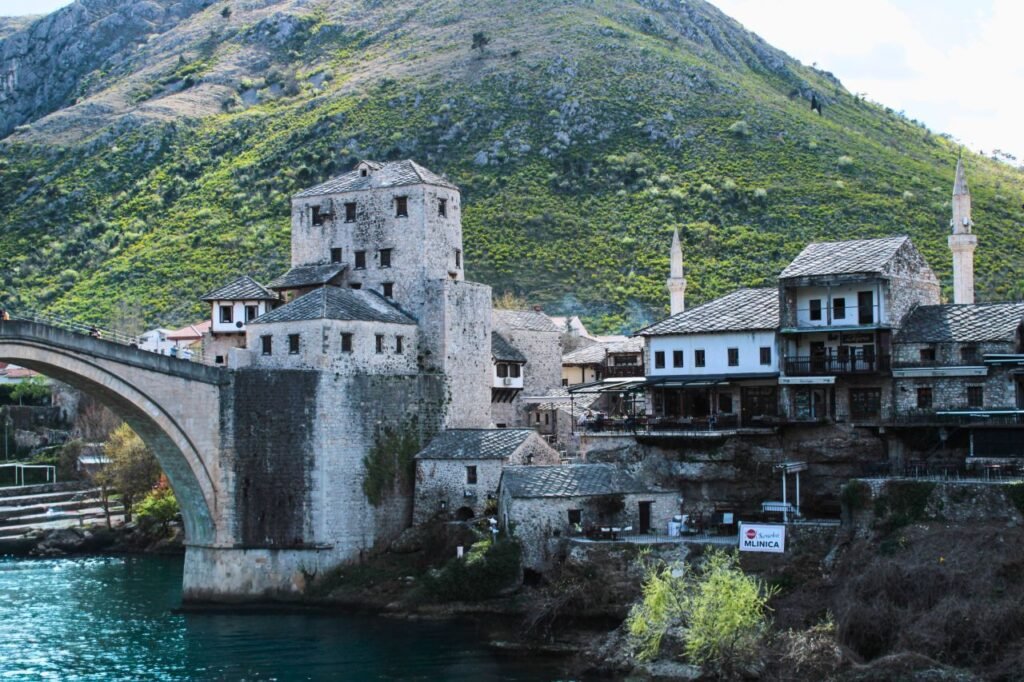
- Plains & Forests: The Northern European Plain spans across Poland and Belarus into vast agricultural steppes, ancient primeval woodlands (such as the UNESCO-listed Białowieża Forest), and winding river systems like the Danube, Dnieper, and Vistula.
- Mountain Ranges: The dramatic arc of the Carpathian Mountains runs through the Czech Republic, Slovakia, Poland, Ukraine, and Romania, home to dense pine forests, alpine lakes, and historic castles.
- Coastlines: Features scenic shorelines along the Baltic Sea, the Black Sea, and the Adriatic coast of the Balkans.
Economy
Eastern European economies have undergone rapid modernization, evolving into dynamic hubs of technology, industrial production, and cultural tourism.
- Tech & Innovation: The region is globally recognized for producing top-tier software engineers, cybersecurity firms, and digital innovation centers.
- Manufacturing & Agriculture: Heavy machinery, automotive assembly, timber, and grain production remain key economic pillars.
- Tourism: Historic cities like Prague, Kraków, Budapest, and Bucharest, alongside mountain resorts and coastal retreats, draw millions of international visitors annually.
Politics
Modern Eastern European states operate as democratic republics, with many holding full membership in the European Union and NATO.
- Governance: Systems feature robust parliamentary representation with active civic participation.
- Historical Memory: Political discourse frequently honors national sovereignty, historic preservation, and community solidarity forged through shared historical challenges.
Ethnic Groups
Eastern Europe boasts a complex demographic mosaic:
- Slavic Peoples: Poles, Czechs, Slovaks, Ukrainians, Belarusians, Bulgarians, Serbs, Croats, Bosniaks, Slovenes, and Macedonians.
- Non-Slavic Groups: Hungarians, Romanians, Moldovans, and Albanians.
- Ethnic Minorities & Indigenous Groups: Includes the Roma population, the Tatars of Crimea and Poland, and various regional mountain groups like the Górale in the Carpathians and the Hutsuls in western Ukraine.
Beliefs & Values
Spiritual Foundations
Religion plays a foundational role in shaping Eastern European ethics, architecture, and daily rhythm.
- Eastern Orthodoxy: Predominant in Ukraine, Bulgaria, Romania, Serbia, Belarus, and Moldova, emphasizing rich liturgical arts, sacred icons, and monastic traditions.
- Roman Catholicism: Deeply rooted in Poland, the Czech Republic, Slovakia, Croatia, and Hungary.
Core Values
- Resilience & Resourcefulness: A deep-seated cultural pride in self-reliance, endurance, and practical ingenuity (Kombinowanie).
- Family & Communal Solidarity: Multi-generational households, intergenerational childcare, and strong neighborly support systems remain central to social life.
Food & Cuisine
Eastern European food culture is renowned for hearty, comforting dishes designed to sustain families through long winters, leveraging fermentation, root vegetables, smoked meats, and fresh dairy.
- Iconic Regional Staples:
- Pierogi / Varenyky: Hand-folded dumplings filled with spiced potatoes, farmer’s cheese, sauerkraut, minced meat, or sweet berries.
- Borscht: A vibrant beet-based soup served hot or cold, enriched with garlic, dill, and a dollop of sour cream (Smietana).
- Goulash (Gulyás): Hungary’s national dish—a rich beef stew seasoned generously with sweet paprika, onions, and root vegetables.
- Sarma / Gołąbki: Cabbage rolls stuffed with seasoned rice and minced meat, slow-simmered in tomato or sauerkraut broth.
- Artisanal Breads & Pastries: Dense sourdough rye bread, chimney cakes (Trdelník / Kürtőskalács), and poppy-seed rolls (Makowiec).
Clothing & Symbols
Traditional Attire
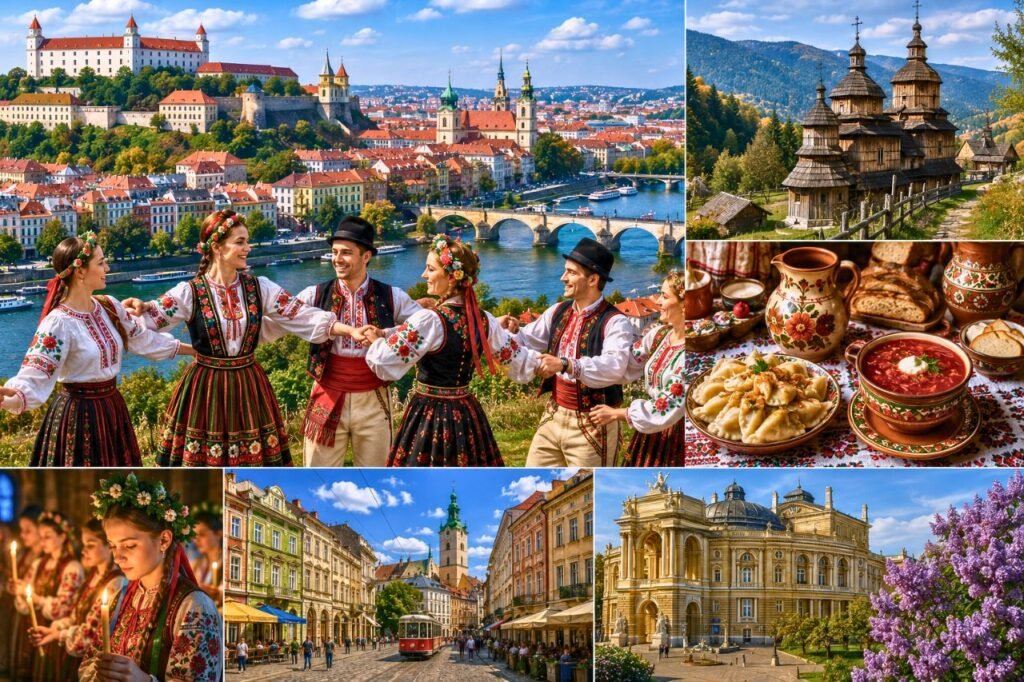
Traditional folk costumes (Stój Ludowy / Vyshyvanka) feature intricate hand-embroidery, woven linen shirts, vibrant floral skirts, embroidered vests, and colorful ribbons.
- The Vyshyvanka: Traditional embroidered shirts in Ukraine and Belarus, where geometric stitch patterns serve as talismanic protection and denote specific home regions.
- Folk Symbols: The Tree of Life, geometric solar wheels, and stylized floral motifs are universal symbols of renewal and family heritage.
Music, Dance & Art
- Folk Music & Instruments:
- Balalaika & Bandura: Multi-stringed plucked instruments used to accompany epic historical ballads and folk songs.
- Pan Flute (Nai): Traditional Romanian woodwind instrument producing haunting, expressive melodies.
- Traditional Dance: Energetic, fast-paced folk dances such as the Polish Polonaise and Mazurka, the Ukrainian Hopak, and the Balkan Kolo (circle dance) emphasize community cohesion and acrobatic skill.
- Visual Arts & Crafts: Famous for intricate wooden church architecture (such as the wooden Tserkvas of the Carpathians), glass painting, lacemaking, and vibrant decorative floral murals (such as the painted village of Zalipie in Poland).
Summary
Eastern Europe Culture represents a soulful blend of ancient folklore, spiritual depth, artistic excellence, and enduring human strength. By cherishing family traditions, preserving folk craftsmanship, and extending genuine hospitality to all who visit, the people of Eastern Europe continue to safeguard a vibrant cultural legacy that enriches world heritage.
At Best Culture Insight, we see culture as the heartbeat of every society – the way people live, connect, and express their identity.