Out of Many, One People: An In-Depth Exploration of Jamaica Culture
Posted in :

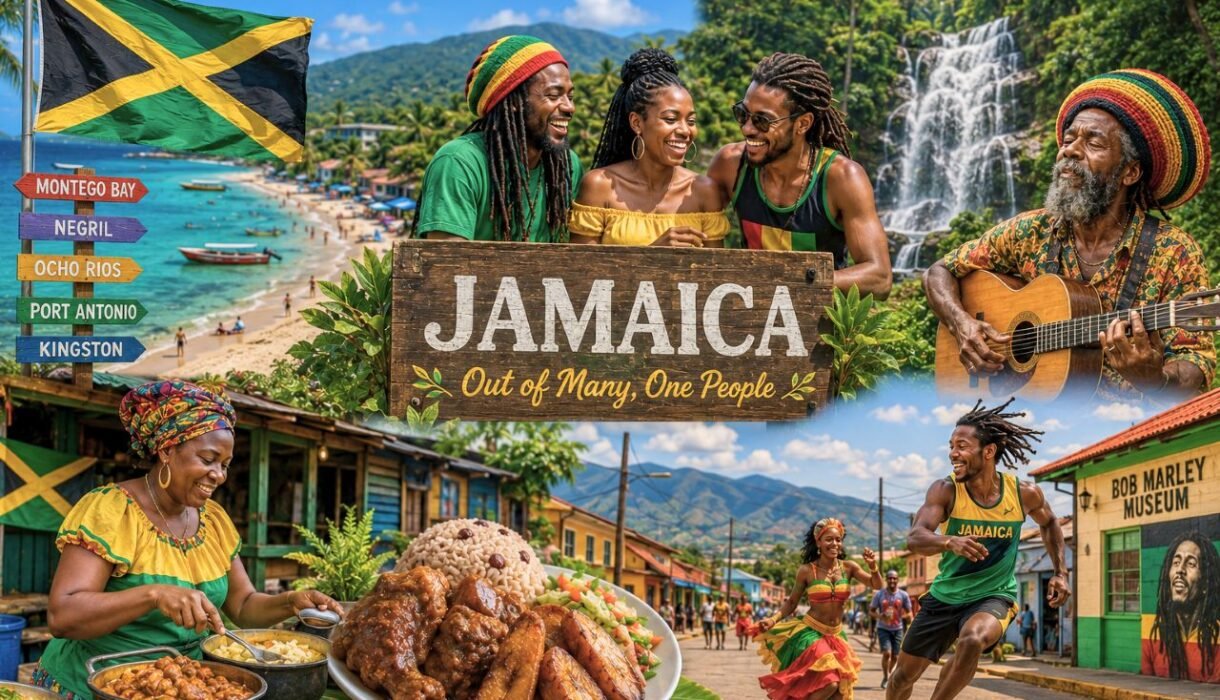
Floating like a shimmering emerald jewel in the Caribbean Sea, Jamaica is a North American island nation that wields a cultural footprint vastly disproportionate to its geographical size. Known globally for its syncopated rhythms, sun-drenched coastlines, and revolutionary spirit, Jamaica is defined by its national motto: “Out of Many, One People.” – Jamaica Culture

The people of Jamaica—Jamaicans—are celebrated for their bold, expressive warmth, sharp wit, and an unyielding spirit of resilience born from historical struggle. Jamaican culture is not a passive artifact; it is a living, breathing experience that shakes speaker boxes, perfumes the air with aromatic spices, and inspires global movements for liberation and peace.
History & Origins
The modern soul of Jamaica was forged through centuries of resistance, ancestral survival, and cross-continental synthesis.
Pre-Columbian Foundations & Colonial Conquest
Long before European sails appeared on the horizon, the island was called Xaymaca (“Land of Wood and Water”) by its peaceful, indigenous Taíno inhabitants. In 1494, Christopher Columbus claimed the island for Spain, initiating a brutal era of enslavement that decimated the native Taíno population. In 1655, the British captured the island, transforming it into a highly lucrative plantation colony centered entirely on sugarcane production.
The African Bedrock and the Maroons
To fuel the sugar estates, European colonizers forcibly imported hundreds of thousands of enslaved West Africans, primarily from the Akan, Igbo, and Yoruba cultural groups. Despite the horrors of chattel slavery, these individuals fiercely guarded their cultural identities.
[Taíno Xaymaca] ➔ [Spanish Conquest] ➔ [British Sugar Plantation Era] ➔ [Maroon Resistance Movements] ➔ [1962 Independence]
A defining pillar of Jamaican history is the legacy of the Maroons—enslaved Africans who escaped into the island’s mountainous, rugged interior. Led by iconic figures like Queen Nanny of the Maroons (now a national hero), these guerrilla fighters waged successful wars against the British military, forcing the crown to sign peace treaties granting them territorial autonomy. This fierce spirit of independence laid the groundwork for the full abolition of slavery in 1834.
Following emancipation, indentured laborers from India and China arrived, introducing subtle but permanent textures to the island’s demographics. Jamaica proudly achieved full political independence from Great Britain on August 6, 1962.
Geography
Jamaica is the third-largest island in the Caribbean, characterized by a highly diverse and dramatic landscape. The interior is dominated by the majestic, mist-shrouded Blue Mountains, which peak at $2,256\text{ meters}$ ($7,402\text{ feet}$) above sea level and produce some of the most sought-after gourmet coffee in the world.
The island features a rugged limestone plateau ringed by coastal lowlands, sweeping white-sand beaches (such as Negril’s famous Seven Mile Beach), and natural harbors like the one flanking the capital city of Kingston. This geography—alternating between isolated mountain sanctuaries and bustling seafaring bays—historically dictated the separation between autonomous Maroon communities and the coastal commercial centers.
Economy
Jamaica operates a mixed market economy that relies heavily on its natural bounty and global appeal.
The primary pillars of the national economy include:
- Services and Tourism: Upscale coastal resorts, cruise line arrivals, and cultural eco-tourism drive the largest portion of national GDP.
- Bauxite Mining: The island possesses vast reserves of bauxite, exporting refined alumina globally.
- Boutique Agriculture: Famous for its ultra-premium Blue Mountain Coffee, high-grade sugarcane, sweet pimento (allspice), and world-renowned Jamaican rum.
Additionally, financial remittances from the highly active Jamaican diaspora living in North America and Europe provide an essential economic safety net for families across the island.
Politics
Jamaica is a stable, independent parliamentary democracy and a constitutional monarchy, recognizing King Charles III as the nominal head of state, represented locally by a Governor-General. Executive power is fully held by the Prime Minister, who leads the cabinet and belongs to the majority party within the bicameral Parliament.
The nation possesses an active, vibrant two-party political tradition divided between the People’s National Party (PNP) and the Jamaica Labour Party (JLP). Political life is highly participatory and deeply connected to cultural expression, with political campaigns frequently utilizing reggae and dancehall sound systems to mobilize voter turnout.
Ethnic Groups
Reflecting its historical journey, Jamaica’s demographic layout is a beautiful, blended spectrum:
| Ethnic Group | Estimated Share | Historical Legacy & Influence |
| African Descent | ~92.1% | The demographic and cultural core; preserved the foundational rhythms, spiritualities, and linguistic baselines. |
| Mixed Heritage | ~6.1% | Representing generations of cross-cultural lineages across the island’s urban centers. |
| East Indian & Chinese | ~1.0% | Arrived as post-emancipation indentured laborers; heavily influenced domestic commerce and culinary arts. |
| European & Middle Eastern | ~0.8% | Including British historical lineages and Syrian/Lebanese mercantile communities. |
Beliefs & Values
The moral and spiritual worldview of Jamaica is intensely active, guiding daily social interactions and community obligations.
The Christian Landscape and Rastafari
Jamaica reportedly has the highest number of churches per square mile in the world, with Protestant denominations (including Seventh-day Adventist, Pentecostal, and Baptist) serving as major civic forces.
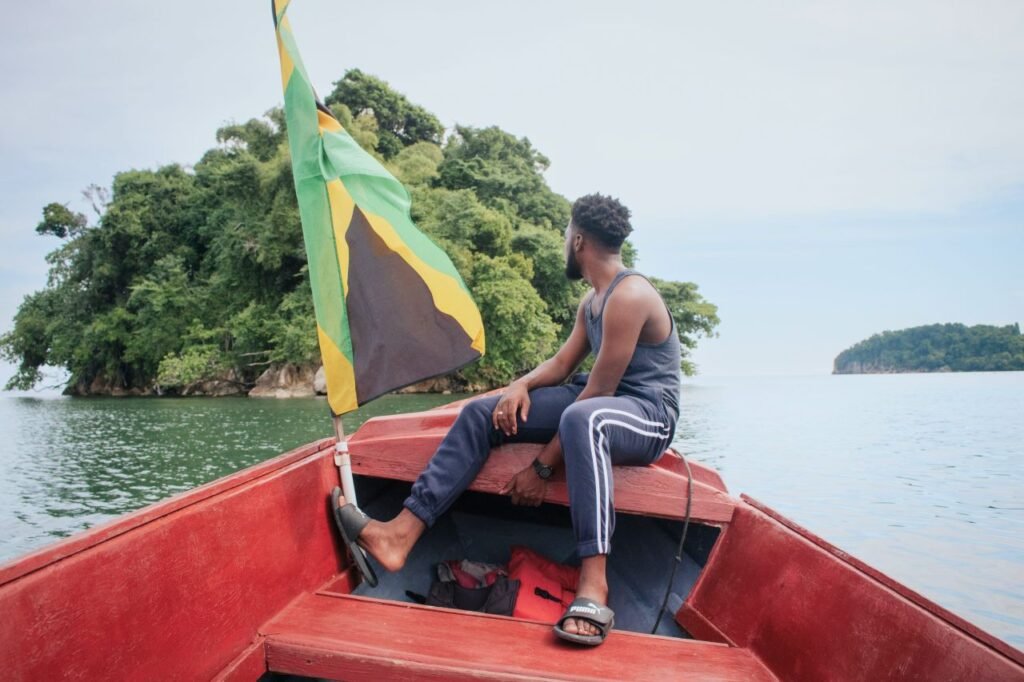
Man enjoying a peaceful boat ride near a lush island with a Jamaican flag
However, Jamaica’s most globally distinct spiritual development is Rastafari. Emerging in the 1930s, Rastafari is a socio-religious movement that rejects Eurocentric colonial structures, honors Emperor Haile Selassie I of Ethiopia as divine, and champions pan-African repatriation and psychological liberation. Rastafari values—including eating clean, organic food (Ital), letting hair grow into natural dreadlocks, and treating all human beings with absolute equality (I and I)—fundamentally transformed global music, philosophy, and style.
Culture, Traditions & Customs
Community Ceremonies and Passages
- The Nine-Night Ritual: A deeply rooted African-Jamaican wake tradition. When a loved one passes away, family and neighbors gather for nine consecutive nights to celebrate their life with drumming, storytelling, food, and traditional singing. The final night features specific rituals to ensure the spirit (duppy) transitions peacefully away from the earthly realm to join the ancestors.
- Weddings: Traditional weddings are vibrant, grand community celebrations where the entire village frequently participates. The definitive highlight is the serving of the Jamaican black rum cake, made from fruits soaked in local overproof rum for months or even years prior.
National Festivals
Jamaica celebrates its creative history through annual events like Jamaica Festival during Independence Week, which features nationwide competitions in traditional storytelling, costume design, and culinary arts.
Languages & Communication
The linguistic landscape of Jamaica is uniquely dualistic. While English is the official language used in government, legal courts, and formal education, the true spoken language of the heart is Jamaican Patois (natively called Patwa).
Patwa is a sophisticated, independent English-based creole language featuring a rich English and French vocabulary layered seamlessly over a West African syntactic and grammatical matrix.
Ubiquitous Patois Expressions and Proverbs:
- “Wah gwaan?” – The universal, warm colloquial greeting meaning “What’s happening?” or “How are you?”
- “Iwi (Yeah man)” – An absolute expression of agreement, enthusiasm, or confirmation.
- “Small up yuhself” – A polite, clever phrase used when trying to pass someone in a tight space, meaning “please make room.”
- “Mi deyah, yuh nuh” – A standard response meaning “I am right here, hanging in there.”
Patois Wisdom: “Chicken merry, hawk deh near.” (The chicken is making merry, but the hawk is nearby.) — A warning to remain alert and responsible, even during times of absolute celebration.
Food & Cuisine
Jamaican cuisine, known as Yard Cooking, is an intense, bold explosion of flavors driven by the creative use of fresh coconut milk, fiery scotch bonnet peppers, scallions, and thyme.
The Art of Jerk
The undisputed global culinary signature of Jamaica is Jerk. Developed centuries ago by the Maroons, this ancient cooking method served as a brilliant preservation and survival technique:
Meats (primarily pork or chicken) are poked thoroughly and marinated in a fiery, aromatic paste composed of ground pimento berries (allspice), scotch bonnet chilies, wild ginger, garlic, and scallions. The meat is then slow-smoked over open green pimento wood logs inside a split steel drum grill. The pimento wood smoke gives the meat its distinct, savory flavor and tender, juicy texture.
The National Dish: Ackee and Saltfish
The official national dish is Ackee and Saltfish. Ackee is a unique, nutritious fruit originally native to West Africa. When boiled, the bright yellow arils of the fruit resemble scrambled eggs but carry a delicate, buttery flavor. It is sautéed alongside flaked, savory salted cod fish, onions, bell peppers, scotch bonnet, and fresh tomatoes, served alongside fried dumplings (johnnycakes) or boiled green bananas for an authentic island breakfast.
Clothing & Symbols
Folk Vestments and Colors
While modern Western apparel is standard across the island, traditional folk attire takes center stage during civic holidays. Women wear a bright quadrille dress made of red-and-white checkered madras cotton, often paired with a matching headwrap.
On a day-to-day cultural scale, the global face of Jamaican style is anchored by the vibrant Rastafari colors: Red (representing the blood of martyrs), Gold (the sun and mineral wealth), and Green (the lush, fertile vegetation of Africa), often worn alongside Black to celebrate African heritage.
[ The Geometric Architecture of the Flag ]
┌───────────────────────────────────────────────────────────────────────────┐
│ GREEN TRIANGLE (Top) │
├─────────────────────┬───────────────────────────────┬─────────────────────┤
│ BLACK TRIANGLE (L) │ GOLD DIAGONAL CROSS │ BLACK TRIANGLE (R) │
├─────────────────────┴───────────────────────────────┴─────────────────────┤
│ GREEN TRIANGLE (Bottom) │
└───────────────────────────────────────────────────────────────────────────┘
Iconic Symbols
The Jamaican flag is a masterpiece of geometric symbolism, unique for being one of the few national flags in the world that does not contain the colors red, white, or blue. It features a striking Gold Diagonal Cross (Saltire) that divides the flag into four alternating triangles:
- The Black Triangles: Represent the historical hardships and challenges the people have faced and overcome.
- =The Green Triangles: Symbolize the agricultural wealth, hope, and lush vegetation of the island.
- The Gold Cross: Represents the brilliant sunshine and the natural mineral wealth of the land.
The flag’s symbolism is beautifully summarized by the phrase: “Hardships there are, but the land is green and the sun shineth.”
Music, Dance & Art
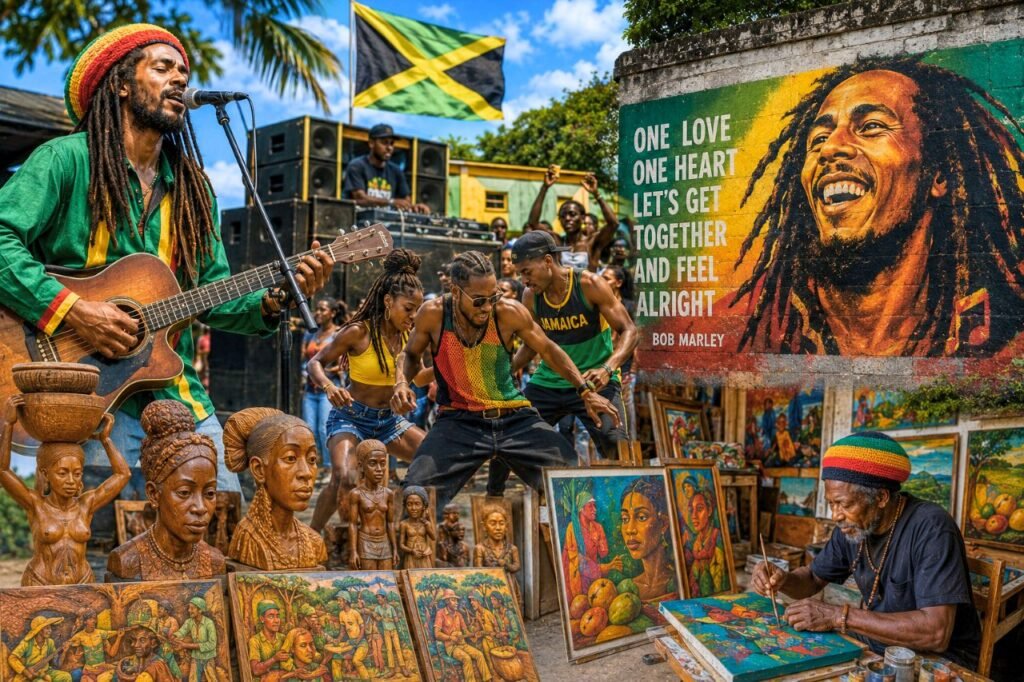
Reggae vibes and creative expressions – Jamaica Music
The Global Power of Reggae and Dancehall
Music is the absolute heartbeat of Jamaica, serving as the voice of the marginalized and a global force for peace. Jamaica is the proud birthplace of Reggae, an internationally acclaimed genre defined by its off-beat guitar chops, heavy melodic basslines, and socially conscious lyrics.
Pioneered by global icons like Bob Marley, Peter Tosh, and Jimmy Cliff, reggae carried messages of pan-Africanism, human rights, and spiritual love straight from the trenches of Kingston to the entire world.
In the modern era, Dancehall music—a high-energy, electronic, and rapid-fire evolution of reggae—dominates youth culture worldwide. Driven by powerful sound systems, dancehall is accompanied by intricate, athletic street dances that reflect urban creativity.
Visual Arts
In the fine arts, Jamaica is celebrated for its Intuitive Art movement, pioneered by masters like Mallica “Kapo” Reynolds, who crafted deeply spiritual, expressive wood carvings and paintings detailing rural life. Sculptor Edna Manley played a pivotal role in the modernist art movement, creating pieces like Beadseller that captured the developing pride of the pre-independence Jamaican identity.
Summary
The culture of Jamaica stands as a magnificent monument to human endurance, artistic brilliance, and the power of unity. By fiercely guarding the revolutionary independence of their Maroon ancestors, channeling their struggles into the globally transformative rhythms of reggae, and gathering around the shared community comfort of a smoking pan of jerk chicken, Jamaicans have cultivated an unforgettable identity. Jamaica continues to stride forward with unyielding pride—celebrating its cultural diversity and offering its deeply profound, syncopated soul to the global family.
At Best Culture Insight, we see culture as the heartbeat of every society – the way people live, connect, and express their identity.