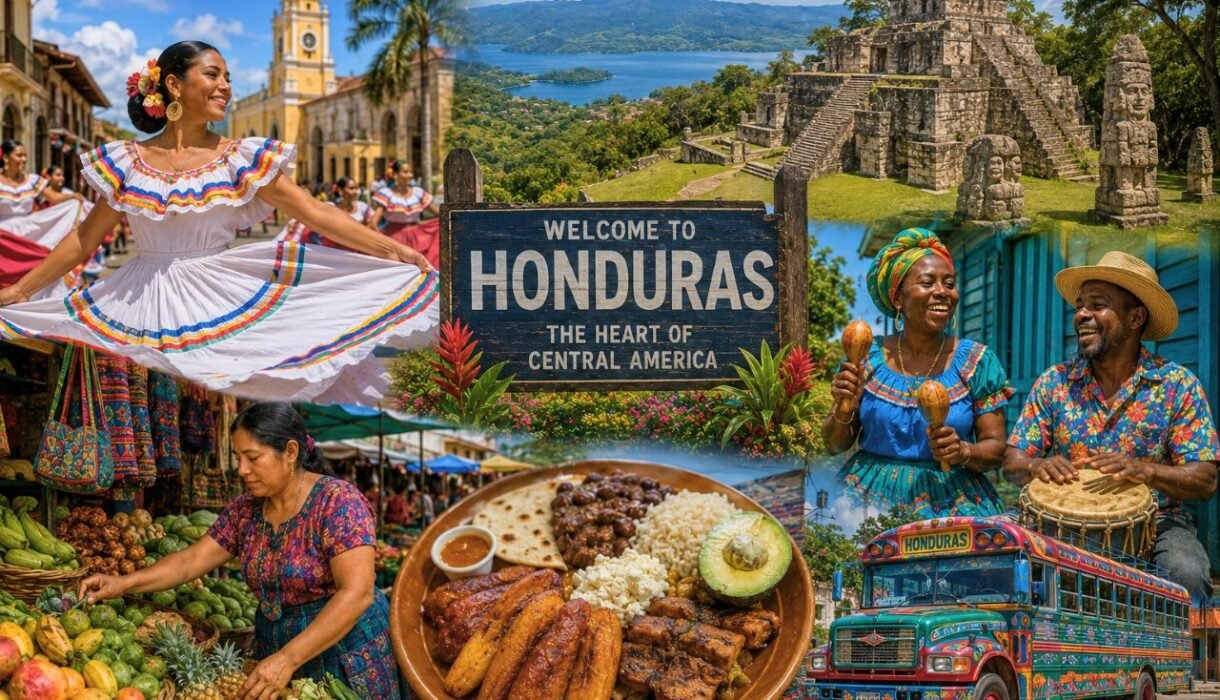
The Soul of Central America: An In-Depth Exploration of Honduras Culture
Posted in :

Honduras, located at the mountainous heart of the Central American corridor in North America, is a land of incredible geographical and cultural diversity. Known historically for its breathtaking natural landscapes, lush rainforests, and ancient ruins, the true essence of Honduras lies in its people. – Honduras culture
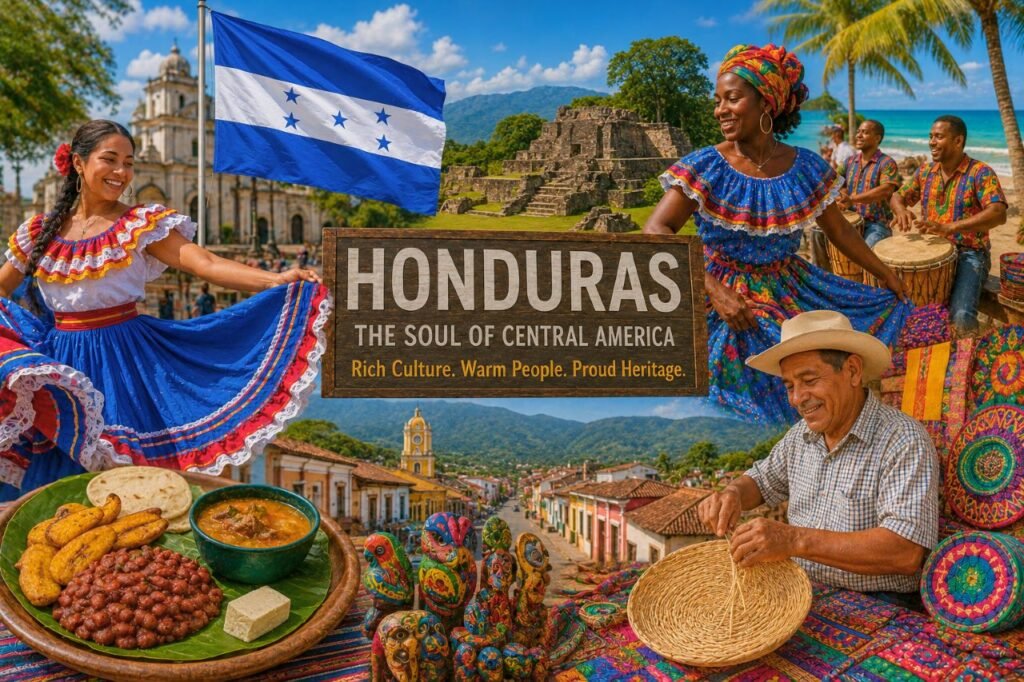
Hondurans—proudly known as Hondureños and colloquially as Catrachos—are celebrated for their profound resilience, warm hospitality, and community-centric worldview. Honduras culture is not a singular, uniform experience; rather, it is a magnificent polyphonic mosaic. It features the ancient Mesoamerican traditions of the interior highlands running concurrently with the distinct Afro-Caribbean rhythms of the northern coast, creating an identity that is intensely vibrant, colorful, and deeply rooted in ancestral pride.
History & Origins
The historical framework of Honduras is a compelling saga of advanced ancient civilizations, colonial impositions, and multi-ethnic encounters.
The Maya Golden Age
Long before the arrival of European explorers, western Honduras was a vital center of the Maya Civilization. The ancient city of Copán served as a major cultural, scientific, and political capital during the Classic Period (5th to 9th centuries AD). The Maya left behind an unparalleled legacy of hieroglyphic history, advanced astronomy, and architectural marvels that continue to serve as a bedrock of modern Honduran national pride.
Colonial Clash and Resistance
In 1502, Christopher Columbus arrived on the coast of Trujillo during his fourth voyage, allegedly exclaiming, “Gracias a Dios que hemos salido de estas honduras!” (“Thank God we have escaped these depths!”), giving the region its name. The subsequent Spanish conquest transformed the territory into a key mining and agricultural center, introducing the Spanish language, municipal architecture, and Roman Catholicism.
This era also birthed an icon of national resistance: Lempira, a brave war chieftain of the Lenca people who unified native tribes against the Spanish conquistadors in the 1530s. Though Lempira was ultimately killed, his legacy as a defender of indigenous liberty is immortalized; the national currency is named after him, and he remains a foundational national hero.
[Maya Classic Era (Copán)] ➔ [Spanish Conquest & Lenca Resistance] ➔ [Transatlantic Afro-Caribbean Migrations] ➔ [1821 Independence]
The Arrival of the Garifuna
In 1797, a major demographic event reshaped the northern coast. The Garifuna people—descendants of West African shipwreck survivors and indigenous Island Caribs—were exiled by the British from the island of St. Vincent and landed on Roatán, eventually settling the Atlantic coast of Honduras. They injected an entirely new, powerful West African linguistic, musical, and spiritual current into the national fabric. Honduras officially achieved full independence from Spanish colonial rule on September 15, 1821, embarking on its journey as a sovereign republic.
Geography
Honduras features a ruggedly spectacular topography, with roughly 80% of its land area covered by mountains. The country is bordered by Guatemala to the west, El Salvador to the southwest, Nicaragua to the southeast, the Pacific Ocean (Gulf of Fonseca) to the south, and the Caribbean Sea to the north.
The interior highlands feature cool cloud forests, pine-covered ridges, and fertile valleys like the Comayagua Valley. The northern Caribbean coast boasts pristine, white-sand beaches and access to the Bay Islands (Roatán, Utila, and Guanaja), which sit atop the Mesoamerican Barrier Reef—the second-largest coral reef system in the world. This dramatic geographic divide directly influences regional lifestyles, moving from the quiet, agricultural traditions of the mountains to the fast-paced, maritime lifestyles of the coast.
Economy
Historically nicknamed a “banana republic” due to the overwhelming historical dominance of foreign-owned fruit companies in the 20th century, modern Honduras maintains a developing economy focused on diversification.
Today, the primary economic pillars include:
- Agriculture: Honduras is one of the world’s leading producers of premium Arabica coffee, alongside large-scale exports of bananas, palm oil, sugar, and high-grade tobacco.
- Manufacturing: The northern valleys house extensive maquiladoras (textile and apparel assembly plants) driving industrial exports.
- Tourism and Remittances: Eco-tourism, scuba diving in the Bay Islands, and archaeological tourism in Copán generate significant foreign revenue. Furthermore, financial remittances sent home by the dedicated Honduran diaspora living in the United States form a crucial economic safety net for millions of families.
Politics
Honduras is a democratic constitutional republic led by an elected President who acts as both head of state and head of government for a four-year term. Legislative power is held by the unicameral National Congress (Congreso Nacional).
The political history of Honduras has experienced structural challenges, including periods of military juntas during the mid-20th century and more recent constitutional crises. Modern political engagement across the country focuses on expanding educational access, strengthening democratic transparency, countering economic inequality, and promoting regional trade integrations within the Central American integration framework.
Ethnic Groups
The demographic layout of Honduras is an inspiring testament to peaceful multicultural coexistence:
| Ethnic Group | Population Share | Definitive Cultural Contributions |
| Mestizo | ~90% | People of mixed Spanish and Indigenous heritage; forms the linguistic and commercial core of the country. |
| Indigenous Groups | ~7% | Comprising the Lenca (highlands), Miskito (eastern jungles), Chortí Maya, Tolupan, and Pech populations. |
| Garifuna | ~2% | Afro-Indigenous coastal communities preserving unique West African drums, dance, and language. |
| Euro-Honduran/Other | ~1% | Including historical Palestinian-Arab mercantile communities (locally called Turcos) and English-speaking Bay Islanders. |
Beliefs & Values
The core values of Honduran society are anchored by profound religious devotion, family interdependence, and personal honor.
Religion and Folk Catholicism
The vast majority of Hondurans identify as Christian, with Roman Catholicism and rapidly expanding Evangelical Protestant denominations serving as major cultural forces. Religious faith is highly visible in daily life; phrases like “Si Dios quiere” (If God wills it) season almost every conversation regarding future plans.
Honduras honors the Virgin of Suyapa as its patron saint. Every February, hundreds of thousands of pilgrims travel from across Central America to the Basilica in Tegucigalpa to celebrate her feast day, playing traditional music and offering prayers for healing.
Indigenous and Afro-Descendant Spirituality
Among the Garifuna, a profound ancestral spiritual system known as Dugu is practiced alongside Catholicism. It features complex rituals led by a shaman (buyei) to commune with deceased ancestors, utilizing sacred drums to maintain spiritual equilibrium and family protection.
Across all groups, the concept of familismo reigns supreme: individual desires are naturally subordinate to the welfare and honor of the extended family unit, and elder family members are treated with absolute respect.
Culture, Traditions & Customs
Festivals and Holy Week (Semana Santa)
Honduran traditions blend solemn religious observation with vibrant community artistry. The most visually stunning display occurs during Semana Santa (Holy Week), particularly in the colonial city of Comayagua.
Artisans work through the night to create massive, intricate alfombras (carpets) out of brightly dyed sawdust, chalk, and flower petals across the cobblestone streets. These temporary masterpieces depict vivid biblical scenes and are created solely to be walked over by the holy religious processions on Good Friday.
Marriage and Rites of Passage
- Weddings: Traditional Honduran weddings are community-wide milestones. Church weddings are followed by grand receptions where guests indulge in massive buffets, and the extended family joins in a custom known as the baile del billete (money dance), pinning cash onto the bride and groom’s attire to help launch their new household.
- The Quinceañera: Celebrating a young woman’s 15th birthday remains a vital rite of passage, symbolizing her transition into adulthood through a formal church mass and a celebratory gala waltz.
Languages & Communication
Spanish is the official and universal language of Honduras. The local dialect, Honduran Spanish, is known for its warm, melodic cadence and its distinct use of voseo (using vos instead of tú for informal “you”).
Caliche (Honduran Slang Expressions)
To speak like a native Catrachos is to embrace Caliche, the rich regional slang:
- Cheque: Everything is good; okay; cool.
- Chero: A friend.
- Pisto: Money.
- Maje: Dude / Pal (used casually among close friends).
- “¡Vaya pues!”: A warm, ubiquitous conversational sign-off meaning “Alright then!”
Indigenous and Coastal Languages
In addition to Spanish, several ancestral languages thrive. The Garifuna speak a rich language combining Arawak, Carib, and West African speech patterns. Along the northern coast and the Bay Islands, Bay Islands Creole English is widely spoken, reflecting historical British maritime connections. Furthermore, native indigenous languages like Miskito and Tawahka remain actively protected in the eastern territories.
Food & Cuisine
Honduran cuisine, or Comida Criolla, is an earthy, incredibly satisfying culinary tradition centered around corn, beans, plantains, and rich dairy creams.
The National Culinary Staple: The Baleada
The undisputed culinary crown jewel of Honduras is the Baleada. Originating on the northern coast, this iconic dish has captured the heart of the entire nation:
- The Core: It begins with a thick, hand-patted flour tortilla that is cooked over a hot griddle. It is then spread with warm, savory refried red beans, sprinkled with salty queso duro (hard cheese), and drizzled with mantequilla de lavar (a distinct Honduran sour cream).
- The Upgrades: A baleada sencilla features the core ingredients, while a baleada mixta is loaded with scrambled eggs, avocado, grilled beef, or pork, making it a hearty, beloved staple eaten at any time of day.
Other Traditional Delicacies
- Sopa de Caracol (Conch Soup): A legendary Caribbean coastal soup featuring fresh conch meat simmered in a rich broth of coconut milk, green bananas, yuca, and sweet peppers, flavored with fresh cilantro.
- Plato Típico: The standard traditional dinner plate, combining grilled meat, refried red beans, chismol (fresh tomato-onion salsa), fried plantain slices, local chorizo, and fresh avocado, served with warm corn tortillas.
Clothing & Symbols
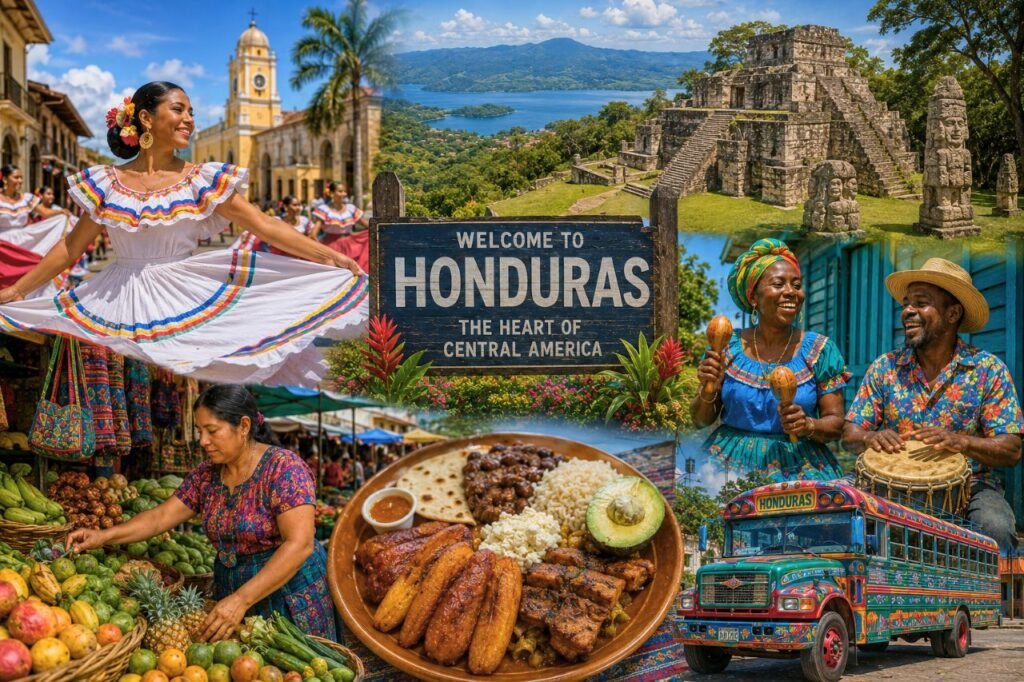
Honduras culture, music, and heritage
Traditional Vestments
While modern Western attire is worn uniformly throughout the country, traditional clothing takes center stage during national holidays and folklore celebrations. The official national folk costume is the Traje de Intibucá, an elegant dress crafted from hand-woven manta fabrics featuring vertical stripes and vibrant color blocks that reflect Lenca weaving heritages. Men wear clean white cotton shirts and trousers, a red bandana (pañolón) knotted neatly around the neck, and a straw hat.
[ Iconography of the Honduran State ]
┌───────────────────────────────────────────────────────────────────────────┐
│ NATIONAL FLAG ── Blue-White-Blue stripes with 5 Central Blue Stars │
├───────────────────────────────────────────────────────────────────────────┤
│ NATIONAL BIRD ── The Scarlet Macaw (Guacamaya) ─ Symbol of Beauty │
├───────────────────────────────────────────────────────────────────────────┤
│ NATIONAL FLOWER ── Rhyncholaelia Digbyana (Exquisite Native Orchid) │
└───────────────────────────────────────────────────────────────────────────┘
Iconic Symbols
The national flag of Honduras features a clean layout carrying deep geographic meaning. The two outer blue bands represent the Pacific Ocean and the Caribbean Sea that border the nation, while the central white band symbolizes peace and purity. The five blue stars arranged in an “H” pattern at the center hold historical significance: they represent the five original members of the historic Federal Republic of Central America (Honduras, Guatemala, El Salvador, Nicaragua, and Costa Rica), symbolizing a continuous hope for regional unity.
Music, Dance & Art
The Rhythms of Punta and Folkloric Expressions
Music is the acoustic engine of Honduras. On a global scale, Honduras is synonymous with Punta, the high-energy, infectious musical genre pioneered by the Garifuna people.
Driven by the complex, syncopated beats of traditional wooden garawoun drums, conch shells, and maracas, Punta features rapid, mesmerizing hip movements. It transitioned successfully from an ancestral ritual dance into a massive commercial pop phenomenon across Latin America through legendary Honduran bands like Banda Blanca. In the highlands, traditional acoustic marimba music provides the gentle, wooden soundtrack for civic festivals and community folk dances.
Visual and Fine Arts
In the realm of visual arts, Honduras is internationally celebrated as the birthplace of Art Naïf (Primitive Art) in Central America, pioneered by the legendary master José Antonio Velásquez. Velásquez captured the idyllic charm of rural Honduran mountain towns, painting detailed scenes of whitewashed colonial churches, cobblestone streets, and daily agrarian interactions with vibrant color palettes.
Honduras also boasts an incredible artisan heritage, notably the intricate, black-and-white burnished pottery of the Lenca women, who utilize ancient pre-Columbian techniques to hand-craft timeless ceramic art.
Summary
The culture of Honduras stands as an inspiring monument to cultural diversity, resilience, and artistic innovation. From the soaring stone glyphs of the Maya ancestors in Copán to the pulse-pounding West African drumbeats of the Garifuna coast, and gathered around the shared comfort of a warm baleada, the Catrachos have forged an unforgettable identity. By fiercely preserving their diverse roots while building a interconnected future, Honduras continues to celebrate its unique heritage, enriching the cultural tapestry of North America and the global community.
At Best Culture Insight, we see culture as the heartbeat of every society – the way people live, connect, and express their identity.