The Vibrant Tapestry of Mexico: A Comprehensive Guide to History, Tradition, and Culture
Posted in :

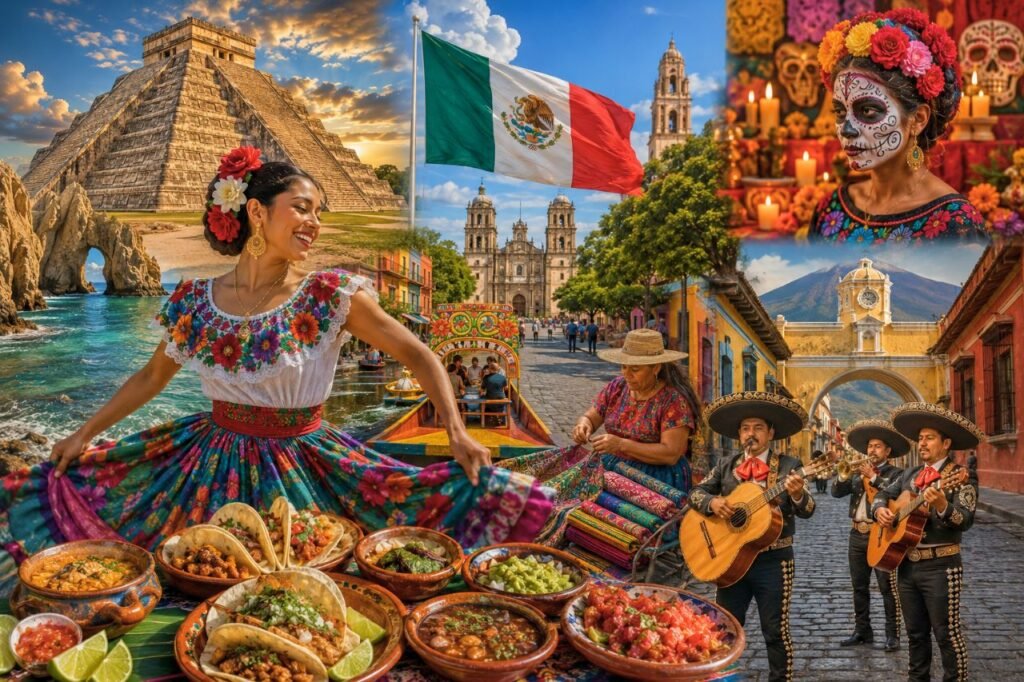
Mexico, located in the southern portion of North America, is a land of staggering visual, geographical, and cultural contrast. It is home to a population that carries a profound sense of national pride, forged through the blending of ancient indigenous roots and Spanish colonial history. The people of Mexico, known for their warmth, hospitality, and deep-seated devotion to family, inhabit a society where historical traditions are not merely remembered—they are actively lived. From the bustling urban expanse of Mexico City to quiet, sun-bleached coastal villages, the essence of Mexican culture lies in its resilience, creativity, and persistent celebration of life.
History & Origins
The historical evolution of Mexico is a multi-millennial epic divided into three major epochs: the Pre-Columbian era, the Spanish Colonial period, and the modern Independent nation.
[Pre-Columbian Era] [Colonial Period] [Modern Independent Nation] (Olmec, Maya, Zapotec, Aztec) ----> (Spanish Rule 1521-1810) ----> (Independence 1810 - Present)Pre-Columbian Civilizations
Long before Europeans arrived, Mexico was the cradle of advanced Mesoamerican civilizations. The Olmecs (the “Mother Culture”) flourished along the Gulf Coast around 1200 BCE, pioneering mathematical systems and monumental stone carving. Following them, the Maya developed sophisticated astronomy, hieroglyphic writing, and architectural masterpieces in the south. In the central highlands, the massive metropolis of Teotihuacán thrived, later paving the way for the rise of the Aztec Empire (Mexica) in the 14th century, with its magnificent capital Tenochtitlan built over a lake.
The Conquest and Colonial Syncretism
In 1521, Spanish conquistador Hernán Cortés, allied with local indigenous factions who opposed Aztec dominance, conquered Tenochtitlan. This marked the beginning of three centuries of Spanish colonial rule under the Viceroyalty of New Spain. This era radically altered the demographic and cultural landscape, introducing the Spanish language, Roman Catholicism, and European architectural and agricultural practices. Crucially, this period gave birth to mestizaje—the blending of European and Indigenous lineages and cultures that defines modern Mexico.
Independence and Modernity
On September 16, 1810, Miguel Hidalgo y Costilla, a Catholic priest, rang his church bell in the town of Dolores, issuing the famous Grito de Dolores (Cry of Dolores), which sparked the Mexican War of Independence. Mexico achieved independence in 1821, navigating a tumultuous 19th century marked by the Mexican-American War and French intervention. The early 20th century brought the Mexican Revolution (1910–1920), a transformative social movement that institutionalized agrarian reform, labor rights, and a renewed artistic appreciation for indigenous culture, culminating in the democratic and diverse nation seen today.
Geography
Mexico spans nearly 2 million square kilometers, bordered by the United States to the north, the Pacific Ocean to the south and west, and the Gulf of Mexico and the Caribbean Sea to the east.
The country is split by the Sierra Madre Oriental and Sierra Madre Occidental mountain ranges, framing a massive central plateau where Mexico City sits at over 2,200 meters above sea level. Mexico’s landscape features dramatic environmental variety, encompassing the arid Sonoran and Chihuahuan deserts in the north, fertile volcanic valleys in the center, and dense tropical rainforests across the Lacandon Jungle and Yucatan Peninsula in the south.
Economy
Mexico possesses the second-largest economy in Latin America and operates as a major global hub for manufacturing and trade. Benefiting from trade agreements like the USMCA, Mexico is a top global exporter of automobiles, electronics, aerospace equipment, and medical devices.
The nation is rich in natural resources, ranking as a prominent global producer of oil and silver. Alongside high-tech industries, agriculture remains culturally and economically essential, leading global markets in the export of avocados, tomatoes, berries, and beer. Furthermore, international tourism provides vital revenue, as millions visit its pristine coastlines and historic archaeological landmarks annually.
Politics
Politically, Mexico is organized as a federal presidential representative democratic republic. Power is divided into thirty-two sovereign states and a capital federal entity. The government operates across three distinct branches:
- Executive: Led by the President, elected by popular vote for a single six-year term (sexenio).
- Legislative: Composed of the bicameral Congress of the Union, featuring a Senate and a Chamber of Deputies.
- Judicial: Headed by the Supreme Court of Justice of the Nation.
The contemporary political system is characterized by a vibrant multi-party framework, navigating long-term national priorities focused on economic equity, judicial reform, and regional infrastructure development.
Ethnic Groups
The demographic makeup of Mexico highlights its complex history of migration, interaction, and regional development.
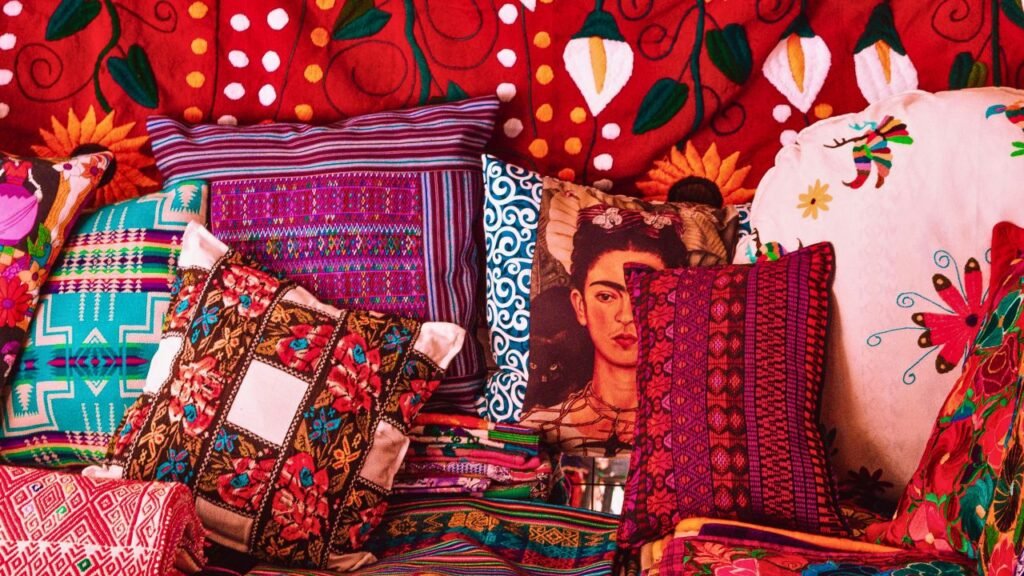
- Mestizos: The largest population segment, comprising individuals of mixed indigenous and European ancestry. This identity forms the foundational cornerstone of modern Mexican nationalism.
- Indigenous Mexicans: Millions of citizens identify closely with one of the 68 distinct officially recognized indigenous nations. Groups like the Nahua, Maya, Zapotec, Mixtec, and Tarahumara preserve their ancestral ancestral territories, governance traditions, and lifeways.
- Afro-Mexicans: Predominantly concentrated in the coastal areas of Guerrero, Oaxaca, and Veracruz, Afro-descendant populations have successfully secured institutional recognition for their historical and cultural contributions to the state.
- Immigrant Diasporas: Historical and modern migration paths have established small but culturally influential communities of Spanish, Lebanese, German, Chinese, and American residents.
Languages & Communication
While Spanish functions as the de facto language of government, business, and daily civic life, Mexico has no single official constitutional language.
The Law of Linguistic Rights recognizes 68 indigenous languages along with Spanish as national languages, all holding equal validity. Among these, Nahuatl (the language of the Aztecs) is spoken by over 1.7 million people, followed closely by Yucatec Maya and Zapotec.
Greetings and Everyday Expressions
Communication style in Mexico is heavily relational, polite, and contextual. Direct eye contact is balanced with respectful, warm gestures.
- Formal vs. Informal: The formal “usted” is carefully used to show respect to elders and strangers, while “tú” is saved for friends and peers.
- Common Greetings: A standard morning greeting is “Buenos días”, while casual settings favor “¿Cómo estás?” (How are you?) or the widely popular slang “¿Qué onda?” (What’s up?).
Proverbs and Cultural Idioms
Mexican Spanish features a unique linguistic flavor shaped by proverbs (refranes) that reflect the country’s worldview:
“A darle que es mole de olla.”
Literal Translation: “Get to it, this is mole de olla (a rich, traditional stew).”
Cultural Meaning: Do the work immediately and with enthusiasm; do not delay when something good or important needs to be done.
“Al mal tiempo, buena cara.”
Literal Translation: “To bad weather, a good face.”
Cultural Meaning: Face adversity with courage and optimism.
Beliefs & Values
Mexican values center primarily around the core institutions of family and community. Individual choices are frequently weighed against their impact on the broader family unit, and multigenerational households remain a standard pillar of society.
Religion and Spirituality
Roman Catholicism remains the predominant religious denomination, shaping calendars, neighborhood geography, and personal milestones across the country. However, spirituality in Mexico often functions through a dual framework where Christian theological concepts blend smoothly with Mesoamerican indigenous rituals.
A prime example is the nationwide devotion to the Virgin of Guadalupe, who represents both a Catholic manifestation of Mary and an echo of Tonantzin, the Aztec earth goddess. Her sanctuary in Mexico City stands as one of the most visited pilgrimage sites in the world.
Culture, Traditions & Customs
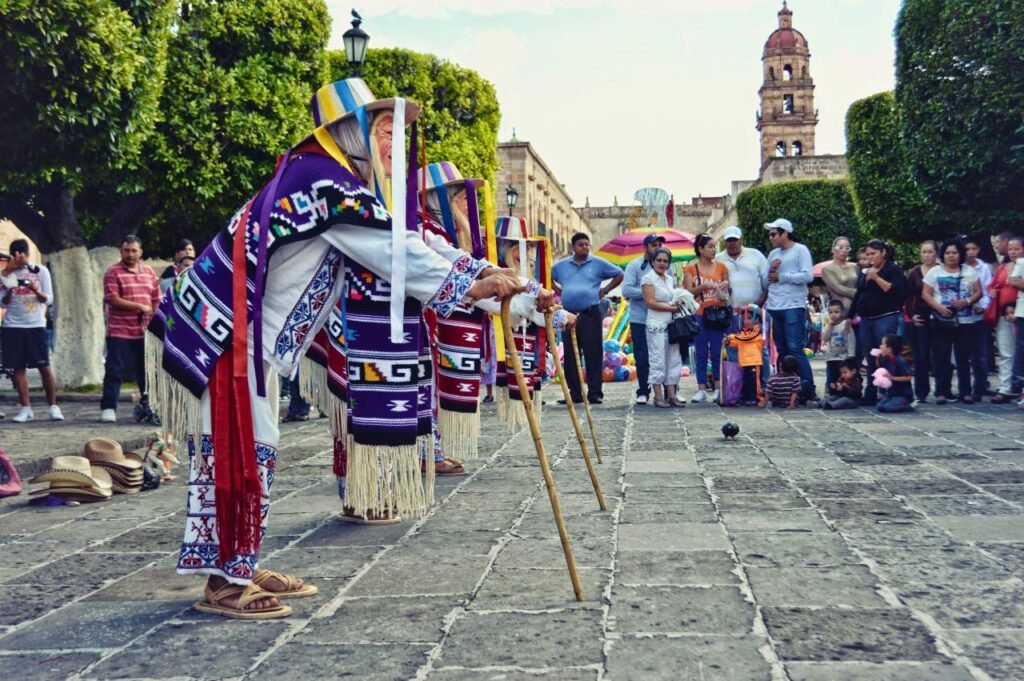
Festivals and Public Holidays
- Día de los Muertos (Day of the Dead): Celebrated on November 1st and 2nd, this holiday is a joyful celebration of remembrance rather than a time of mourning. Families build ofrendas (altars) adorned with bright orange cempasúchil (marigold) flowers, candles, sugar skulls (calaveras), and the favorite meals of deceased relatives, inviting their spirits back for a brief, loving visit.
- Las Posadas: Running from December 16th to 24th, this neighborhood tradition reenacts Mary and Joseph’s search for shelter in Bethlehem, complete with candlelit processions, singing, and breaking star-shaped piñatas filled with seasonal fruits and candies.
- Independence Day: On the night of September 15th, crowds gather in town squares nationwide to hear the local authorities echo the historical Grito de Independence, culminating in fireworks and shouts of “¡Viva México!”.
Rites of Passage
- The Quinceañera: Marking a young woman’s transition from childhood to adulthood on her 15th birthday, this celebration blends a thanksgiving Mass with an elegant reception, featuring synchronized waltzes performed alongside her chambelanes (court of honor).
- Marriage Customs: Traditional weddings feature a Catholic mass featuring symbolic tokens like the arras (13 blessed gold coins representing financial commitment) and the lazo (a decorative cord placed over the couple’s shoulders to symbolize their eternal unity).
Food & Cuisine
Recognized by UNESCO as an Intangible Cultural Heritage of Humanity, traditional Mexican cuisine is an ancestral agricultural dynamic centered on the structural trinity of corn, beans, and chili peppers.
Iconic Dishes
- Mole Poblano: A complex, velvety sauce originating from Puebla that requires days of preparation. It blends several varieties of roasted chili peppers, nuts, seeds, spices, and a touch of dark Mexican chocolate, typically served over chicken.
- Tacos al Pastor: Thinly sliced marinated pork cooked on a vertical split spit, heavily influenced by Lebanese immigrants, served on small corn tortillas with cilantro, onions, and fresh pineapple.
- Tamales: Corn masa dough seasoned with savory or sweet fillings, wrapped neatly in corn husks or banana leaves, and steamed until light and tender.
Traditional Cooking Methods
Many Mexican kitchens continue to use ancient pre-Hispanic tools. The metate (a flat volcanic stone slab) is used for grinding corn corn masa, while the molcajete (a volcanic stone mortar and pestle) is used to crush fresh chilies, tomatoes, and garlic into vibrant salsas.
Clothing & Symbols
Traditional Attire
- The Huipil: A sleeveless tunic worn by indigenous women, crafted from hand-woven backstrap-loom fabrics. The embroidered patterns along the neckline offer a visual language detailing the wearer’s village identity, marital status, and local spiritual stories.
- The Charro Suit: The definitive silhouette of the Mexican horseman, featuring fitted jackets, trousers accented with silver buttons, and wide-brimmed sombreros.
- China Poblana: A traditional dress consisting of a white embroidered blouse and a colorful sequined green and red skirt, frequently worn for national folk dances.
+-------------------------------------------------------------+| MEXICAN CULTURAL SYMBOLS |+--------------------------+----------------------------------+| The Eagle and the Serpent| On the flag; Aztec foundation || | sign for Tenochtitlan. |+--------------------------+----------------------------------+| The Sombrero | Protection from the high sun; || | global emblem of charro folk art.|+--------------------------+----------------------------------+| Cempasúchil (Marigold) | The floral path guiding spirits || | home during Día de los Muertos. |+--------------------------+----------------------------------+Music, Dance & Art
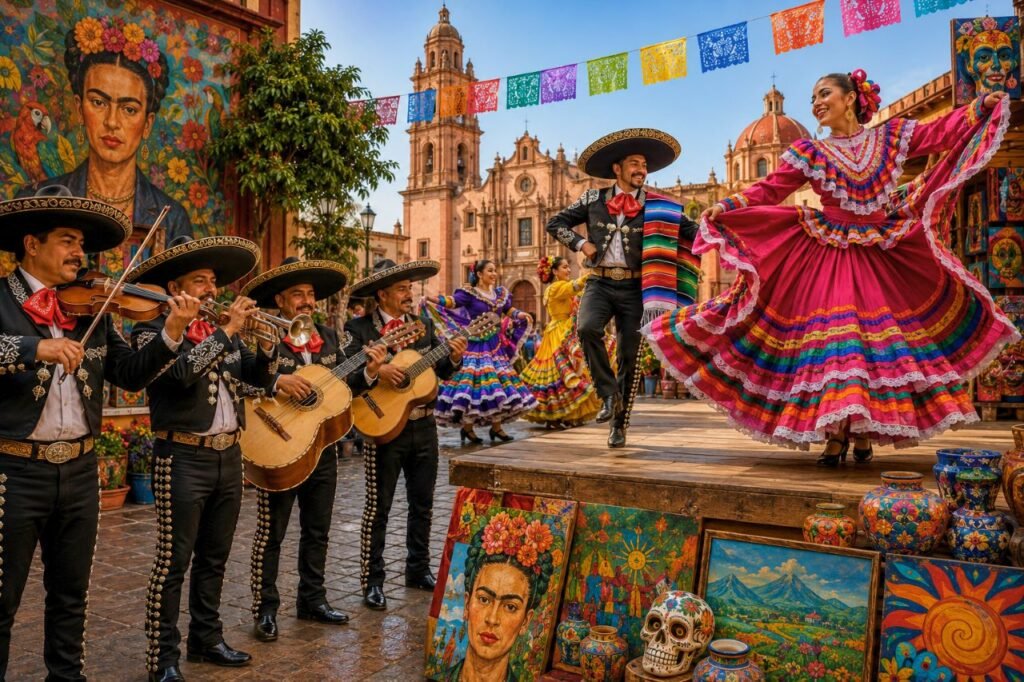
Fiesta mexicana en el plaza
Musical Traditions
- Mariachi: Originating in Jalisco, this world-renowned ensemble features violins, trumpets, a classical guitar, a high-pitched vihuela, and a deep-toned guitarrón. Their songs celebrate love, heartbreak, and patriotic pride.
- Son Jarocho: Hailing from Veracruz, this percussive musical style blends African, Spanish, and indigenous rhythms, emphasizing stringed jarana guitars and lively tap-dance footwork on raised wooden platforms.
Folkloric Dance
The Ballet Folklórico showcases the regional diversity of Mexico through choreography. Dances like Jalisco’s Jarabe Tapatío (the Mexican Hat Dance) feature intricate, percussive footwork (zapateado), where women twirl large, vibrant skirts to create shifting waves of color.
Visual Arts and Crafts
- Muralism: Following the revolution, artists like Diego Rivera, David Alfaro Siqueiros, and José Clemente Orozco used massive public building walls to paint sweeping narratives of working-class struggle and indigenous history.
- Alebrijes: Fantastical, brightly painted folk-art sculptures made of papier-mâché or carved copal wood, depicting dreamlike hybrid creatures.
- Talavera Pottery: Exquisite glazed earthenware from Puebla, easily recognized by its intricate blue and white patterns, blending Spanish, indigenous, and Asian ceramic traditions.
Summary
The culture of Mexico stands as a brilliant testament to the endurance of its people and the beauty of cultural synthesis. By safeguarding thousands of years of Mesoamerican indigenous wisdom and weaving it with European and global influences, Mexico has cultivated an artistic, linguistic, and culinary identity that is globally celebrated. Learning about and preserving these traditions ensures that future generations can continue to find identity, joy, and inspiration in Mexico’s rich cultural mosaic.
At Best Culture Insight, we see culture as the heartbeat of every society – the way people live, connect, and express their identity.