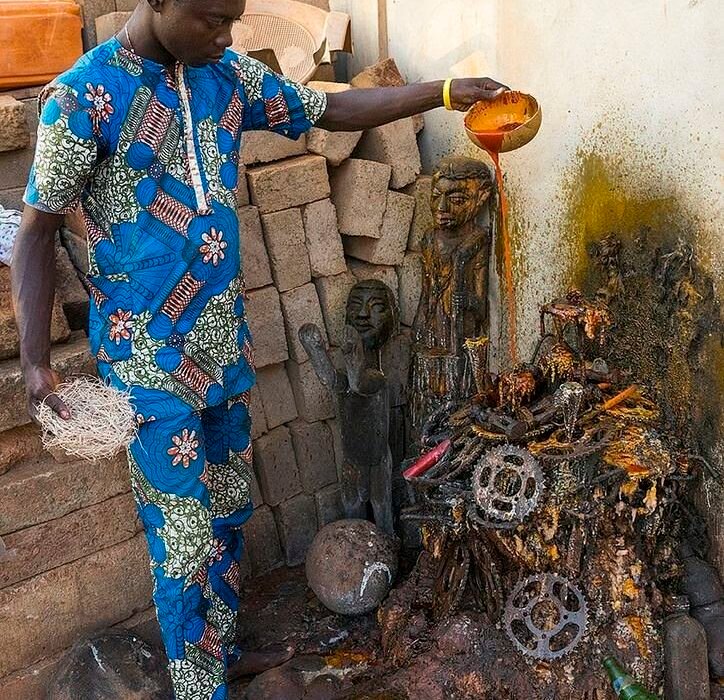

In the traditional worldview of the Ibibio people of southern Nigeria, the boundary between the physical world and the spiritual realm is incredibly thin. Central to this belief system is a profound reverence for ancestral spirits, who are viewed not as dead and forgotten, but as active, living guardians of their communities. To bridge the gap between the human family and these unseen protectors, the Ibibio established sacred spaces known as shrines (Idem or Iso Ekpo). Far from being mere relics of the past, these traditional shrines serve as profound symbols of justice, morality, and historical continuity for one of Nigeria’s oldest ethnic groups.
The Spiritual Mechanics: Understanding Ancestral Veneration (Ekpo)
To comprehend the meaning behind Ibibio shrines, one must first understand the concept of Ekpo, which means “ancestor” or “spirit.” The Ibibio believe in a supreme creator God (Abasi Ibom), but they view Him as too vast to approach directly for everyday matters. Instead, they call upon their righteous ancestors to act as intermediaries. Not everyone who dies becomes an honored ancestral spirit; only those who lived exemplary lives, reached a mature age, and received proper burial rites earn this status. These elevated spirits are believed to have the power to grant fertility, ensure bountiful harvests, and shield their living descendants from malicious forces.
Shrines as Sacred Portals of Communication
An Ibibio traditional shrine acts as a localized portal where the physical family can interact directly with the spiritual world. Shrines are typically constructed in secluded family compounds, central village squares, or deeply inside sacred forests (Akai). Within these spaces, sacred items are preserved to anchor the spirit’s presence. This often includes carved wooden figures (Ekpu), terracotta pots, ceremonial staffs, and specific native flora like the Nton plant. When a family face crises, illness, or complex disputes, they gather at the shrine to pour libations of palm wine and offer sacrifices, inviting the wisdom of their forebears into the situation.
The Role of Secret Societies in Maintaining Order
The spiritual authority of the ancestral shrines is closely guarded by traditional institutions, most notably the Ekpo and Ekpe societies. These male-only groups act as the executive, legislative, and judicial arms of traditional Ibibio governance. Masked spirits representing the ancestors emerge from the shrines during important seasonal festivals, burials, and planting seasons to enforce customary laws. Because the community holds immense respect—and a healthy fear—of ancestral judgment, the laws pronounced from these shrines are strictly obeyed, keeping crime rates low and ensuring communal harmony.
Preserving a Legacy in the Modern Era
With the widespread adoption of Christianity and modern education across Akwa Ibom State, the physical presence of traditional shrines has drastically diminished. However, the foundational values they represent still heavily influence modern Ibibio culture. The emphasis on respect for elders, community solidarity, integrity, and accountability can all be traced back to the ancient spiritual fear of checking out of line with the ancestors. Today, these shrines and their associated artifacts are increasingly viewed through a lens of cultural preservation, serving as historical landmarks that celebrate the resilience of the Ibibio identity.