Harmony in the Alps: An Elaborate Exploration of Switzerland Culture
Posted in :

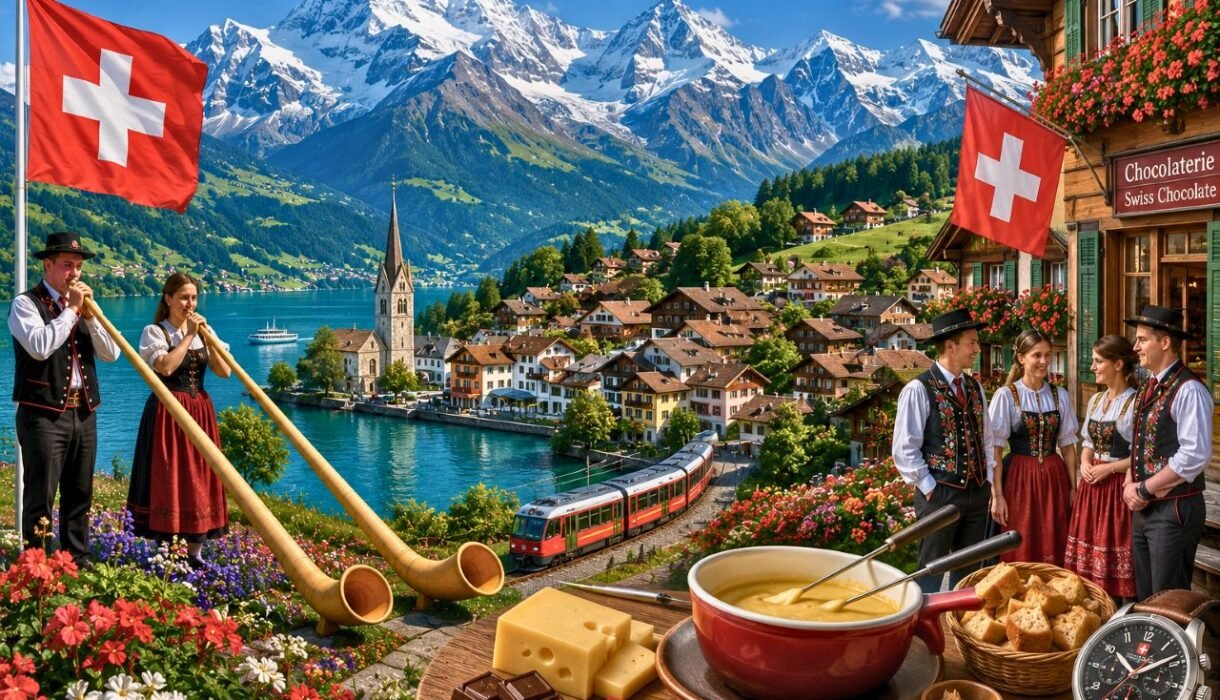
Surrounded by the dramatic snow-capped peaks of the Alps and Jura mountains in Central Europe, Switzerland is a land defined by precision, scenic majesty, and multilingual harmony. The unique Culture of Switzerland—known across its regions as Schweizer Kultur (German), culture suisse (French), and cultura svizzera (Italian)—is a masterclass in peaceful coexistence, where four distinct linguistic worlds intersect without losing their individual regional identities. The Swiss people are globally respected for their discretion, commitment to neutrality, remarkable civic responsibility, punctuality, and an abiding devotion to quality craftsmanship. From the cosmopolitan banking centers of Zurich and Geneva to peaceful alpine farming hamlets, Switzerland provides a rich, pristine cultural blueprint.
History & Origins
The historical emergence of Switzerland is a story of independent mountain communities binding together for mutual defense while fiercely guarding local autonomy.
- Helvetii & Roman Antiquity: Before Roman expansion, Celtic tribes known as the Helvetii inhabited the Swiss plateau. Following Julius Caesar’s conquests, the territory was integrated into the Roman Empire, giving rise to Latin settlements like Turicum (Zurich) and Aventicum. To this day, Switzerland uses the historic Latin designation Confoederatio Helvetica (CH) on national symbols and vehicle codes to maintain neutrality among its languages.
- The Oath of Rütli (1291): In early August 1291, representatives of three alpine cantons—Uri, Schwyz, and Unterwalden—met on the Rütli meadow to sign the Federal Charter (Bundesbrief). This mutual defense pact against Habsburg dominance marked the birth of the Old Swiss Confederacy.
- Perpetual Neutrality & The Federal State: Following military defeat at the Battle of Marignano in 1515, Switzerland began adopting a posture of armed neutrality, which was formally recognized internationally by the Congress of Vienna in 1815. Following a brief civil war (the Sonderbundskrieg), Switzerland adopted its modern federal constitution in 1848, creating a stable democratic state with a strong balance between federal power and cantonal sovereignty.
Culture, Traditions & Customs
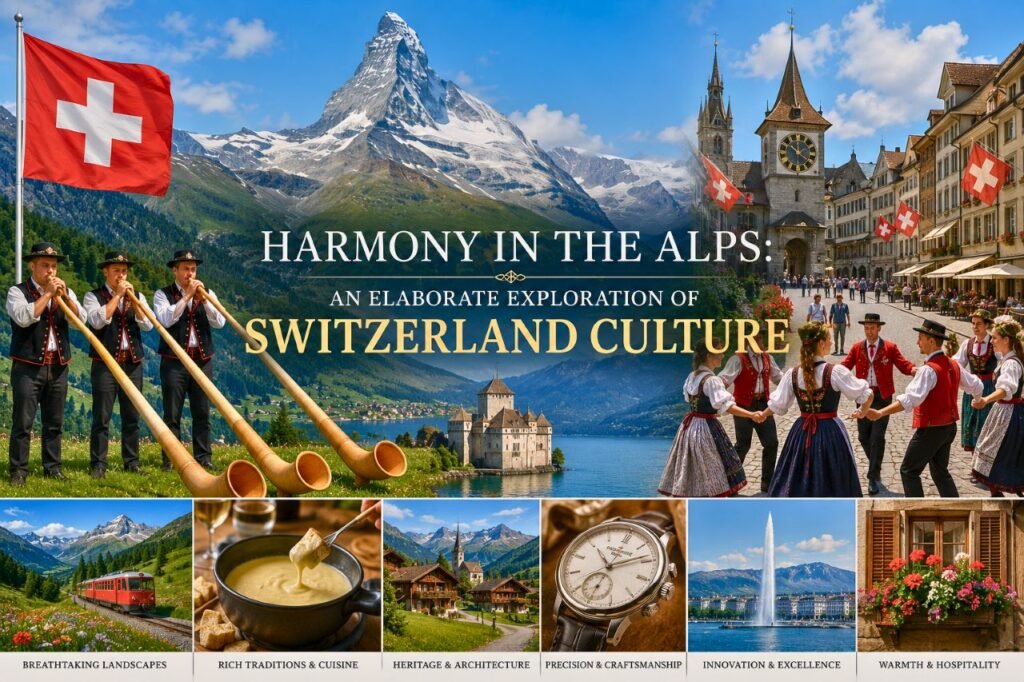
Harmony in the Alps: Switzerland’s Beauty
Direct Democracy & Civic Responsibility
Civic engagement in Switzerland is deeply personal. Through referendums and popular initiatives, Swiss citizens vote several times a year on specific laws, infrastructure projects, and tax policies. In rural cantons like Appenzell Innerrhoden and Glarus, citizens still gather annually outdoors for the Landsgemeinde—an ancient open-air assembly where voters raise their hands to vote on cantonal legislation.
Seasonal Alpine Festivals
- Alpabzug / Désalpes (Autumn Cattle Descent): Every autumn, alpine dairy farmers dress their cattle in floral garlands and heavy decorative brass bells to herd them down from high summer mountain pastures to valley farms. Villages celebrate with alpine folk music, market stalls, and cheese tastings.
- Fasnacht (Carnival): The spring carnival season is celebrated with intense passion, most famously in Basel (Basler Fasnacht). Beginning at 4:00 AM in total darkness (Morgenstreich), lantern-lit processions of masked musicians (Guggenmusik) parade through old stone streets playing fifes and drums.
Life Milestones & Marriage
Swiss weddings (Mariage / Hochzeit) blend formal civil ceremonies—required by law at local municipal offices—with spiritual or festive celebrations. A traditional post-ceremony ritual includes the Apéro (an extended cocktail reception), where wedding guests enjoy local wines, cured meats, and cheeses while socializing before intimate dinner receptions.
Languages & Communication
Four Official Languages
Switzerland is officially quadrilingual, reflecting its position at the crossroads of major Western European cultures:
- German (62%): Spoken across central, eastern, and northern Switzerland. Crucially, the spoken everyday language is Swiss German (Schwiizertüütsch)—a group of Alemannic dialects distinctly different from Standard High German.
- French (23%): Spoken in western Switzerland (La Romandie), including Geneva, Lausanne, and Neuchâtel.
- Italian (8%): Spoken in the southern canton of Ticino and southern valleys of Graubünden.
- Romansh (0.5%): A ancient Rhaeto-Romance language descending from Vulgar Latin, spoken natively in the mountainous canton of Graubünden.
Communication Etiquette & Values
Swiss communication is respectful, reserved, and incredibly punctual. Arriving even five minutes late for a business or personal meeting is considered disrespectful.
- Greetings: In formal contexts, a firm handshake with direct eye contact is universal. In French-speaking regions, friends exchange three cheek kisses (trois bises), while two are common in German and Italian regions.
- Key Expressions:
- Grüezi (Swiss German formal “Hello”) / Hoi (Informal)
- Bonjour (French “Good day”) / Ciao (Italian “Hello”)
- Merci vielmal (Swiss combination of French and German for “Thank you very much”)
Proverbs & Wisdom
- “Pünktlich wie ein Schweizer Uhrwerk.”
Meaning: “As punctual as a Swiss clockwork”—reflecting the national pride in precision and time management.
- “Reden ist Silber, Schweigen ist Gold.”
Meaning: “Speaking is silver, silence is gold”—highlighting discretion and thoughtful composure.
Geography
Covering roughly 41,285 square kilometers, Switzerland is a landlocked alpine nation characterized by dramatic topographical diversity divided into three natural geographic zones:
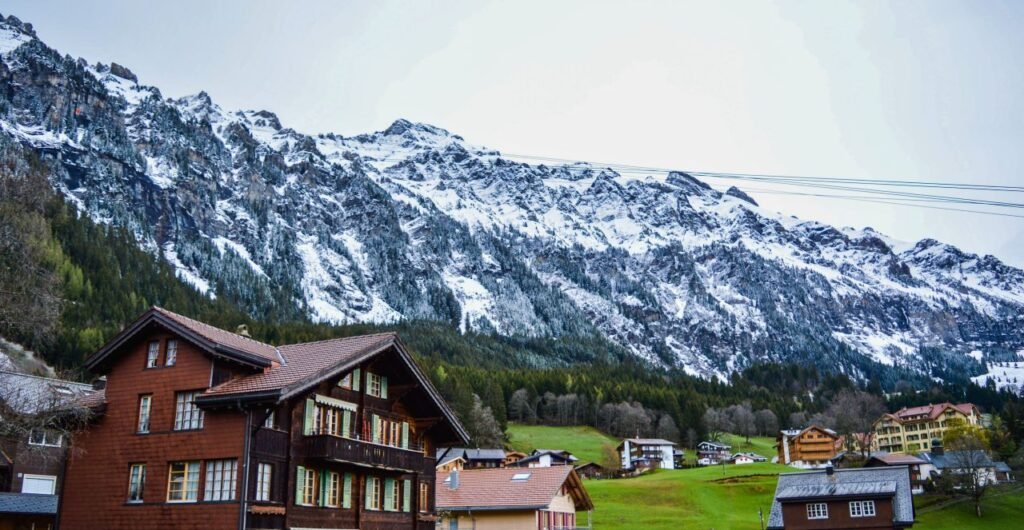
- The Swiss Alps: Covering nearly 60% of the land area, featuring world-famous peaks like the Matterhorn, Eiger, Jungfrau, and massive glaciers like the Aletsch Glacier.
- The Central Plateau (Mittelland): The hilly lowland corridor holding the majority of the population, major industrial hubs, and large urban lakes (Lake Zurich, Lake Lucerne, Lake Geneva).
- The Jura Mountains: A forested limestone mountain range along the northwestern border with France, famous for watchmaking valleys.
Economy
Switzerland possesses one of the world’s most advanced, stable, and prosperous free-market economies, consistently ranking among the top countries globally in GDP per capita, innovation, and quality of life.
The nation is famous for precision engineering, premium watchmaking (Rolex, Patek Philippe, Omega), global banking and financial services, and pharmaceuticals (Novartis, Roche). Additionally, Swiss chocolate makers (Lindt, Toblerone) and dairy producers set global standards for quality.
Politics
Switzerland operates as a federal parliamentary republic with a unique executive leadership model.
- Federal Council (Bundesrat): Executive power is held not by a single President or Prime Minister, but by a seven-member collective council representing major political parties and linguistic regions. The position of Federal President rotates annually among the seven members, serving primarily ceremonial functions.
- Federal Assembly (Bundesversammlung): A bicameral parliament consisting of the National Council (Nationalrat, 200 seats) and the Council of States (Ständerat, 46 seats representing cantons).
- Cantonal Sovereignty: Switzerland consists of 26 Cantons, each enjoying extensive political autonomy over education, taxation, policing, and healthcare.
Ethnic Groups
Demographically, Switzerland is shaped by native linguistic communities alongside a large international population:
| Linguistic / Regional Group | Main Geographic Area | Cultural Heritage |
| German-Swiss | Northern, Central, Eastern Switzerland | Alemannic cultural base; industrial & precision technology focus. |
| French-Swiss (Romands) | Western Switzerland (Romandie) | Close cultural links to France; wine production and diplomacy hub (Geneva). |
| Italian-Swiss | Canton of Ticino (South) | Mediterranean flair, stone architecture, and palm-lined lakeshores. |
| Romansh | Valleys of Graubünden | Ancient alpine Rhaeto-Romance linguistic heritage and folk art traditions. |
| Expatriate / Resident Foreigners | Major urban hubs | Over 25% of residents are foreign nationals, enriching the nation’s diversity. |
Beliefs & Values
Religious Heritage
Historically split between Roman Catholicism and Protestant Reformism (led by 16th-century reformers Huldrych Zwingli in Zurich and John Calvin in Geneva), modern Switzerland guarantees complete freedom of religion. Christianity remains the largest religious identification (~60%), though society is increasingly secular.
Core Values
- Neutrality & Diplomacy: Switzerland’s historic neutrality makes it a trusted global venue for peace negotiations and the international headquarters of organizations like the Red Cross (founded by Swiss humanitarian Henri Dunant) and the United Nations Office at Geneva.
- Quality & Craftsmanship (Swiss Made): A deep cultural commitment to excellence, durability, and perfection in manufacturing, from timepieces to pocket knives (Victorinox).
Food & Cuisine
Swiss gastronomy is warm, hearty, and heavily influenced by alpine farming traditions, centered on high-quality dairy, potatoes, and chocolate.
- Cheese Fondue: The national dish—a communal pot (caquelon) of melted Gruyère and Vacherin cheeses blended with white wine, garlic, and kirsch, into which diners dip cubes of crusty bread using long forks.
- Raclette: Melty alpine cheese scraped directly from a heated wheel onto boiled potatoes, pickled onions, and gherkins.
- Rösti: Crispy, golden pan-fried grated potato cakes, originally eaten as a hearty breakfast by Bernese farmers.
- Zürcher Geschnetzeltes: Thinly sliced veal cooked in a rich cream sauce with white wine and mushrooms, traditionally served alongside Rösti.
- Birchermüesli: Developed around 1900 by Swiss physician Maximilian Bircher-Benner, a healthy mix of rolled oats, grated fresh apples, nuts, and milk or yogurt.
Clothing & Symbols
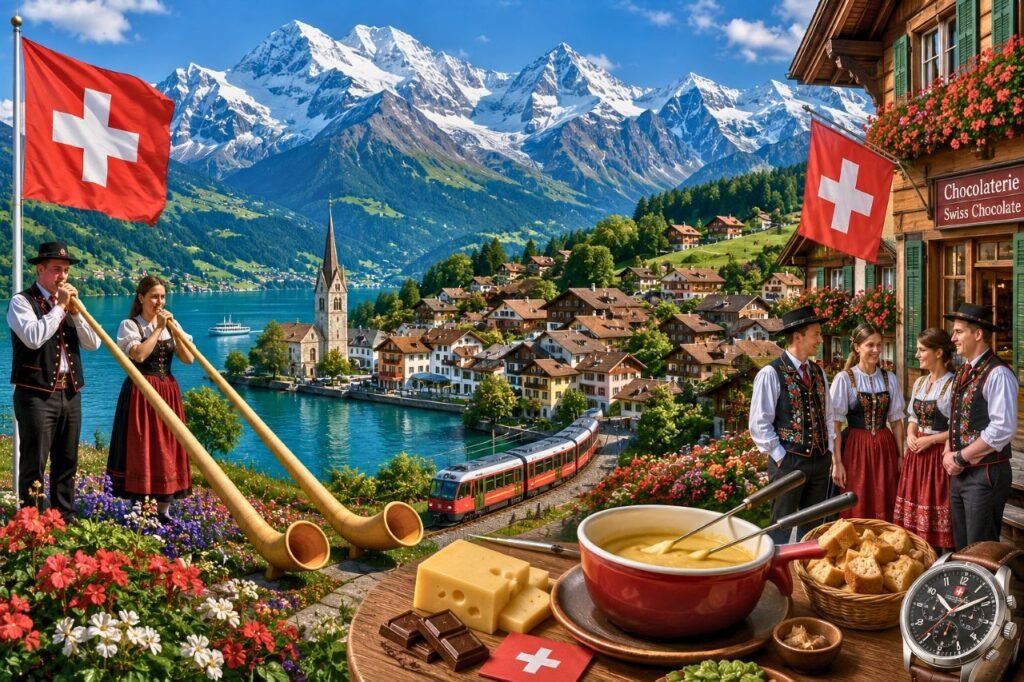
Traditional Alpine Attire (Tracht)
Traditional Swiss costumes (Trachten) vary significantly across cantons:
- Women: Feature dark skirts paired with embroidered velvet bodices, white puffed linen sleeves, lace aprons, and silver jewelry accessories.
- Men: Wear dark breeches, linen shirts, and short embroidered jackets (Sennenkittel), often adorned with alpine floral motifs like Edelweiss.
Iconic National Symbols
- Edelweiss: The resilient white alpine flower growing on rocky cliffs, symbolizing alpine courage and purity.
- The Swiss Cross: A bold white cross on a red field, dating back to medieval battle banners, representing freedom, honor, and humanitarian service.
- Alphorn: A massive wooden horn up to 3.5 meters long, originally used by mountain shepherds to communicate across alpine valleys.
Music, Dance & Art
Folk Soundscapes: Yodeling & Alphorn
Swiss folk music relies on the haunting sounds of the Alphorn, accordion (Schwyzerörgeli), and Yodeling (Jodel)—a vocal technique alternating between chest voice and head voice, originally used by mountain herders to call livestock across distant valleys.
Literature, Art & Graphic Design
Switzerland has made monumental contributions to global visual arts and design:
- Visual Arts & Sculpture: Legendary artists include Alberto Giacometti (famous for elongated bronze figures) and Paul Klee.
- International Typographic Style: Swiss graphic designers in the 1950s created the “Swiss Style” of design, giving birth to clean typography, grid layouts, and the world’s most ubiquitous font: Helvetica.
- Literature: Classic works like Johanna Spyri’s Heidi reflect the enduring romantic connection between Swiss youth and the alpine environment.
Summary
In summary, Switzerland Culture offers an extraordinary blueprint for unity in diversity. By balancing four distinct language regions, preserving centuries-old alpine folk traditions, perfecting precision craftsmanship, and upholding direct democracy, the Swiss people have built one of the most harmonious and prosperous societies on Earth. Switzerland invites the world to appreciate the quiet strength of neutrality, the beauty of the high Alps, and the warmth of a shared meal around the fondue pot.
At Best Culture Insight, we see culture as the heartbeat of every society – the way people live, connect, and express their identity.