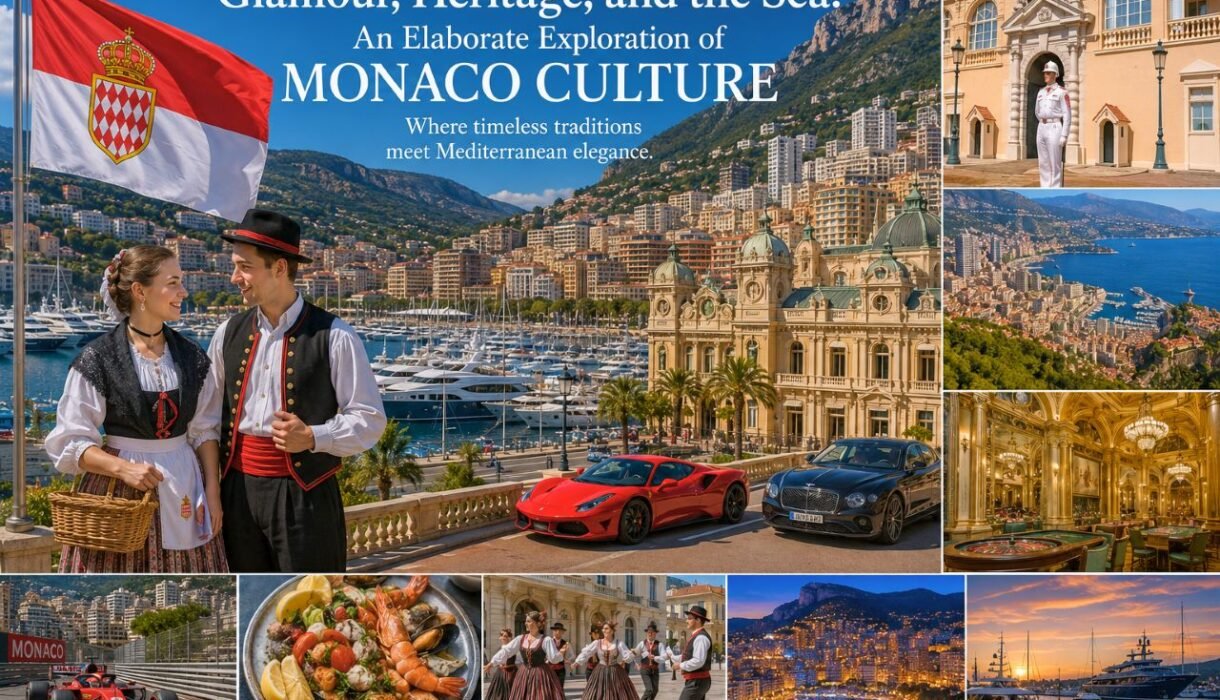

Monaco—the glittering jewel of the French Riviera—evokes images of luxury superyachts, the legendary Casino de Monte-Carlo, and high-octane Formula 1 cars screaming through tight city streets. Yet, beneath this ultra-modern veneer of opulence lies a deeply rooted, resilient Mediterranean culture.
With an area of just over two square kilometers, the Principality of Monaco is the world’s second-smallest independent state, but its cultural presence is immense. The native people, known as Monegasques, have carefully preserved their unique heritage, language, and ancestral traditions through centuries of geopolitical shifts. This comprehensive, research-driven guide celebrates the history, traditions, beliefs, and vibrant everyday culture of Monaco.
History & Origins
Monaco’s history is inextricably linked to its strategic, rocky promontory overlooking the Mediterranean Sea, known simply as The Rock (Le Rocher).
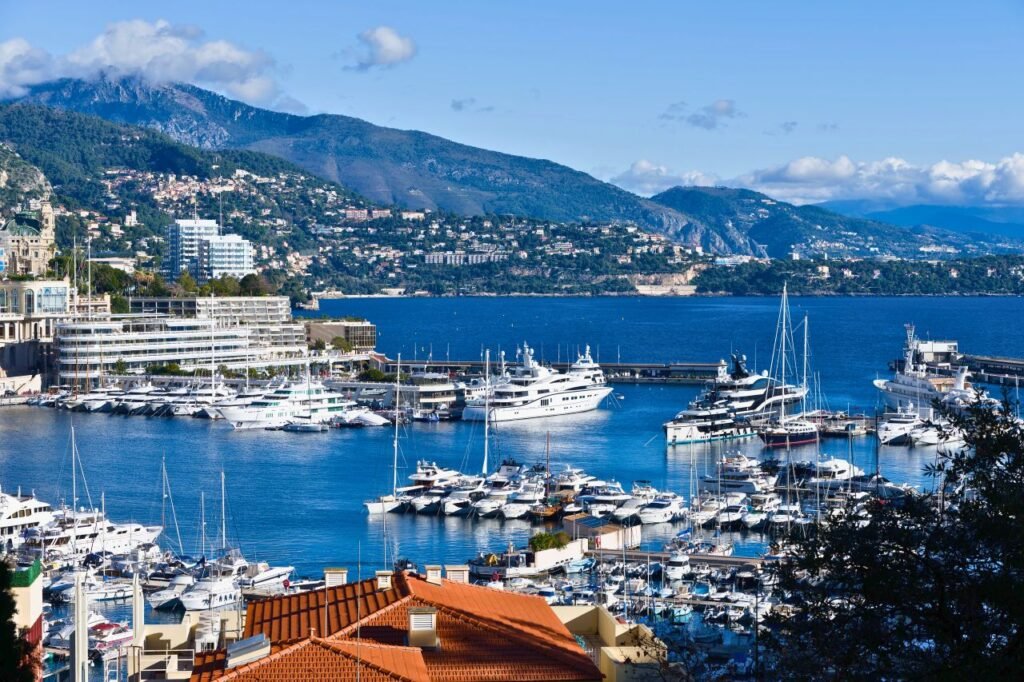
- Ancient Beginnings: The region was originally settled by the Ligurians, an ancient Mediterranean people. In antiquity, it became an important port of call for Phoenician, Greek, and Roman sailors. The Greeks named the harbor Monoikos (meaning “single house” or “lone temple”), dedicated to the demigod Hercules, which eventually evolved into the name “Monaco.”
- The Grimaldi Dynasty: The modern history of Monaco began on January 8, 1297, when Francesco Grimaldi (known as Malizia or “The Cunning One”), a member of a prominent Genoese family, disguised himself as a Franciscan monk to gain entry to the fortress atop The Rock. Once inside, he opened the gates for his soldiers, establishing the Grimaldi family’s rule.
- Sovereignty and Expansion: For over 700 years, the House of Grimaldi navigated pressure from neighboring regional powers, including Spain, France, and Sardinia. In 1861, a Franco-Monegasque treaty officially recognized Monaco’s independence. Shortly thereafter, the opening of the legendary casino in Monte-Carlo and the connection of the railway transformed the principality from a quiet, citrus-growing port into a playground for international high society.
Culture, Traditions & Customs
National Holidays and Civic Festivals
Monegasque traditions are defined by a strong sense of community and devotion to the ruling princely family.
- The Feast of Saint Devota (Sainte Dévote): Celebrated on January 26th and 27th, this is Monaco’s most deeply spiritual festival. Saint Devota is the patron saint of the principality and the House of Grimaldi. According to legend, a 4th-century Christian martyr’s body was sent out to sea in a boat, guided by a dove to the shores of Monaco. Every year on the eve of her feast day, the Prince and the Monegasque people gather to burn a symbolic wooden boat in front of the Church of Sainte Dévote in a moving ceremony of remembrance.
- National Day (La Fête Nationale): Celebrated on November 19th, this day marks the official ascension of Prince Albert II’s father, Prince Rainier III. The day features a solemn mass in Saint Nicholas Cathedral, a military parade in the Palace Square, and festive fireworks over the harbor, with houses decorated in the national red-and-white colors.
Marriage, Naming, and Rites of Passage
Because of Monaco’s small population, family milestones are celebrated with unique civic pride:
- Royal and Civic Celebrations: Royal weddings and the births of princely heirs are treated as national festivals, often declared public holidays with free open-air banquets organized for all Monegasque citizens.
- The “Pine Tree” Christmas Tradition: On Christmas, the Palace hosts a historic children’s party where the ruling Prince and Princess personally distribute gifts to Monegasque children, maintaining a close, familial bond between the citizens and the sovereign.
Languages & Communication
Monégasque: The Ancestral Tongue
While French is the official state language and English is widely spoken in business and tourism, the historic language of the land is Monégasque (Munegascu).
This is a Western Romance language derived from Ligurian (a Genoese dialect), heavily influenced by French and Occitan. In the mid-20th century, the language faced extinction, but a concerted effort by the government saved it. Today, Monégasque is a compulsory subject in all public schools, and street signs in the historic Old Town are bilingual.
Greetings and Idioms
- “Asevo”
Meaning: “Welcome”—commonly seen on signs entering the old town.
- “Daghe Munegu!”
Meaning: “Go Monaco!”—the iconic, passionate cheer used by locals during sporting events, particularly at AS Monaco football matches.
- “Oila ciao!”
Meaning: A friendly, informal greeting used among close friends.
Geography
Monaco is a narrow coastal strip of land nestled at the foot of the southern Alps, looking out over the sparkling, deep blue waters of the Ligurian Sea.
The principality is divided into several districts, including Monaco-Ville (the medieval old town built on The Rock), Monte-Carlo (the central residential and resort area), La Condamine (the harbor area), and Fontvieille (an industrial and residential district built entirely on land reclaimed from the sea). Due to its rugged, vertical terrain, the city is connected by an intricate network of public elevators, escalators, and tunnels carved directly into the seaside cliffs.
Economy
Monaco has successfully built an exceptionally robust, tax-free economy that punches far above its weight.
- Financial Services and Tourism: Monaco’s status as a tax haven attracts ultra-high-net-worth individuals, fueling a massive private banking and wealth management sector. Tourism is also a core pillar, centered around high-end luxury hospitality, yachting, and premium events.
- The Casino de Monte-Carlo: Designed by Charles Garnier (the architect of the Paris Opera), this architectural marvel famously saved the House of Grimaldi from bankruptcy in the 19th century. Interestingly, by Monegasque law, citizens of Monaco are strictly forbidden from gambling in the casino; it is reserved entirely for foreign visitors.
- Scientific and Marine Research: Under the influence of Prince Albert I (a pioneering oceanographer), Monaco has become a world hub for marine conservation and oceanography, hosting the internationally renowned Oceanographic Museum and various marine labs.
Politics
Monaco is a constitutional monarchy, currently ruled by Prince Albert II of the House of Grimaldi.
The Prince holds significant political executive power. He appoints the government, which is led by a Minister of State (historically a French citizen, chosen by the Prince). Legislative authority is shared between the Prince and the National Council (Conseil National), a unicameral parliament of 24 members elected by Monegasque citizens. While Monaco is not a formal member of the European Union, it is deeply integrated with France through a customs union and uses the Euro as its official currency.
Ethnic Groups
Monaco’s demographic makeup is highly unusual, as native citizens form a minority in their own country.
| Ethnic Group | Approximate Share | Cultural Legacy & Influence |
| French | ~28.4% | The largest resident population; brings heavy linguistic and culinary influence |
| Monegasque | ~21.6% | The native citizens; hold exclusive voting rights and preserve historic local customs |
| Italian | ~18.7% | Deep historical ties to Genoa; strongly influences local cuisine and social habits |
| British | ~7.5% | Influential in the luxury yachting, financial, and expat social sectors |
| Other (140+ nationalities) | ~23.8% | A diverse global mix of business professionals, retired athletes, and wealthy expats |
Beliefs & Values
Roman Catholicism
The official state religion of Monaco is Roman Catholicism, as outlined in the country’s Constitution, although freedom of worship is fully guaranteed to all.
The Cathedral of Our Lady Immaculate (also known as the Saint Nicholas Cathedral) is a stunning Romanesque-Byzantine structure built from white stone quarried in nearby La Turbie. This sacred space is where national celebrations occur and serves as the burial site for many members of the Grimaldi dynasty, including Prince Rainier III and his wife, Princess Grace (the former American actress Grace Kelly).
Food & Cuisine
Monegasque cuisine is a delicious blend of French elegance and rustic Italian coastal cooking, relying heavily on olive oil, fresh seafood, garlic, and Mediterranean vegetables.
- Barbagiuan: The national dish of Monaco. These are small, crisp, deep-fried pastry pockets stuffed with a savory filling of Swiss chard, spinach, ricotta cheese, leeks, garlic, and herbs. They are eaten warm as appetizers and are present at every major festive gathering.
- Stocafi: A rich, comforting cod stew. Dried stockfish is rehydrated and slow-cooked in a vibrant red wine tomato sauce flavored with garlic, black olives, capers, and local herbs.
- Fougasse Monégasque: A sweet, festive flatbread. The dough is subtly flavored with orange blossom water, baked until golden, and decorated with red and white anise seeds, almonds, and hazelnuts to represent the colors of the national flag.
Clothing & Symbols
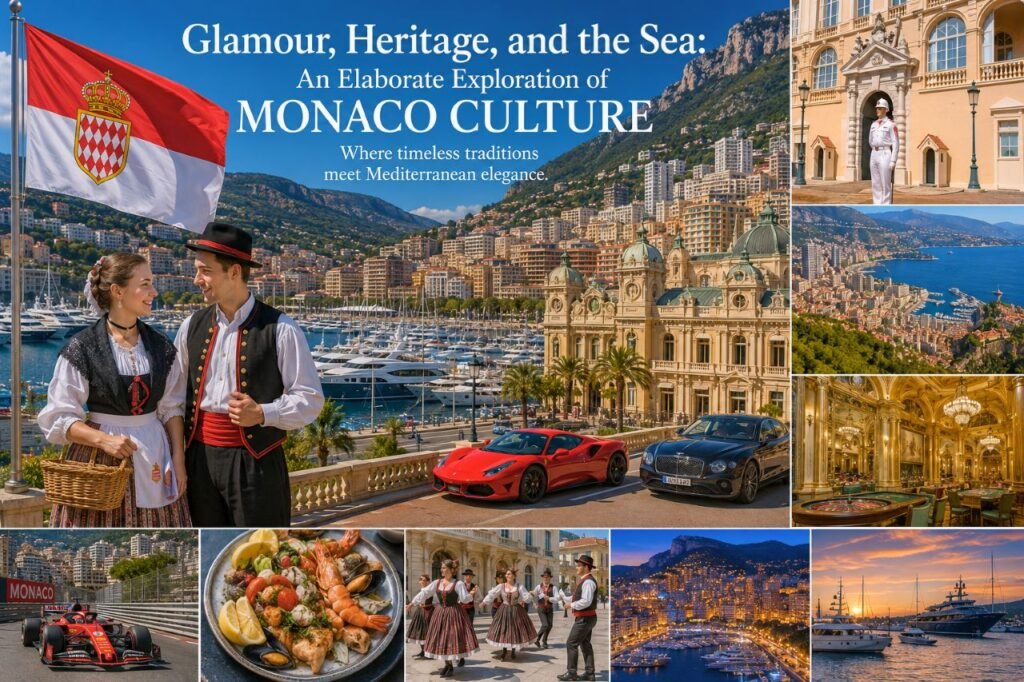
Traditional Attire and the National Colors
The historic, traditional costume of Monaco dates back to the 18th century and is worn during national folk dances and official holidays:
- Women’s Costume: Consists of a long, full skirt (usually red-and-white striped), a crisp white peasant blouse with delicate lace trim, a black embroidered velvet corset, and a small lace bonnet.
- Men’s Costume: Features white trousers adorned with red sashes, a white shirt, a dark embroidered vest, and a wide-brimmed straw hat decorated with red and white ribbons.
The Grimaldi Coat of Arms
The state coat of arms is highly symbolic. It features two Franciscan monks brandishing swords, supporting a red-and-white checkered shield. This directly commemorates Francesco Grimaldi’s historic, deceptive conquest of The Rock in 1297, reminding the Monegasque people of the courage and cunning that secured their independence.
Music, Dance & Art
Performing Arts and the Monte-Carlo Opera
Despite its tiny size, Monaco is a monumental center for the performing arts.
- Les Ballets de Monte-Carlo: Established under the patronage of Princess Grace and Prince Rainier III, this world-class classical ballet company tours globally and continues a legacy of dance that began with the famous Ballets Russes in the early 20th century.
- The Monte-Carlo Philharmonic Orchestra: A highly respected classical ensemble that performs regularly in the stunning Opera House (Salle Garnier) and hosts summer concerts in the open-air courtyard of the Palace.
- The Palladienne of Monaco: A traditional folk dance group dedicated to preserving local songs and historic, high-spirited Mediterranean street dances, keeping the authentic spirit of Le Rocher alive.
Summary
Monaco’s culture is a masterclass in balance. It seamlessly weaves together the glittering, fast-paced world of high-end international glamour with a quiet, deeply respectful preservation of Ligurian heritage. Through its unique Monégasque language, historic religious processions, and traditional culinary flavors like the savory barbagiuan, Monaco continues to prove that even the smallest nations can cultivate a rich, resilient, and fiercely proud cultural identity.
At Best Culture Insight, we see culture as the heartbeat of every society – the way people live, connect, and express their identity.