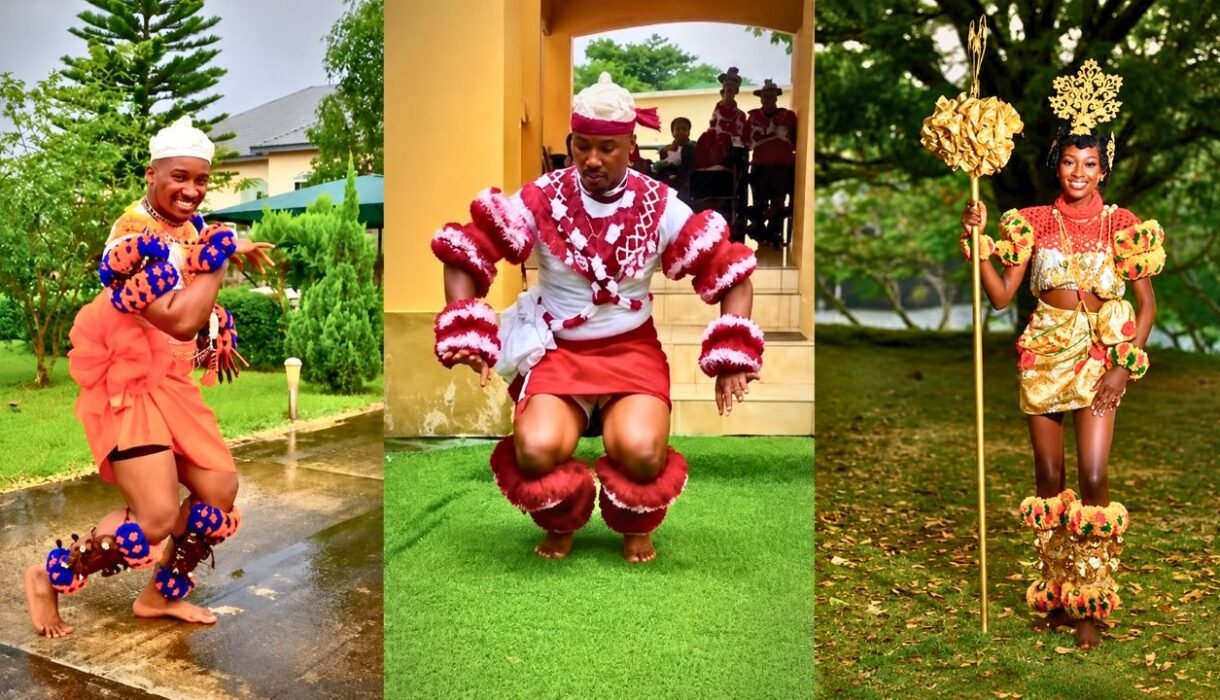
Ekombi Dance: The Royal Dance of the Coast
Posted in :

The Efik people of Cross River State, Nigeria, possess a cultural heritage as rich and fluid as the waters that surround their coastal homeland. At the heart of this heritage lies the Ekombi dance, a mesmerizing and aristocratic performance known across West Africa as the “Royal Dance of the Coast.” Far more than just rhythmic entertainment, Ekombi is a living historical archive. It tells the story of a people deeply connected to the Atlantic Ocean, capturing the essence of their environment, their societal values, and their royal institutions through poetic physical movement.
The Rhythm of the Atlantic Ocean – Ekombi Dance
The choreographic foundation of the Ekombi dance is directly inspired by the natural movements of the sea. As the drummers strike the traditional percussion instruments, the dancers—predominantly young women—mimic the gentle ebb and flow, the sudden swells, and the rhythmic cresting of ocean waves. Every sway of the hips, fluid motion of the arms, and calculated footstep represents the Efik people’s historical reliance on the water for commerce, sustenance, and protection. It is a beautiful, visual celebration of nature, transforming the power of the marine environment into an elegant human art form.
A Ritual of Maidenhood and Royalty – Ekombi Dance
Historically, Ekombi is deeply intertwined with the ancient Efik institution of the “Fattening Room” (Nkuho). Upon graduating from this secluded period of mentoring, where they learned the secrets of womanhood, marriage, and royal etiquette, young maidens would debut their refined skills through the Ekombi dance. The dance served as a public demonstration of their grace, purity, and readiness for marriage. Because of its association with prestige and high social standing, it quickly evolved into a staple performance for the installation of kings (Obongs) and the reception of important dignitaries.
The Elegance of Royal Regalia
The visual spectacle of Ekombi is heightened by the breathtaking traditional attire worn by the performers. Dancers are adorned in the Moninkim—a vibrant, multi-layered brassiere and short skirt combo—or the flowing Onyonyo gown, paired with intricate beadwork around their necks, waists, and ankles. Heavy brass leg rings (Ekpaku) are often worn to add weight to their steps, creating a subtle, rhythmic metallic chime that complements the drumming. Their hair is elaborately styled and decorated with gold combs and feathers, signifying their royal status and the wealth of the Efik kingdom.
Preserving a Coastal Legacy
Today, the Ekombi dance remains a powerful symbol of cultural identity and pride for the Efik people, successfully transitioning from ancient palace courts to modern global stages. It is a staple at cultural festivals, state ceremonies, and international tourism expositions, capturing the imagination of audiences worldwide. By blending the beauty of the natural world with the dignity of royal tradition, Ekombi ensures that the rich history of the coastal cross-river region continues to be told, celebrated, and preserved for generations to come.