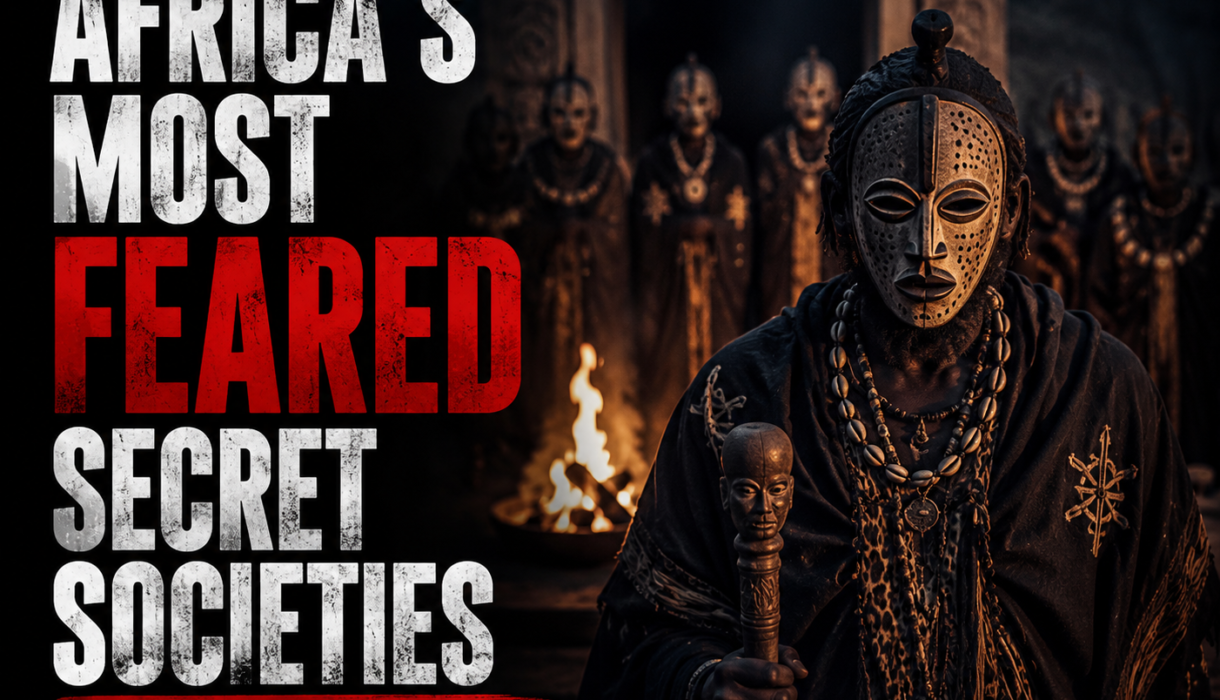

Long before the arrival of colonial administrations and modern judicial systems, many African kingdoms were governed by highly organized, exclusive brotherhoods and sisterhoods. Often referred to as traditional secret societies, these groups served as the legislative, executive, and judicial arms of their respective communities. Far from being archaic relics of the past, several of these ancient institutions have survived centuries of external suppression and political shifts. Today, they continue to exert massive, often feared, social and political influence beneath the surface of modern African governance.
The Poro and Sande Networks of West Africa
Spanning across Sierra Leone, Liberia, Guinea, and parts of Côte d’Ivoire, the Poro (for men) and Sande (for women) societies represent two of the most powerful institutional networks in West Africa. Acting as traditional parallel governments, they are responsible for safeguarding esoteric knowledge, enforcing community laws, and overseeing rites of passage. The Poro society is personified by a Grand Master and masked figures who wield massive spiritual and judicial authority, including the power to arbitrate land disputes and dictate political succession. In many rural regions, it remains an unwritten rule that no individual can achieve a position of significant political or communal authority without first being initiated into the upper echelons of the Poro.
The Ogboni Society and Indigenous Checks on Power
Among the Yoruba people of southwestern Nigeria and Benin Republic, the Ogboni fraternity stands as a legendary institution deeply revered and feared for its stealth and structural authority. Historically, the Ogboni acted as a high court and a vital constitutional check on the powers of the Oba (King). Bound by sacred oaths to the earth deity (Ile), members possess the traditional authority to depose tyrannical rulers and settle major capital disputes. While modern constitutional law has superseded their formal judicial role, the Ogboni society persists as an elite, deeply secretive network composed of highly influential politicians, business moguls, and traditional leaders who discreetly shape regional dynamics.
The Ekpe Society and the Majesty of the Leopard
In the Cross River region of southeastern Nigeria and southwestern Cameroon, the Ekpe (Leopard) society reigns supreme as an ancient fraternity of law enforcement and trade regulation. Historically, the Ekpe society developed an sophisticated system of governance that even included its own sacred, symbolic script known as Nsibidi. Members of the highest ranks operate as custodians of cultural morality and economic order, using the mystical authority of the “leopard spirit” to enforce peace and recover communal debts. Because the society transcends modern political boundaries, its contemporary members retain an uncanny ability to command absolute obedience and social order across vast territories.
Balancing Ancient Mystique with Modern Realities
The enduring existence of these secret societies frequently sparks intense debate within contemporary African discourse. To their defenders, these institutions represent invaluable repositories of pre-colonial history, philosophical discipline, and structured leadership formation that Western governance models fail to offer. To critics and outsiders, however, their strict codes of silence, highly guarded initiation rituals, and immense behind-the-scenes political leverage can evoke fear and suspicion. Ultimately, whether viewed as sacred cultural guardians or shadowy parallel authorities, these ancient societies remain a testament to the resilient, unyielding power of African traditional governance in the 21st century.