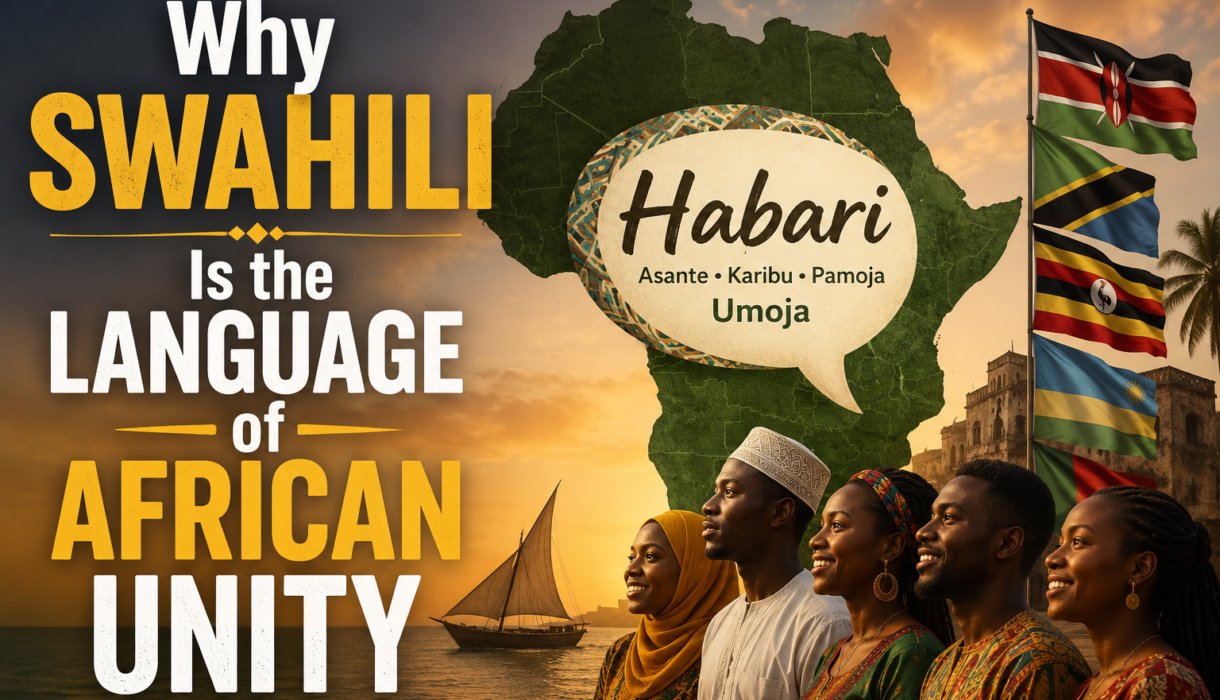

With over 2,000 distinct languages spoken across its vast territories, Africa’s incredible linguistic diversity has historically presented a unique barrier to continental integration. Amid this complex landscape, Swahili—locally known as Kiswahili—has emerged as a powerful beacon of pan-African identity. Spoken by over 200 million people, it has transcended its origins as a coastal dialect to become the ultimate bridge connecting diverse cultures. Today, Swahili is not just a tool for daily trade; it is celebrated globally as the linguistic heartbeat of African solidarity and progress.
A Legacy Untethered to Colonialism
Unlike English, French, or Portuguese, which were imposed during the colonial era, Swahili is a deeply indigenous African language with Bantu roots, enriched by centuries of cross-cultural trade. During the mid-20th century struggle for independence, visionary leaders like Tanzania’s Mwalimu Julius Nyerere recognized its potential as a unifying force. By promoting Swahili over localized ethnic languages, post-colonial leaders successfully fostered national cohesion, proving that a native African tongue could serve as a highly effective, neutral language of liberation and governance.
The Official Voice of Continental Diplomacy
Swahili’s status has successfully transitioned from a regional lingua franca to a powerful diplomatic tool. Recognizing its unifying potential, the African Union (AU), the East African Community (EAC), and the Southern African Development Community (SADC) have adopted Swahili as an official working language. Furthermore, the United Nations has embraced its global significance by dedicating July 7th as World Kiswahili Language Day. These institutional endorsements solidify the language’s role as the premier medium for continental policy, negotiation, and future development.
Driving Economic and Digital Integration
As the African Continental Free Trade Area (AfCFTA) continues to expand, Swahili is poised to play an essential role in driving cross-border commerce and digital innovation. Because of its relatively straightforward phonetic structure and lack of complex tonal variations, it is remarkably easy for beginners to learn. This linguistic simplicity makes it an ideal medium for merchants, tech developers, and educators. By facilitating seamless communication across diverse regional borders, the language acts as a catalyst for economic integration, transforming how Africans do business with one another.
A Modern Symbol of Global Pan-African Pride
Beyond the borders of Africa, Swahili has captured the imagination of the global African diaspora. Powerful cultural concepts such as Harambee (meaning “pulling together”) and Uhuru (meaning “freedom”) have entered the international lexicon as symbols of resilience, community, and collective progress. From its inclusion in major university curriculums to its adoption on global streaming and digital media platforms, Swahili has become a source of immense pride. It continues to remind the world that true African unity is not merely a political ambition, but a shared, living tongue.