Why Samoa’s “Fa’afafine” Third Gender Has Been Accepted for Centuries
Posted in :

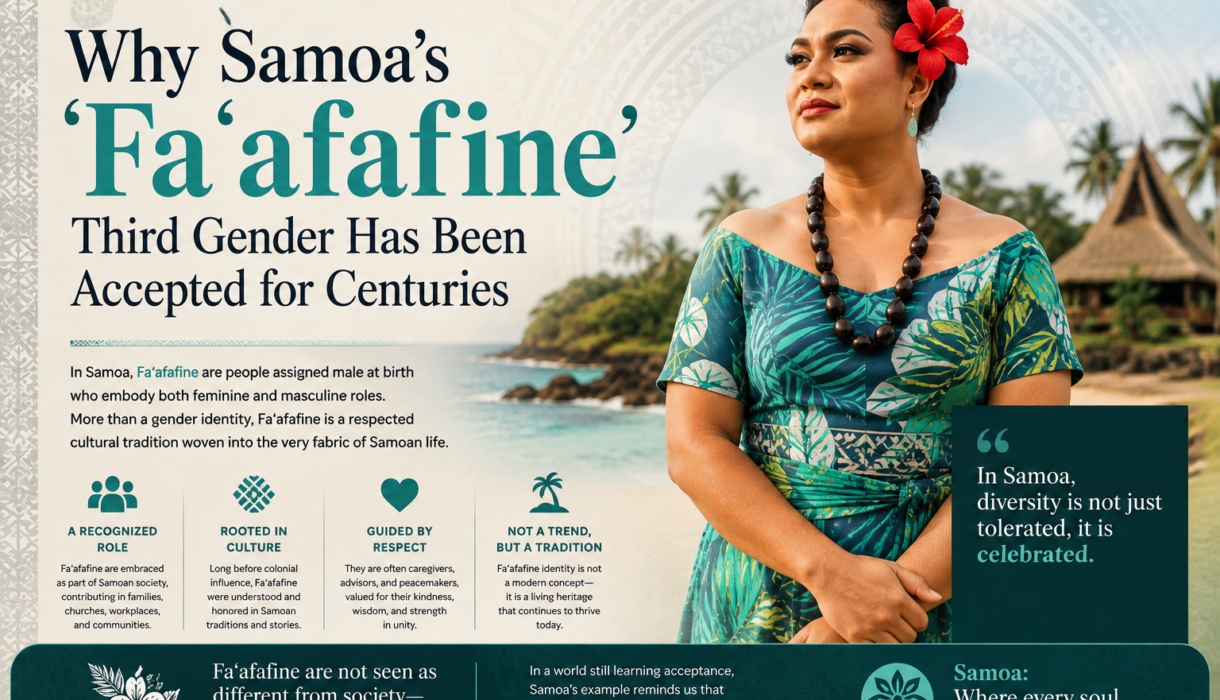
In modern Western discussions surrounding identity, gender non-conformity is often framed as a contemporary cultural shift. However, in the South Pacific island nation of Samoa, a recognized non-binary identity has existed harmoniously within society for centuries. Known as the Fa’afafine, which translates directly to “in the manner of a woman,” these individuals are assigned male at birth but naturally express feminine gender traits, roles, and aesthetics. Rather than facing social exclusion, the Fa’afafine are deeply respected, fully integrated, and celebrated as an essential pillar of Samoan communal life.
Understanding the Cultural Roots of Fa’aSamoa
To comprehend why the Fa’afafine identity thrives, one must understand Fa’aSamoa—the traditional Samoan way of life. Fa’aSamoa is a socio-cultural framework centered on family (aiga), communal responsibility, and mutual respect rather than individualistic labels. In ancient Samoan philosophy, societal roles were divided by service and labor rather than rigid biological expectations. Because Fa’afafine naturally bridge the gap between male and female perspectives, Samoan society historically recognized them as a distinct, valued third gender, ensuring that every member of the community had a meaningful role to play in daily survival and cultural preservation.
Pillars of Caregiving and Family Life
Throughout Samoan history, Fa’afafine have earned deep affection through their dedication to domestic caregiving and elder support. Because traditional Samoan families rely heavily on shared communal labor, Fa’afafine often step forward to manage household responsibilities, organize large social gatherings, and care for aging relatives or young children. Their fluid position allows them to navigate both male-dominated physical tasks and female-centered domestic work seamlessly. This reputation for hard work, loyalty, and exceptional hospitality has made them indispensable assets within the multi-generational family structure.
Cultural Leadership, Art, and Community Organizing
Beyond domestic contributions, Fa’afafine play a vital role in preserving Samoan arts, dance, and oral traditions. They are frequently the creative heartbeat of local communities, excelling as choreographers, event organizers, fashion designers, and cultural performers. The Society Fa’afafine Association (SFA), established in the country, actively works alongside government bodies and church leaders to advocate for community welfare and humanitarian causes. Their active engagement in civic life ensures that Fa’afafine are seen not as an isolated minority, but as visible, highly respected leaders within public spaces.
Resilience Against Western Influence and Global Lessons
Despite centuries of Western colonization and the introduction of conservative Christian missionary values, the Fa’afafine identity has remained remarkably resilient. While nineteenth-century European travelers struggled to categorize them within strict Western binary frameworks, Samoans refused to abandon their heritage of inclusion. Today, Samoa’s enduring acceptance of the Fa’afafine offers a profound lesson to the wider world: when a culture prioritizes family unity, communal contribution, and unconditional respect over rigid stereotypes, diverse gender identities naturally thrive as valued gifts to society.