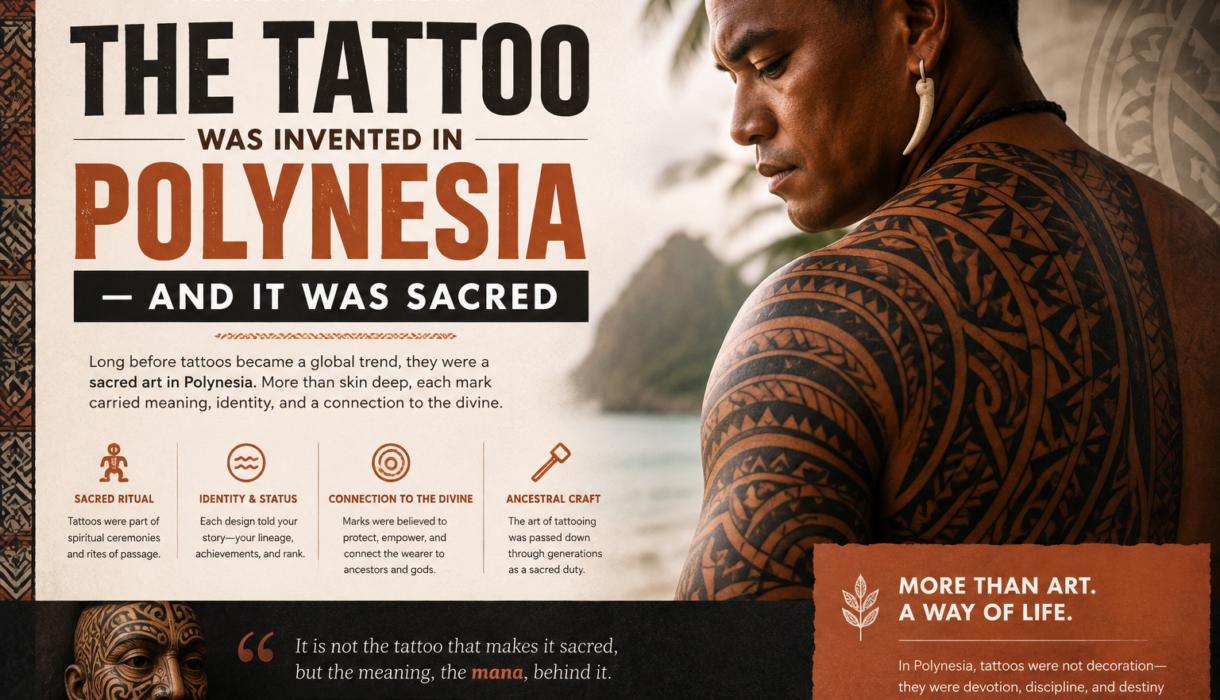

In modern society, body art is often viewed as a personal aesthetic choice, a dynamic form of self-expression, or a spontaneous trend. However, long before body art entered mainstream global pop culture, it existed as a deeply spiritual, structured, and sacred practice across the Pacific Ocean. The word “tattoo” itself derives directly from the Polynesian terms tatau (in Samoa) and ta-moko (among the Māori of New Zealand). Across the vast Polynesian Triangle—spanning Hawaii, New Zealand, and Easter Island—marking the human skin was not a mere fashion statement, but a sacred spiritual requirement that defined an individual’s identity, destiny, and connection to the divine.
The Sacred Language of Spiritual Power (Mana)
In ancient Polynesian culture, the physical body was considered a holy vessel that housed a person’s mana—their spiritual energy, prestige, and life force. Tatau served as a spiritual shield designed to preserve, elevate, and protect this sacred energy. Every line, geometric curve, and intricate symbol tapped into ancestral lineages and tribal deities. Rather than selecting random art off a wall, a person’s markings were carefully crafted to represent their rank, genealogy, courage in battle, and personal milestones. Walking through society without these sacred markings meant being spiritually exposed, socially invisible, and lacking honor in the eyes of the community.
Pain, Blood, and the Rite of Passage
The process of receiving a tatau was an intense spiritual trial rather than a simple cosmetic session. Master tattooists, known as Tufuga tātatau, held immense religious authority within the tribe. Utilizing handmade tools crafted from sharpened boar tusks, turtle shells, and bone bound to wooden handles, the master would tap dark ink—made from burned candlenut soot—deep into the skin. This excruciating ritual required incredible endurance and physical fortitude. The spilled blood was viewed as a sacred sacrifice to the gods, and successfully completing the painful ceremony marked a young person’s official transition from adolescence into respected adulthood.
Distinct Symbols with Cosmic Meaning
Polynesian tattoo imagery was built on a rich lexicon of natural and cosmic symbols, each carrying profound meaning. Spearheads represented courage and martial strength, while ocean waves symbolized the voyage of life, survival, and the unpredictable nature of fate. The sea turtle (Honu) was revered as a sacred guardian that guided souls between the physical realm and the spirit world, while shark teeth (Niho Mano) offered divine protection against malicious forces. Every individual’s body told a complete, readable story—a living, permanent passport that allowed tribe members to instantly understand an individual’s heritage, achievements, and spiritual standing.
Suppression, Survival, and Modern Renaissance
When European explorers like Captain James Cook encountered the Pacific islands in the 18th century, they brought the word “tattow” back to the Western world. However, as Christian missionaries settled across the region in the 19th century, they condemned tatau as a pagan practice and strictly banned it. Despite decades of colonial suppression, indigenous islanders secretly preserved the knowledge and techniques across generations. Today, Polynesian tattooing is experiencing a powerful cultural renaissance. Islanders and global enthusiasts alike wear these ancient patterns with pride, ensuring that the sacred, historic art of tatau continues to honor its original spiritual roots.