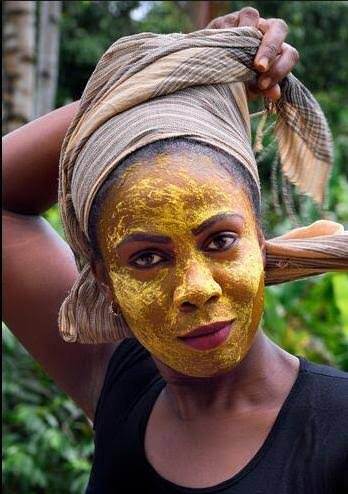
Why Comorian Women Wear Yellow Paste on Their Faces Every Day and Have Done So for Centuries
Posted in :

In the Comoros archipelago, a group of volcanic islands nestled in the Indian Ocean off the coast of East Africa, visitors are often greeted by a striking visual tradition. Women across the islands walk through markets and towns with their faces covered in a bright yellow, paste-like mask. Known locally as Msindanu (or msindzano), this distinct yellow face mask is far more than a cosmetic trend—it is an ancient custom passed down through generations of island women for centuries.
What Is Msindanu and How Is It Prepared?
The foundation of msindanu is completely natural, made primarily from sandalwood. To prepare the paste, women grind a small piece of sandalwood bark against a rough coral stone called a mbalazo, gradually adding a few drops of water, rosewater, or coconut oil to create a smooth paste. In many cases, natural ingredients like turmeric or ground seeds are added, giving the paste its vibrant golden-yellow hue. The paste is then applied evenly across the forehead, cheeks, and chin, creating a protective layer that quickly dries on the skin.
Natural Protection Against the Tropical Sun
The primary practical reason Comorian women wear msindanu daily is sun protection. Positioned in a humid, tropical environment, the Comoros islands experience intense solar radiation throughout the year. Long before commercial sunscreens were imported or accessible, islanders relied on indigenous knowledge to care for their skin. Sandalwood acts as a natural physical sunblock, reflecting harsh ultraviolet rays and shielding the face from sunburn, premature aging, and hyperpigmentation.
Skincare and Anti-Aging Benefits
Beyond acting as a shield against the sun, sandalwood is renowned in traditional medicine for its dermatological benefits. It possesses natural anti-inflammatory, antibacterial, and cooling properties that soothe irritate skin, reduce acne, and tighten pores. Women who apply msindanu regularly report smoother skin texture and a clearer complexion. The cooling effect of the damp paste also provides welcome relief from the sweltering coastal heat, making daily chores and outdoor work far more comfortable.
A Symbol of Beauty and Cultural Identity
In Comorian society, msindanu is intimately tied to concepts of femininity, grace, and cultural pride. While basic applications are worn for daily errands and work, women often paint delicate geometric or floral patterns on their faces for special occasions like weddings and religious festivals. Wearing the paste signifies that a woman takes pride in her appearance and honors her island heritage. It serves as a visual bridge connecting young girls to their mothers and grandmothers through a shared daily ritual.
Social Bonding Among Island Women
The preparation of msindanu is rarely a solitary task. In villages and coastal settlements, women frequently gather in shady courtyards to grind sandalwood together, share stories, and discuss community matters. This daily preparation transforms a personal beauty routine into an essential social space for female bonding, mentorship, and support across generations. The rhythm of grinding sandalwood on coral stone remains a soothing background sound in Comorian homes.
Preserving Ancient Wisdom in a Modern World
Despite the availability of modern commercial skincare products, msindanu remains a staple of daily life across the Comoros. Its persistence highlights the enduring strength of traditional African beauty practices rooted in sustainability and local ecology. For the women of Comoros, applying yellow sandalwood paste every morning is not just about keeping their skin healthy—it is a proud statement of identity that continues to thrive in the modern era.