Two Islands, One Vibrant Soul: The Culture of Saint Kitts and Nevis
Posted in :

The twin-island federation of Saint Kitts and Nevis, located in the northern region of the Lesser Antilles in North America, stands as a mesmerizing pocket of Caribbean heritage. Locally referred to as Kittitians (from St. Kitts) and Nevisians (from Nevis), the people of this dual-island nation possess a unique blend of easygoing warmth, sharp creative wit, and profound communal pride. – Culture
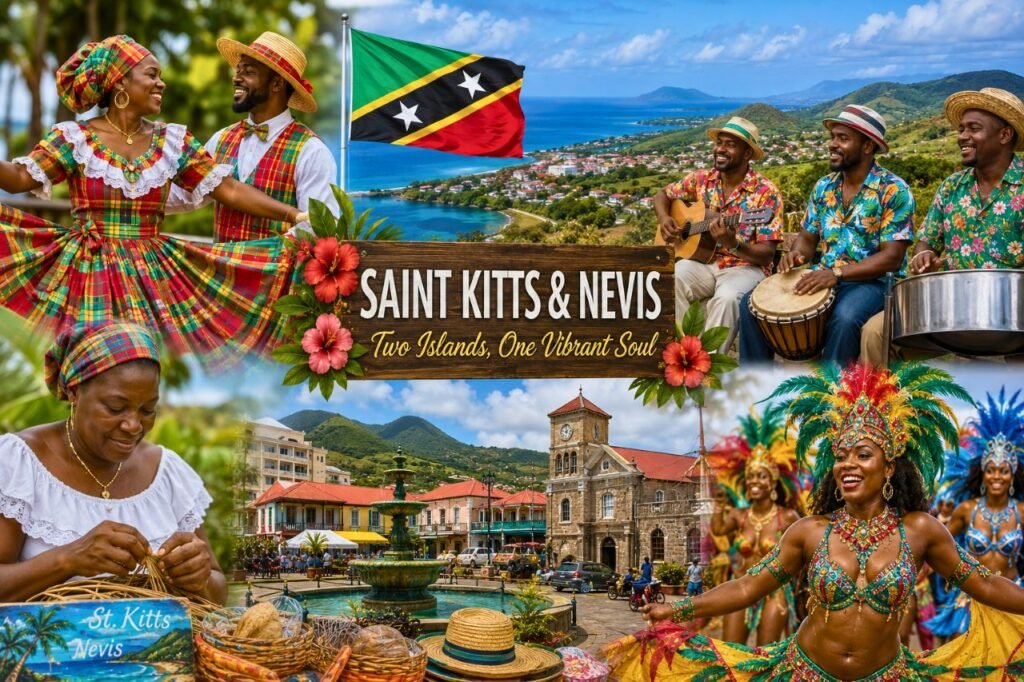
Saint Kitts & Nevis Culture, Island Vibrance
Though physically separated by a shallow two-mile channel known as “The Narrows,” the two islands form a single, deeply unified cultural identity. It is a culture engineered through centuries of struggle, celebrated via explosive seasonal street festivals, and tied together by a shared love for the soil, the sea, and storytelling.
History & Origins
The historical blueprint of Saint Kitts and Nevis is complex, marked by its status as the foundational launchpad for European colonization in the Caribbean.
[Indigenous Kalinago: Liamuiga & Oualie] ➔ [1623: British & French Sugar Colonies] ➔ [The Transatlantic Slave Trade] ➔ [1834: Emancipation] ➔ [1983: Sovereignty]
The Cradle of the Caribbean
Long before European contact, the islands were inhabited by the indigenous Kalinago people. They named St. Kitts Liamuiga (“Fertile Land”) and Nevis Oualie (“Land of Beautiful Waters”). In 1493, Christopher Columbus sighted the islands, but it was not until 1623 that the British established their first Caribbean settlement on St. Kitts, followed closely by the French. This earned St. Kitts the historical title of “The Mother Colony of the West Indies.”
The Sugar Era and African Resilience
The colonizers systematically pushed out the native Kalinago population and reshaped the entire landscape into highly profitable sugarcane plantations. To power this intensive labor economy, hundreds of thousands of enslaved West Africans were forcibly imported. These individuals brought diverse linguistic frameworks, musical systems, spiritual worldviews, and agricultural techniques from regions such as the Gold Coast and the Bight of Biafra.
Following the full abolition of slavery in 1834, the emancipated population meticulously fused these West African traditions with European structures. The nation achieved full independence on September 19, 1983, establishing itself as the smallest sovereign state in the Western Hemisphere.
Geography
Saint Kitts and Nevis lies in the eastern Caribbean Sea, forming part of the Leeward Islands chain. St. Kitts, the larger island, is shaped like a musical lute, dominated by a central volcanic mountain range peaking at the dramatic, cloud-cloaked Mount Liamuiga ($1,156\text{ meters}$ or $3,792\text{ feet}$).
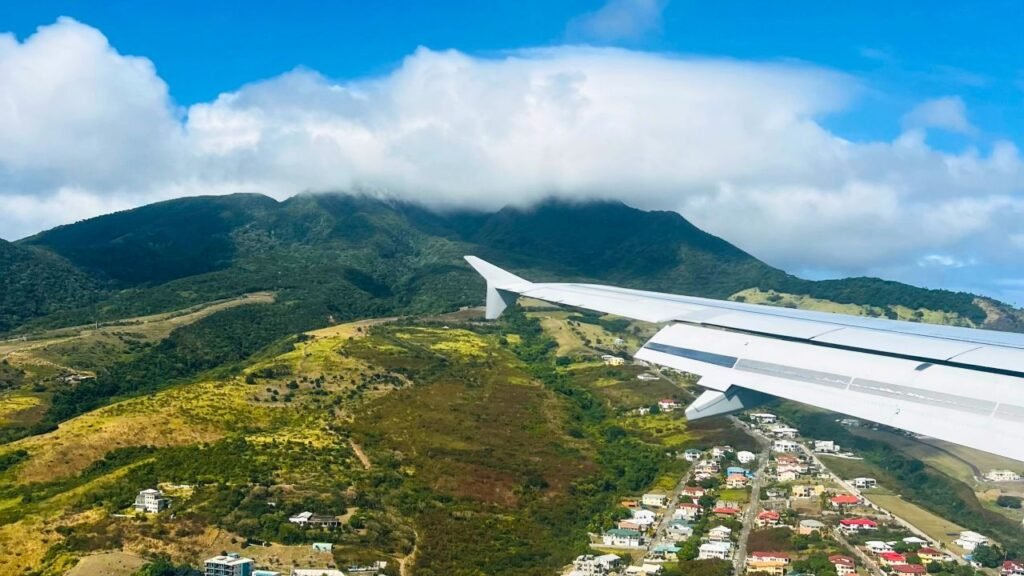
Nevis is near-circular and dominated by a single, majestic volcanic peak, Nevis Peak, which is almost permanently ringed by white mist. The geography alternates between rich, dark volcanic slopes—historically ideal for sugarcane—and a coastline adorned with both black and golden sand beaches.
Economy
Historically dependent on sugar cultivation for over three centuries, the federation made a bold economic pivot in 2005, closing its state-run sugar industry to transition into a modern, service-based economy.
Today, the primary economic drivers include:
- Tourism: Luxury eco-resorts, yachting harbors, and cruise ship arrivals drive the service sector.
- Citizenship by Investment (CBI): As global pioneers of the CBI concept established in 1984, foreign investment significantly funds local infrastructure, schools, and green energy initiatives.
- Light Manufacturing & Agriculture: Local initiatives prioritize specialty food processing, assembly electronics, and sustainable small-scale farming.
Politics
Saint Kitts and Nevis functions as an independent, federal parliamentary democracy and a constitutional monarchy. King Charles III is recognized as the titular head of state, represented locally by a Governor-General. Head of government authority is held by the Prime Minister, who leads the cabinet within the National Assembly.
Uniquely, the federation features an asymmetrical structure: the smaller island of Nevis possesses its own autonomous Nevis Island Administration (NIA) and its own legislative assembly, headed by a Premier, granting Nevis significant internal self-governance over its domestic affairs, taxation, and public services.
Ethnic Groups
The demographic layout of the islands reflects the migration patterns of the transatlantic plantation era:
| Ethnic Group | Approximate Share | Ancestral and Cultural Legacy |
| African Descent | ~92.5% | The cultural core; preserved the foundational oral histories, rhythms, folklore, and culinary base. |
| Mixed Heritage | ~3.0% | Representing multi-generational blending across urban and coastal communities. |
| East Indian | ~2.1% | Descendants of post-emancipation indentured workers; heavily influenced local spice uses and agricultural trade. |
| European & Other | ~2.4% | Including historical British lineages, expatriate communities, and Middle Eastern merchant families. |
Languages & Communication
While English is the official language used in civil administration, the legal system, and formal education, the true linguistic pulse of daily life is Saint Kitts Creole English (often called Kittitian Creole or Nevisian Creole).
This expressive, fast-paced creole language overlays West African grammatical structures onto a English vocabulary, using unique vocal inflections to convey nuance.
Common Creole Expressions and Wisdom:
- “Whaaa gwan?” — The absolute, warm daily greeting meaning “What’s happening?” or “How are you?”.
- “Me dey yah” — A standard relaxed response meaning “I am right here / I am doing fine.”
- “Me knock ‘gree” — An expression indicating absolute agreement or coming to a terms with someone.
Proverbial Wisdom:
“Don’t wait til storm come to clear gutter.”
Meaning: Do not wait until a crisis arrives to practice preparation; handle your responsibilities ahead of time.
Beliefs & Values
Kittitian and Nevisian society is deeply anchored by values of community solidarity, respect for elders, and an intense connection to ancestral land. Church attendance is an important social anchor, with Protestant denominations (Anglican, Methodist, and Seventh-day Adventist) serving as central institutions for civic and family life.
Alongside formal Christian practice runs a historic undercurrent of folk spirituality and traditional medicine. Many residents maintain an extensive knowledge of “bush medicine”—utilizing wild herbs, roots, and leaves (like soursop leaves for sleep or wild sage for colds) handed down through generations as a trusted form of holistic wellness.
Culture, Traditions & Customs
Community Rites & Traditions
- Christenings: The naming and blessing of a child is a major community affair. Following the church service, families host large neighborhood gatherings where sweet bread, puddings, and local drinks are shared to welcome the infant into the village network.
- The Traditional Wake: When a community member passes away, neighbors gather at the family home for a night of hymns, storytelling, and reflection, serving as a vital support system for the grieving family.
National Festivals: Sugar Mas
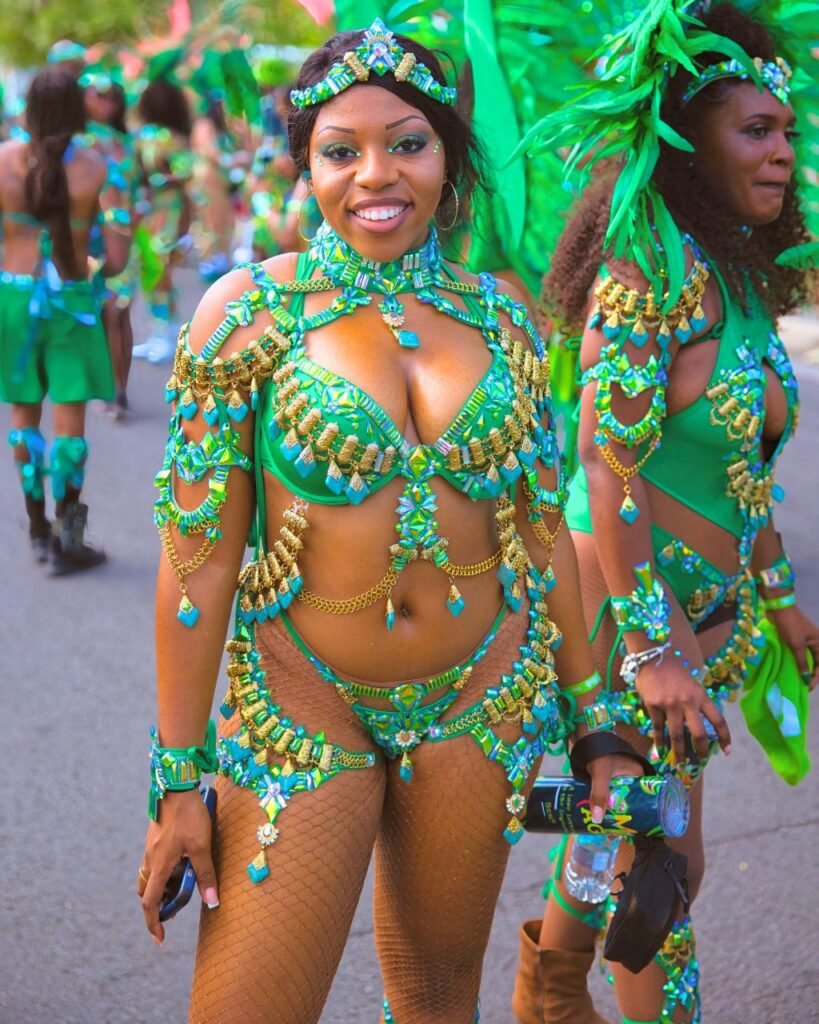
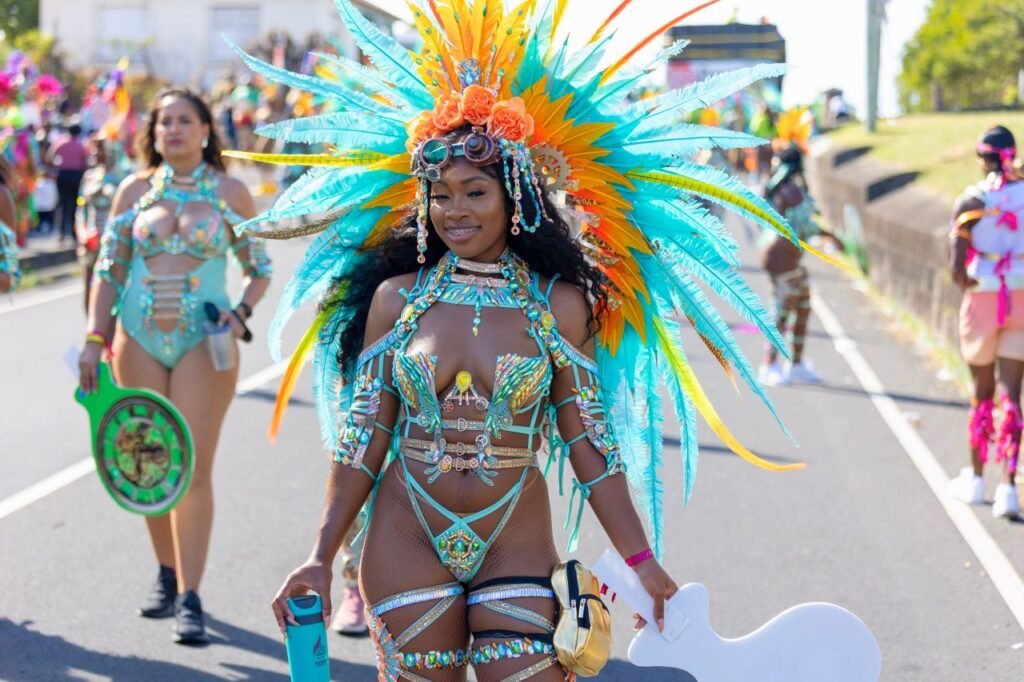
The absolute pinnacle of the cultural calendar is Sugar Mas—the Saint Kitts and Nevis National Carnival. Staged from late November through early January, it is one of the few Caribbean carnivals that seamlessly spans both Christmas and the New Year.
Street parades fill the capital city of Basseterre with massive truck sound systems, calypso competitions, and sea of vibrant costumed bands. It is the definitive showcase of national creative expression, bringing the entire diaspora back home to celebrate.
Food & Cuisine
The food of Saint Kitts and Nevis, affectionately termed Island Cooking, relies heavily on fresh seafood, root crops (ground provisions like sweet potatoes, yams, and dasheen), and tropical fruits, utilizing slow-simmering methods that maximize rich, deep flavors.
Goat Water: The National Culinary Stew
The undisputed national culinary dish is Goat Water. It is a savory, fiery, and deeply comforting medicinal stew served at weddings, festivals, and weekend gatherings:
- The Composition: Goat meat is slow-cooked in a deep broth seasoned heavily with scallions, thyme, garlic, onions, allspice (pimento berries), cloves, and fresh scotch bonnet peppers.
- The Texture: Droppers (small, elongated flour dumplings) and chunks of green papaya or breadfruit are added to the pot, creating a thick, rich stew that is traditionally enjoyed hot with a fresh loaf of hard-dough bread.
Iconic Sweet Treats
- Sugar Cake: A popular local confection made from grated fresh coconut, sugar, ginger, and sometimes a splash of coloring, boiled down and cooled into sweet, hardened blocks.
- Conkies: A traditional sweet dish made of cornmeal, grated sweet potato, pumpkin, coconut, and spices, wrapped neatly in banana leaves and steamed to perfection.
Clothing & Symbols
Traditional Wear and Festive Attire
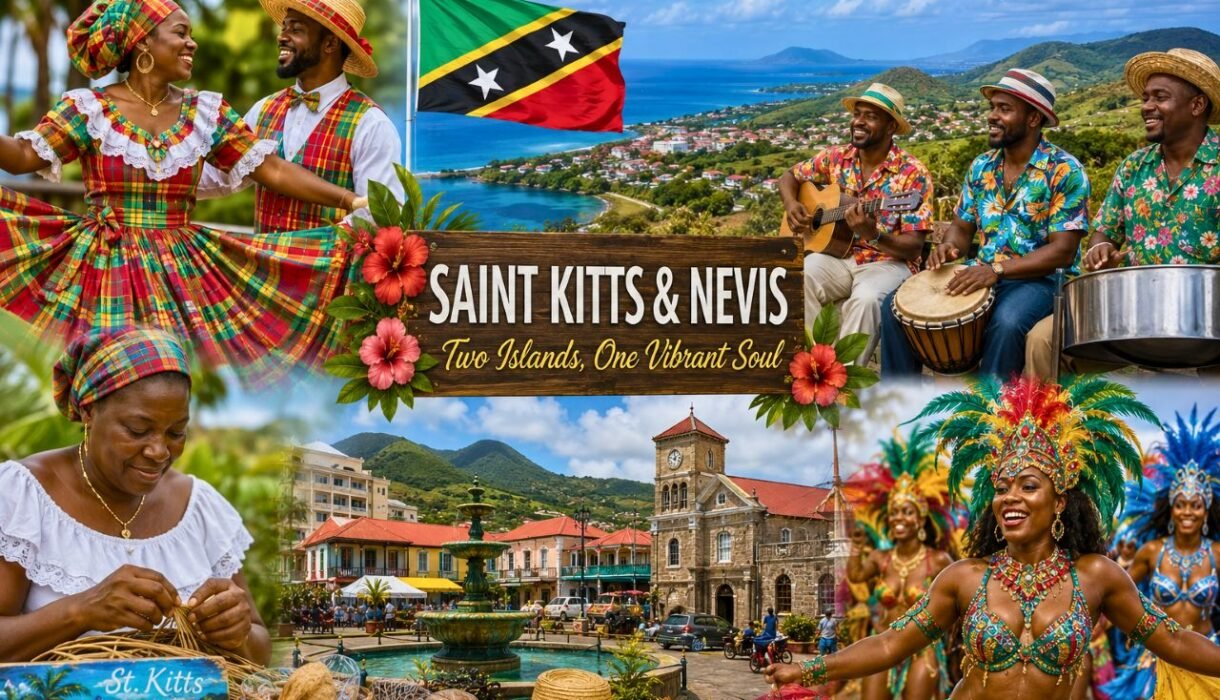
The national dress of Saint Kitts and Nevis features a traditional white cotton peasant blouse accented with local embroidery, paired with a long, flowing tiered skirt displaying the colors of the national flag.
During festivals, however, clothing transforms into an elaborate canvas of historic storytelling. The most visually striking traditional attire belongs to the festive Masqueraders, who wear long-sleeved silk shirts, short trousers decorated with mirrors and ribbons, pink mesh masks to historically satirize European colonizers, and magnificent headdresses crowned with real peacock feathers.
[ State Symbols of Saint Kitts and Nevis ]
┌───────────────────────────────────────────────────────────────────────────┐
│ NATIONAL FLAG ── Green (Wealth), Red (Struggle), Yellow (Sun), │
│ Black (African Roots), Two White Stars (Hope & Liberty) │
├───────────────────────────────────────────────────────────────────────────┤
│ NATIONAL BIRD ── Brown Pelican (Pelecanus occidentalis) │
├───────────────────────────────────────────────────────────────────────────┤
│ NATIONAL TREE ── Poinciana / Flamboyant Tree (Delonix regia) │
└───────────────────────────────────────────────────────────────────────────┘
The Geometry of the Flag
The national flag features a unique diagonal layout. The Green triangle represents the island’s fertile agricultural land, the Red triangle honors the struggle from slavery to independence, and the narrow Yellow borders represent the year-round sunshine. The central Black band represents the African heritage of the people, while the two white stars signify hope, liberty, and the distinct islands of Saint Kitts and Nevis.
Music, Dance & Art
Acoustic Roots and Folklore Dance
The acoustic soul of the federation is driven by the Iron Band and String Bands. String bands utilize acoustic guitars, mandolins, the banjo, and a deep-toned bamboo “pipe” or boom pipe for bass, playing fast, syncopated folk songs that comment on local village gossip and historical events.
The country boasts several ancestral street performance dances that blend West African ritual with theater:
- The Mocko Jumbies: Stilt walkers who dance high above crowds, historically representing protective ancestral spirits guarding villages from evil.
- The Clowns: Troupes of dancers dressed in loose, oversized jumpsuits decorated with hundreds of tiny bells, performing synchronized, rapid footwork to string band music.
Visual Arts & Craft
The visual arts are deeply connected to the island’s textures. Nevis is globally celebrated for its high-grade, hand-built terracotta pottery, a craft preserved by local artisans who harvest raw red clay from mountain veins, shaping and firing it in open wood kilns. St. Kitts is a major regional center for Batik art, where artisans use hot wax and vibrant dyes on fine cotton and silk to create detailed fabrics depicting Caribbean marine life, historical estates, and tropical landscapes.
Summary
The culture of Saint Kitts and Nevis stands as a beautiful testament to the power of human endurance, creative synthesis, and community pride. By fiercely guarding the folkloric choreography of their Masquerade and Mocko Jumbie ancestors, channeling their historical journeys into the sweet acoustic ring of string bands, and gathering around a steaming pot of savory Goat Water, Kittitians and Nevisians have engineered a distinct, unforgettable identity in North America. The twin islands look forward with confidence—celebrating their cultural diversity and preserving a brilliant heritage for generations to come.
At Best Culture Insight, we see culture as the heartbeat of every society – the way people live, connect, and express their identity.