The Helen of the West Indies: An In-Depth Exploration of Saint Lucia Culture
Posted in :

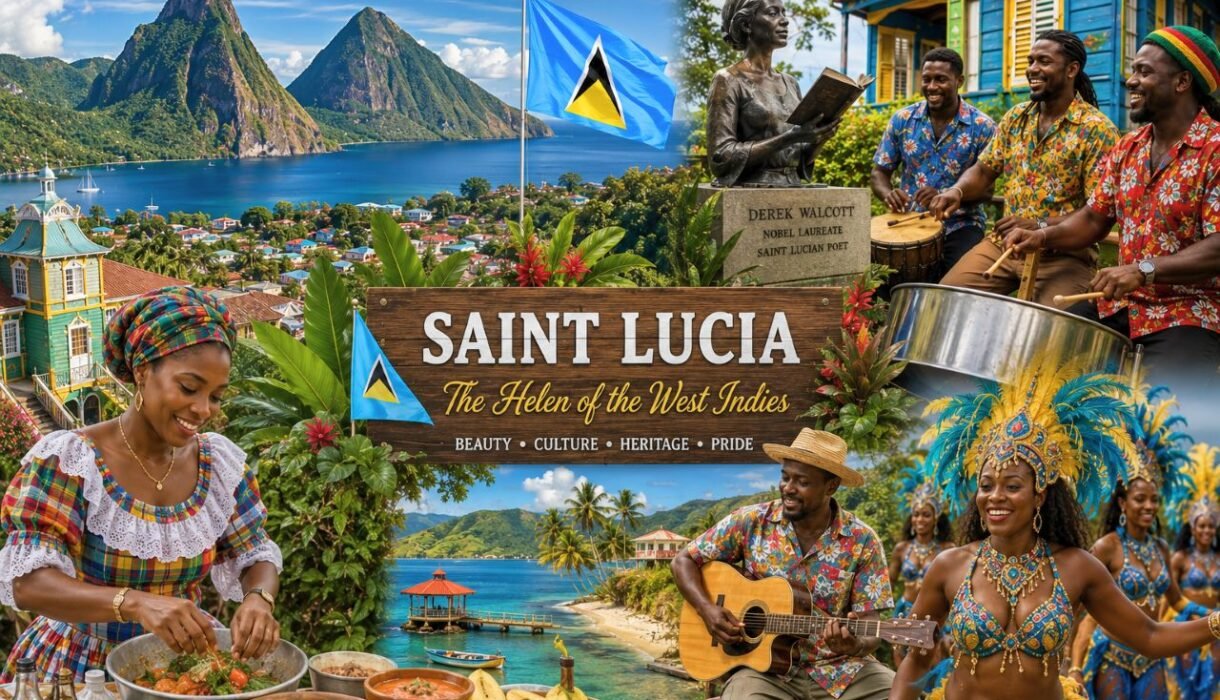
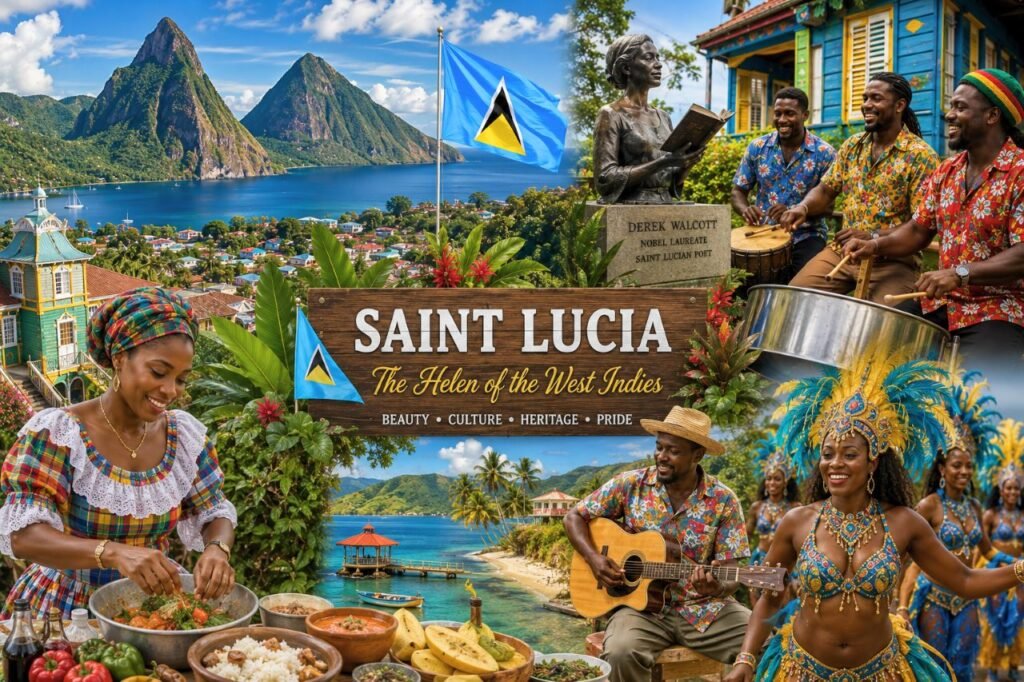
Saint Lucia, a breathtaking volcanic island jewel nestled in the eastern Caribbean Sea of North America, possesses a cultural identity as dramatic and mesmerizing as its famous mountain peaks. Known historically as the “Helen of the West Indies” because its strategic beauty caused it to be fiercely contested by colonial empires, Saint Lucia has synthesized these complex historical currents into a proud, deeply unique Caribbean identity. – Culture
The culture of Saint Lucia is a rich, syncretic blend where West African heritages, French colonial traditions, and British institutional systems meet. The people of Saint Lucia—known globally as Saint Lucians or locally as Lucians—possess an expressive, artistic, and resilient spirit.
From the mist-shrouded rainforests surrounding the Pitons to the rhythmic, bass-heavy street parties of Gros Islet, the country is a profound celebration of multicultural diversity. It holds the rare distinction of having produced two Nobel Laureates from a remarkably small population, a testament to the nation’s deep intellectual, literary, and poetic soul.
History & Origins
The historical evolution of Saint Lucia is a story of continuous cultural friction, adaptation, and ultimate self-determination.
[Amerindian Era: Arawaks & Kalinago] ➔ [1500s: European Contact] ➔ [14 Alternating Shifts: French & British Rule] ➔ [1838: Post-Emancipation African Core] ➔ [1979: Full Independence]
The island’s earliest inhabitants were the peaceful Arawaks, who were later displaced by the warrior Kalinago (Caribs). The Kalinago named the island Hewanorra, meaning “Land of the Iguanas.” European explorers arrived in the early 16th century, sparking a centuries-long colonial tug-of-war.
Between the 17th and 19th centuries, Saint Lucia changed hands a staggering 14 times between the French and the British. This constant rotation left an indelible blueprint on the country: while the British ultimately secured permanent administrative and political control, the French ruled during long stretches of agricultural development, deeply implanting their language, religion, and customs into the local population.
Crucially, the plantation system brought thousands of enslaved West Africans to the island. Their spiritual worldviews, rhythmic structures, and resistance strategies formed the unyielding foundational core of modern Saint Lucian identity. The nation achieved full independence within the British Commonwealth on February 22, 1979.
Geography
Saint Lucia forms part of the Windward Islands chain in the Lesser Antilles. It is a highly mountainous island characterized by lush tropical rainforests, fertile valleys, and a network of active geothermal rivers.
The undisputed icons of the landscape are The Pitons—Gros Piton and Petit Piton—two spectacular, green-mantled volcanic plugs that rise abruptly from the Caribbean Sea on the southwestern coast near the town of Soufrière. A short distance away lies the Sulphur Springs, globally recognized as the world’s only “drive-in volcano,” offering a stark visual reminder of the island’s raw, living geothermal origins.
Economy
Once a purely monocultural economy centered heavily on sugar production and later a thriving banana export trade (referred to traditionally as “Green Gold”), Saint Lucia successfully diversified its economic layout in the late 20th century.
| Economic Sector | Major Components | Cultural Intersection |
| Tourism | Luxury eco-resorts, yachting, cruise arrivals, heritage tours | Showcases local hospitality, folk arts, and culinary traditions to a global audience. |
| Agriculture | Bananas, high-grade cocoa, coconuts, root vegetables | Sustains rural campesino communities and traditional open-air market trading. |
| Manufacturing | Beverage bottling (Pitón Beer), apparel, electronic assembly | Represents modern urban labor networks centering around Castries and Vieux Fort. |
Politics
Saint Lucia is an independent sovereign state operating under a constitutional monarchy and a Westminster-style parliamentary democracy. The British monarch is recognized as the ceremonial head of state, represented on the island by a Governor-General. Executive authority is held by the Prime Minister, who leads the cabinet and command the majority in the elected House of Assembly.
The legal system is uniquely hybrid: criminal law is based on English Common Law, while civil matters are governed by a Civil Code deeply rooted in historic French law, mirroring the dual colonial ancestry of the nation.
Ethnic Groups
The demographic makeup of Saint Lucia highlights the historical currents of transatlantic forced migration, colonial settlement, and labor migration:

- African Descent (~85.3%): The vast demographic and cultural engine of the island, preserving foundational West African language patterns, music, and spiritual customs.
- Mixed Heritage (~10.9%): Representing centuries of multi-generational ancestral blending across urban and coastal settlements.
- East Indian (~2.2%): Descendants of indentured laborers brought to work the plantations post-emancipation, who introducing unique culinary spices and agricultural methods.
- European & Other (~1.6%): Comprising historic French and British lineages alongside modern international expatriate communities.
Languages & Communication
While English is the official language of government, education, and legal administration, the true emotional and conversational heartbeat of Saint Lucia is Saint Lucian Creole (known locally as Kwéyòl or Patois).
Kwéyòl is not a mere dialect; it is a fully structured, complex language with a vocabulary primarily derived from French, overlaid upon West African syntax and grammatical frameworks, with occasional Carib and English loanwords.
Common Kwéyòl Greetings & Idioms
- “Bonswa” — Good evening (the universal polite greeting as afternoon turns to night).
- “Sa ka fêt?” — A warm, ubiquitous informal phrase meaning “What’s happening?” or “How are things?”.
- “Chonché sa” — Remember this / Keep this in mind.
Proverbial Wisdom
“Ravêt pa ni rezon douvan poul.”
Translation: A cockroach has no voice or right before a chicken.
Meaning: In a system dominated by unequal power dynamics, the vulnerable must navigate with caution and wit.
Beliefs & Values
Saint Lucian society is deeply embedded with a sense of community accountability, familial loyalty, and respect for religious structures. Due to the long periods of French colonial settlement, Roman Catholicism remains the dominant spiritual matrix, though Evangelical Protestantism, Seventh-day Adventism, and Rastafarianism have expanded significantly.
A defining national cultural trait is the practice of Koudmen (derived from the French coup de main, meaning “a helping hand”). This is a deep-seated community tradition where neighbors spontaneously gather together to assist a fellow villager in building a house, harvesting crops, or clearing land after a tropical storm, expecting no monetary payment except shared food, rum, and future mutual solidarity.
Culture, Traditions & Customs
Community Life and Rites of Passage
- Christenings and First Communions: These milestones are highly sacred and social events. Children dress in elaborate formal wear, and families host vast village gatherings filled with traditional baked treats, heavy spice rums, and family storytelling.
- La Rose and La Marguerite Flower Festivals: Saint Lucia boasts two unique, competitive floral cultural societies that date back to the colonial era: La Rose (La Woz) and La Marguerite (La Magwit).
The societies stage elaborate mock-royal pageants. The La Rose members dress in brilliant red and white garments, celebrating grandeur, excess, and natural beauty. In contrast, the La Marguerite members dress in sophisticated blue and white attire, praising discipline, modesty, and intellectual refinement. Each society takes turns hosting annual festivals featuring song duels, traditional dances, and community feasting designed to outshine the other.
Food & Cuisine
Saint Lucian cuisine, commonly celebrated as Comida Kwéyòl, is a masterclass in rich, aromatic slow-cooking, matching fresh seafood and poultry with an abundance of starches known locally as ground provisions (yams, dasheen, sweet potatoes, and green bananas).
Green Fig and Saltfish: The National Culinary Icon
The absolute national dish of Saint Lucia is Green Fig and Saltfish. In local terminology, “fig” does not refer to the sweet Mediterranean fruit, but rather to green, unripened bananas:
- The Preparation: Heavy slabs of salted codfish are boiled to remove excess salt, then shredded and sautéed in local coconut oil with a fragrant mixture of onions, garlic, thyme, sweet bell peppers, hot scotch bonnet peppers, and fresh scallions.
- The Companion: Unripened green bananas are boiled in their skins with salted water until tender, peeled, and served warm alongside the savory saltfish, creating a beautiful balance of textures.
Other Traditional Favorites
- Bouillon: A thick, hearty meat and vegetable stew packed with lentils, dumplings, yuca, plantains, and salted meats, slow-cooked in a large communal pot over woodfires.
- Cocoa Tea: The classic breakfast drink, made by grating artisanal, pure roasted cocoa sticks into boiling water infused with cinnamon, nutmeg, bay leaves, and milk.
Clothing & Symbols
The Wob Dwiyan National Dress
The national costume of Saint Lucia is the Traje Kwéyòl, centered around the breathtaking Wob Dwiyan (Grand Dress). Evolved from West Indian adaptations of 18th-century French court dresses, it features a long, flowing outer dress made of rich brocade or satin, worn over a stiff white cotton chemise trimmed with fine lace.
The outfit is styled with a colorful Madras cloth sash draped over the shoulder and a matching Tête Kasé (folded headpiece). Uniquely, the number of peaks tied into the Madras headpiece tells a social story:
- One Peak: My heart is free, I am single.
- Two Peaks: I am engaged or married.
- Three Peaks: I am a widow or single but completely unavailable.
[ National Iconography of Saint Lucia ]
┌───────────────────────────────────────────────────────────────────────────┐
│ NATIONAL FLAG ── Cerulean blue field with a central black isosceles │
│ triangle bordered in white and gold │
├───────────────────────────────────────────────────────────────────────────┤
│ NATIONAL BIRD ── Saint Lucia Parrot / Jacquot (Amazona versicolor) │
├───────────────────────────────────────────────────────────────────────────┤
│ NATIONAL FLOWER─ Rose and Marguerite (shared historic floral symbols) │
└───────────────────────────────────────────────────────────────────────────┘
The Geometry of the Flag
Designed by local artist Sir Dunstan St. Omer, the Cerulean Blue field represents the surrounding Caribbean Sea and Atlantic Ocean. The central Black isosceles triangle represents the unity and African roots of the people, while its White borders symbolize peaceful racial harmony. The ascending Gold triangle represents the warm sunshine and the majestic, upward reach of the twin Piton mountains.
Music, Dance & Art
Rhythms of Folk and Festivity
Music functions as the ultimate physical expression of the Saint Lucian experience. The traditional folk sphere is driven by Kwéyòl Folk Music, utilizing acoustic instruments like the Chak-Chak (a metal maraca filled with seeds), the acoustic violin, wooden banjos, and the Tambour (a single-headed skin drum played with the hands).
During the annual summer Saint Lucia Carnival, the sonic soundscape transitions completely to explosive, bass-heavy Soca and Dennery Segment—a fast-paced, highly syncopated local electronic sub-genre originating from the eastern district of Dennery that has captured international Caribbean airwaves.
The Literary Legacy and Arts
Saint Lucia holds an unparalleled position in global arts as the home of two Nobel Prize winners: Sir Arthur Lewis (Nobel Prize in Economics, 1979) and Sir Derek Walcott (Nobel Prize in Literature, 1992). Walcott’s epic poetry masterfully elevated the local Kwéyòl vernacular and island landscape to international acclaim.
In the visual arts, the island is famed for its majestic, vivid woodcarvings crafted from native mahogany and cedar, alongside world-renowned stained-glass church murals painted by Sir Dunstan St. Omer, which depict biblical figures with dark skin tones to celebrate Black identity and local Caribbean history.
Summary
The culture of Saint Lucia stands as a brilliant monument to human resilience, linguistic innovation, and artistic mastery. By fiercely preserving the expressive vocabulary of their Kwéyòl tongue, honoring the competitive folklore of the La Rose and La Marguerite floral festivals, and gathering together around the comforting steam of Green Fig and Saltfish, Saint Lucians have crafted an unforgettable identity in North America. The island continues to leap forward into the modern era with pride—celebrating its multicultural diversity and offering its brilliant, poetic soul to the global family.
At Best Culture Insight, we see culture as the heartbeat of every society – the way people live, connect, and express their identity.