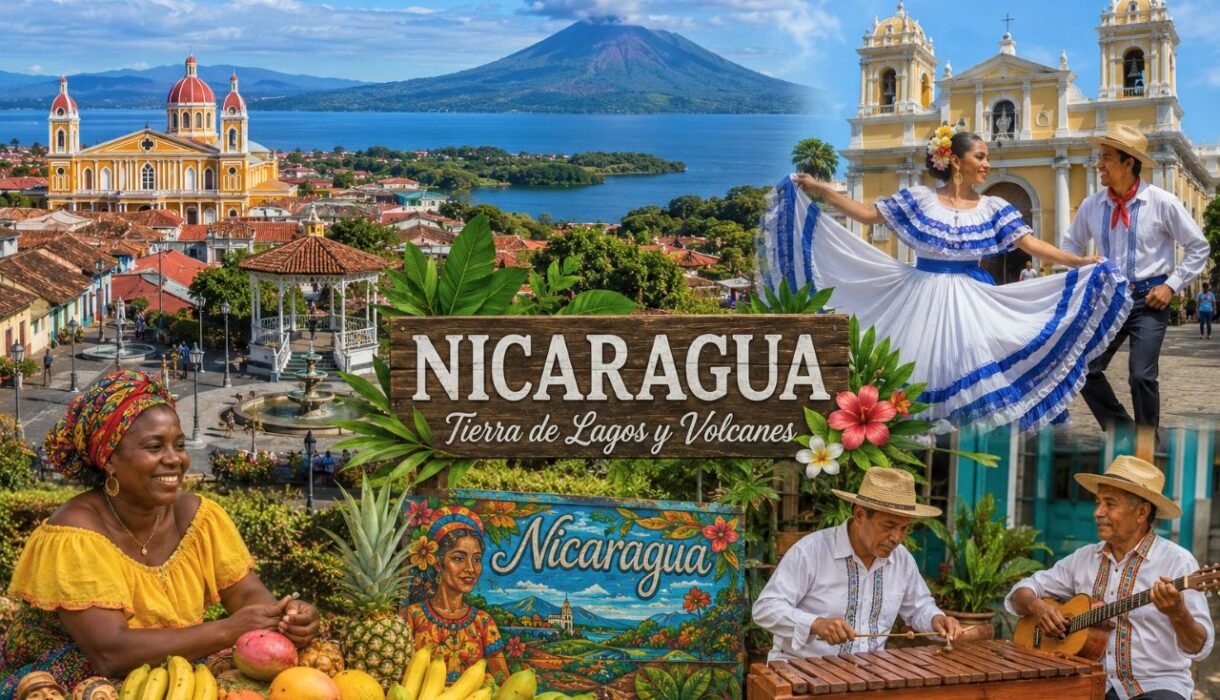
The Land of Lakes and Volcanoes: An Elaborate Journey into Nicaragua Culture
Posted in :

Nicaragua, nestled comfortably in the Central American isthmus of North America, is a nation of immense natural beauty and rich cultural complexity. Known affectionately as the Tierra de Lagos y Volcanes (Land of Lakes and Volcanoes), its cultural identity is as dynamic and dramatic as its physical landscape. – Culture
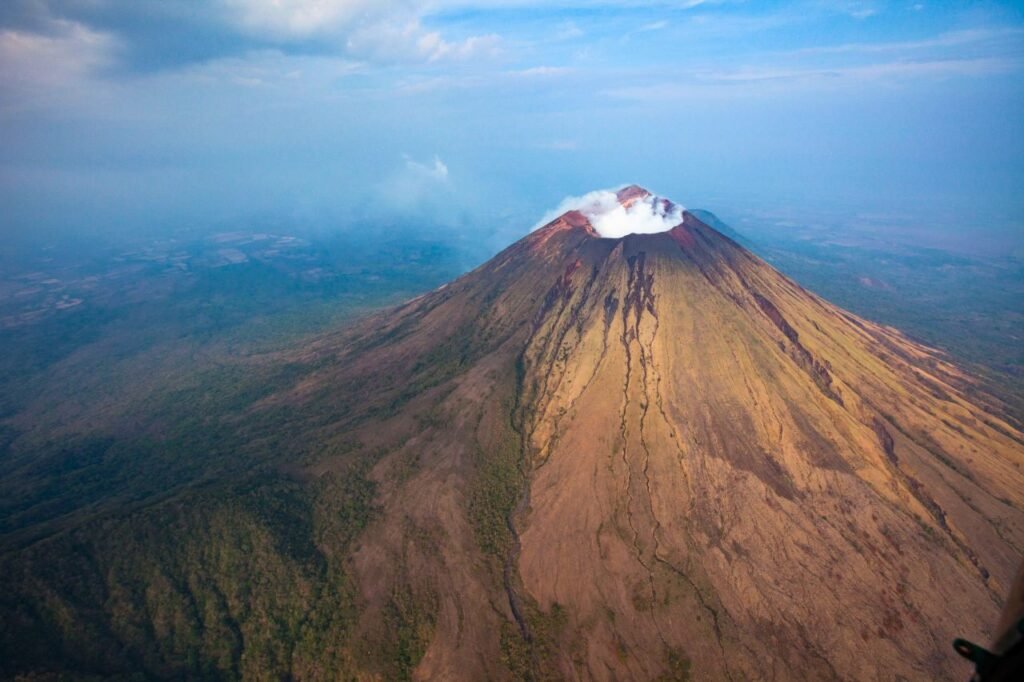
A stunning aerial view of San Cristobal Volcano, Nicaragua’s highest volcano, enveloped in clouds – Chinandega, Chinandega, Nicaragua
The culture of Nicaragua is defined by its resilience, poetic soul, and multi-ethnic composition. The people of Nicaragua—Nicaragüenses or informally Nicas—possess an open, hospitable, and deeply creative spirit.
Nicaraguan culture is beautifully divided by its geography: the Pacific west presents a vibrant Spanish-indigenous (Mestizo) folklore, while the Caribbean east offers a distinct Afro-Caribbean and indigenous ecosystem. From the marimba-infused festivals of Masaya to the reggae beats of Bluefields, Nicaragua is a celebration of diversity and historical pride.
History & Origins
The modern cultural tapestry of Nicaragua is the result of thousands of years of human settlement, colonial friction, and revolutionary developments.
[Pre-Columbian Chorotega & Nicarao] ➔ [1522: Spanish Settlement] ➔ [British Caribbean Protectorate] ➔ [1821: Independence] ➔ [Modern Revolutionary Era]
Before the arrival of Europeans, western Nicaragua was inhabited by Mesoamerican tribes like the Nicarao and Chorotega. In 1522, Spanish conquistador Gil González Dávila explored the territory, encountering the powerful indigenous chieftain Nicarao, from whom the country derives its name. The Spanish colonized the western Pacific plains, building majestic cities like Granada and León, introducing the Spanish language and Catholicism.
Concurrently, the Caribbean Atlantic coast evolved under entirely different conditions. It became a British protectorate populated by British sailors, indigenous Miskito communities, and enslaved Africans fleeing colonial plantations. This historical duality left Nicaragua with a permanently divided, yet beautifully diverse, multi-cultural reality. The country achieved full independence from Spain in 1821, navigating a complex 20th-century political path that heavily prioritized national independence and grassroots agrarian movements.
Geography
Nicaragua is the largest country in Central America. It is bordered by Honduras to the north, Costa Rica to the south, the Pacific Ocean to the west, and the Caribbean Sea to the east.
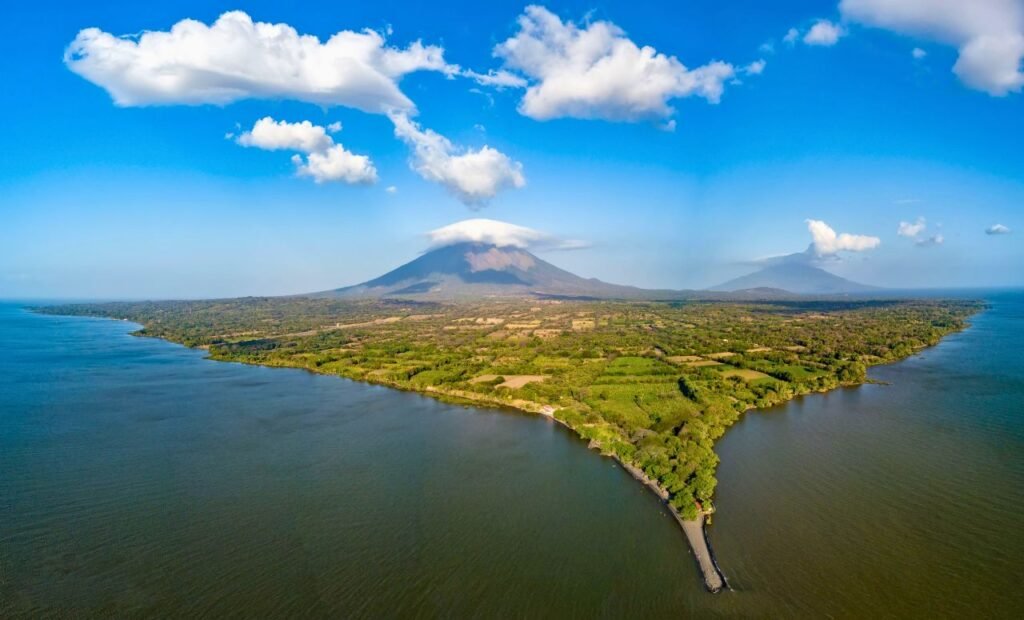
Explore the stunning aerial view of Ometepe Island and its volcanic landscape surrounded by serene waters – Rivas, Rivas, Nicaragua
The geography is dominated by two massive freshwater lakes: Lake Managua (Xolotlán) and Lake Nicaragua (Cocibolca). Lake Nicaragua is the largest lake in Central America and contains the volcanic island of Ometepe, formed by two towering peaks, Concepción and Maderas. A volcanic chain runs parallel to the Pacific coast, providing fertile volcanic soil that supports lush agricultural valleys, while the eastern half of the country features vast rainforests and dense pine highlands.
Economy
Nicaragua is historically an agrarian society that has consistently expanded into service and manufacturing sectors.
| Economic Pillar | Primary Goods & Activity | Cultural Significance |
| Agriculture | Premium coffee, cattle/beef, gold, sugar, peanuts, tobacco | Small-scale farming (campesino tradition) forms the backbone of country music and food. |
| Manufacturing | Apparel assembly, footwear (maquiladoras) | Drives urban employment, particularly in the Managua valley. |
| Tourism | Eco-tourism, volcanic trekking, colonial city tours | Celebrates native natural wonders and colonial history while funding local artisans. |
Nicaragua is internationally renowned for producing ultra-premium Flor de Caña rum, a slow-aged volcanic rum, alongside hand-rolled cigars manufactured in the northern valleys of Estelí.
Politics
Nicaragua is constitutionally established as a presidential representative republic. Executive power is held by the President, who functions as both head of state and head of government. Legislative power is vested in the unicameral National Assembly (Asamblea Nacional).
The country’s modern political landscape has been heavily shaped by the legacy of the Sandinista Revolution of 1979, which overthrew the long-standing Somoza dictatorship. Political consciousness remains highly visible across public art, civic holidays, and music, with local communities heavily emphasizing neighborhood solidarity, cooperative trade, and national independence.
Ethnic Groups
The population of Nicaragua highlights the historic paths of migration and interaction across the region:
- Mestizos (~86%): People of mixed Spanish and indigenous descent, making up the vast majority of the population and driving the linguistic and cultural core of the Pacific interior.
- African Descent (~9%): Primarily located along the Caribbean coast, including the Creole and Garifuna populations, who maintain a strong Afro-Caribbean maritime identity.
- Indigenous Communities (~5%): Including the Miskito, Mayangna, Rama, and Lenca groups who preserve autonomous ancestral lands and traditional tribal structures.
Languages & Communication
Spanish is the official and universal language of western and central Nicaragua. The local dialect is characterized by voseo (using vos instead of tú for the informal “you”) and a gentle, rapid speech pattern.
Local Idioms & Expressions
- “¡Deacachimba!” — Something exceptionally cool, amazing, or high quality.
- “Dale pues” — Okay then / Let’s do it (the standard way to conclude a conversation).
- “Chunche” — A generic word for any physical object or gadget whose name you cannot remember.
Caribbean Coast Languages
Along the autonomous Caribbean coast, English and Miskito Coast Creole are widely spoken, coexisting with native indigenous languages like Miskito, Mayangna, and Rama, all of which hold official status within their respective ancestral territories.
Beliefs & Values
The core values of Nicaraguan society emphasize family loyalty, shared neighborhood assistance, and a natural passion for poetic expression. It is often said that every Nicaraguan is born a poet, a legacy institutionalized by national literary hero Rubén Darío, the father of Spanish-language Modernism.
Religious Expression
The country is highly religious, with Roman Catholicism and growing Evangelical Protestant churches guiding community calendars. A defining national value is the celebration of La Purísima, a massive festival honoring the Conception of Mary during early December. Communities build elaborate altars at their homes, and crowds walk the streets shouting “¿Quién causa tanta alegría?” (Who causes so much joy?), receiving sweets, fruits, and traditional gifts in return.
Culture, Traditions & Customs
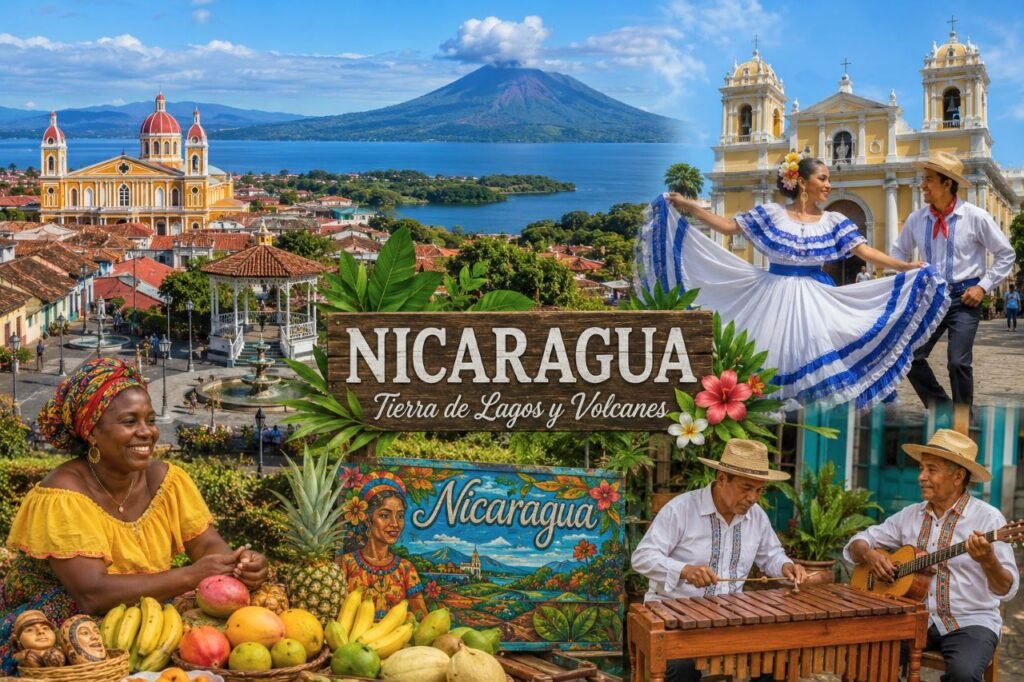
Vibrant Nicaragua Culture, Nature, and Traditions
Marriage and Rites of Passage
- Weddings: Traditional Nicaraguan weddings are lively community affairs. Receptions feature open buffets of national food, and guests celebrate with an energetic dance known as the baile del monito, where family members playfully encircle the newlyweds to shower them with good wishes.
- The Quinceañera: Celebrating a young woman’s 15th birthday is an essential social transition milestone, bringing together extended families for a Catholic mass and a celebratory ballroom waltz.
The Toro Huaco and Patron Saint Festivals
Every town in Nicaragua honors its patron saint with an annual Fiesta Patronal. The most famous takes place in Diriamba, featuring the Toro Huaco, an ancient traditional dance character wearing elaborate wooden masks, peacock-feather hats, and capes, mocking early Spanish colonial authorities through silent, rhythmic choreography.
Food & Cuisine
Nicaraguan cuisine, or Comida Nica, is built around a hearty, savory framework of corn, red beans, sweet plantains, and local cheeses.
Gallo Pinto: The Heartbeat of the Nation
The undisputed staple of Nicaraguan daily life is Gallo Pinto. It is eaten at breakfast, lunch, or dinner across all social classes:
- The Method: Red kidney beans are simmered with garlic and onions until tender. They are then sautéed together with pre-cooked white rice in aromatic bean broth and oil until the mixture turns a signature mottled dark red color, creating a perfect balance of texture and flavor.
Other Iconic Dishes
- Nacatamal: The ultimate weekend feast food. A massive tamal made of deeply seasoned corn masa stuffed with pork, rice, potatoes, onions, raisins, and mint, wrapped securely in plantain leaves and slow-boiled for hours.
- Vigorón: Originating in Granada, this popular street food features a base of boiled yuca topped with crunchy pork rinds (chicharrón) and a tangy salad of cabbage, tomatoes, and mombin fruit, served over a fresh green plantain leaf.
Clothing & Symbols
Traditional Vestments
The national costume is the Traje del Mestizaje. Women wear an elegant white ruffled blouse paired with a long, flowing multi-tiered colorful skirt decorated with local embroidery, accessorized with a braided hairstyle and flowers. Men wear simple white long-sleeved shirts, cotton trousers, a red sash tied around the waist, and a straw hat, reflecting the agrarian history of the countryside.
[ Iconography of the Nicaraguan State ]
┌───────────────────────────────────────────────────────────────────────────┐
│ NATIONAL FLAG ── Blue-White-Blue horizontal bands with central Crest │
├───────────────────────────────────────────────────────────────────────────┤
│ NATIONAL BIRD ── Guardabarranco (Turquoise-browed Motmot) │
├───────────────────────────────────────────────────────────────────────────┤
│ NATIONAL FLOWER ── Sacuanjoche (Fragrant Plumeria / Frangipani) │
└───────────────────────────────────────────────────────────────────────────┘
Iconic Symbols
The central triangle on the national flag’s crest represents equality, while the five volcanoes symbolize the original five member states of the historic Federal Republic of Central America, framed by a rainbow of peace and a Phrygian cap of liberty.
Music, Dance & Art
The Marimba and El Güegüense
Music in western Nicaragua is driven by the sweet, percussive ring of the Marimba de Arco, a unique wooden xylophone played with rubber-tipped mallets while sitting down.
On an international scale, Nicaragua’s premier theatrical heritage is El Güegüense (or Macho Ratón), recognized by UNESCO as a Masterpiece of the Oral and Intangible Heritage of Humanity:
Dates back to the 16th century, El Güegüense is a satirical folk drama combining music, dance, and theater. It tells the story of a clever indigenous elder who uses brilliant wordplay and humor to outwit and mock Spanish colonial authorities without ever breaking their laws. Performers wear highly stylized pink European masks and elaborate colonial attire, dancing to traditional acoustic violins and drums.
Visual Arts
Nicaragua is globally celebrated for its Primitivist Painting movement, centered on the Solentiname Islands in Lake Nicaragua, popularized by poet Ernesto Cardenal. Local fishermen and farmers developed a unique style of fine art, painting incredibly detailed, vibrant scenes of tropical flora, wildlife, and rural island life using flat perspectives and saturated colors.
Summary
The culture of Nicaragua stands as an inspiring monument to human freedom, artistic expression, and resilience. By guarding the ancestral wisdom of their Mesoamerican and Afro-Caribbean roots, honoring their incredible poetic history through Rubén Darío, and coming together around the comfort of Gallo Pinto and the satire of El Güegüense, the Nicaraguan people have shaped a distinct identity in North America. Nicaragua continues to look forward with pride—celebrating its cultural diversity and offering its deeply profound, artistic legacy to the global family.
At Best Culture Insight, we see culture as the heartbeat of every society – the way people live, connect, and express their identity.