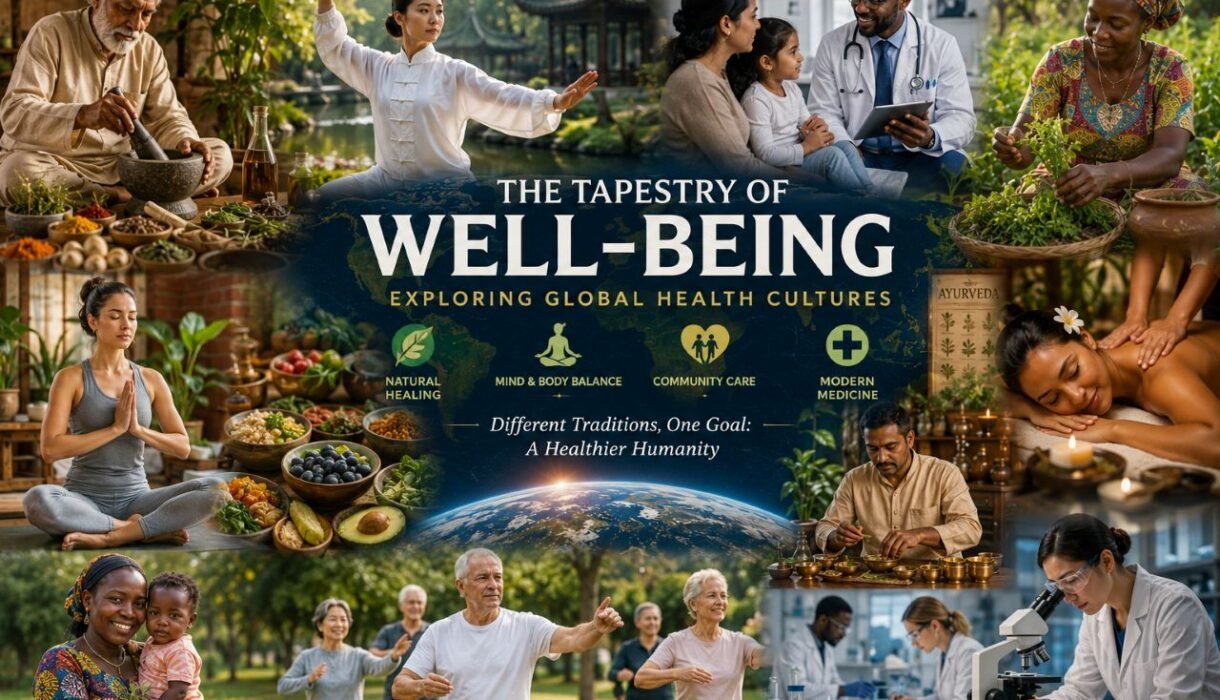

What does it mean to be “healthy”? To a modern Western doctor, it might mean the absence of disease and normal blood pressure panels. To an elder in rural India or a practitioner in Beijing, it means the smooth, uninterrupted flow of vital energy through the body. This divergence highlights Health Culture —the collective beliefs, traditions, values, and practices that shape how different human societies define, maintain, and restore physical and mental well-being.
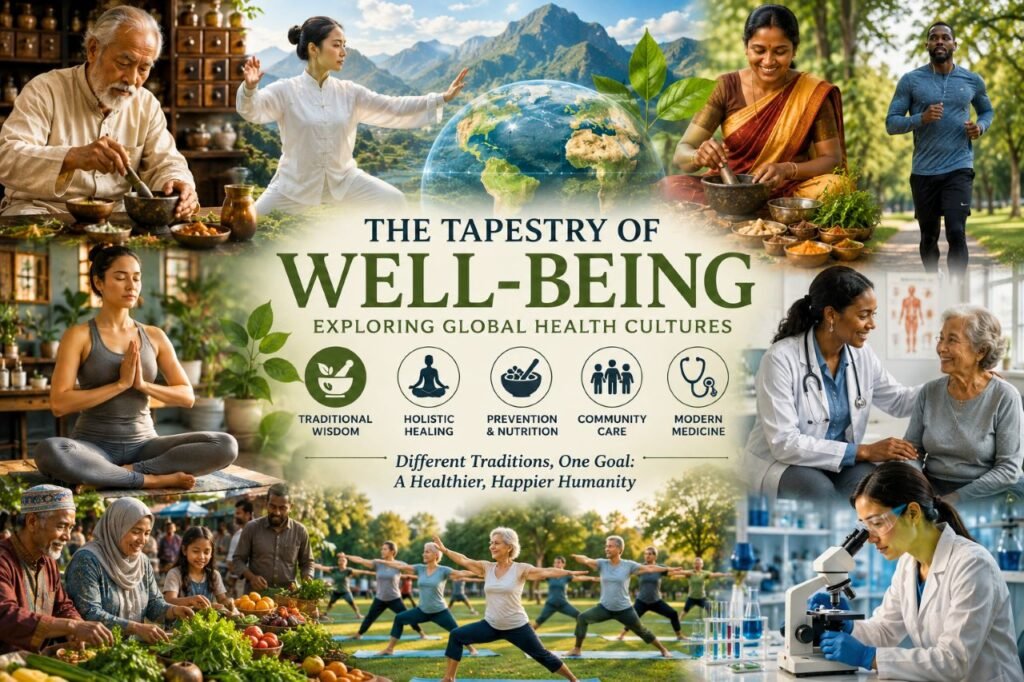
Health culture is the lens through which we view our bodies, interpret pain, and seek healing. It is not a fixed science but a living element of human heritage. Every civilization has developed unique medical models based on its specific ecosystem, spiritual beliefs, and social structures.
By exploring global health culture, we move past the idea that there is only one “right” way to heal. Instead, we discover an ancient, diverse global toolkit where modern biomedicine, herbal wisdom, community care, and mind-body balance come together to honor the complexity of human life.
History & Origins
The healing practices we see today are the result of thousands of years of observation, experimentation, and cultural migration.
[Primal Shamanism & Botanicals]➔[Great Humoral/Elemental Syntheses]➔[19th Century: Germ Theory & Biomedicine]➔[21st Century: Integrative Holistic Health]
Ancient Foundations
Long before microscopic analysis, early human cultures relied on ethnobotany—the study of a region’s plants and their practical medical uses. Healing was fundamentally spiritual; illness was often viewed as an imbalance between the individual, the community, and the spiritual world.
The Great Medical Systems
As civilizations grew, they organized their healing knowledge into structured systems. In India, Ayurveda (meaning “The Science of Life”) was recorded in sacred texts over 3,000 years ago. Concurrently, Traditional Chinese Medicine (TCM) emerged, mapping the pathways of vital energy. In the West, ancient Greek and Roman physicians like Hippocrates and Galen developed Humoral Theory, which argued that health relied on balancing four distinct bodily fluids (humors).
The Rise of Biomedicine
The 19th and 20th centuries brought a massive shift with the acceptance of Germ Theory and the development of antibiotics, vaccines, and advanced diagnostic imaging (like X-rays and ultrasound). This biomedical model excelled at treating acute trauma and infectious diseases, eventually becoming the dominant global framework for health care.
Geography & Ecosystems
Health culture is deeply shaped by local geography. The traditional remedies a society develops depend entirely on the plants, minerals, and climate native to their homeland.
- The Alpine and Forest Traditions: Northern European and Native American health cultures rely heavily on local forest botanicals like willow bark (the original source of aspirin), elderberry, and pine resins.
- High-Altitude Adaptogens: In the harsh, low-oxygen environments of the Andes and the Himalayas, local health cultures focused on adaptogens—resilient plants like Maca root and Ginseng that help the human body resist environmental stress.
Economy & Globalization
The global wellness economy has turned traditional health customs into a massive international market, reshaping how we approach self-care.
| System / Practice | Economic Drivers | Cultural & Modern Footprint |
| Integrative Medicine | Global yoga, acupuncture, and supplement markets | Blends traditional practices with standard clinical care to manage chronic stress. |
| Pharmaceutical Sourcing | Biodiscovery based on traditional indigenous knowledge | Drives massive investments into preserving rainforests and protecting local plant habitats. |
| Wellness Tourism | Thermal springs, Ayurvedic retreats, and forest bathing | Creates sustainable tourism models centered around historical and cultural healing sites. |
Politics & Healthcare Systems
Governments handle healthcare through different political frameworks, which directly affect local health culture.
In many European and North American nations, the focus is heavily on institutionalized biomedicine, backed by national health insurance or private systems. However, countries like China, India, and South Korea use a dual or pluralistic healthcare model. In these nations, traditional practices are integrated directly into public policy; patients can choose between a standard biomedical hospital or a traditional facility covered by national health plans.
Ethnic Groups & Ancestral Traditions
Different ethnic groups preserve distinct health traditions that serve as vital community anchors:
- Curanderismo: A holistic healing tradition practiced across many Hispanic and Latin American communities. It combines indigenous Aztec and Mayan herbalism with Spanish Catholic rituals, utilizing curanderos (healers) to treat both physical ailments and spiritual conditions like susto (soul fright).
- Ubuntu-Based Healing: Found throughout many Sub-Saharan African cultures, this model views health through the lens of community connection (“I am because we are”). Wellness is not just an individual matter; it requires maintaining harmony with family, neighbors, and ancestors.
Language & Communication
The vocabulary used within a health culture reveals its core philosophical priorities.
Key Concepts in Traditional Healing
- Qi (Chi): The fundamental life force or vital energy in Chinese medicine that flows through invisible pathways called meridians.
- Prana: The Sanskrit term for life breath and vital energy, which anchors Ayurvedic medicine and yoga.
- Doshas: The three fundamental energies (Vata, Pitta, and Kapha) in Ayurveda that determine an individual’s specific physical and mental constitution.
Proverbial Wisdom
“Let food be thy medicine and medicine be thy food.” — Hippocrates
Meaning: True long-term health is built daily through nutrition and lifestyle, rather than relying solely on treatments after we fall ill.
Beliefs & Values: What Drives Wellness?
Every health culture operates on a core set of values that dictate how people react to illness and recovery:
- Holism vs. Reductionism: Traditional health cultures are usually holistic, viewing the mind, body, and spirit as an interconnected system. Modern biomedicine often leans toward reductionism, isolating and treating a specific organ or chemical pathway.
- The Meaning of Pain: In some cultures, pain is viewed simply as a mechanical malfunction to be eliminated immediately. In others, it is interpreted as an essential warning signal from the body, an invitation to slow down, or a spiritual test of resilience.
- The Balance of Opposites: Many Eastern traditions value the balance of opposing forces—such as the cold (Yin) and hot (Yang) properties of food and lifestyle choices.
Culture, Traditions & Customs
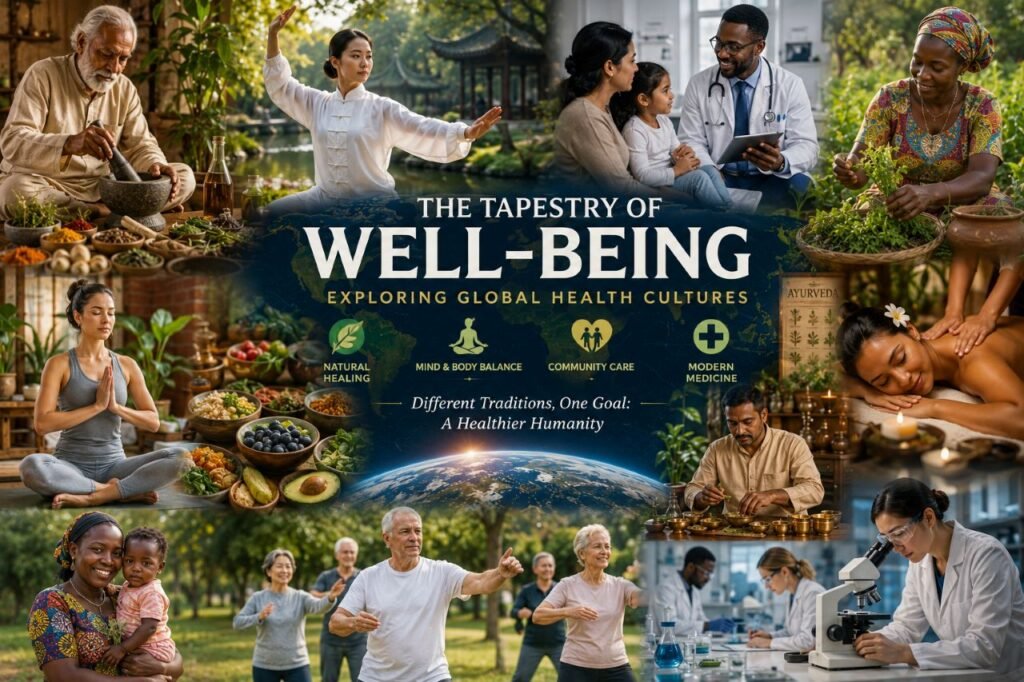
Traditional Healing Modalities
- Acupuncture and Moxibustion: Key practices within Traditional Chinese Medicine. Tiny, sterile needles are inserted into specific meridian points to stimulate the nervous system and balance the body’s energy flow.
- Panchakarma: A comprehensive detoxification and rejuvenation ritual within Ayurveda. It utilizes specialized herbal oil massages, steam therapies, and tailored diets to clear toxins and restore balance to the doshas.
Community Rites of Wellness
- The Sweat Lodge / Sauna: From the Native American Inipi ceremony to the Finnish sauna, many cultures use communal heat and steam rituals for detoxification, physical relaxation, and spiritual renewal.
Food, Cuisine & Diet as Medicine
In traditional health cultures, the kitchen is the primary pharmacy. Food is never viewed simply as fuel or calories; it carries therapeutic value.
- The Food Energy System: In Chinese health culture, ingredients are classified by their thermal properties. Cooling foods (like cucumber and green tea) are used to clear excess heat, while warming ingredients (like ginger and garlic) are used to stimulate circulation and combat cold conditions.
- The Six Tastes of Ayurveda: A balanced meal must include six distinct tastes: sweet, sour, salty, bitter, pungent, and astringent. Each taste plays a specific role in digestion and hormonal balance.
Summary
Health culture is a beautiful testament to human ingenuity and our shared desire for vitality. While modern medicine provides vital interventions for acute illness and trauma, ancient traditional systems offer invaluable frameworks for prevention, lifestyle balance, and emotional well-being. By preserving, studying, and celebrating global health cultures, we build an inclusive approach to medicine—one that values the discoveries of the modern laboratory alongside the timeless wisdom of ancestral heritages.
At Best Culture Insight, we see culture as the heartbeat of every society – the way people live, connect, and express their identity.