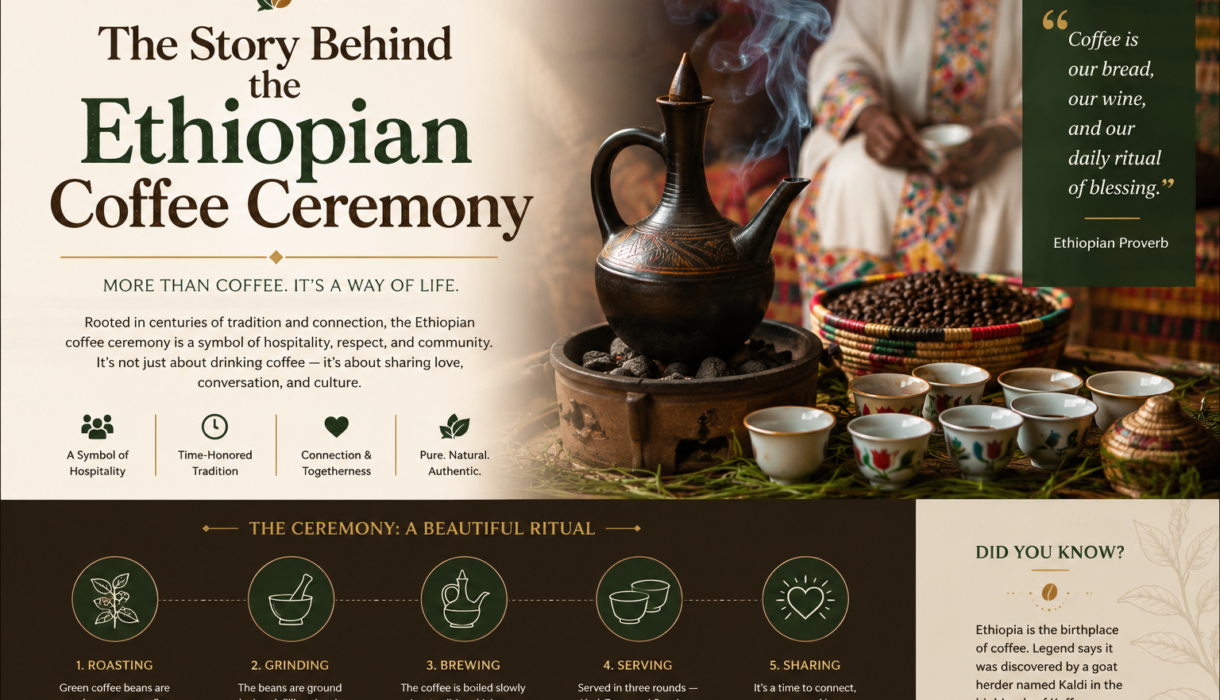

In Ethiopia, the recognized birthplace of wild Arabica coffee, preparing and drinking coffee is never a rushed, automated process. Known locally as bunna, coffee serves as the bedrock of Ethiopian culture, hospitality, and daily communal life. Rather than grabbing a quick grab-and-go espresso, families gather multiple times a day to participate in a sacred ritual that takes hours to complete. This ceremonial tradition transforms a simple agricultural crop into a profound spiritual experience that strengthens friendships, resolves community disputes, and honors the timeless gift of human connection.
Legendary Beginnings in the Ancient Highlands
The story of coffee in Ethiopia dates back over a millennium to the ancient kingdom of Kaffa. Local legend tells of an Abyssinian goat herder named Kaldi, who noticed his herd bounding with extraordinary energy after eating bright red berries from a wild bush. Intrigued, Kaldi shared the berries with a local monk, who initially dismissed them as a temptation and threw them into a fire. As the sweet, rich aroma of roasting beans filled the monastery, the monks quickly raked the coals, crushed the roasted seeds, and steeped them in hot water to create the world’s first brew. What began as a monastic tool to maintain alertness during long nighttime prayers soon evolved into a nationwide cultural institution.
The Art of Roasting and Brewing
The traditional ceremony begins long before a single drop of liquid is poured, starting with green, unroasted coffee beans. The host, usually the woman of the house dressed in a traditional white woven garment (habesha kemis), carefully washes the raw beans before roasting them over hot coals in a flat pan. As the beans crackle and turn a deep, glossy brown, she walks around the room, wafting the fragrant smoke toward guests so they can appreciate the rich aroma. Once ground by hand with a wooden mortar and pestle, the fresh coffee is transferred to a long-necked clay pot called a jebena, where it slowly boils over an open flame alongside burning frankincense.
The Significance of the Three Servings
A complete Ethiopian coffee ceremony consists of three distinct rounds of drinks, each holding its own symbolic weight and name. The first round, called Abol, is the strongest brew and sets a tone of deep gratitude and serious conversation. The second round, Tona, is made by adding more water to the remaining grounds, offering a lighter taste as discussions soften into relaxed laughter. The final round, Baraka (which translates to “to be blessed”), is the mildest serving, symbolizing a final spiritual blessing bestowed upon every guest before they depart. Leaving before drinking all three rounds is considered impolite, as skipping a serving means missing out on the full blessing of the gathering.
A Modern Refuge for Community and Mindfulness
While modern technology continues to speed up daily life around the globe, the Ethiopian coffee ceremony remains an enduring sanctuary of slow living. It serves as a natural equalizer where neighbors put aside their smartphones, sit on fresh grass scattered across the floor, and share news face-to-face. Beyond its rich history and delicious taste, the ceremony stands as a living testament to the power of hospitality. It reminds us that coffee, at its absolute best, is not just a stimulant to fuel our workday, but a powerful catalyst for bringing people together.


