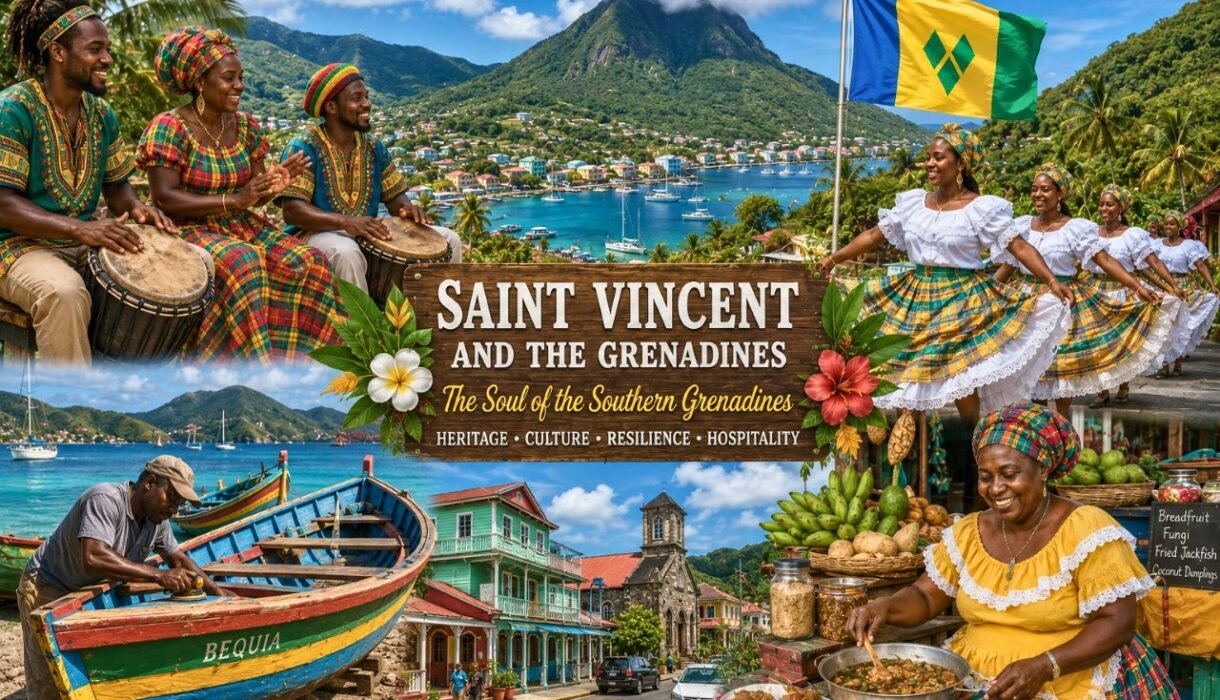
The Soul of the Southern Grenadines: An Elaborate Journey into Saint Vincent and the Grenadines Culture
Posted in :

Saint Vincent and the Grenadines, a multi-island nation located in the Windward Islands chain of the Lesser Antilles in North America, possesses a cultural identity shaped by geological drama and historical resilience. Known affectionately to locals as Vincy, this beautiful country blends volcanic topography with a maritime ecosystem.

Saint Vincent and the Grenadines vibes
The culture of Saint Vincent and the Grenadines is defined by its deep historical grit, poetic oral traditions, and welcoming, open-hearted populace. The people—Vincentians—are the caretakers of a unique historical narrative.
While much of the wider Caribbean shares a direct Euro-African baseline, Saint Vincent stands apart as the definitive ancestral cradle of the Garifuna identity—a cultural group born from the union of shipwrecked African survivors and indigenous islanders. From the misty, rugged heights of the La Soufrière volcano down to the wooden boat-building harbors of Bequia, the federation is a celebration of diversity.
History & Origins
The historical blueprint of Saint Vincent is characterized by successful resistance against early European colonial empires.
[Indigenous Ciboney & Island Caribs/Kalinago] ➔ [1675: African Shipwrecks & Garifuna Birth] ➔ [1700s: Severe Franco-British Warfare] ➔ [1797: Expatriation & Sugar Plantations] ➔ [1979: Sovereignty]
Originally settled by the Ciboney, the main island was later controlled by the Kalinago (Island Caribs), who named it Hairoun (“Land of the Blessed”). In 1675, a slave ship wrecked near the coast. The surviving West Africans made it ashore, finding refuge among the Kalinago. Over generations, these two groups intermarried, creating the Black Caribs or Garifuna population. This group successfully fought off both French and British colonization attempts for over a century.
Following the Second Carib War in 1797, British forces captured the island, exiled thousands of Garifuna to Central America, and cleared the volcanic landscape for sugarcane and arrowroot plantations powered by enslaved Africans. After the abolition of slavery, Portuguese and East Indian indentured laborers were brought to the islands. This history culminated in full national independence on October 27, 1979.
Geography
The country consists of the main volcanic island of Saint Vincent and a chain of 32 smaller islands and cays known as the Grenadines, including Bequia, Mustique, Canouan, Mayreau, Union Island, and the marine sanctuary of the Tobago Cays.
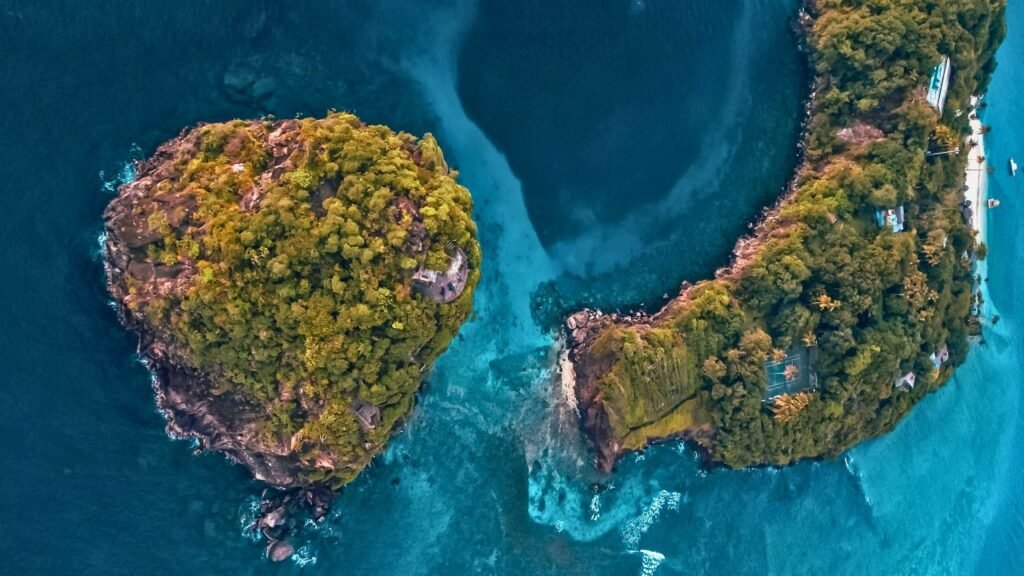
The main island’s landscape is dominated by La Soufrière, an active stratovolcano rising $1,234\text{ meters}$ ($4,049\text{ feet}$) into the northern clouds. The geography transitions from steep, dramatic black-sand volcanic beaches and fertile rainforest valleys in the north to low-lying, white-sand coral keys in the southern Grenadines.
Economy
Saint Vincent and the Grenadines has transitioned from an economy centered on banana production to a diversified, modern service-oriented model.
| Sector | Key Products & Activities | Cultural Impact |
| Tourism & Yachting | Elite eco-resorts, marine sailing, diving charters | Focuses economic activity on traditional seafaring communities in the Grenadines. |
| Agriculture | High-grade arrowroot starch, bananas, root crops, ginger | Supports rural farming structures and the traditional open-market culture of Kingstown. |
| Blue Economy | Artisanal fishing, sustainable ocean harvest, boat building | Preserves multi-generational knowledge of whale tracking and maritime craft in Bequia. |
Politics
Saint Vincent and the Grenadines is an independent sovereign state within the Commonwealth. It operates as a constitutional monarchy with a Westminster parliamentary system, where King Charles III is represented by a local Governor-General. Executive authority is held by the Prime Minister, who leads the cabinet and commands a majority in the unicameral House of Assembly. The nation possesses a history of active civic participation and high voter turnout, with public policy heavily prioritizing regional integration, disaster management, and environmental conservation.
Ethnic Groups
The population distribution reflects the historical encounters of the colonial era:
- African Descent (~66%): The demographic majority, shaping the linguistic, religious, musical, and culinary foundations of the country.
- Mixed Heritage (~19%): Multi-generational ancestral mixing across rural villages and coastal fishing ports.
- East Indian (~6%): Descendants of post-emancipation indentured workers, who introduced unique spices and field techniques.
- Garifuna / Indigenous (~2%): Preserving ancestral bloodlines and working to revitalize ancient Garifuna artistic expressions.
- European & Other (~7%): Including historical Portuguese and British lineages alongside modern international expatriate communities.
Languages & Communication
English is the official language of education, government administration, and the judicial system. However, the emotional heart of communication is Vincentian Creole English.
This expressive dialect overlays West African syntax and French/Carib structural elements onto an English vocabulary, creating a fast-paced cadence.
Common Vincentian Idioms
- “Wha yo on?” — A warm everyday greeting meaning “What are you up to?” or “How are you doing?”.
- “All skin teeth ain’t laugh.” — A widely used proverb meaning that not every smile is genuine or friendly; remain discerning.
- “Water more than flour.” — An expression used when a situation has become completely overwhelming or unmanageable.
Beliefs & Values
Vincentian culture values neighborly solidarity, respect for religious authority, and a deep connection to the land and sea. The society is highly religious, with Protestant denominations (Anglican, Methodist, and Seventh-day Adventist) alongside Roman Catholicism acting as central pillars of civic life.
The Spiritual Baptist Tradition
A unique element of Vincentian religious identity is the Spiritual Baptist faith (historically referred to as “Shakers”). Blending Christian liturgy with West African praise forms, this faith features expressive chanting, rhythmic handclapping, spiritual dancing, and traditional bell-ringing. Despite being banned by colonial authorities under the 1912 Shakerism Prohibition Ordinance, the community practiced in secret until the law was repealed in 1951, cementing it as a symbol of cultural survival.
Culture, Traditions & Customs
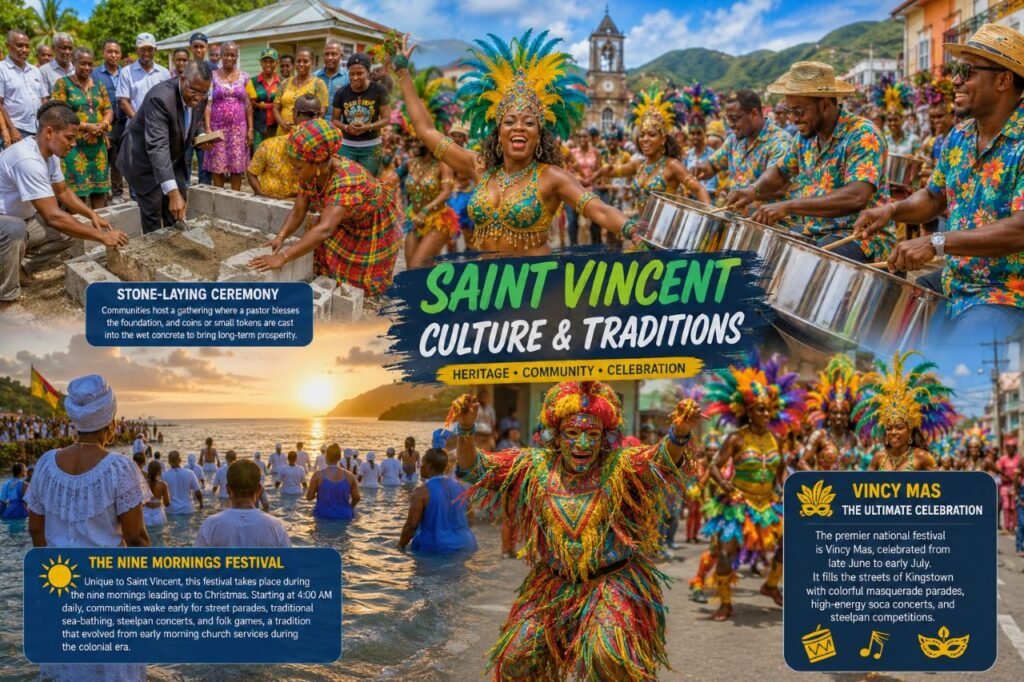
Community Ceremonies and Transitions
- Stone-Laying: When building a new family home, communities host a gathering where a pastor blesses the foundation, and coins or small tokens are cast into the wet concrete to bring long-term prosperity to the household.
- The Nine Mornings Festival: Unique to Saint Vincent, this festival takes place during the nine mornings leading up to Christmas. Starting at 4:00 AM daily, communities wake early for street parades, traditional sea-bathing, steelpan concerts, and folk games, a tradition that evolved from early morning church services during the colonial era.
Vincy Mas: The Ultimate Celebration
The premier national festival is Vincy Mas, celebrated from late June to early July. It fills the streets of Kingstown with colorful masquerade parades, high-energy soca concerts, and steelpan competitions.
Food & Cuisine
Vincentian cuisine, or Vincy Cooking, relies on fresh catches from the Atlantic and Caribbean oceans combined with an abundance of starchy root crops known as ground provisions (yams, sweet potatoes, dasheen, and eddoes).
Roasted Breadfruit and Fried Jackfish
The undisputed national dish of the nation is Roasted Breadfruit and Fried Jackfish, a culinary combination rooted in the island’s plantation history:
- The Breadfruit: Whole green breadfruits are placed directly into open charcoal embers until the tough skin turns completely black. The charred skin is sliced away to reveal a soft, steaming, pale-yellow interior with a texture similar to fresh bread.
- The Jackfish: Freshly caught jackfish are seasoned with local chives, garlic, and scotch bonnet peppers, dusted lightly in flour, and shallow-fried until crispy. The fish is often served with a savory Creole sauce made from sautéed onions, tomatoes, and bell peppers.
Clothing & Symbols
Traditional Vestments
The national costume is the Vincy Heritage Dress. For women, it features a traditional white cotton blouse under a multi-colored tiered skirt showing yellow, green, and blue patterns. Men wear simple white linen shirts accented with embroidered cuffs, dark trousers, and a woven straw hat, representing the country’s agricultural origins.
[ National Symbols of the Federation ]
┌───────────────────────────────────────────────────────────────────────────┐
│ NATIONAL FLAG ── Blue (Sky/Sea), Gold (Sunshine/Sand), Green (Land), │
│ with three green diamonds arranged in a ‘V’ shape │
├───────────────────────────────────────────────────────────────────────────┤
│ NATIONAL BIRD ── St. Vincent Parrot / Amazona guildingii (Endemic) │
├───────────────────────────────────────────────────────────────────────────┤
│ NATIONAL FLOWER─ Soufrière Tree / Spachea perforata │
└───────────────────────────────────────────────────────────────────────────┘
The Geometry of the Flag
The national flag contains three vertical bands of Blue, Gold, and Green. The three green diamonds centered in the gold band are arranged in a “V” shape for Vincent, representing the gems of the islands and the nation’s tropical landscape. Because they sit low in the gold band, they symbolize the geographic positioning of the Grenadine islands trailing south of Saint Vincent.
Music, Dance & Art
Acoustic Roots and Steelpan Architecture
Music is central to daily life across the islands, spanning a variety of genres:
- Soca and Ragga-Soca: Saint Vincent has produced influential soca artists (such as Kevin Lyttle and Skinny Fabulous) who blended traditional calypso structures with melodic R&B and dancehall electronic patterns.
- Big Drum Dance: Primarily preserved on Union Island, this traditional performance utilizes three open-ended wooden drums played with the hands. Dancers move in a circular formation, chanting call-and-response songs that honor ancestral spirits and request rain or good harvests.
Visual Arts & Craft
The visual arts are closely tied to raw local materials. The island of Bequia is world-renowned for its model boat building, where master craftsmen construct scale models of historic whaling boats using native white cedar, preserving maritime design principles without blueprints. On the main island, local artists create intricate grass-straw basketry, clay pottery, and vibrant canvas paintings that capture the steep valleys and volcanic energy of the landscape.
Summary
The culture of Saint Vincent and the Grenadines stands as a testament to successful historical resistance, maritime skill, and community pride. By preserving the drumming rhythms of Union Island, celebrating their heritage through the unique Nine Mornings festival, and gathering around a traditional meal of Roasted Breadfruit and Fried Jackfish, Vincentians have forged a distinct, unforgettable identity. The nation moves forward into the future with confidence—celebrating its cultural diversity and sharing its vibrant Caribbean soul with the global family.
At Best Culture Insight, we see culture as the heartbeat of every society – the way people live, connect, and express their identity.