The Soul of Samba and Sunshine: A Comprehensive Guide to Brazil’s Rich Culture – Brazil, South America.
Posted in :

Brazil (Brasil) is a country of continental proportions, legendary energy, and an uncontainable joy for life. As the largest nation in South America, its cultural footprint is felt globally. The people—Brasileiros—are universally celebrated for their warmth, spontaneous hospitality, and a unique emotional outlook known as pretinho básico or jogo de cintura (the ability to flexibly navigate life’s challenges with grace and creativity).
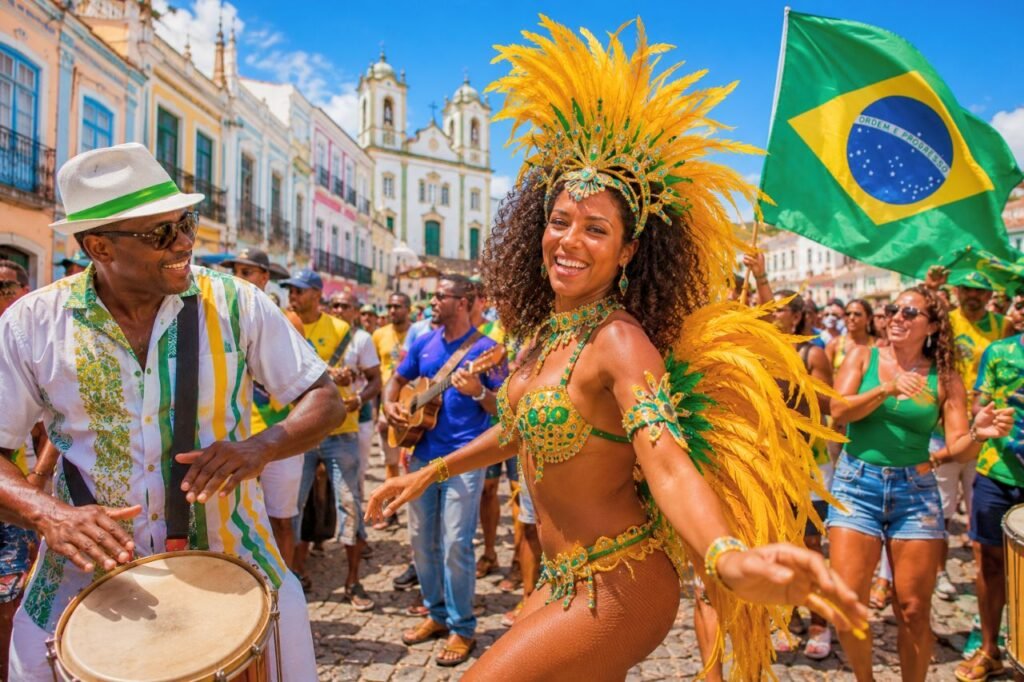
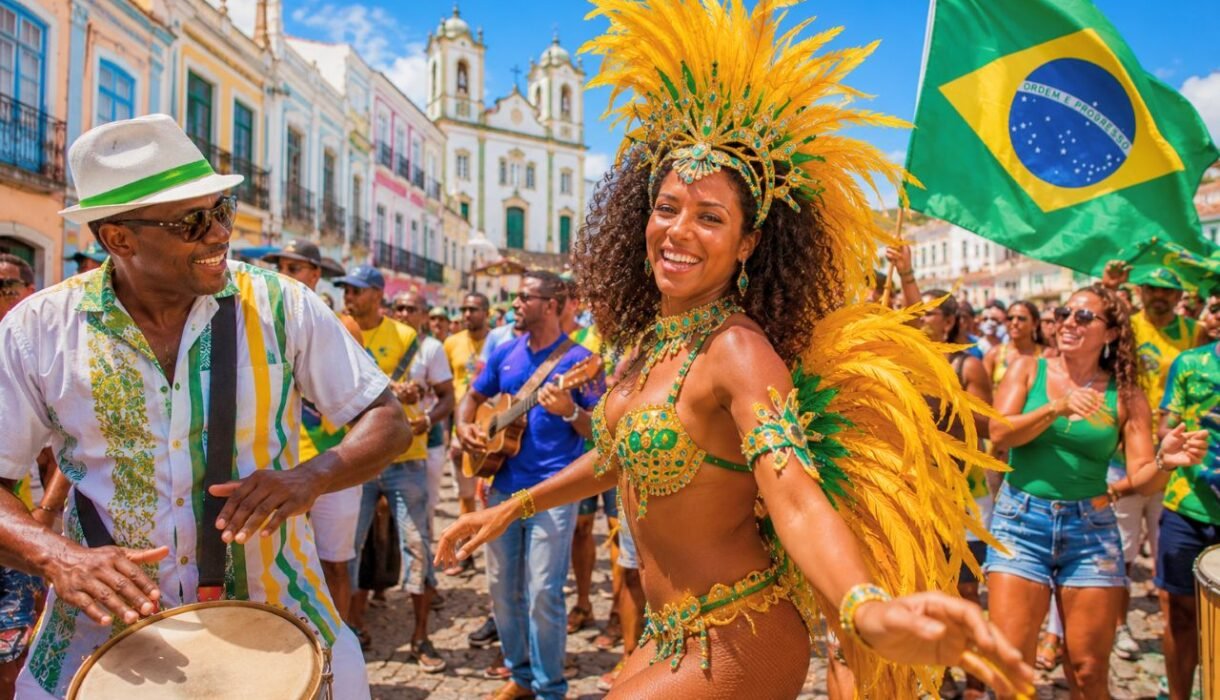
Carnival celebrations in Rio de Janeiro – Brazil, South America
From the historic, sun-drenched cobblestones of Salvador da Bahia to the hyper-modern corporate towers of São Paulo and the quiet, mysterious waterways of the Amazon, Brazilian culture centers on community, physical expression, and an absolute passion for music, dance, and family connection.
History & Origins
The modern cultural identity of Brazil is the product of intense, often tumultuous historic intersections spanning over five centuries.
- Indigenous Foundations: Long before European sails appeared on the horizon, the territory was home to an estimated 2 to 6 million indigenous peoples. Diverse nations, including the Tupi-Guarani, Yanomami, and Ge, lived in deep harmony with the vast rainforest and coastal ecosystems, establishing spiritual systems and agricultural methods that remain vital to Brazil’s ecological understanding today.
- Portuguese Colonization: In 1500, Portuguese explorer Pedro Álvares Cabral arrived, initiating over three centuries of Portuguese colonial rule. The colonizers brought the Roman Catholic faith, architectural styles, and the Portuguese language, establishing a heavy European baseline for the nation’s governance and infrastructure.
- The African Legacy: Between the 16th and 19th centuries, Brazil imported more enslaved African people than any other nation in the Americas—predominantly from West and Central Africa (Yoruba, Bantu, and Fon lineages). Despite the profound horrors of forced labor, these resilient populations heavily infused Brazilian society with their spiritualities, culinary arts, martial traditions, and musical structures.
- The Global Melting Pot: Following the abolition of slavery in 1888, the government actively encouraged international immigration. Waves of millions of German, Italian, Spanish, Lebanese, and Japanese settlers arrived to work the expanding coffee plantations, creating distinct regional subcultures. Notably, Brazil is now home to the largest Japanese population outside of Japan.
Culture, Traditions & Customs
Brazilian customs are vibrant, highly tactile, and deeply focused on public celebration and kinship milestones.

- Carnival (Carnaval): The undisputed pinnacle of the national calendar. Held annually in the days leading up to Ash Wednesday, Carnival shuts down the entire country. While Rio de Janeiro is world-famous for its massive, highly competitive Samba School parades in the Sambódromo, cities like Salvador and Recife feature authentic street carnivals (blocos) where millions dance behind massive sound trucks (trios elétricos).
- Festa Junina: Celebrated throughout June, these colorful rural winter festivals honor Saint John, Saint Peter, and Saint Anthony. Heavily influenced by European midsummer traditions, locals dress in checkered countryside clothing, perform synchronized square dances known as quadrilhas, and gather around massive bonfires to enjoy sweet corn-based delicacies.
- New Year’s Eve (Réveillon) at Copacabana: Millions of revelers gather on the white sands of Rio’s beaches dressed entirely in white to honor Yemanjá, the Afro-Brazilian goddess of the sea. Celebrants throw white flowers and small offerings into the ocean waves for good luck and spiritual purification in the coming year.
Languages & Communication
Brazil is the only Portuguese-speaking nation in the Americas, a linguistic reality that isolates and unifies it creatively from its Spanish-speaking neighbors.
- Brazilian Portuguese: The local language is significantly different from the European Portuguese spoken in Portugal. It features a smoother, more rhythmic cadency, open vowel sounds, and thousands of words borrowed from indigenous Tupi and African Yoruba vocabularies.
- Expressive Body Language: Communication in Brazil is deeply physical. Hand gestures are vital; for example, clicking your fingers repeatedly translates to “it took a long time,” while lightly pulling your earlobe indicates something tastes delicious. Physical proximity is close, and warm hugs (abraços) and air kisses on both cheeks are standard friendly greetings.
- Iconic Expressions:
- Tudo bem? – The universal greeting meaning “Is everything good?” The standard response is always a cheerful “Tudo bem!”
- Saudade – A famous, untranslatable word expressing a deep, melancholic longing for a person, place, or time that is absent.
- Gambiarra – The culturally celebrated art of a creative, impromptu fix or workaround for a physical problem.
Geography
Spanning nearly half of the South American continent, Brazil’s immense geography is divided into five main cultural-ecological regions:
- The North: Home to the towering Amazon Rainforest. The culture here is deeply intertwined with indigenous river traditions, boat travel, and native forest resources.
- The Northeast (Nordeste): The historic Afro-Brazilian heartland. It features a stunning tropical coastline, an arid interior (sertão), and a culture celebrated for its unique folk music, deep spirituality, and spiced cuisine.
- The Central-West: A vast savannah region (Cerrado) and home to the massive wetlands of the Pantanal. This area is dominated by an expansive cattle ranching culture and houses the futuristic, purpose-built federal capital, Brasília.
- The Southeast: The economic and industrial engine of the nation, housing the megacities of Rio de Janeiro and São Paulo. It is the center of media, financial tech, and cosmopolitan arts.
- The South: Characterized by rolling pampas and cold winters, this region retains heavy German, Italian, and Polish architectural and cultural influences, complete with local Oktoberfest celebrations.
Economy
Brazil possesses a major, highly diversified economy that transitions fluidly between traditional agriculture and cutting-edge industrial tech.
- Agribusiness Titan: Brazil is a global powerhouse, serving as the world’s largest exporter of coffee, sugarcane, soy, and premium beef.
- Manufacturing and Aerospace: The country boasts a massive domestic industrial base, notably housing Embraer, one of the world’s largest commercial aircraft manufacturers.
- Green Energy Pioneer: Culturally committed to energy independence, Brazil is a world leader in biofuels, with the vast majority of its domestic vehicles running on sugarcane-derived ethanol, backed by massive hydroelectric infrastructures.
Politics
Formally known as the Federative Republic of Brazil, the nation operates under a robust presidential democracy. Its political landscape is famously dynamic, marked by intense civic engagement, artistic street protest culture, and vivid ideological debates. Following the transition from a military dictatorship back to democracy in 1985, modern Brazilian politics center heavily on managing environmental preservation in the Amazon basin, addressing historic socioeconomic inequalities, and building diplomatic bridges across the global south.
Ethnic Groups
Brazil is one of the most genetically diverse and racially mixed nations on earth, proudly using the term mestiçagem to describe its cultural blending.
| Group Identity (IBCensus) | Percentage | Primary Regions | Cultural Blueprint |
| Branco (White) | ~43% | South / Southeast | Traces roots to Portuguese, Italian, and German immigration waves. |
| Pardo (Mixed/Multiracial) | ~47% | North / Central-West | Represents a rich blending of European, African, and Indigenous ancestries. |
| Preto (Black) | ~9% | Northeast (Bahia) | Custodians of Afro-Brazilian spiritualities, music, and culinary traditions. |
| Indígena (Indigenous) | ~1% | Northern Amazon Basin | Hundreds of distinct tribes preserving ancient languages and forest medicine knowledge. |
Beliefs & Values
The spiritual worldview of Brazil is highly pluralistic, fluid, and deeply intertwined with daily cultural vernacular.
- Religious Syncretism: While Brazil holds the world’s largest Roman Catholic population, alongside a rapidly growing Evangelical Christian movement, millions of citizens practice Afro-Brazilian religions like Candomblé and Umbanda. These spiritualities seamlessly blend Catholic saint veneration with African Orixás (nature deities), allowing practitioners to move comfortably between church pews and traditional temple drumming spaces.
- The Family Unit: Family is the absolute foundation of Brazilian societal moral values. Multi-generational homes are common, and extended family members gather regularly for massive weekend lunches. Children are highly integrated into public adult social spaces from infancy.
- O Jeitinho Brasileiro: This central cultural concept translates to “the little Brazilian way.” It represents an endearing, highly valued social philosophy focused on finding warm, empathetic, and unconventional solutions to rigid rules or bureaucratic gridlocks through personal charm and human connection.
Food & Cuisine
Brazilian gastronomy is a robust, flavor-packed celebration of local ingredients, combining European cooking techniques with African spices and indigenous cassava staples.
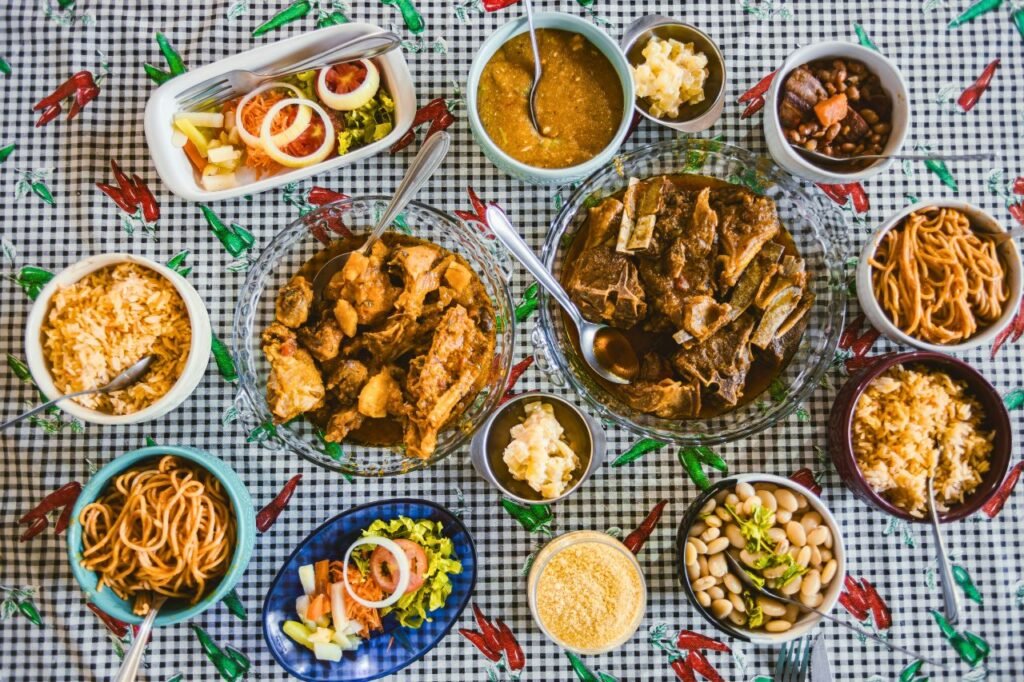
- Feijoada: The undisputed national dish of Brazil. It is a rich, slow-simmered stew of black beans packed with various cuts of pork, beef, and traditional smoked sausages. Historically developed by enslaved populations who combined discarded meat scraps with abundant black beans, it is traditionally served every Saturday alongside white rice, toasted cassava flour (farofa), sautéed collard greens, and fresh orange slices.
- Churrasco: The iconic Brazilian barbecue style. In specialized restaurants (churrascarias), master carvers move from table to table slicing premium cuts of meat directly from large metal skewers onto diners’ plates. The most prized cut is Picanha (the sirloin cap), grilled over open charcoal with nothing but coarse rock salt.
- Pão de Queijo: Originating from Minas Gerais, these highly addictive, naturally gluten-free little cheese bread balls are made from sour cassava starch and local cheeses, resulting in a crispy exterior and a soft, chewy, elastic interior.
- The Caipirinha: The national cocktail, mixed by muddling fresh lime chunks with white sugar, ice, and a generous pour of Cachaça—a fiery, uniquely Brazilian spirit distilled directly from fermented sugarcane juice.
Clothing & Symbols
Brazilian clothing perfectly balances tropical beach relaxation with historic regional pride.
- Traditional Attire: In Salvador da Bahia, Afro-Brazilian women proudly wear the Traje de Baiana. This striking ensemble features voluminous, starched white lace skirts, matching headwraps, and layers of colorful beaded necklaces that honor specific Orixá deities. Down south, the Gaúcho (cowboy) culture is kept alive through wide trousers (bombachas), leather boots, and neck scarves.
- The Beach Uniform: On the sands of Ipanema or Copacabana, swimwear is a true democratizing equalizer. Brazilians of all shapes, sizes, and ages wear minimalist swimwear with absolute body positivity, paired universally with Havaianas flip-flops, which are considered a staple of national fashion.
- National Symbols: The flag features a vibrant green field (representing the Amazon) and a yellow rhombus (representing the country’s immense gold reserves), centered with a blue celestial globe showcasing the night sky over Rio on the morning of the republic’s birth, wrapped in the national motto: “Ordem e Progresso” (Order and Progress).
Music, Dance & Art
Artistic expression in Brazil is percussive, highly kinetic, and fundamentally designed for community participation.
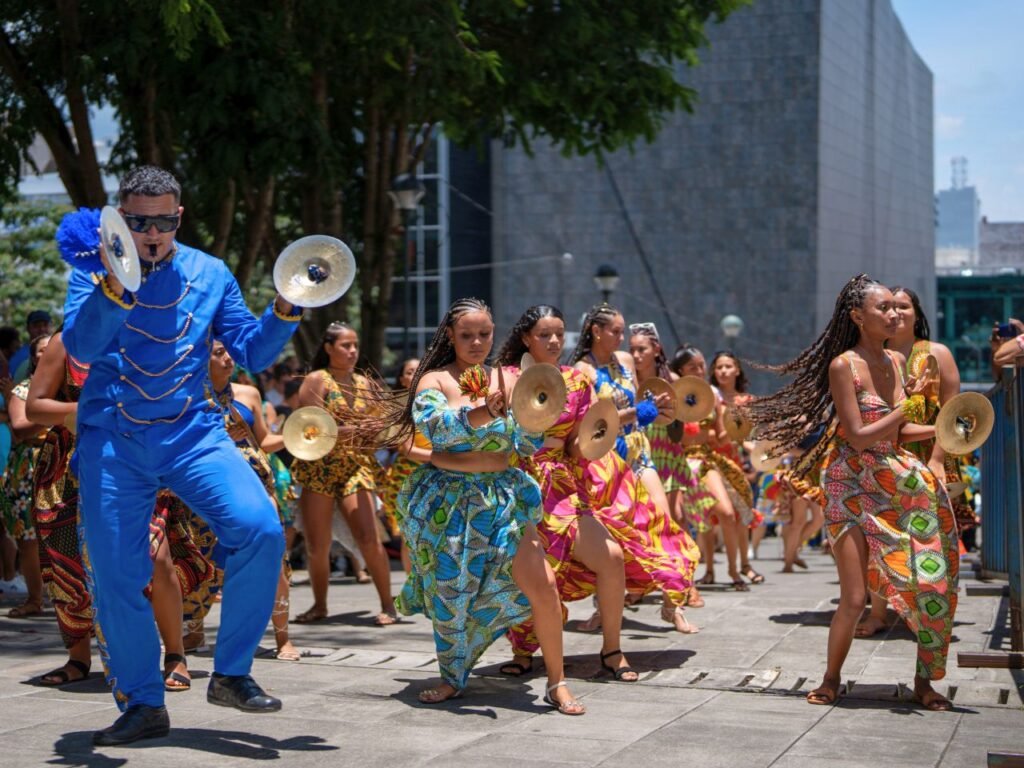
- Samba and Bossa Nova: Born in the Afro-Brazilian neighborhoods of Rio, Samba is the polyrhythmic, high-tempo heartbeat of the nation, driven by the pandeiro (tambourine) and surdo drums. In the late 1950s, musicians like João Gilberto and Tom Jobim softened this rhythm, blending it with cool jazz to create Bossa Nova (famously epitomized by “The Girl from Ipanema”).
- Capoeira: Developed by enslaved Africans as a profound survival tool disguised as a dance, Capoeira is a breathtaking martial art combining acrobatic flips, kicks, and sweeping strikes. Practitioners form a circle (roda) and face off in pairs, moving to the hypnotic, metallic twang of the Berimbau (a single-stringed bow instrument).
- Visual Arts & Modernism: Brazil boasts a world-class architectural and artistic legacy. The futuristic, swooping concrete lines of architect Oscar Niemeyer transformed Brasília into a UNESCO World Heritage site, while iconic 20th-century painters like Tarsila do Amaral permanently redefined global modern art by blending European avant-garde styles with raw, colorful Brazilian themes.
Summary
The culture of Brazil is an elegant, multi-layered triumph of human diversity and creative resilience. It is a society that has masterfully woven the ancient heritage of its indigenous tribes, the profound spiritualities of its African ancestors, and the cultural frameworks of European immigrants into a dynamic, contemporary tapestry. Through the thunderous roar of a samba drum line, the warm shared joy of a backyard feijoada feast, and an unyielding capacity for joy, Brazil offers a brilliant cultural landscape that illuminates the global stage.