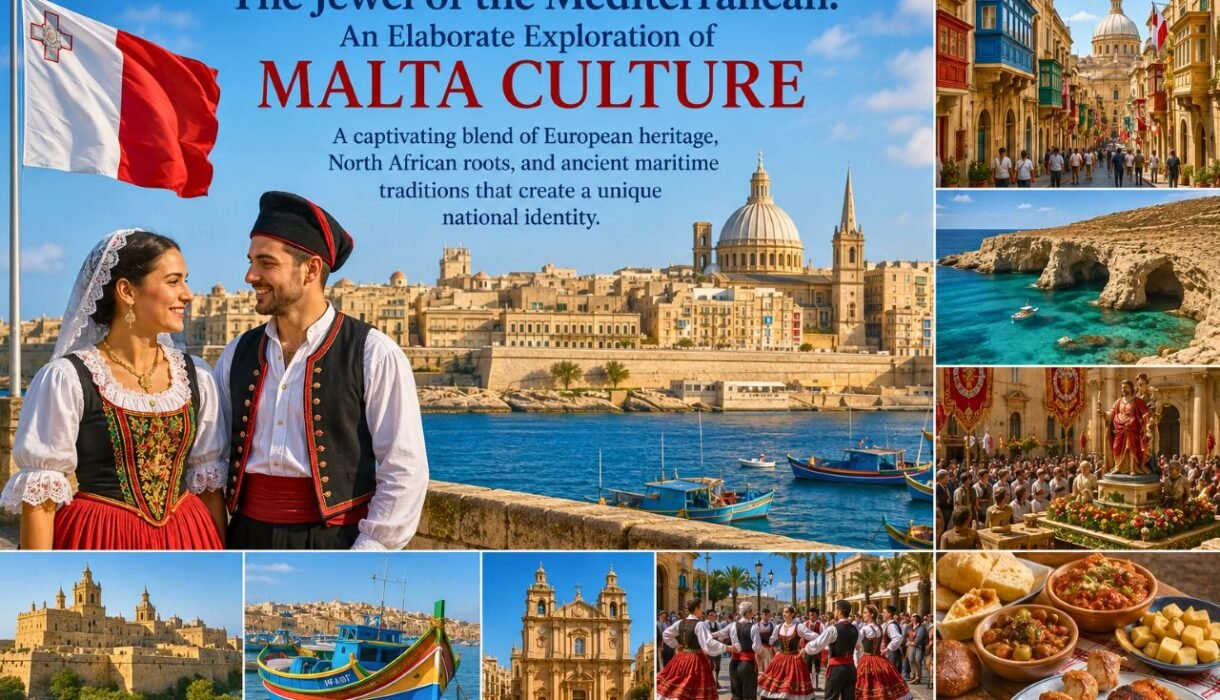

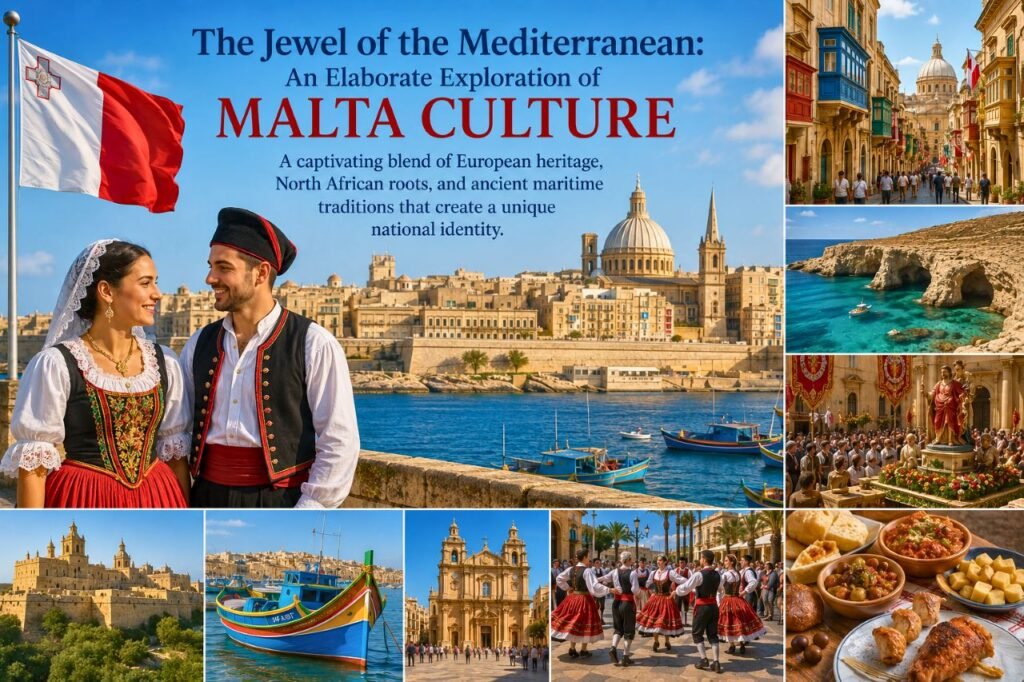
Rising out of the sapphire waters of the Mediterranean Sea, the Maltese archipelago is a geographic micro-state with a monumental cultural identity. Comprising the islands of Malta, Gozo, and Comino, this sun-drenched nation represents a fascinating cultural melting pot. Here, European heritage, North African linguistic roots, and ancient maritime traditions blend into a completely distinct national character. – Culture
The people of Malta—the Maltese (Maltin)—are known globally for their legendary hospitality, deep-seated family values, and passionate community celebrations. This research-driven, comprehensive guide delves into the essence of Malta’s history, customs, lifestyle, and values, offering a vibrant celebration of a society shaped by waves of global civilizations.
History & Origins
Malta’s strategic position at the crossroad of early seafaring routes turned the islands into a coveted prize for the world’s greatest empires.
- Prehistoric Builders: Malta is home to some of the oldest free-standing stone structures on Earth. The Megalithic Temples of Malta and Gozo, such as Ġgantija, date back to 3600 BC—predating both the Egyptian Pyramids and Stonehenge.
- The Conquest of Empires: Over three millennia, a succession of dominant powers conquered and colonized Malta, each leaving an indelible mark on its culture. These included the Phoenicians, Carthaginians, Romans, Byzantines, and the Arabs, the latter introducing the structural basis of the modern Maltese language in 870 AD.
- The Knights and the British: In 1530, the islands were granted to the Order of Knights of St. John, who transformed Malta into a heavily fortified Baroque masterpiece and successfully defended it during the Great Siege of 1565. Following a brief French occupation under Napoleon, Malta voluntarily joined the British Empire in 1814. The nation finally achieved full independence in 1964 and became a Republic in 1974.
Culture, Traditions & Customs
The Village Festa (Feast Day)
The cornerstone of Maltese social life is the Festa season, which runs from May to September. Every village and town hosts an annual, week-long celebration dedicated to its respective patron saint.
The streets are adorned with intricate fabric banners, statues, and thousands of twinkling lights. The atmosphere is electric, filled with loud brass band marches, massive displays of aerial fireworks, and traditional street food vendors. It acts as the ultimate expression of community pride and religious devotion.
Marriage and Family Traditions
Family is the emotional and social anchor of Maltese life. Traditional weddings are joyous, grand affairs that bring entire extended networks together.
Historically, a traditional courtship involved a Qarċilla—a humorous, poetic contract read aloud to guests. While modern weddings look similar to contemporary European celebrations, they retain distinct Maltese flourishes. Guests are always served fjokketti (bow-shaped almond pastries) or perlini (sugar-coated almonds) as symbols of fertility and prosperity.
The Il-Ġiganti Custom and Life Passages
Childhood milestones are celebrated with deep warmth. A unique baptismal tradition involves the Quċċija, an informal ritual held on a child’s first birthday.
Family members place a variety of objects on the floor—such as a book, a rosary, money, or a stethoscope—and encourage the crawling toddler to choose one. The selected object is playfully believed to predict the child’s future profession or life path.
Languages & Communication
A Linguistic Marvel: Maltese (Malti)
The linguistic identity of the islands is uniquely fascinating. Malta recognizes two official languages: Maltese and English.
Maltese is a Semitic language that evolved from Siculo-Arabic. Crucially, it is the only Semitic language in the world written entirely in the Latin alphabet. Over time, it absorbed a massive influx of vocabulary from Sicilian, Italian, and English. A Maltese speaker can seamlessly count using Arabic roots, describe a kitchen table using Italian words, and talk about technology using English structures.
Everyday Greetings & Expressions
Maltese communication is expressive, loud, and inherently warm. Common phrases include:
- “Bonġu!”
Meaning: Derived from the French bonjour, this is the universal morning greeting.
- “Grazzi ħafna!”
Meaning: “Thank you very much!”—reflecting the polite, accommodating nature of the locals.
- “Qalbi”
Meaning: “My heart”—a common, highly affectionate term of endearment used even in casual conversations among friends and family.
Geography
Malta’s geographic profile is defined by its dramatic coastal topography and classic Mediterranean climate, featuring warm, dry summers and mild winters.
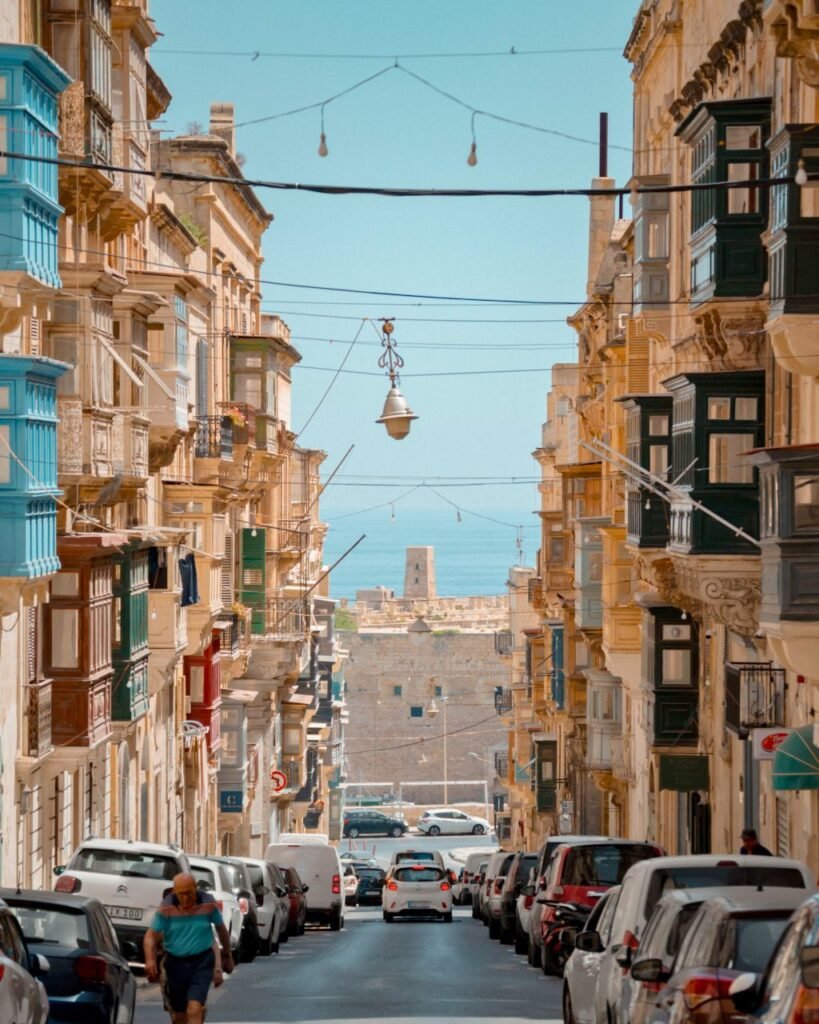
- Limestone and Coastlines: The landscape is composed almost entirely of globigerina limestone—a golden-hued stone that gives Maltese architecture its iconic, warm glow. The coastlines are marked by deep natural harbors, steep sea cliffs, and hidden rocky coves.
- The Three Islands: Mainland Malta is the bustling commercial and cultural hub. Gozo is noticeably greener, more rural, and characterized by flat-topped hills and a slower, traditional agricultural pace of life. Comino is virtually uninhabited, famous for the crystalline waters of the Blue Lagoon.
Economy
Malta operates a highly developed, innovative, and service-driven economy that has shown remarkable resilience in the 21st century.
- Maritime and Tourism: Historically dependent on its strategic dockyards and naval shipping, Malta successfully transitioned into a premier global tourist destination, attracting millions of visitors annually to its historic sites and dive spots.
- Tech and Gaming Hub: Malta pioneered the regulatory framework for the international iGaming and financial technology sectors, transforming the country into a major Mediterranean hub for digital entertainment, software development, and online commerce.
Politics
Malta is a constitutional republic operating as a parliamentary democracy.
The President of Malta serves as the constitutional head of state, fulfilling a largely ceremonial and unifying role. Executive authority is held by the Prime Minister, who serves as the head of government and leader of the majority political party. The unicameral Parliament (Kamra tad-Deputati) is fiercely contested by a deeply entrenched two-party system. Malta proudly joined the European Union in 2004 and adopted the Euro currency in 2008.
Ethnic Groups
The vast majority of the population identifies as ethnically Maltese, tracing their ancestry to ancient Mediterranean migrations. However, the economic boom of the past two decades has fostered an increasingly cosmopolitan society.
| Group / Origin | Estimated Share | Societal Role & Integration |
| Ethnic Maltese | ~80.0% | The historic core population holding deep familial and cultural ties to the land |
| British Expatriates | ~5.0% | A long-standing community drawn by historical colonial links and the sunny climate |
| Other EU Citizens | ~8.0% | Italian, Spanish, and French nationals working across tech, hospitality, and finance |
| Non-EU Multinationals | ~7.0% | Growing communities from Asia and North Africa contributing to the diverse workforce |
Beliefs & Values
Devout Roman Catholicism
Roman Catholicism is established by the constitution as the state religion, and its influence on Maltese culture is profound. The islands boast over 360 churches—literally one for every day of the year. While church attendance has naturally normalized in recent generations, Catholic rituals, village patron saints, and religious feast days remain central to the country’s cultural calendar.
The Worldview of Hospitality
The Maltese worldview is deeply colored by the concept of Mhux problema (No problem). They possess an easygoing, resilient attitude born from centuries of navigating shifting political tides. The ancient biblical story of Saint Paul being shipwrecked on Malta in 60 AD praises the islanders for their “unusual kindness”—a value of hospitality that remains a proud pillar of local identity.
Food & Cuisine
Maltese cuisine is a hearty, rustic celebration of seasonal Mediterranean ingredients, heavily influenced by Italian culinary styles and enriched with subtle North African spices.
- Stuffat tal-Fenek (Rabbit Stew): The definitive national dish of Malta. Rabbit is slow-cooked for hours in a rich red wine, tomato, garlic, and bay leaf sauce until the meat falls off the bone. It is traditionally served as a communal family meal, often tossed with pasta as a first course.
- Pastizzi: The ultimate Maltese comfort food and street snack. These are small, incredibly flaky diamond-shaped pastries made from phyllo dough, traditionally stuffed with either creamy ricotta cheese or a savory savory mash of mushy peas. They are sold hot from tiny storefront bakeries called pastizzerijas.
- Ħobż biż-Żejt: A beloved summer staple consisting of thick slices of crusty sourdough Maltese bread rubbed with ripe tomatoes, drizzled generously with olive oil, and topped with capers, tuna, garlic, and mint.
Clothing & Symbols
The Għonella (Traditional Attire)
The most iconic piece of traditional Maltese clothing is the Għonella (sometimes called the Faldetta).
This unique women’s garment was a large, hooded cloak made of rich black silk or cotton, featuring a stiffened arch framed by cardboard or whalebone over the head. It draped gracefully over the shoulders, providing shade from the intense Mediterranean sun while ensuring modesty. While no longer worn as daily attire, it remains an instantly recognizable symbol of historical Maltese fashion.
Essential National Symbols
- The Maltese Cross: A distinct eight-pointed cross associated closely with the Knights of St. John. The eight points are traditionally said to symbolize the eight virtues of a knight and the eight original languages of the Order’s members.
- The Luzzu and the Eye of Osiris: The Luzzu is a traditional Maltese fishing boat painted in vibrant, striking shades of yellow, red, blue, and green. Crucially, the bow of every luzzu features a carved or painted pair of eyes—the Eye of Osiris—an ancient Phoenician custom believed to protect fishermen from bad weather and evil spirits at sea.
Music, Dance & Art
Għana (Traditional Folk Singing)
The ultimate expression of authentic Maltese musical heritage is Għana. This is a form of traditional, improvised folk singing performed by soloists accompanied by acoustic guitars.
The most popular style is Għana spirtu pront (quick-witted song), where two singers engage in a friendly, rhythmic duel of rhyming wits, trading clever remarks and poetic teases spontaneously. It is an extraordinary display of linguistic skill and storytelling.
Caravaggio and the Baroque Legacy
Malta’s art world is anchored by its breathtaking Baroque heritage. The world-famous Italian master Caravaggio sought refuge in Malta under the protection of the Knights, leaving behind his absolute masterpiece, The Beheading of Saint John the Baptist (1608), which still hangs in St. John’s Co-Cathedral in Valletta. Today, contemporary Maltese artists continue to draw inspiration from this dramatic play of light and shadow, balancing historic religious art with bold, modern Mediterranean themes.
Summary
The culture of Malta stands as a magnificent testament to resilience, adaptation, and harmony. By preserving its distinct Semitic language, honoring ancient community festas, and proudly showcasing its maritime heritage, the nation has protected a timeless identity. Malta reminds the world that diversity is not a modern compromise, but a historical foundation—making this sun-drenched archipelago a true masterpiece of human connection.
At Best Culture Insight, we see culture as the heartbeat of every society – the way people live, connect, and express their identity.