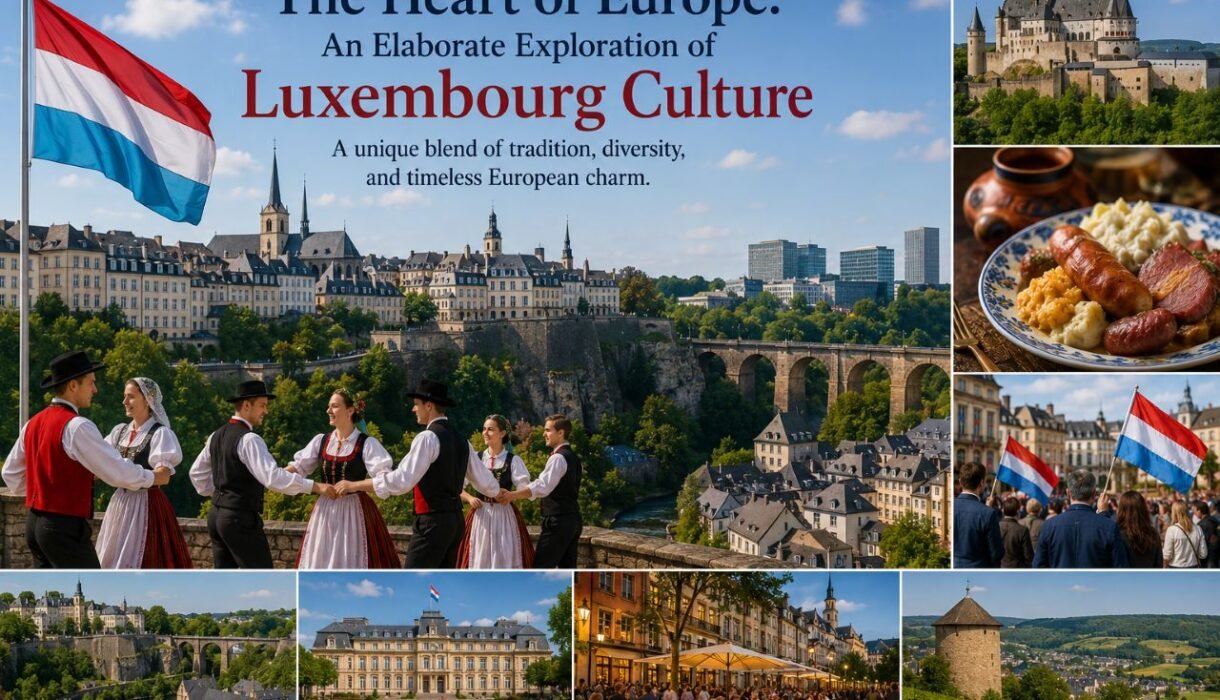
The Heart of Europe: An Elaborate Exploration of Luxembourg Culture
Posted in :

Nestled quietly between France, Germany, and Belgium, the Grand Duchy of Luxembourg is a small nation with a massive cultural footprint. As the world’s only remaining sovereign Grand Duchy, it represents a captivating crossroads where Germanic efficiency, Romanic flair, and a distinct, fiercely protected local identity meet.
The people of Luxembourg—Luxembourgers (Lëtzebuerger)—embody a unique cultural paradox: they are profoundly cosmopolitan and international, yet deeply rooted in ancestral traditions and localized folklore. This comprehensive, research-driven guide explores the rich tapestry of Luxembourg’s history, language, cuisine, and values, celebrating a society that masterfully balances global integration with local heritage.
History & Origins
Luxembourg’s history is a mirror to the geopolitical shifts of Western Europe over the last millennium.
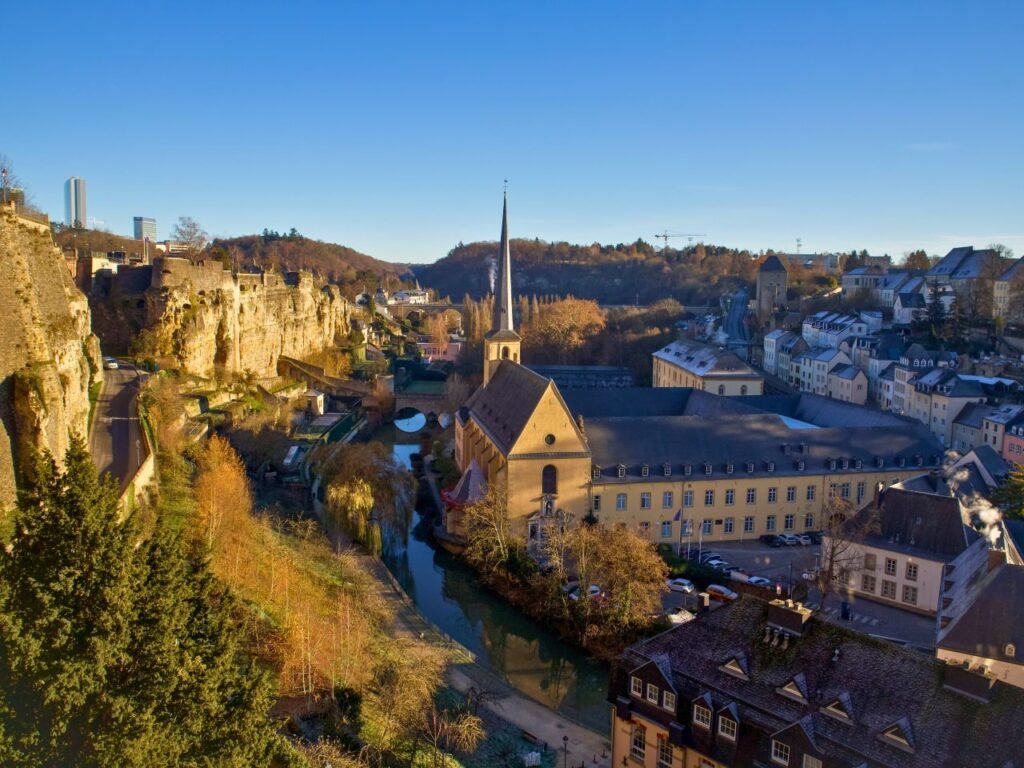
- The Cradle of Lucilinburhuc: The modern state traces its origins back to 963 AD, when Count Siegfried of the Ardennes acquired a rocky promontory overlooking the Alzette River. He constructed a modest fort named Lucilinburhuc (“Little Castle”), which laid the literal foundations for both the capital city and the nation.
- The Gibraltar of the North: Due to its highly strategic location, Luxembourg became a heavily fortified stronghold coveted by Europe’s greatest empires. Over the centuries, it was controlled, expanded, and fortified successively by the Burgundians, Spanish, French, Austrians, and Prussians, earning the title “Gibraltar of the North” for its legendary, impenetrable fortress walls.
- The Path to Sovereignty: Following the defeat of Napoleon, the 1815 Congress of Vienna elevated Luxembourg to a Grand Duchy, placing it in a personal union with the Netherlands. The nation achieved full strategic neutrality and independence through the Treaty of London in 1867, surviving brutal occupations during both World Wars to emerge as a passionate, founding pioneer of European unity.
Culture, Traditions & Customs
The Dancing Procession of Echternach (Iechternacher Sprangprozess)
Held annually on Whit Tuesday (the Tuesday after Pentecost), this remarkable ritual is inscribed on the UNESCO Representative List of the Intangible Cultural Heritage of Humanity.
Dating back to the 8th century to honor Saint Willibrord, thousands of pilgrims dressed in white shirts and dark trousers link hands using white handkerchiefs. To the rhythmic, mesmerizing tune of a traditional folk melody, they dance through the medieval streets of Echternach, bouncing forward, backward, and sideways. It is a striking, living testament to the endurance of communal folk piety.
Liichtmëssdag (Candlemas Tradition)
On the evening of February 2, Luxembourgish children participate in Liichtmëssdag.
Carrying beautifully handcrafted, colorful paper lanterns called Lampionnen, children march through their local villages and urban neighborhoods. Knocking on doors, they sing a traditional song to Saint Blaise, asking neighbors for small treats or pocket change (Speck an Ierbsen, historically meaning bacon and peas). It functions as a cozy, community-driven winter celebration of light and generosity.
Emaischen and Life Passages
On Easter Monday, the traditional festival of Éimaischen takes place in the oldest quarters of Luxembourg City and the village of Nospelt.
The highlight of the festival is the sale of Péckvillercher—small, beautifully painted terracotta whistling birds. Couples traditionally gift these to each other to symbolize love and the coming of spring. For milestones like marriage and naming days, small-town communities frequently come together to host a Pirendëp (communal dinner) or construct decorative pine arches to welcome newlyweds home, reinforcing strong regional bonds.
Languages & Communication
Trilingualism as a Way of Life
Luxembourg’s linguistic landscape is incredibly unique and functions as a masterclass in societal multilingualism. The nation operates under three officially recognized administrative languages:
- Luxembourgish (Lëtzebuergesch): A High German Franconian dialect enriched with a heavy infusion of French vocabulary. Codified as the national language in 1984, it is the language of the heart, home, and daily casual conversation.
- German: The primary language utilized for written print media, commerce, and initial primary school education.
- French: The primary language of legislation, high administration, legal courts, fine dining, and international corporate sectors.
Greetings & Expressions
Language changes seamlessly depending on the context, but everyday communication is grounded in a few core phrases:
- “Moien!”
Meaning: The universal, cheerful greeting used at any time of day to say “Hello!” or “Good morning!”
- “Äddi!”
Meaning: “Goodbye!”—typically exchanged when leaving shops, cafes, or casual social gatherings.
- “Mir welle bleiwe wat mir sinn.”
National Motto: “We want to remain what we are.” This profound phrase emerged in the 19th century during periods of foreign geopolitical pressure and remains a core expression of the country’s independent spirit.
Geography
Covering just 998 square miles, Luxembourg’s geography is compact but structurally diverse. The country is split into two distinct geographical landscapes:
- The Ösling (North): Characterized by the rugged terrain of the Ardennes mountains, this region features sweeping highland plateaus, dramatic forested valleys, and medieval castles perched over winding rivers.
- The Gutland (South): Meaning “Good Land,” this rolling countryside is home to agricultural fields, the urban capital, and the Moselle Valley—a scenic region famous for its steep riverside vineyards producing world-class sparkling and dry white wines.
Economy
Luxembourg possesses one of the world’s most resilient, advanced, and high-income economies, consistently ranking at the top of global GDP per capita metrics.
- From Steel to Finance: In the 19th and early 20th centuries, Luxembourg’s wealth was driven by a powerful steel manufacturing sector. As global steel demand shifted, the nation pivoted into a premier international financial powerhouse.
- Investment Hub: Today, the country stands as the largest fund management center in Europe and the second-largest in the world, trailing only the United States.
- Space and Digital Technology: Looking forward, Luxembourg has emerged as a pioneer in the commercial space sector, establishing robust legal frameworks and funding for asteroid mining research and satellite communications.
Politics
Luxembourg is a constitutional monarchy operating as a parliamentary democracy.
The executive head of state is the Grand Duke (currently Grand Duke Henri), whose role is primarily representative and symbolic, though he signs passed legislation into law. The actual head of government is the Prime Minister, who leads the cabinet. Legislative power is held by the Chamber of Deputies (D’Chamber), which consists of 60 members elected to five-year terms. The country is deeply committed to multilateralism, serving as the home court to several key European Union institutions, including the European Court of Justice.
Ethnic Groups
Driven by its dynamic, multinational job market, Luxembourg has developed into one of Europe’s most diverse societies, with foreign residents making up nearly 47% of the total population.
| Ethnic Group / Nationality | Approximate Population Share | Cultural and Economic Integration |
| Luxembourgers | ~53.0% | Native population holding deep generational roots and administrative roles |
| Portuguese | ~14.5% | The largest foreign community, arriving initially during the mid-20th-century labor boom |
| French | ~7.6% | Closely integrated urban professionals and cross-border commuters |
| Italian | ~3.7% | Historic community with deep roots in the southern steelworking regions |
| Belgian / German / Others | ~21.2% | Multinationals attracted to financial, tech, and European Union institutions |
Beliefs & Values
Secularism Layered Over Catholic Tradition
While contemporary Luxembourg is a highly secularized, modern society, its historic cultural fabric is deeply intertwined with Roman Catholicism. Catholic values heavily influence national holidays, communal structures, and philanthropic traditions.
Freedom and Pragmatism
The prevailing worldview in Luxembourg is defined by pragmatism, tolerance, and a commitment to peaceful coexistence. Living at the crossroads of major empires has taught Luxembourgers to be natural diplomats and highly adaptable polyglots. They fiercely protect their personal privacy and community stability while remaining open-minded toward international integration and new neighbors.
Food & Cuisine
Traditional Luxembourgish cuisine is a comforting blend of rustic, earthy German portions accented by refined French culinary techniques, historically designed to sustain hardworking farmers and steelworkers.
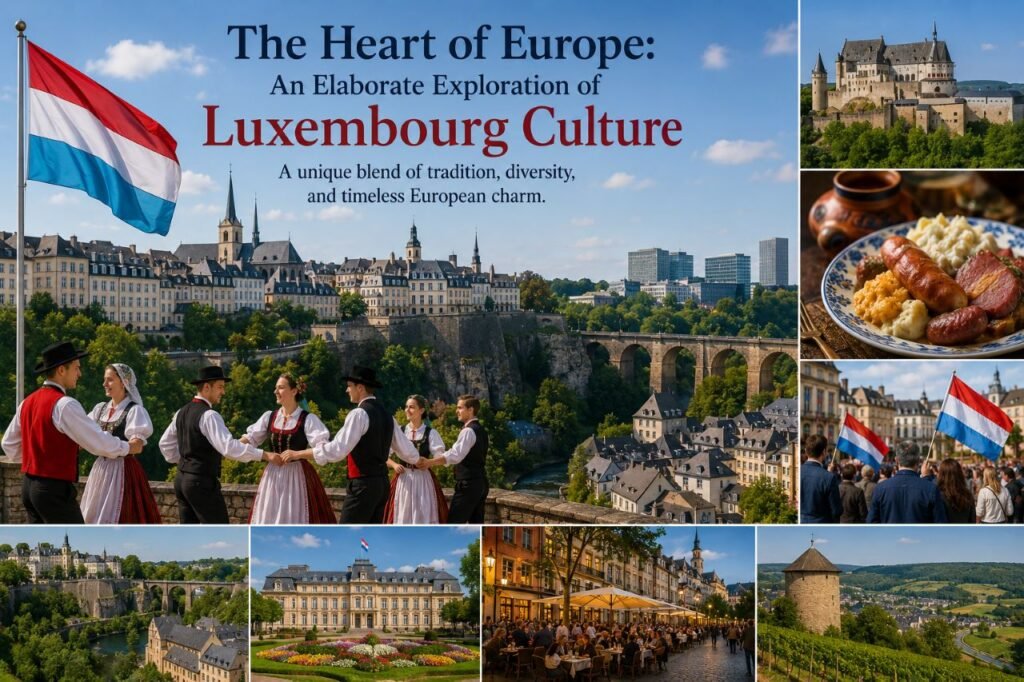
- Judd mat Gaardebounen: The undisputed national dish of the country. It consists of a tender, smoked collar of pork that is boiled with vegetables and spices, sliced thick, and smothered in a rich, creamy white sauce packed with fresh broad beans (Gaardebounen). It is traditionally paired with boiled or pan-fried potatoes.
- Gromperekichelcher: These are crisp, golden, shallow-fried potato pancakes mixed with finely grated onions, parsley, eggs, and flour. They are a staple of open-air street markets, village fairs, and Christmas celebrations, usually served hot alongside sweet applesauce.
- Kachkéis (Cooked Cheese): A unique, runny, and pungent processed cheese spread that is often melted and enjoyed on slices of dense rye bread with a touch of sharp mustard.
Clothing & Symbols
Traditional Attire and the Red Lion
Traditional folk dress is rarely worn today, reserved mostly for heritage folk dance troupes during national festivals. Women historically wore long, patterned dirndl-style aprons over linen dresses, while men wore dark waistcoats, linen shirts, and wide-brimmed hats.
Essential National Symbols
- The Roude Léiw (The Red Lion): The historic coat of arms and civil ensign features a fierce, double-tailed red lion with a golden crown, set against ten silver and blue horizontal stripes. It stands as an intense, popular symbol of national pride and sports fandom.
- The Gëlle Fra (The Golden Lady): Situated in Constitution Square in Luxembourg City, this striking monument features a gilded bronze lady holding a wreath aloft. It serves as a moving memorial to the brave citizens who volunteered for military service during the World Wars.
Music, Dance & Art
The March of the Sheep (Hämmelsmarsch)
A beloved musical tradition is the playing of the Hämmelsmarsch, an ancient folk melody historically composed to announce village wakes and festivals. During local parish celebrations (Kermes), local brass musicians march through village streets playing this tune, leading a small flock of sheep decorated with colorful ribbons to collect donations for community funds.
The Octave and Fine Arts
In the realm of fine arts, Luxembourg’s most globally renowned creative mind is the iconic 20th-century photographer Edward Steichen, who curated the legendary The Family of Man exhibition, now permanently housed in Clervaux Castle.
Architecturally, the nation shines through the historic fortifications of Luxembourg City—a UNESCO World Heritage site—and the ultra-modern Mudam (Museum of Modern Art), designed by the legendary architect I.M. Pei, showcasing how seamlessly the country marries past and future.
Summary
The culture of Luxembourg is a fascinating example of how a small country can maintain a distinct identity while embracing global diversity. By honoring sacred traditions like the Echternach procession, preserving Lëtzebuergesch as a vibrant daily tongue, and welcoming a massive multinational community, Luxembourg has built a peaceful and prosperous home. It stands as a brilliant bridge between cultures, demonstrating that a nation’s true strength lies not in its physical size, but in its capacity for adaptation and unity.
At Best Culture Insight, we see culture as the heartbeat of every society – the way people live, connect, and express their identity.